
In a large living room or open-plan flat, a long blank wall often raises a question: how do you fill it so it is both useful and good-looking? The simplest answer is to line it with identical cabinets, but the result often resembles an office archive. The opposite approach, a small TV unit in the middle of the wall, lets the furniture disappear against the width of the wall. A successful composition sits between these extremes and rests on rhythm and proportion.
Divide the wall into sections
A long wall should be planned not as a single mass but as several connected parts. Start by dividing the wall into vertical bands on paper or on a photo. Each band can correspond to a function: storage, TV, books, display, a desk. The bands do not need to be equal in width; in fact, varied widths prevent monotony.
Windows, doors, radiators and sockets are part of this division too. Aligning the rhythm of the composition with them, for example ending a tall unit a set distance from a door frame, makes the wall look natural.
Symmetry or asymmetry
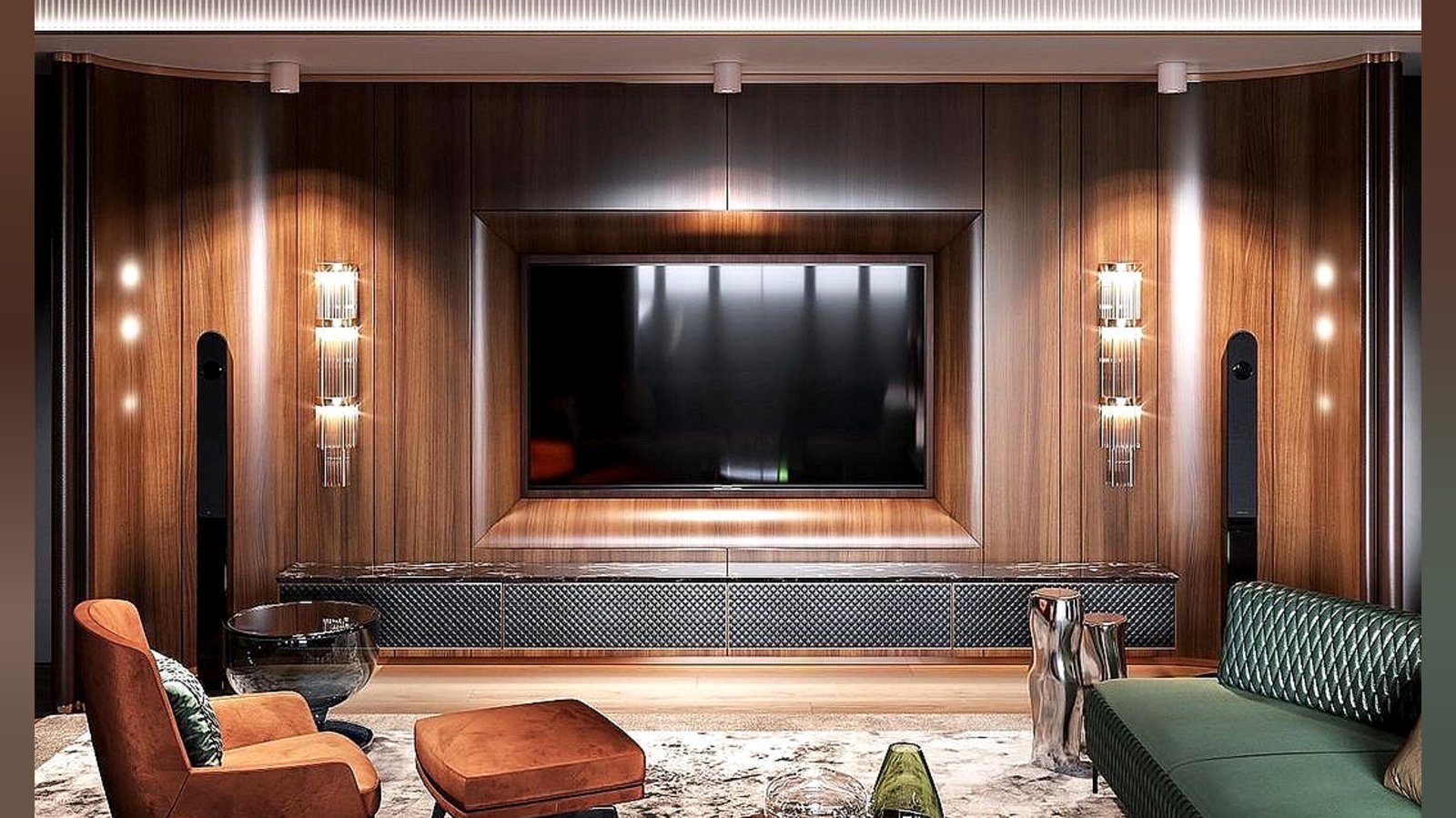
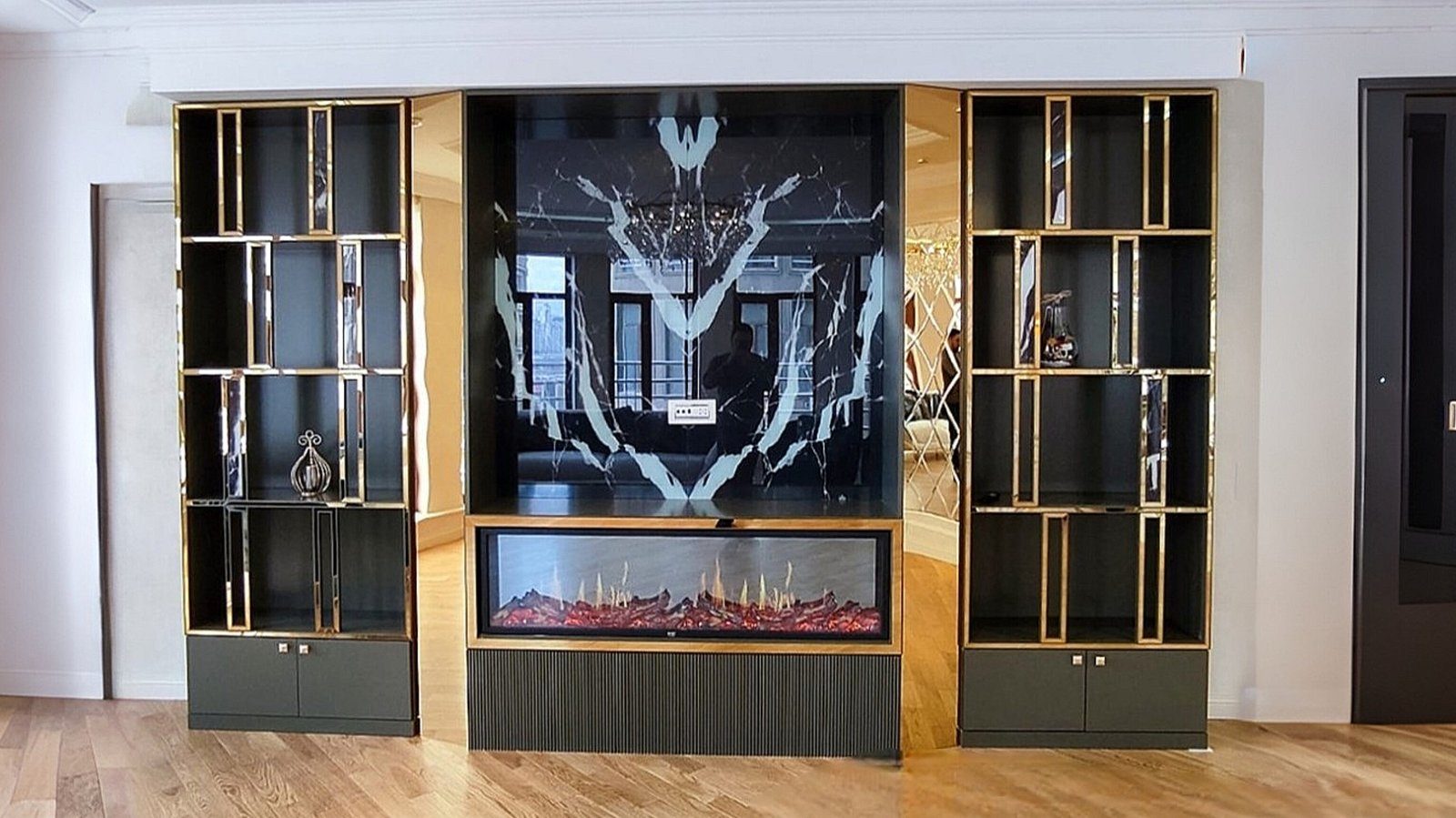
A symmetrical composition has a central element flanked by matching units on either side. It creates a calm, classic, formal look and works well in rooms where the TV, fireplace or a large picture sits in the centre. For symmetry to work, the centre of the wall must line up with the centre of the seating group; otherwise the eye notices the mismatch immediately.
An asymmetrical composition is more dynamic. A tall closed cabinet on one side and a long low console with floating shelves above on the other create balance through the distribution of visual weight. The main rule of asymmetry is that a large, dark element is balanced by several smaller, lighter ones. The centre of the composition becomes the line of sight from the seating, not the middle of the wall.
Rhythm of open and closed parts
On a long wall, closed fronts alone look heavy and open shelves alone look cluttered. Alternating them creates rhythm: closed unit, open niche, closed unit. As in music, the rhythm is more interesting when motifs repeat without being identical. Slightly varying the height or width of open niches, for instance, brings the composition to life.
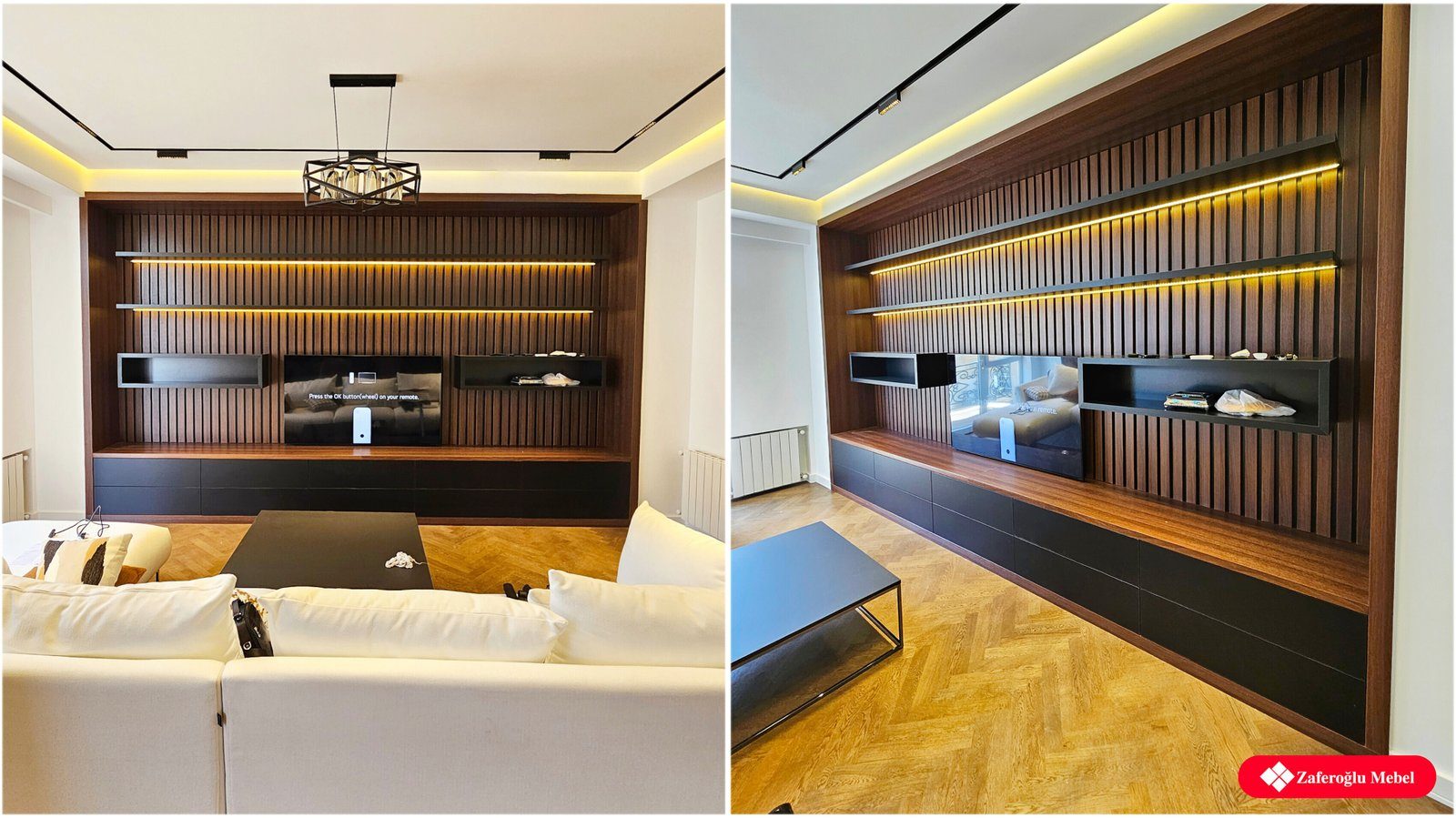
Materials are part of the rhythm too. A slatted or veneered panel between smooth fronts, a light shelf between dark closed sections, or a brass-framed glass display unit creates resting points for the eye along the wall.
Horizontal line and height
The strongest way to unify a long wall is a continuous horizontal line. A low cabinet or floating console running along the wall gathers the whole composition onto a single base. Vertical elements above it, such as tall cabinets, floating shelves and the TV, rest on that base. A console hung slightly above the floor makes the wall look lighter and longer, while a unit standing on the floor feels more solid and grounded.
Height should suit the ceiling. In a room with a low ceiling, floor-to-ceiling units make the wall read as one surface. With a high ceiling, leaving blank wall above the composition, or placing the tallest units at the ends to frame the wall, usually works better.
Leave some space
A long wall does not have to be filled end to end. A little empty space at the ends lets the composition breathe and makes it look like a complete object set against the wall rather than part of the architecture. In that free space, a plant, a floor lamp or an armchair links the composition with the rest of the room.
A short planning checklist
- Record the full wall dimensions and the positions of windows, doors, radiators and sockets.
- List the functions the wall will serve: storage, TV, books, display, a desk.
- Fix the position of the seating group and choose the centre of the composition accordingly.
- Set the ratio of open to closed parts by the amount of things to be stored.
- Plan lighting early: LED inside shelves, wall lights or light under the console.
Zaferoglu Mebel's work includes a slatted TV wall and compositions with brass-framed shelf towers. For a long wall, the module split and rhythm can be tested on a sketch against the room plan.