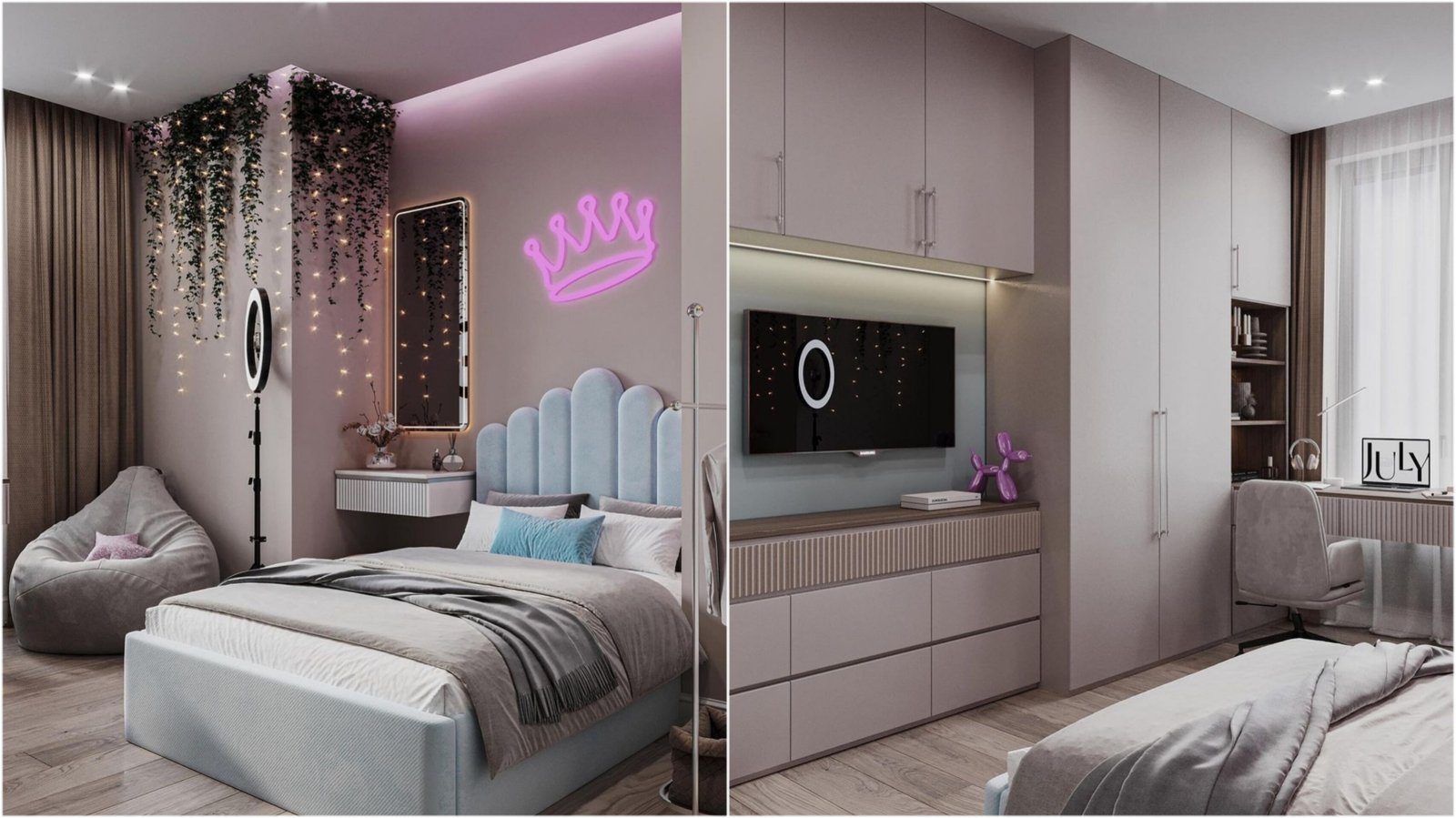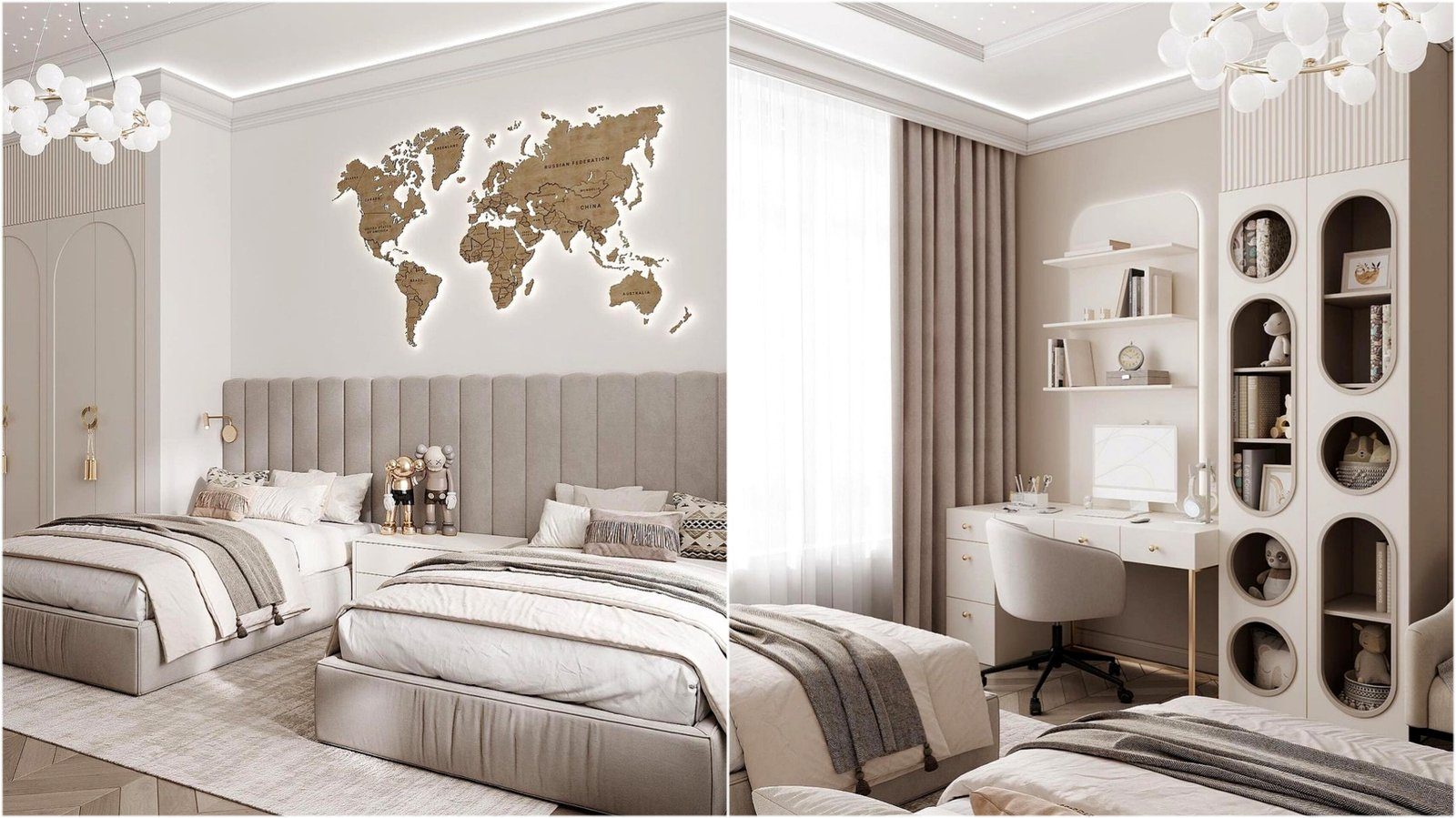

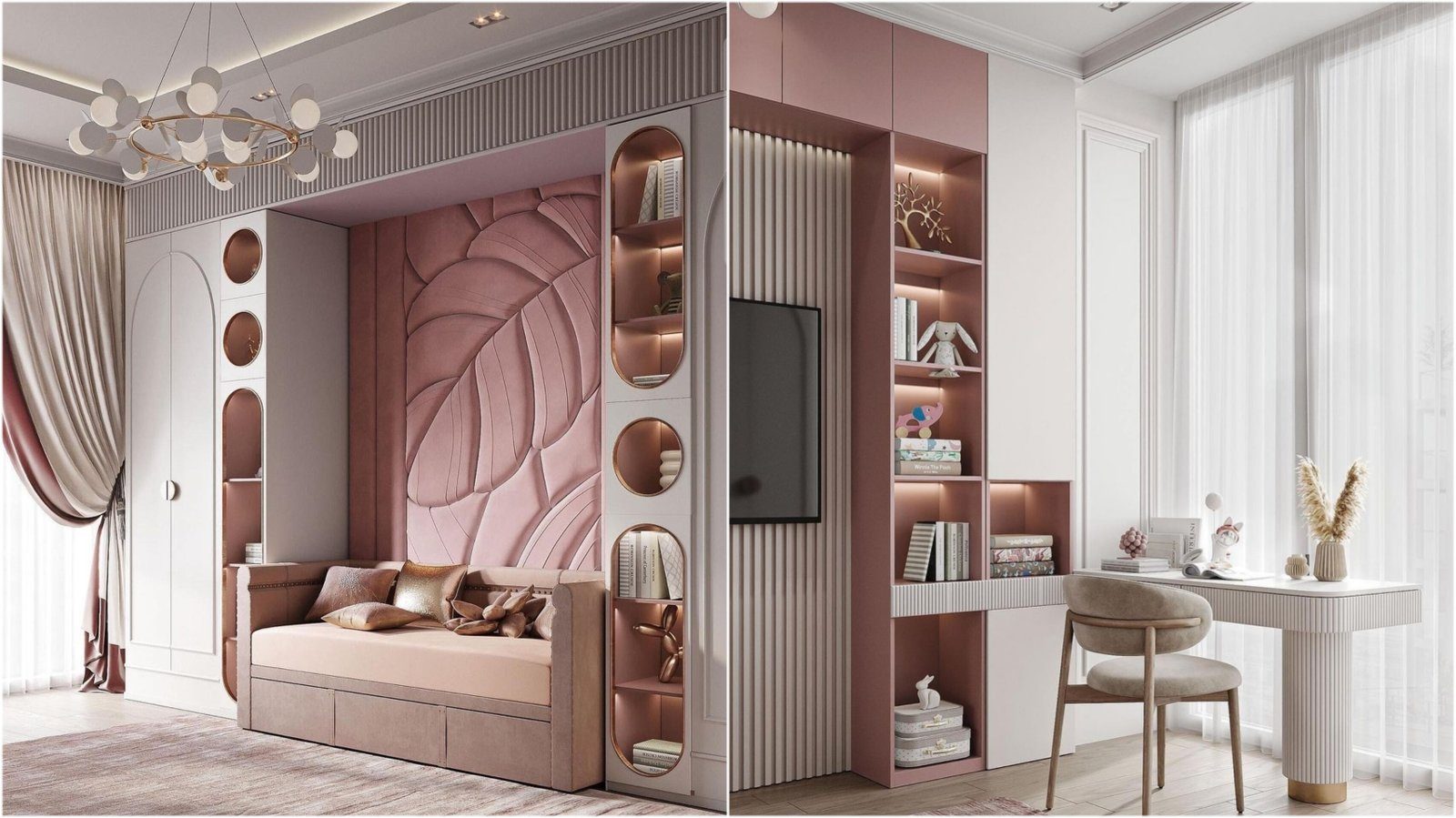
Young children recognise books by their covers, not their titles. If books sit tightly packed on a high shelf, a child cannot choose and has to ask an adult every time. When the shelves are built to the child's height, books become an everyday object within reach: the child takes one, looks through it and, if the system is well organised, puts it back.
Front-facing shelves or standard shelves
For pre-school children the most useful format is a shallow, often slightly angled shelf where books face forward. A low lip at the front holds them in place, and the child chooses by the picture. These shelves are shallow, so they take little space and fit even narrow, corridor-like rooms.
Standard shelving, where only the spines are visible, holds far more books. As a child starts reading and books get thicker, this becomes the main storage. A practical solution combines both: one or two rows of front-facing shelves in the lower zone for "this week's books", and standard shelves above for the wider collection.
Front-facing shelves have another benefit: they make it easy to rotate books. When every book is on display at once, a child keeps picking the same two or three and forgets the rest. Swapping the books on the lower shelf with those above every few weeks revives interest in older titles. For that, leave a little free space on the upper standard shelves so there is somewhere to put books during the swap. Add a soft floor cushion or a small armchair and gentle local lighting next to the shelf, and it gradually turns from storage into a reading corner.
Height: where the child can actually reach
Shelf height should be set for the specific child rather than a general norm. A simple test: ask the child to stand and stretch an arm forward — that level and below is the independent-use zone. For small children most books belong in this zone, a little above the floor; the very bottom shelf at floor level tends to fill with dust and toys and is less convenient.
Upper shelves are still needed, but for a different purpose: fragile editions, books the child is not ready for yet and books read together with a parent. The child is free in the reachable zone while the upper zone stays under adult control.
Safety: fixing and edges
Children may try to climb shelving, which is a serious risk. So:
- Every tall shelf unit is fixed to the wall, with anchors suited to the wall material.
- Corners are rounded and edges are banded so there are no chipped, rough cuts.
- Heavy books go on the lower shelves, keeping the centre of gravity low.
- Long shelves get a middle support, because sagging under books increases over time.
- Glass doors or mirror panels right next to open shelving are best avoided.
If wall shelves hang on concealed brackets, ask what load they are designed for: a bracket that is fine for a decorative shelf may not hold a full row of books.
A layout that changes as the child grows
Children's furniture serves very different needs over a few years, and planning for that reduces the cost of later changes. Adjustable shelves — a row of holes in the side panels and movable shelf supports — allow front-facing shelves to be converted into standard ones later. Open boxes in the lower zone can hold large picture books at first and school supplies afterwards.
Shelves next to the desk play a separate role in the school years: textbooks should be within reach without getting up. That is why it helps to design the bookshelf as one composition with the desk and wardrobe.
Quick check
- Can the child reach their most-used book without help?
- Does the balance of front-facing and standard shelves suit the child's age?
- Are all tall units fixed to the wall?
- Can shelf heights be changed later?
- Is putting a book back as easy as taking it out?
Zaferoglu Mebel's fitters install children's furniture free. Setting shelf heights at the measuring visit, allowing for the child's height and age, keeps the bookcase useful for years.