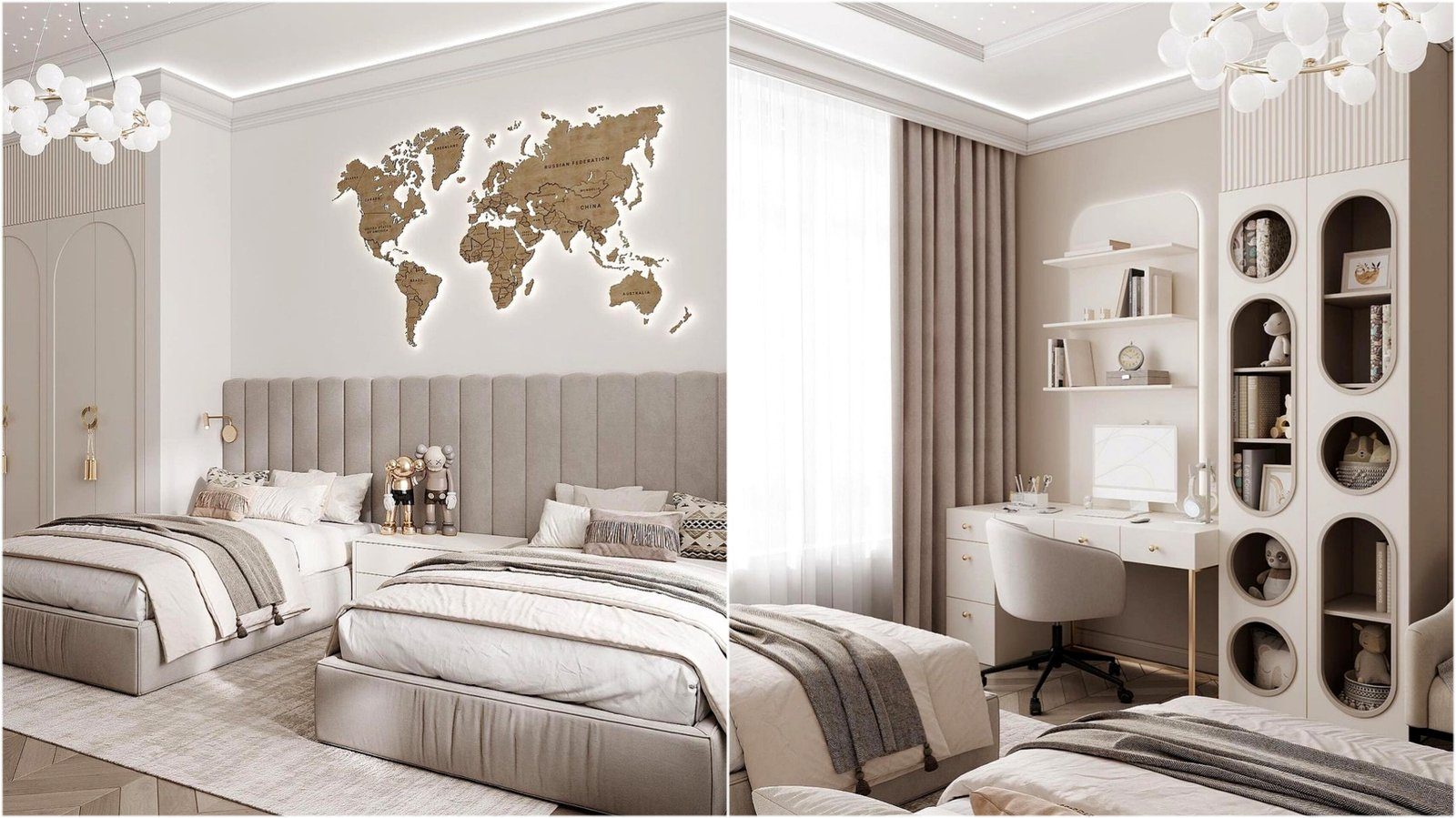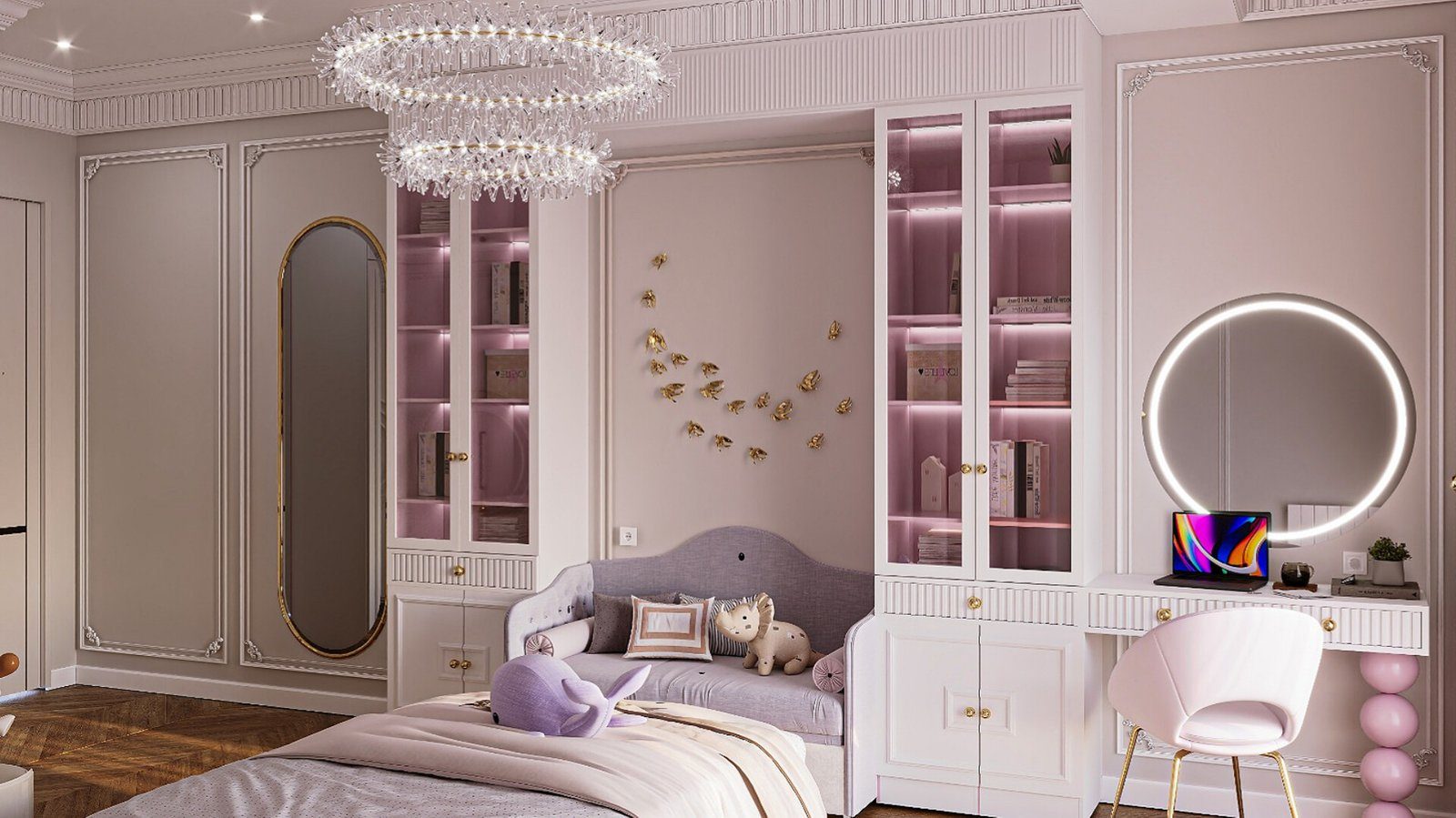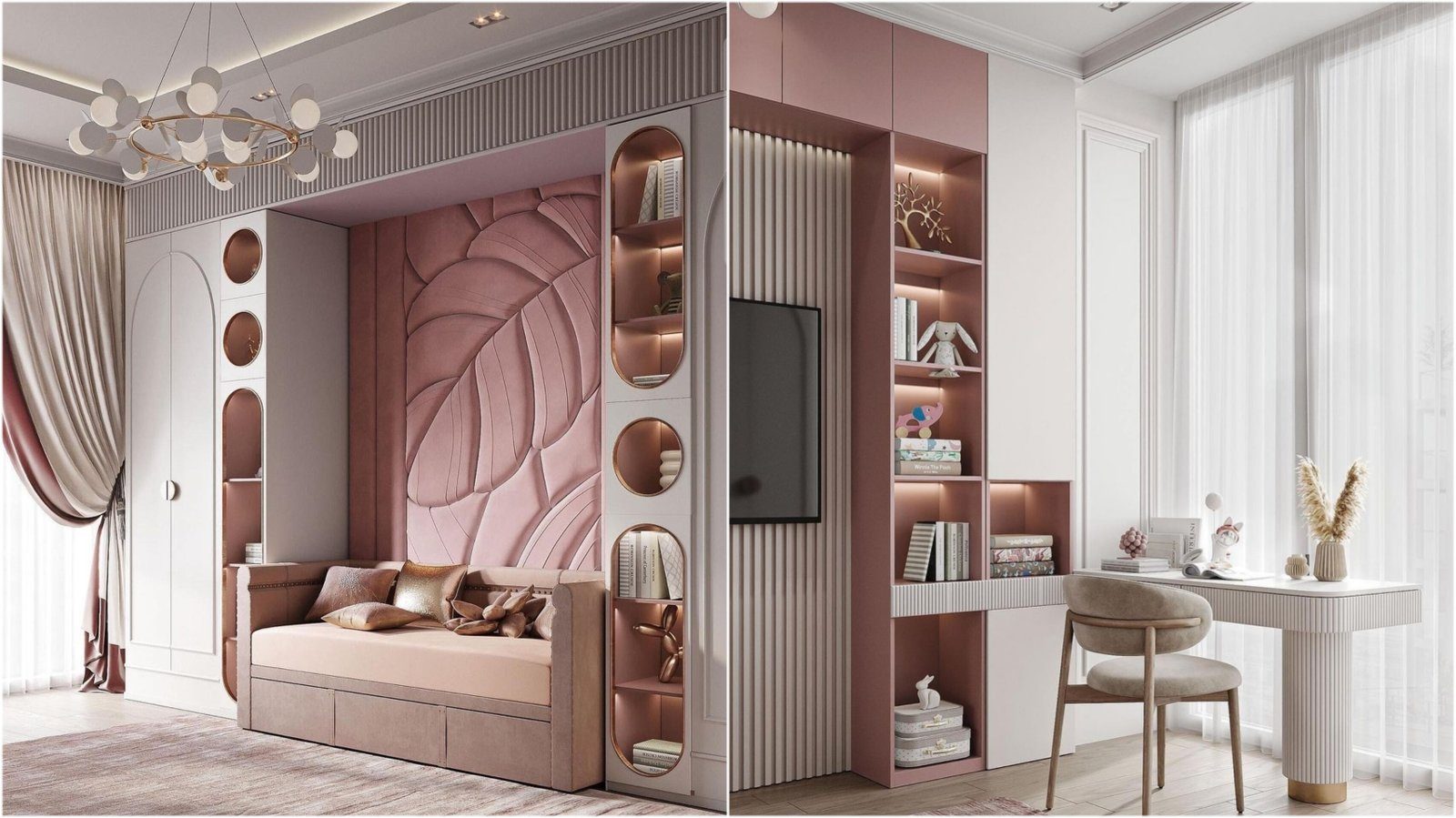

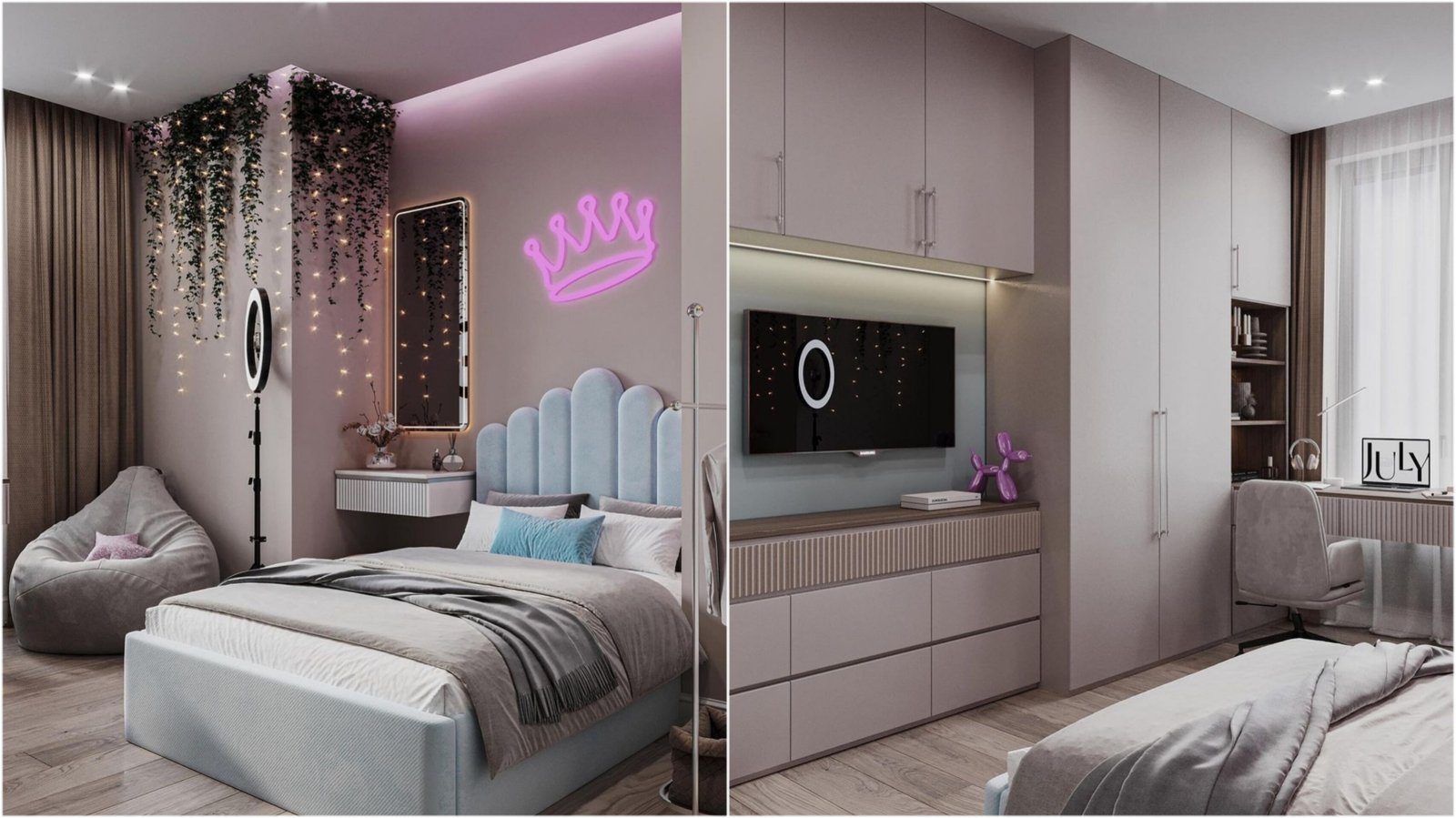
When buying a wardrobe for a child's room, people often look only at current needs: baby clothes are small, little needs hanging, and the rest of the space goes to toys. A few years later come school uniforms, a sports bag, long dresses and books, and by the teenage years the wardrobe is essentially an adult's. To avoid buying a new wardrobe at every stage, the solution is simple: plan a large, long-lasting carcass with an interior that can change.
The core principle: fixed carcass, flexible interior
The carcass — sides, base, top and doors — is made from day one at full adult wardrobe size. What changes is the inside. Several technical points are built into the design for this:
- A row of shelf-support holes runs the full height of the side panels, so shelf heights can be changed at any time.
- Hanging rails are fitted with replaceable brackets.
- Drawer blocks are made as separate modules that can be moved or removed if needed.
- Internal partitions are kept to a minimum so wide sections can be created later.
Babies and pre-school children
At this stage clothes are small, so little hanging space is needed. Placing one rail low and another above it creates two rows of hanging in one section. In the rest, wide shelves and open boxes are more practical: baby clothes are stored folded, and nappies and hygiene products stay within reach.
At pre-school age children learn to dress themselves. A "what I'm wearing today" zone on a low shelf or rail builds independence. Upper shelves hold out-of-season clothes and items that stay under adult control.
School age
For a school-age child, the interior layout changes fundamentally. School uniforms and shirts need hanging, so the hanging zone gets taller. The lower rail is removed and the upper rail lowered to a height the child can reach. A separate section for sportswear, school bag and shoes saves a lot of time during rushed school-day mornings.
Toy boxes shrink, and their place is taken by books, hobby items and school supplies. Shelf heights are changed to suit folders and boxes.
The teenage years
Teenagers' clothes are adult-sized: long dresses, coats, suits. The hanging zone is extended to full height, and drawers are used for underwear and accessories. A mirror goes inside the wardrobe door or on the front.
Privacy also becomes important at this stage: closed sections, a small lockable drawer, a dedicated place for personal things. If the wardrobe's look needs updating, changing the handles or refreshing the front colour is often enough, which is why choosing neutral fronts from the start makes sense.
Safety requirements
Safety matters in a child's wardrobe at every age:
- The wardrobe must be fixed to the wall: a child may try to climb open drawers like steps.
- Drawers use runners with stops so they cannot be pulled out and fall.
- Soft-close hinges reduce the risk of trapped fingers.
- Mirror elements are fitted with safety film so shards do not scatter if broken.
- For young children, a high or lockable compartment is provided for medicines and small objects.
Planning together with the child
From school age, it helps to involve the child in planning the wardrobe layout. When children decide where their things go, keeping order becomes easier too. Reviewing the wardrobe together each summer or at the start of the school year — clearing out outgrown clothes and resetting shelves — can become a habit.
Visual cues are another way to keep order. For a child who cannot read yet, a picture of socks, a T-shirt or trousers stuck on each box or drawer is enough, while a school-age child can make written labels themselves. Keep the labels easy to change, because the purpose of each section will shift again at every stage. This small step turns putting clothes away from a parent's instruction into the child's own habit and cuts the time spent searching on busy mornings.
Zaferoglu Mebel makes children's furniture, including wardrobes, to individual dimensions and uses Blum hardware. Planning the interior layout with the stages of growing up in mind allows the same carcass to be used for many years.