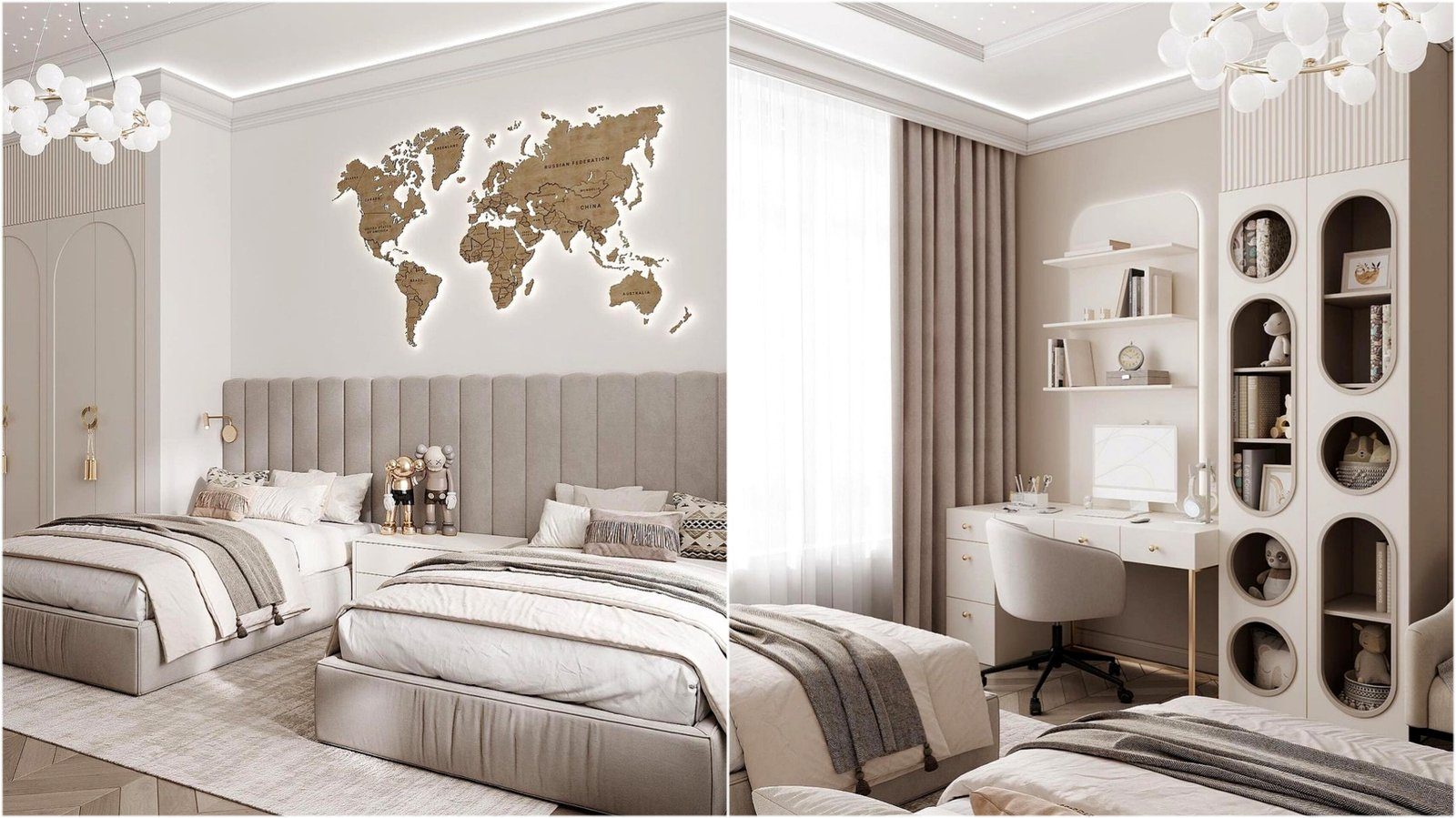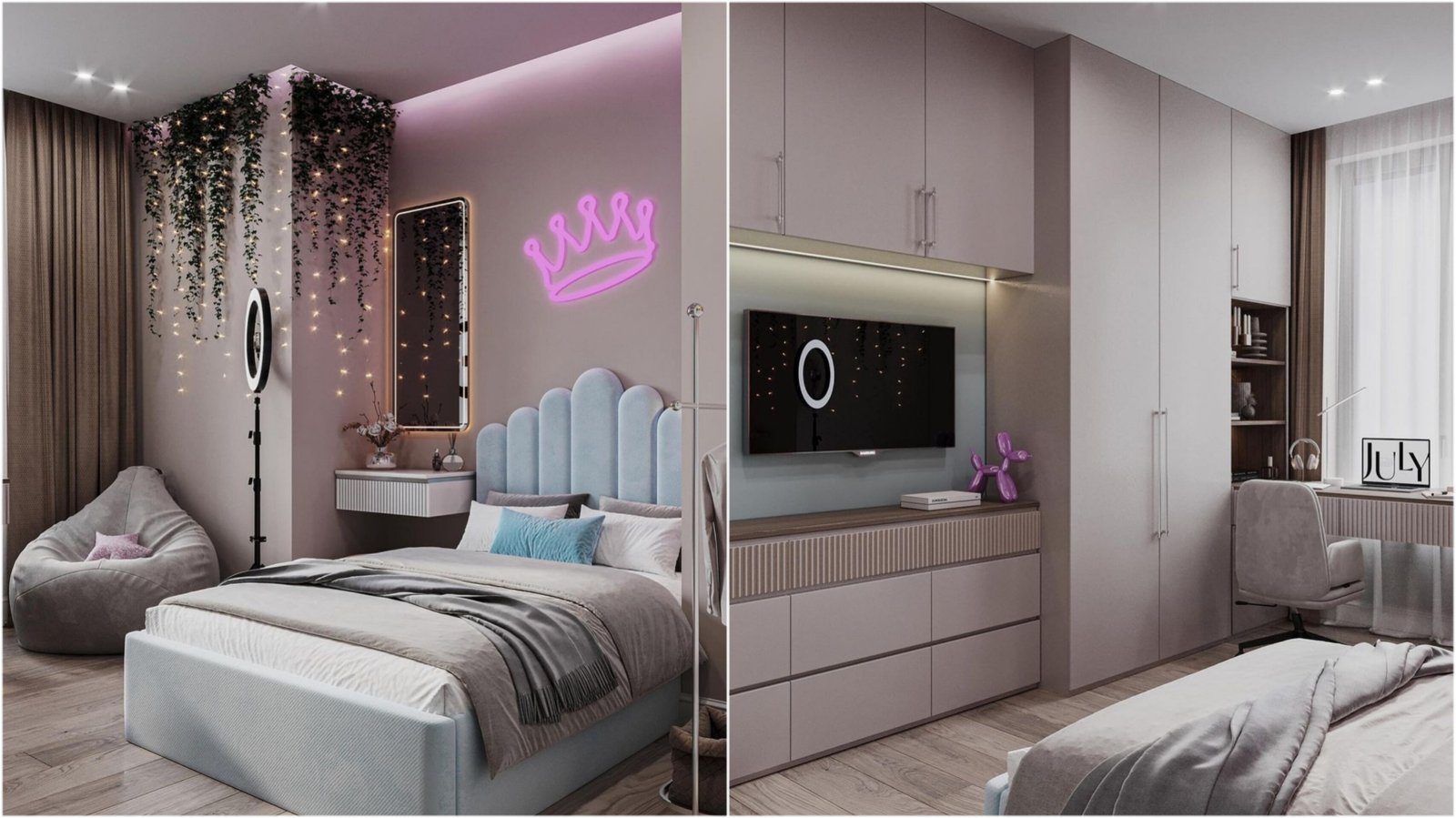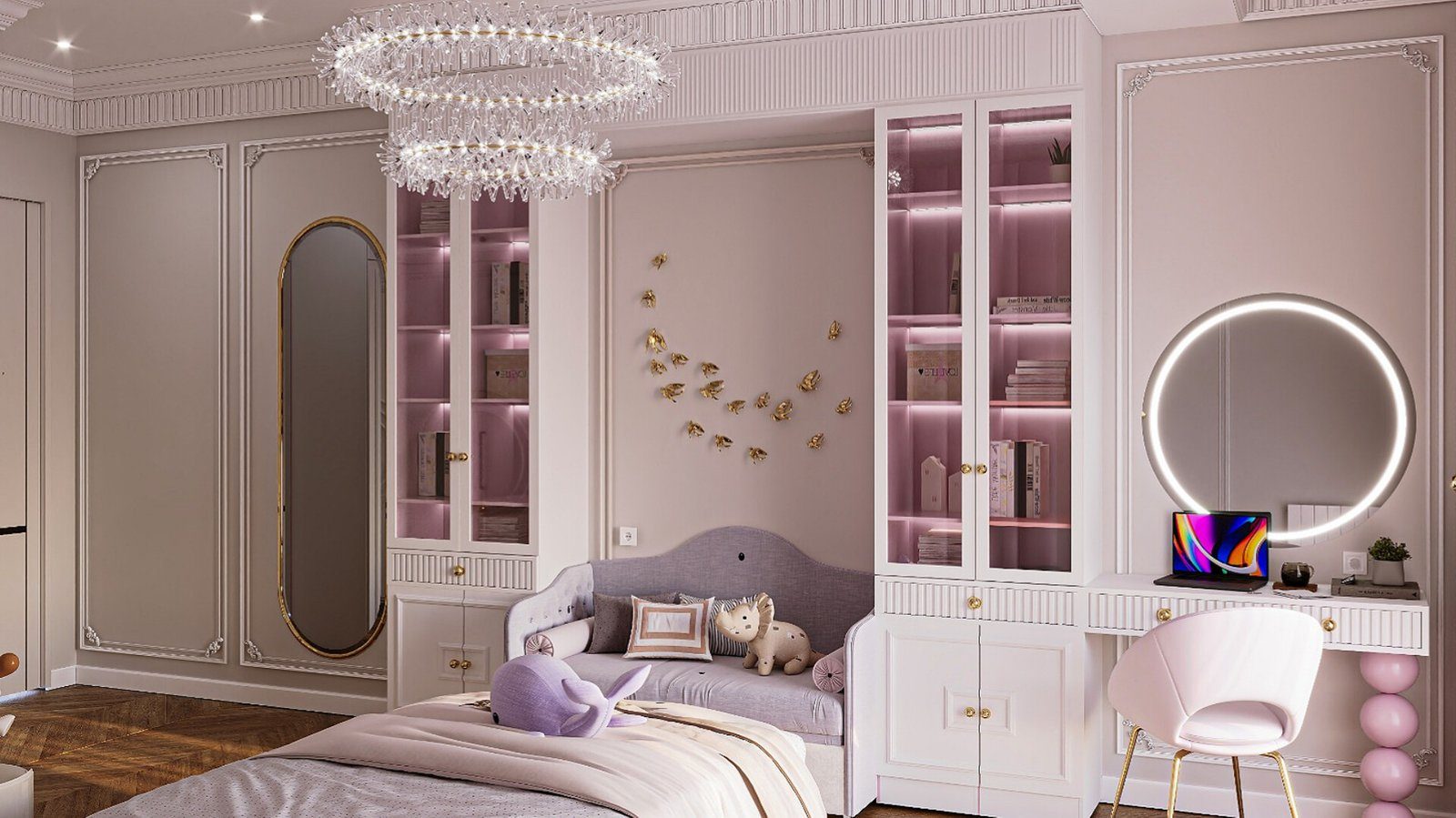

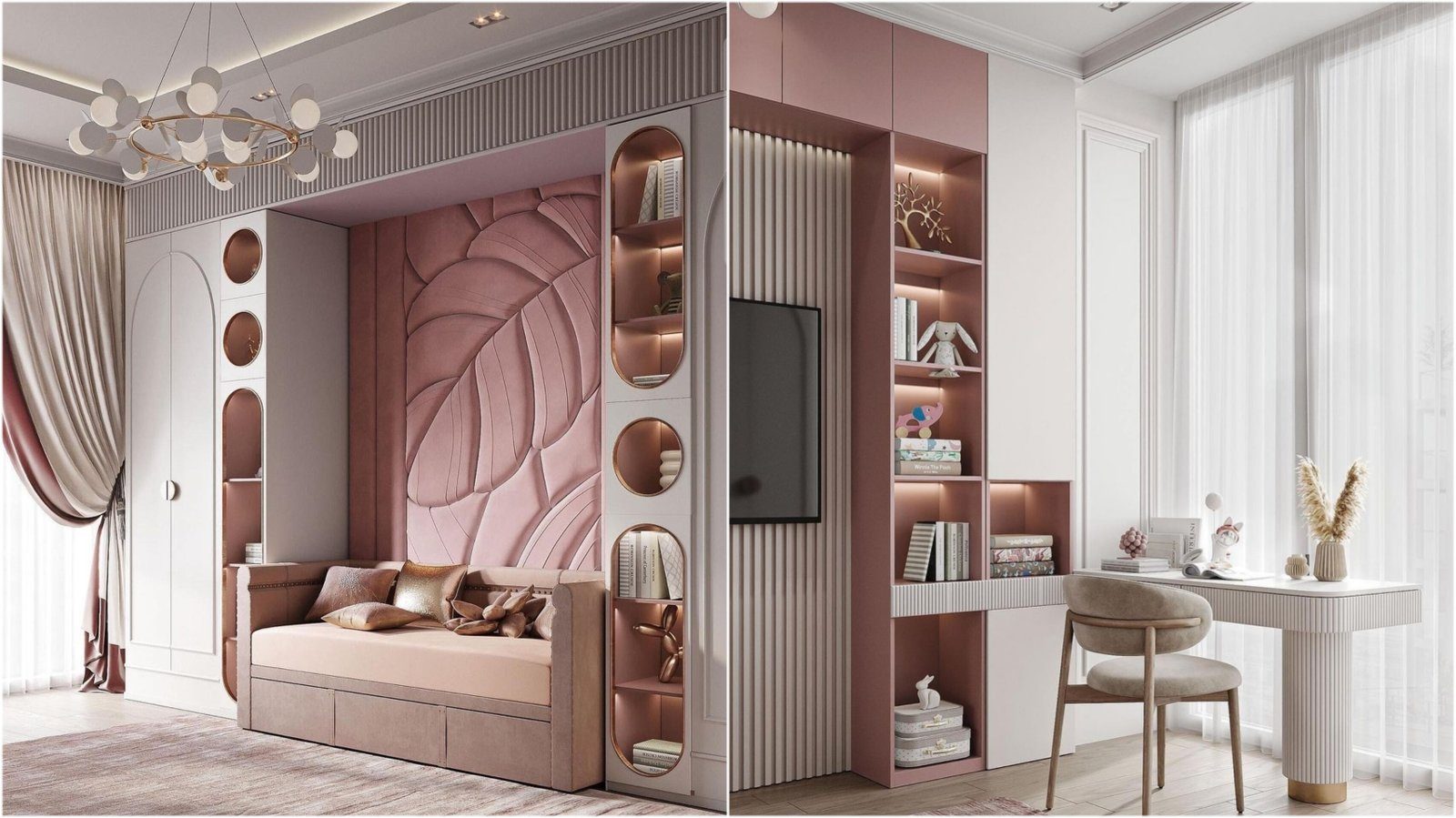
A child's room is often a bedroom, playground and, later, study all at once. When toys are spread everywhere, calming a child in the evening is hard, because every object near the bed is an invitation to play. Separating zones does not mean building a wall; furniture placement, storage and lighting create a clear enough boundary.
Choosing where the bed goes
The sleep zone is usually placed in a quieter corner away from the door and the main path through the room. Setting the long side of the bed against a wall gives the child a sense of security and frees the middle of the room for play. Directly under a window is not always the best spot, because of cold draughts and early morning light.
In a small room, a raised bed or one with a play space underneath saves floor area. Age-appropriate safety matters here: an upper bed needs guard rails, a sturdy ladder and enough clearance below the ceiling. For younger children, a low bed with drawers underneath is the more comfortable solution.
Think separately about the route from the door to the bed. A parent coming in at night should not trip over toys in the dark or have to cross the play area. Keeping this path clear and straight improves safety and makes the edge of the play zone more obvious. For play itself, keep an area of floor where the child can sit comfortably and spread things out, not cut up by furniture corners.
Drawing the boundary with furniture
The most practical divider is an open shelving unit usable from both sides. It does not block light like a wall, but from the bed it partly hides the play area. On the bed side it can hold books and small things needed at night; on the play side, boxes and toys.
Other options include:
- A low chest of drawers or bench: it forms a boundary and the top doubles as a seat.
- A curtain or light fabric hung from the ceiling: it lets you close off the sleep corner at night.
- A rug on the floor: it visually marks the play zone and makes playing on the floor comfortable.
- If the shelving unit is tall, fix it to the wall so it cannot tip if the child climbs it.
Where toys should live
There should be few toys in the sleep zone. When all storage is gathered in the play area, tidying up in the evening becomes easier: the child puts things into a box or two and moves to bed. Storage should be at the child's height so they can tidy up themselves.
- Low open shelves and boxes on castors are the most accessible solution for a small child.
- Pictures or colour codes on boxes help a child quickly learn where each thing belongs.
- Soft-close drawers and anti-pinch mechanisms are useful.
- Moving rarely used toys to higher shelves or a closed cupboard reduces everyday clutter.
Light and colour
Light can also separate zones. Bright general lighting suits the play area, while the sleep zone calls for a soft, directed night light. A light by the bed that the child can switch on and off by themselves makes the evening routine easier. Turning off the bright light before bedtime and keeping only the soft one also becomes a signal that it is time to sleep.
Colour plays a part too. Calm, light tones in the sleep corner and livelier accents in the play area, such as coloured boxes or a rug, create balance. Keeping the furniture itself neutral makes changes easier as the child grows, while coloured accents are quick to update.
How the layout changes as the child grows
In a few years, the play zone gradually becomes a study zone. Allowing for this from the start avoids major changes later. Open shelves can become bookshelves, and a play table can be replaced by a height-adjustable desk. Low storage modules can later sit under the desk or along a wall.
A short planning check:
- Is the bed away from the door and the main path?
- Is there a visible boundary between the sleep and play zones?
- Can the child tidy away toys on their own?
- Is tall furniture fixed to the wall?
- Can the room be reorganised for study in a few years?
At Zaferoglu Mebel, a child's bed, shelving and storage can be drawn as one composition on the room plan, so the furniture itself marks where play ends and sleep begins.