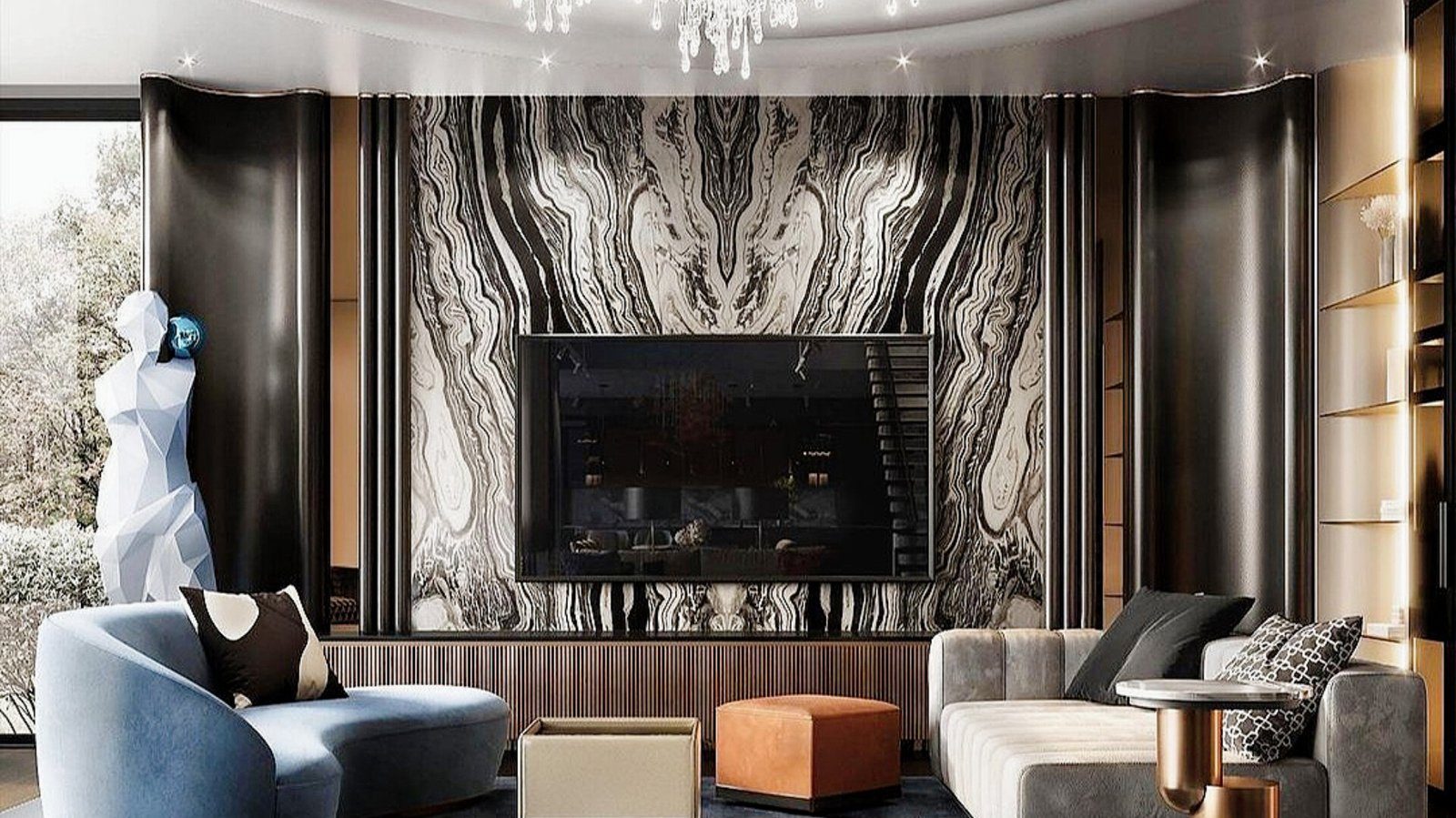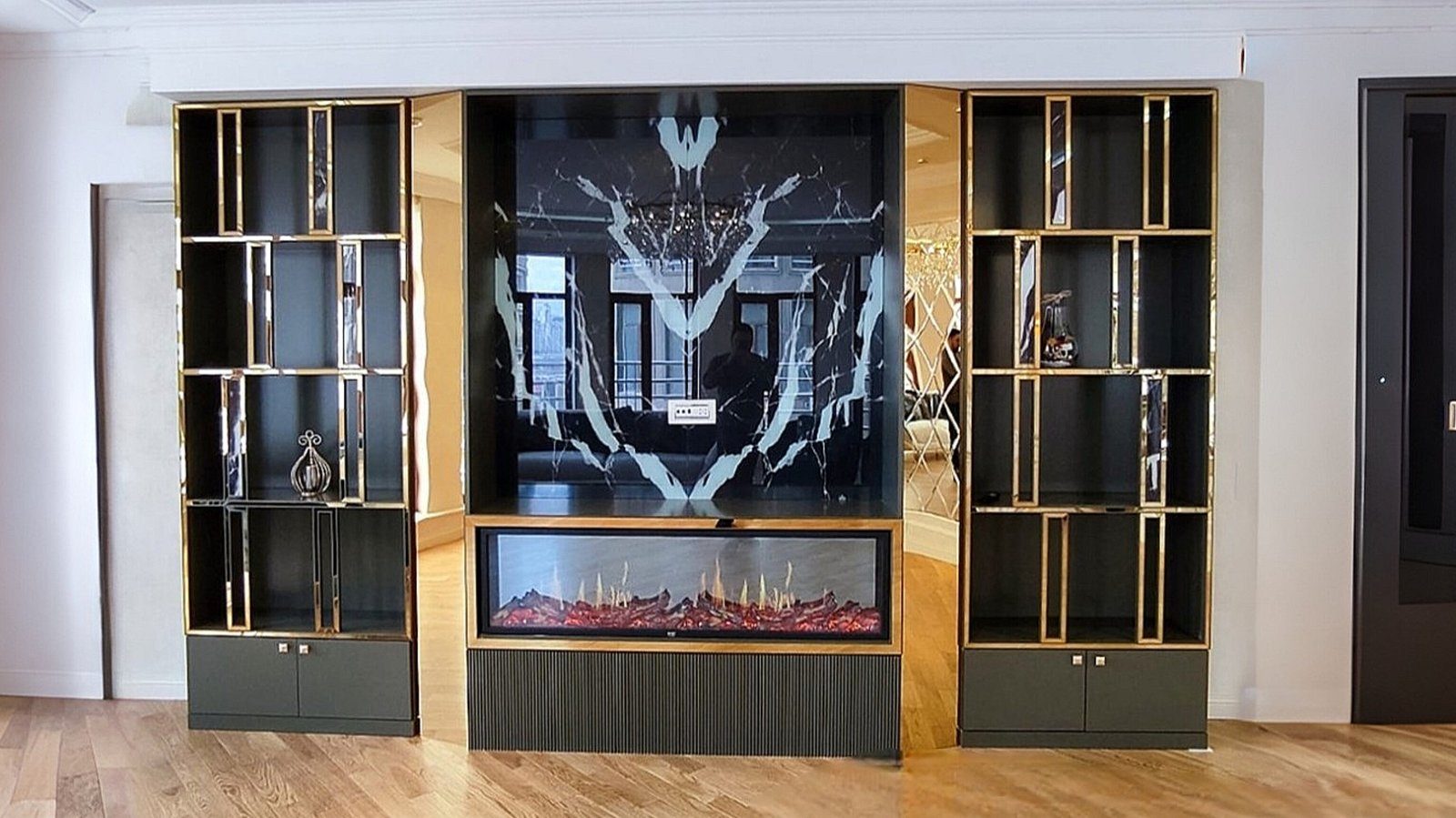

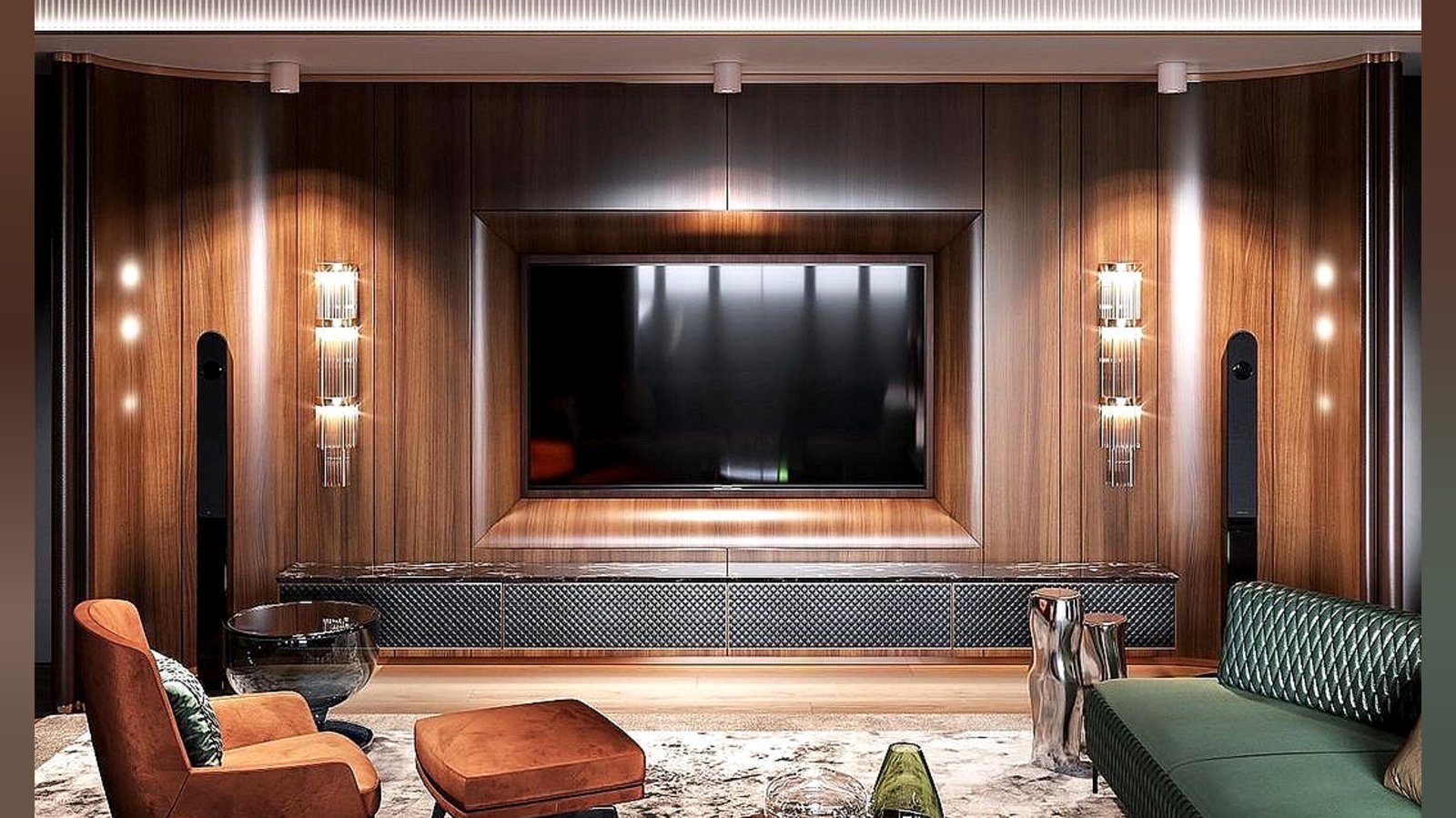
A TV unit sits where the eye rests most in a living room: beneath the screen, often on the main wall. Its surface therefore has to be decorative and able to handle daily use. Remotes, a games console and decorative objects sit on it, it is wiped often, and warm air comes from the back of the equipment. The material should be chosen according to how it copes with each of these conditions.
What tests a TV unit's surface
Before choosing, picture the unit's everyday life:
- dust — electronics build up static and dust gathers quickly on the top, so the surface will be wiped frequently;
- scratches — remotes, consoles and vases are slid across the top;
- glare — a glossy surface below and in front of the screen reflects light from windows and lamps;
- heat — receivers, consoles and other devices release warm air inside closed compartments;
- fingerprints — handleless doors are opened by pressing.
Knowing which of these is strongest in your home makes the choice much simpler.
Laminated board: practical and stable
Laminated chipboard is the most widely used material for TV units. The decorative layer is pressed on under high pressure, the surface is reasonably resistant to scratches and stains, and care is simple. Collections from manufacturers such as Egger and Kronopol include wood, stone, concrete and plain colour decors, and some come with a textured surface that echoes real wood grain.
The limitation of laminate is at the edges: the cut is covered with edge banding, and that line is visible on close inspection. For complex, curved or routed details, laminate offers limited possibilities.
Natural veneer: the look of real wood
Veneer is a thin layer of natural wood glued onto a board. Each panel has its own unique grain, and the depth and warmth of real wood cannot be fully reproduced by laminate. A veneered surface is finished with protective lacquer or oil, and the type of finish determines its durability.
Veneer has its own characteristics: its colour can change over time in strong sunlight, and a deep scratch can sometimes be repaired, unlike on laminate, but the surface needs more careful handling. Because it is a natural material, differences in grain and tone between panels are normal, so on a long unit the sequence of panels should be chosen in advance.
Painted lacquer: colour and sheen
A painted lacquer finish is usually applied to MDF fronts and allows almost any colour. It comes in gloss and matt. In routed, rounded or handleless designs, a painted surface gives a seamless look with no visible edge line.
There are two practical points here. A high-gloss painted surface reflects light beneath the screen and shows dust and fingerprints more. Matt lacquer does not create glare, but greasy marks can soak into some matt finishes more easily, so the manufacturer's care guidance should be followed. If a painted surface is chipped by a knock, repair can be harder than with laminate.
Combinations and technical details
Often the best result comes from combining materials. For example, the carcass and top are laminated, while the fronts are painted or veneered. This way the top withstands daily wear while the doors provide the decorative effect.
Whatever the material, these details should be planned in a TV unit:
- ventilation holes in the back panel, or an open back, in equipment compartments;
- cable openings in the top and internal divisions;
- a path for the remote control signal, since infrared may not reach a device behind a solid door — glass, perforated or open compartments solve this;
- for a wall-hung unit, fixings suited to the wall type and a structure matched to the load.
A quick guide to choosing
In a home with children or pets, where the unit is used heavily, laminate or a matt surface is more convenient. If the look and feel of real wood matter, veneer is the choice, but it needs protection from sun and careful care. If you want a specific colour, a seamless surface and minimalist form, painted fronts suit, bearing in mind that gloss reflects light in front of the screen.
Zaferoglu Mebel makes TV units to individual dimensions and uses Egger and Kronopol boards. Surface materials can be compared on samples according to the room's lighting and how the unit will be used.