
In many homes the best tableware comes out only a few times a year, for holidays and guests. The rest of the time it either hides at the back of a kitchen cupboard or sits on display behind glass in the living room. The second option is more enjoyable, but only if the furniture is well thought out: shelves that do not sag, light that does not heat the pieces, doors that keep dust out and a cabinet that does not wobble at the first accidental bump.
Display cabinet, glazed cabinet, sideboard: the difference
In everyday speech these words are often mixed up, yet their functions differ slightly:
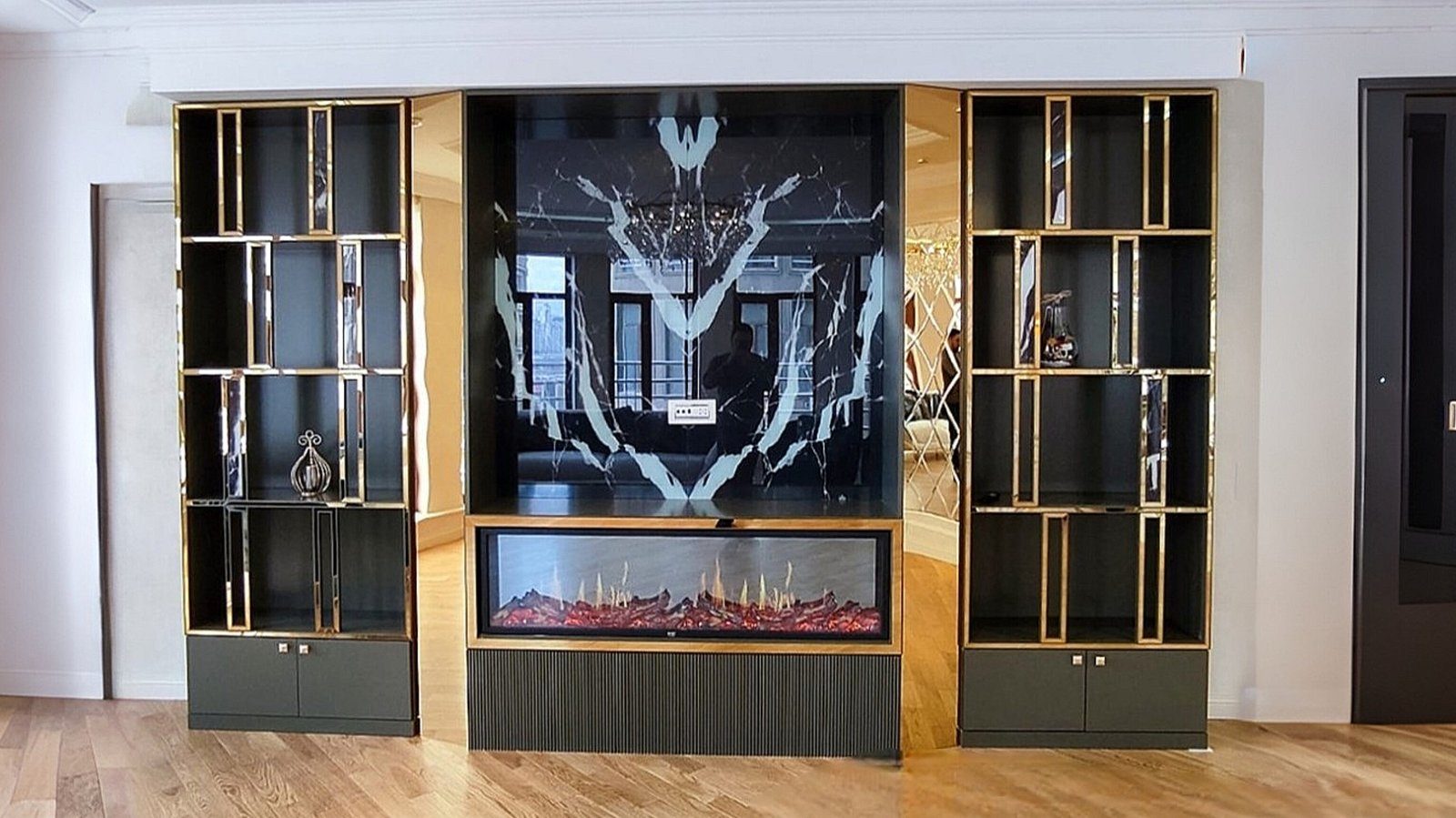
- A display cabinet is a tall unit with glass doors and often glass sides. Its main purpose is display; it has little or no closed storage.
- A glazed cabinet with a closed base — what is locally called a servant — has two parts: a glass-fronted display section above and cupboards and drawers below. Some tableware is shown, while tablecloths, cutlery and everyday dishes stay out of sight.
- A sideboard is usually waist-high, its top serving as a surface for dishes, and it may have no glazed section at all.
In a small living room a tall display cabinet is more space-efficient because it uses height rather than floor area. In a larger room with a dining area, a glazed cabinet with a base does more work: its top acts as a serving table when laying the table.
Shelf depth and load
Most mistakes are made with depth. Large dinner plates and platters are comfortable on shelves with an internal depth of 35–40 cm; on a shallow 30 cm shelf plates only fit standing upright. For glasses and cups a deep shelf is the opposite of convenient: you cannot reach the back row without lifting the front one. It therefore makes sense to vary shelf depth and height within one cabinet, for example a shallow shelf for glasses at the top and a deeper one for plates in the middle.
Glass shelves pass light downwards and look best in a display cabinet, but their thickness and span must suit the load. For heavy dinner sets, adding a central support in a wide section or alternating glass with board shelves is a sound solution. To display plates upright, a small groove or a retaining rail is built into the shelf so that they do not slide.
Lighting: show the pieces, do not heat them
Light turns a display cabinet from a piece of furniture into an accent in the room. Crystal and glassware sparkle when lit from above or from the side. LED sources are recommended here because they give off little heat and do not warm delicate pieces or glued joints. Hiding the light behind the door frame or inside the profiles keeps the light points out of sight. A mirrored back doubles the effect and shows pieces from behind, though it also shows dust twice.
Linking the light to the door or giving it a separate switch means the cabinet can serve as ambient lighting in the evening. Match the colour temperature to the room’s general lighting, or the cabinet will look like a separate patch of light.
Dust, knocks and safety
Few people want to wash displayed tableware every week. Silicone seals along the door edges and doors that close snugly against the carcass greatly reduce the dust getting in. Toughened glass is recommended for the doors, and soft-close hinges stop a door slamming and rattling the pieces inside.
A tall, narrow cabinet has a high centre of gravity and tends to tip, especially when the top shelves are full, so it must be fixed to the wall. In homes with children, locks or magnetic catches on low glass doors are sensible. Keeping the heaviest pieces low and the lightest, smallest items at the top improves stability and reduces the risk when taking things out.
Organising the closed base
The closed part of a glazed cabinet easily becomes a store for everything. Avoid that by planning the layout in advance:
- a shallow drawer with dividers for cutlery and serving utensils;
- a wide, shallow drawer for tablecloths and napkins so folded fabric does not crease;
- an adjustable shelf for platters and large dishes;
- a separate box for candles, candlesticks and seasonal decorations.
Before deciding, measure your largest platter and tallest piece, list what will be on display and what will be hidden, and check whether there is a socket on the wall where the cabinet will stand.
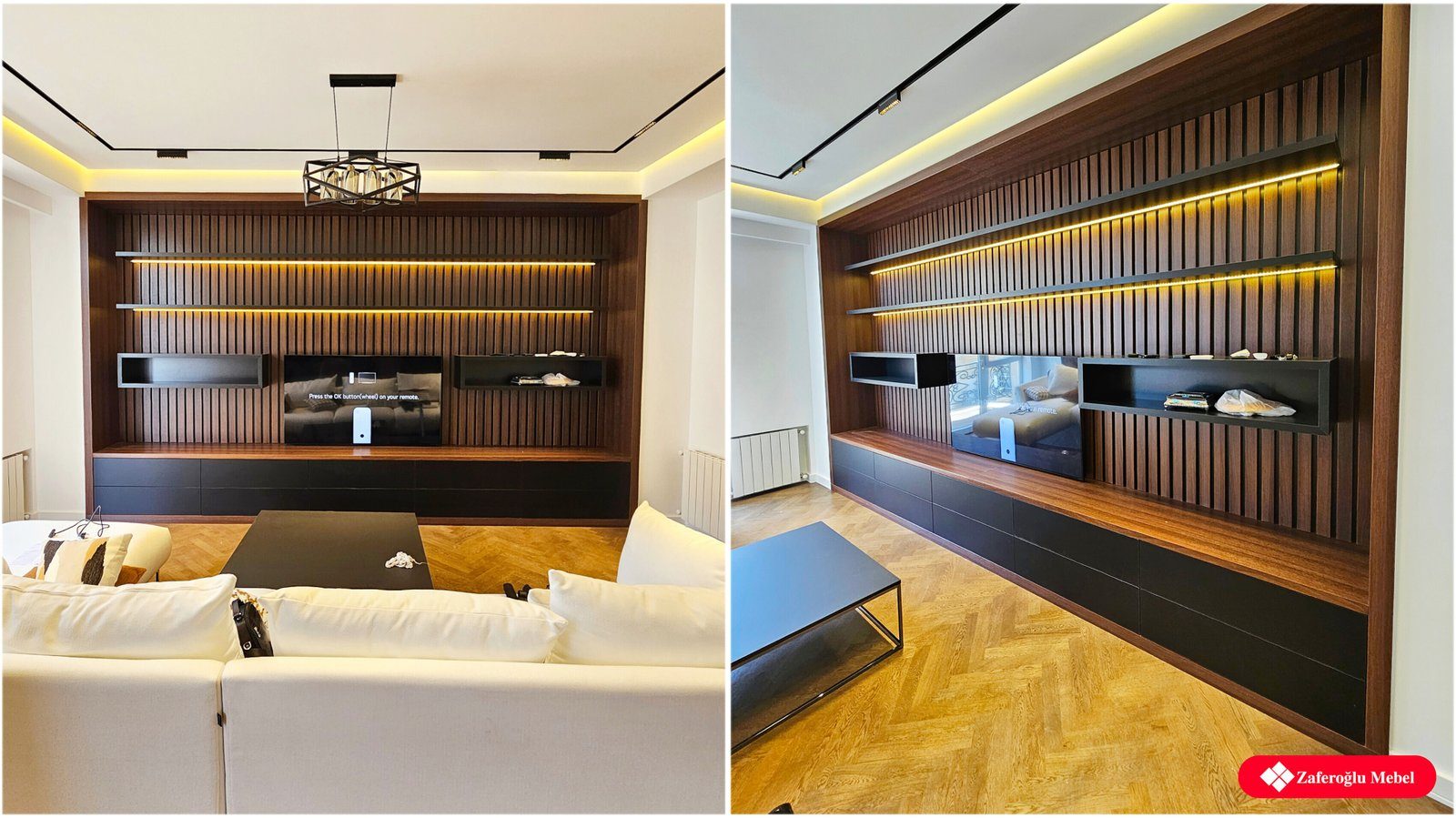
Zaferoglu Mebel can make living room storage such as display cabinets, glazed cabinets and TV units to individual sizes in one continuous line of fronts; shelf depths and lighting are set at the design stage according to the tableware to be stored.