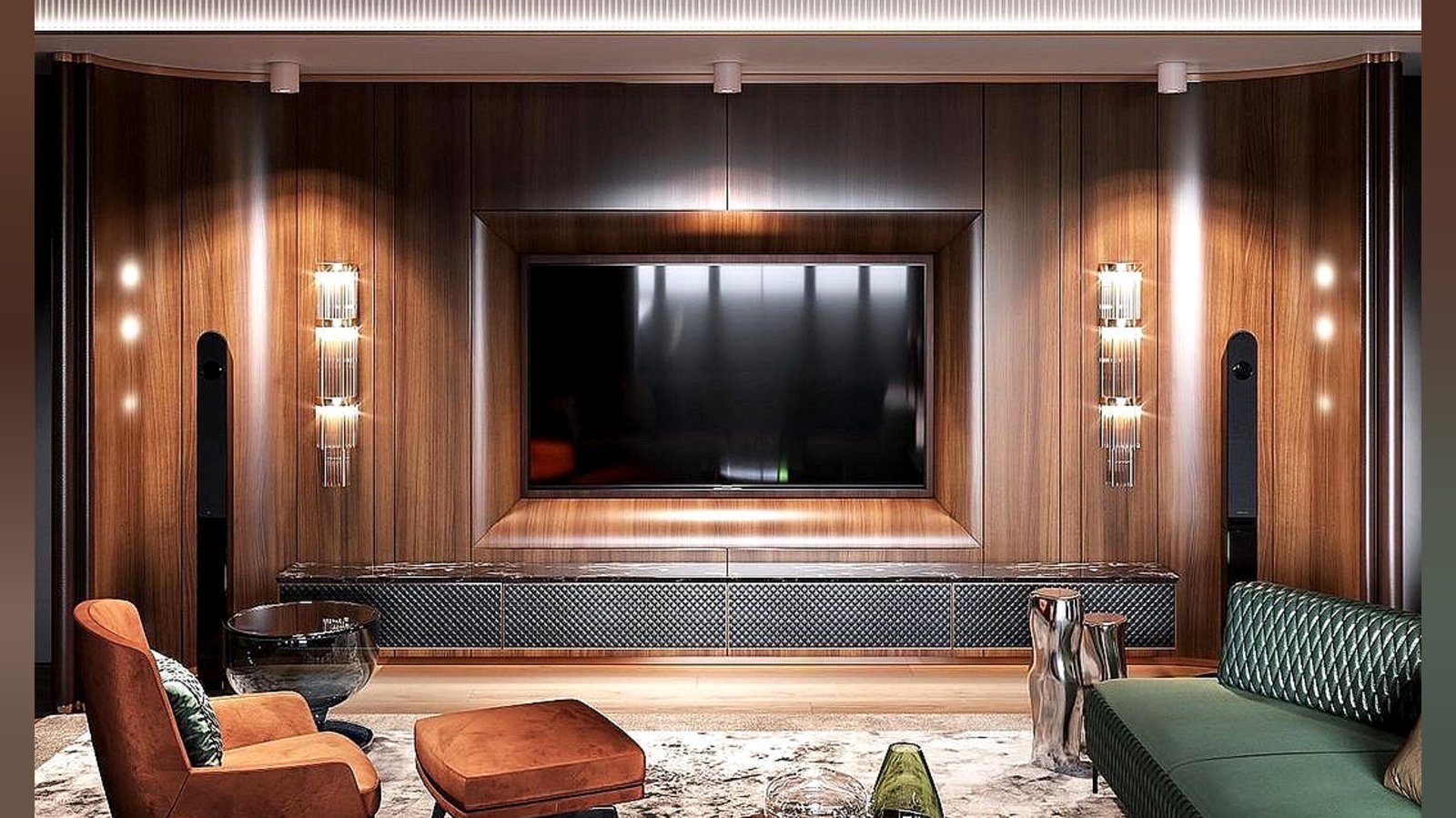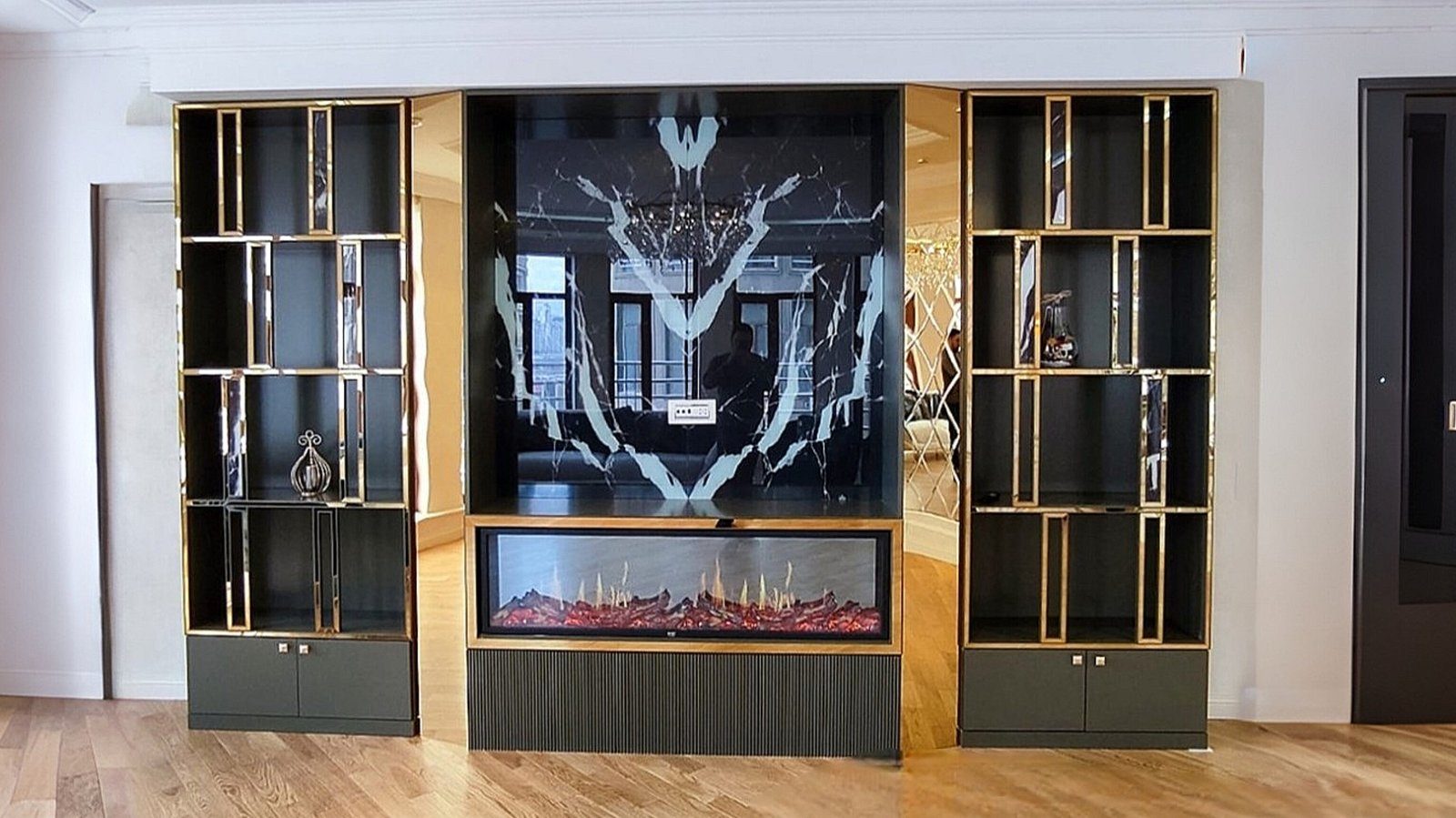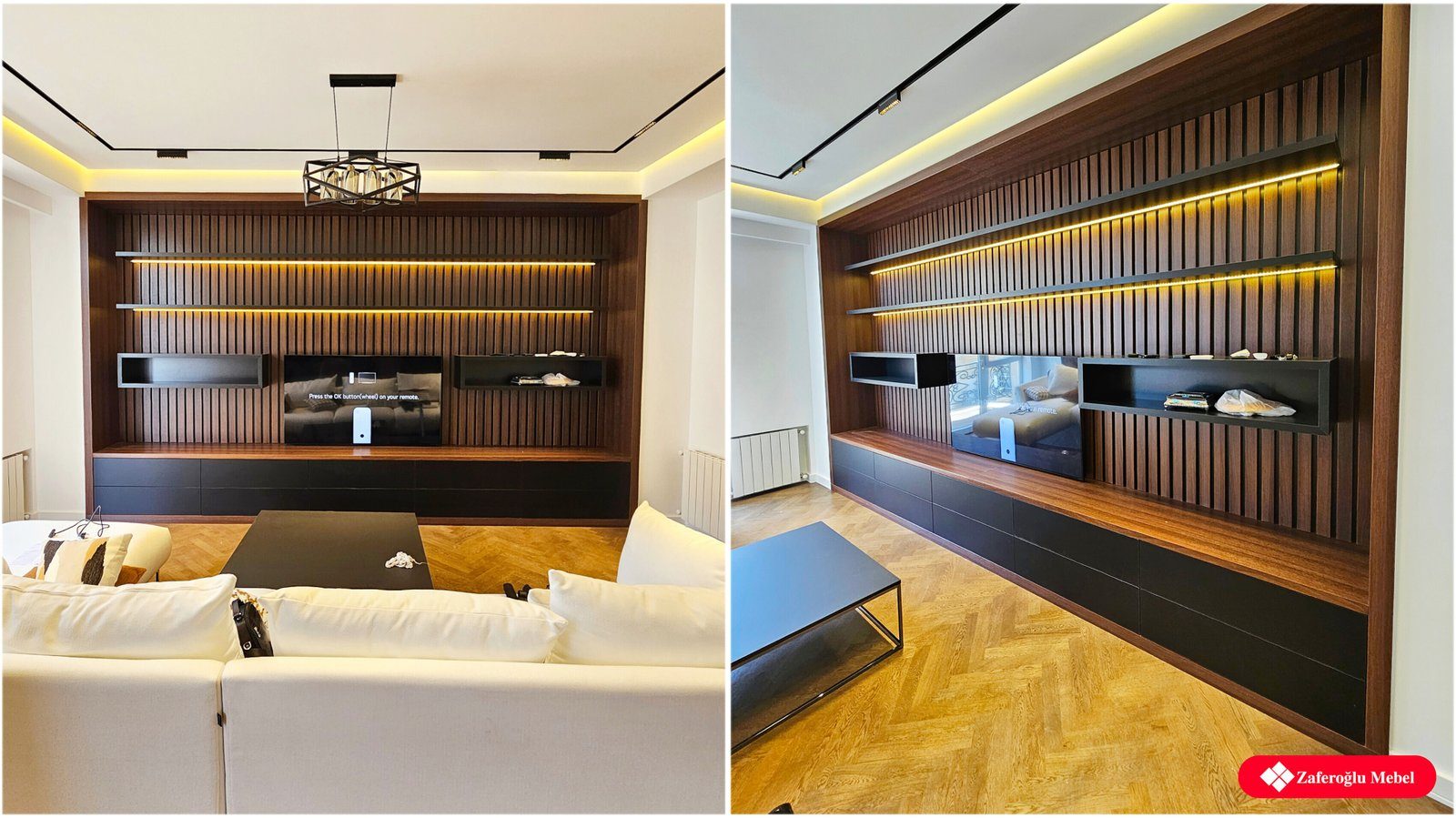

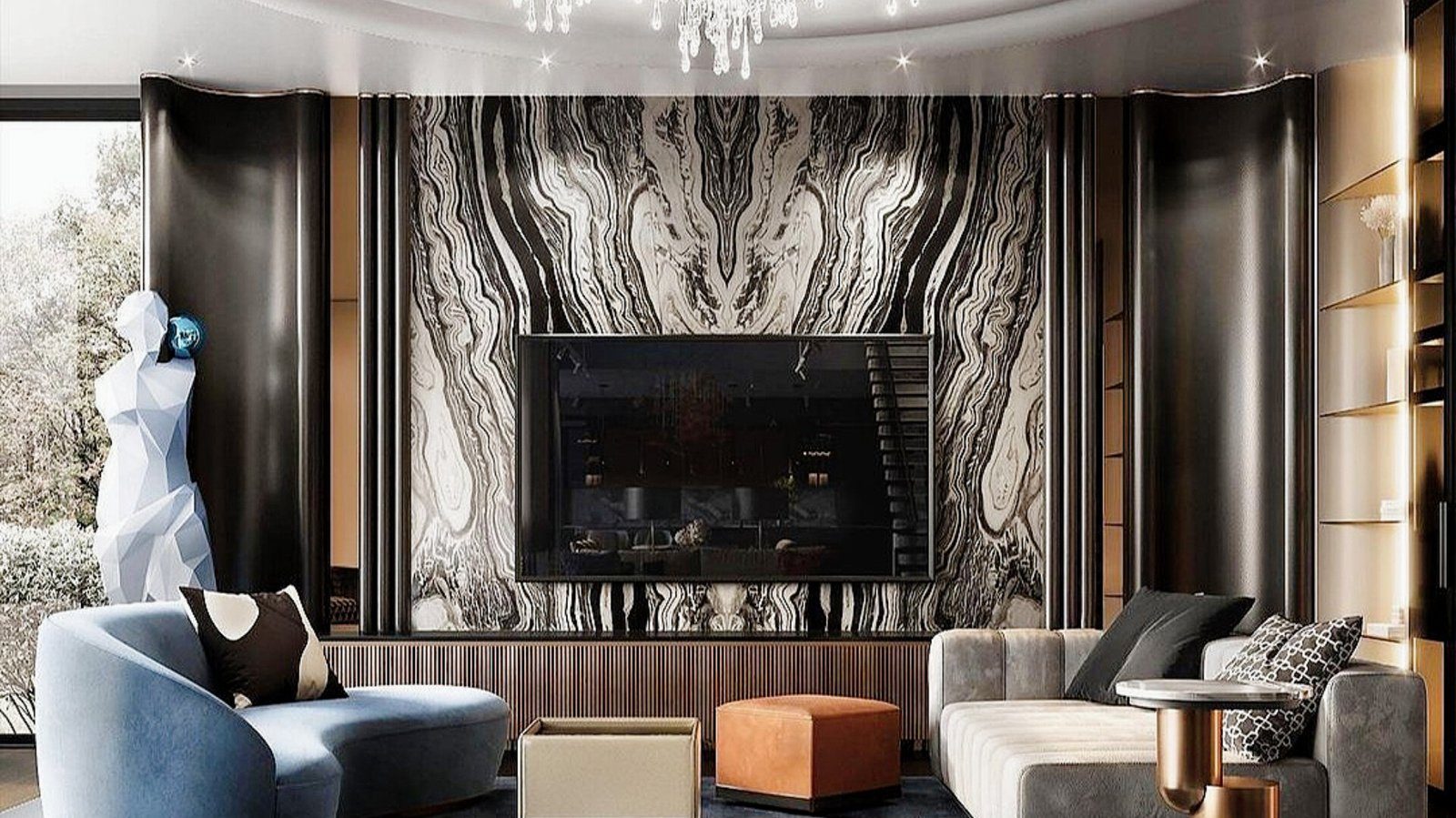
In the living room, the wall behind the television often becomes the main focal point. Cladding it in marble looks luxurious, but natural stone is heavy, needs specialist installation and is hard to integrate with furniture. Marble-look panels achieve a similar effect with lighter materials that suit furniture production.
Types of panel
Marble imitation is available in several materials, and each behaves differently:
- Laminated board (chipboard or HPL-faced). A printed marble decor is pressed onto the board under high pressure. It is cut with the same technology as furniture carcasses and edged with banding. It comes in matt, satin and gloss finishes.
- High-gloss acrylic or lacquered MDF panels. These give a deep shine and look closest to polished marble. They need care against scratches but reflect the room's light beautifully.
- Composite and polymer panels. Lightweight wall-cladding panels that come in large formats and reduce the number of joints.
- Thin ceramic slabs. The closest look to natural stone, but cutting and fitting them is a different trade altogether, and integrating them with furniture is more complex.
If the composition is to form one system with the furniture, laminated or gloss-finished panels are usually more practical, because they are made in the same workshop and to the same precision as the TV unit and shelves.
Veining and joint lines
How convincing a marble effect is depends largely on the veins. In natural stone, veins continue from one slab to the next. In imitation panels, if every board has the same pattern, the repeated motif is quickly noticed and feels printed.
What to watch for:
- Panel size. The larger the panel, the fewer the joints. Ideally there should be no joint in the central area behind the TV.
- Vein direction. Vertical veins make a wall look taller, diagonal ones add movement. All panels on one wall should run in the same direction.
- Symmetrical layout. Some decors allow two panels to be mirrored to create a book-matched effect, which is especially striking in a central composition.
- Tone. White-background Carrara-type decors look light and spacious, while dark Nero Marquina-type decors look dramatic and heavy.
When choosing a decor, look at a large real sample rather than a catalogue photo. A small square sample does not show the scale of the veining: a pattern that looks delicate on a piece a few centimetres wide can appear far too bold, or too fine, across a two-metre panel.
Composition with furniture
A marble panel works together with the TV unit, wall shelves and decorative lighting rather than on its own. The rule for balance is simple: if the panel is strongly patterned, the surrounding furniture should be calm, such as matt white, graphite or a natural wood decor. Marble plus gloss fronts plus gold details can easily look overloaded.
When planning the composition:
- fix the TV height and size in advance so that the most attractive part of the veining is not hidden behind the screen;
- plan a channel or conduit behind the panel for cables, because drilling a finished panel later spoils its appearance;
- make sure socket and aerial outlets do not coincide with panel joints.
Lighting
Lighting is what brings a marble effect to life. A concealed LED strip running along the top or side of the panel grazes the surface and picks out the veining. On high-gloss boards, light aimed straight at the front bounces off both panel and screen, so place the source at an edge instead. A soft glow behind the TV while watching also rests the eyes and gives the panel depth.
Care and durability
Laminate marble decors cope well with everyday wiping; a soft damp cloth and a mild cleaner will do. Gloss acrylic and lacquer scratch finely, so pick up dust with a damp microfibre cloth instead of dry-dusting, and skip abrasive creams and alcohol glass sprays. A practical bonus for families: unlike real stone, the imitation is not etched by acidic drips such as fruit juice.
Zaferoglu Mebel builds TV walls to size, so the marble-look panel, cable routes and lighting can be planned around the exact wall width and your TV model.