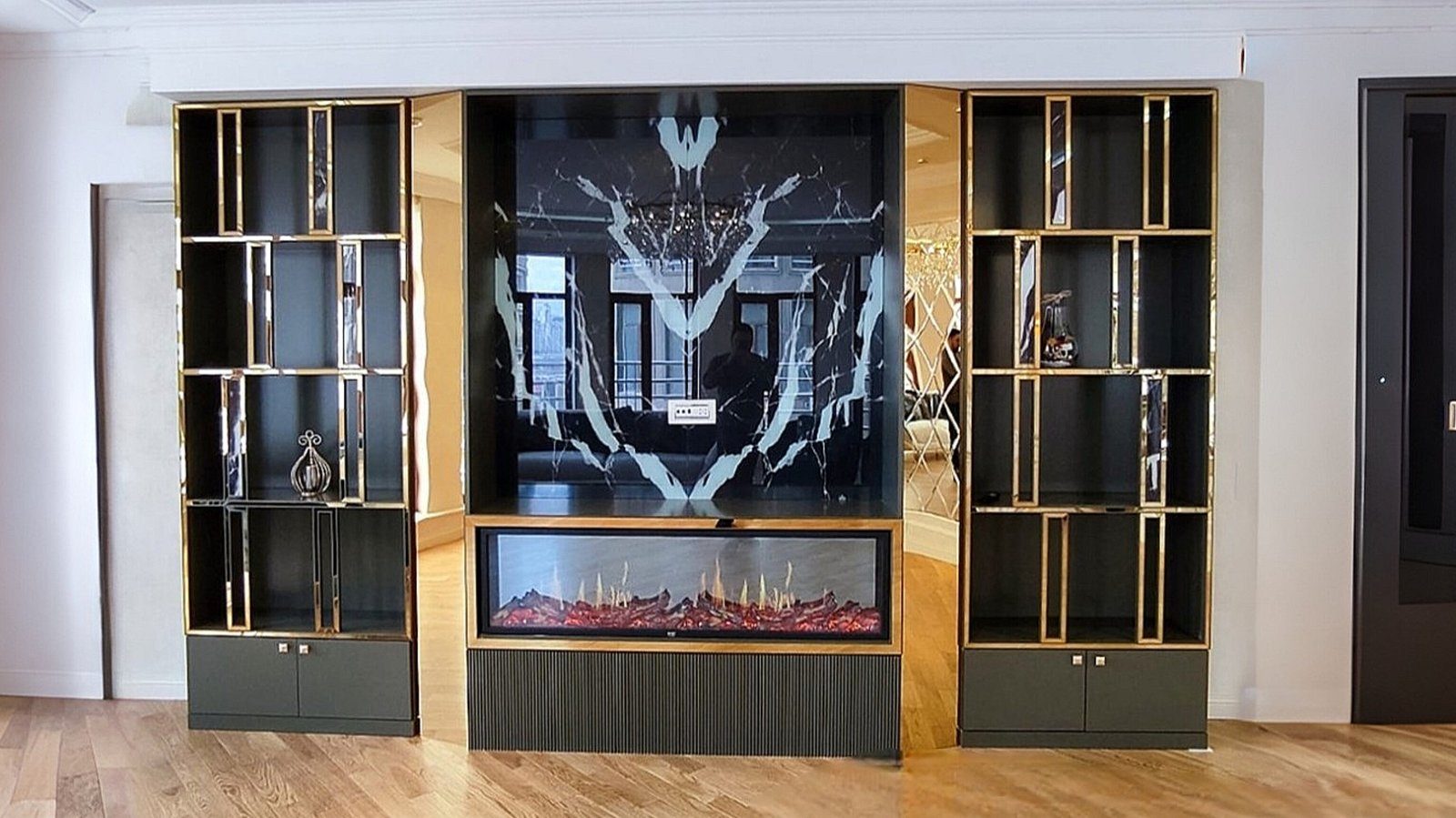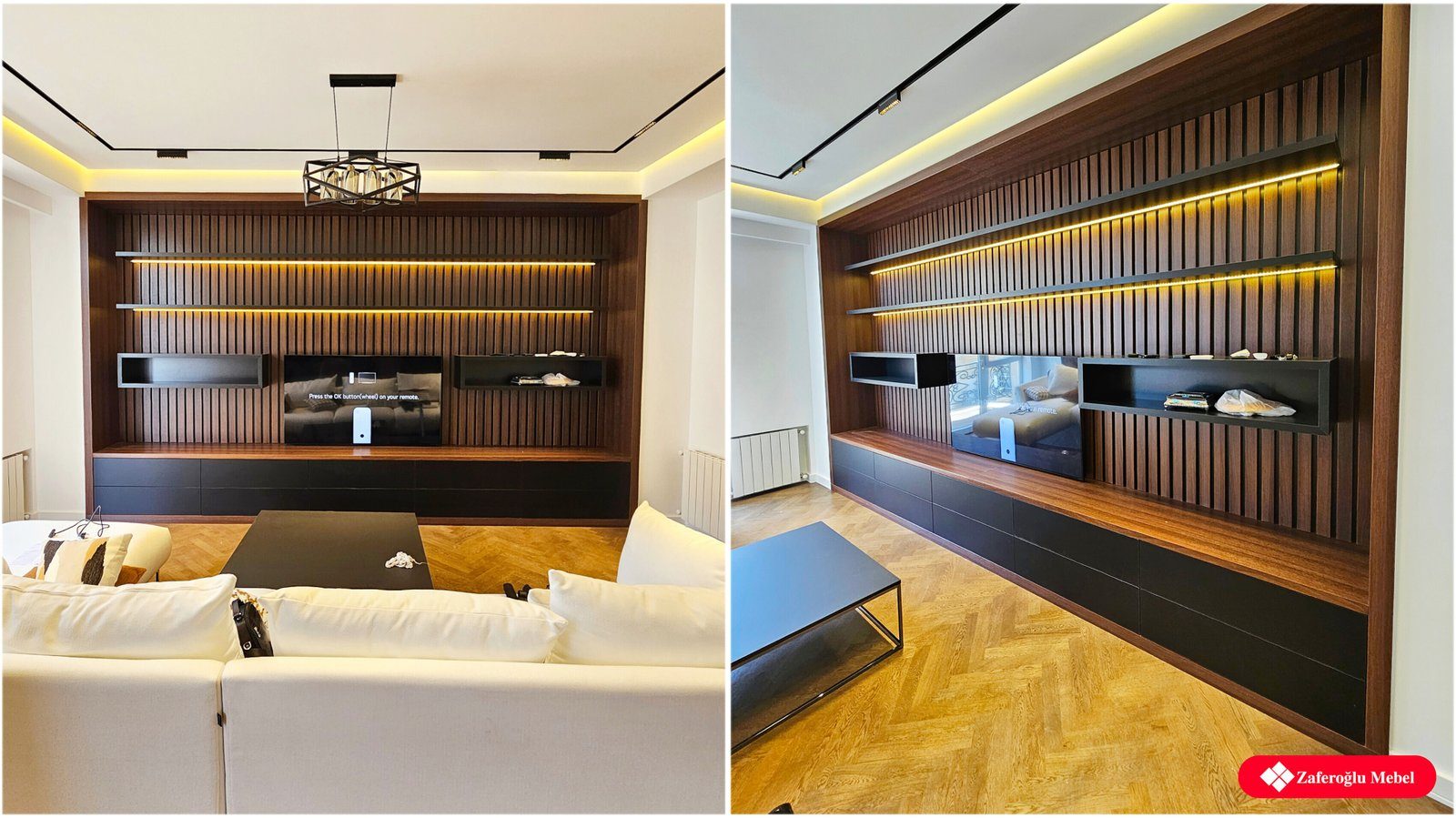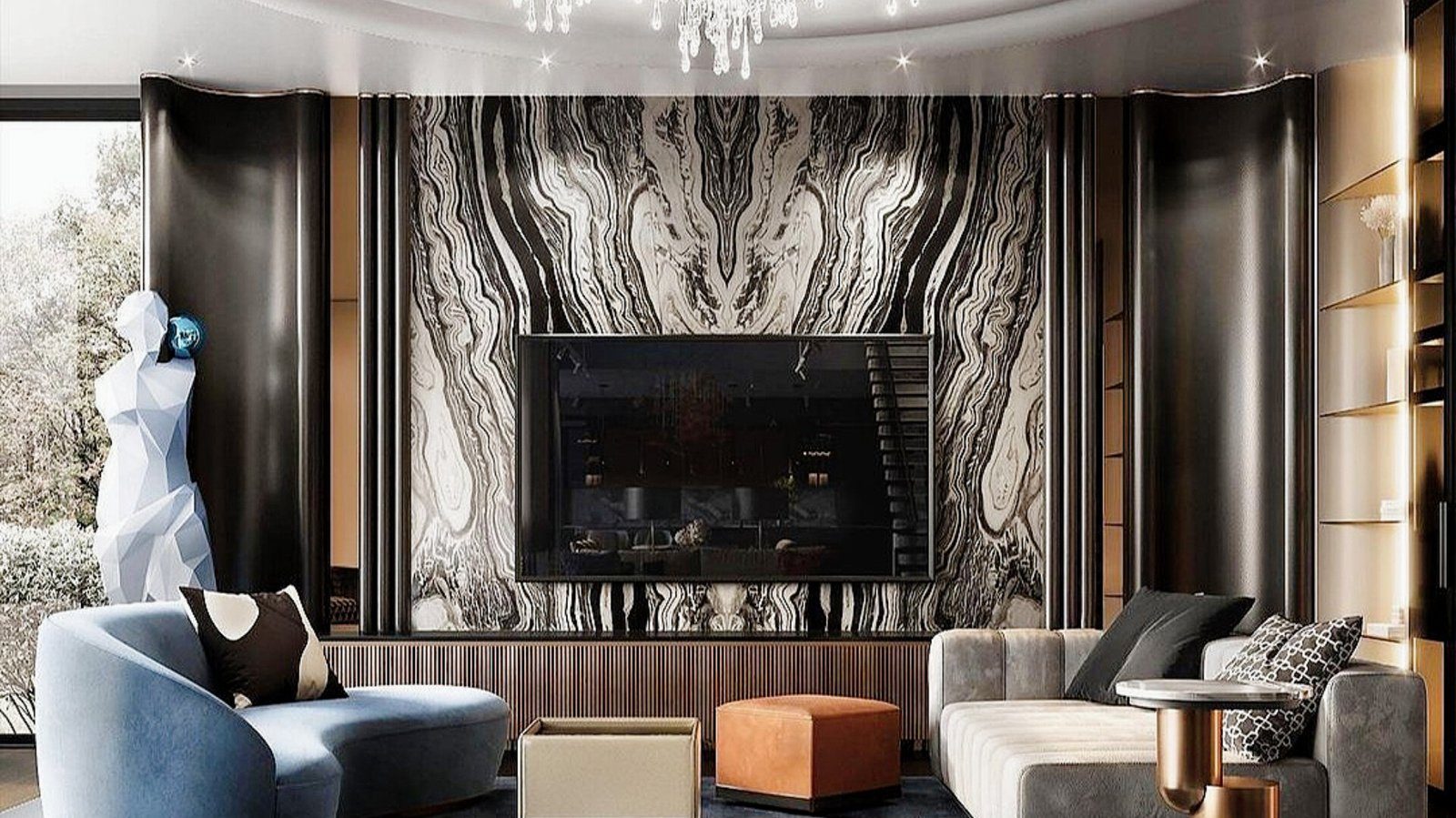

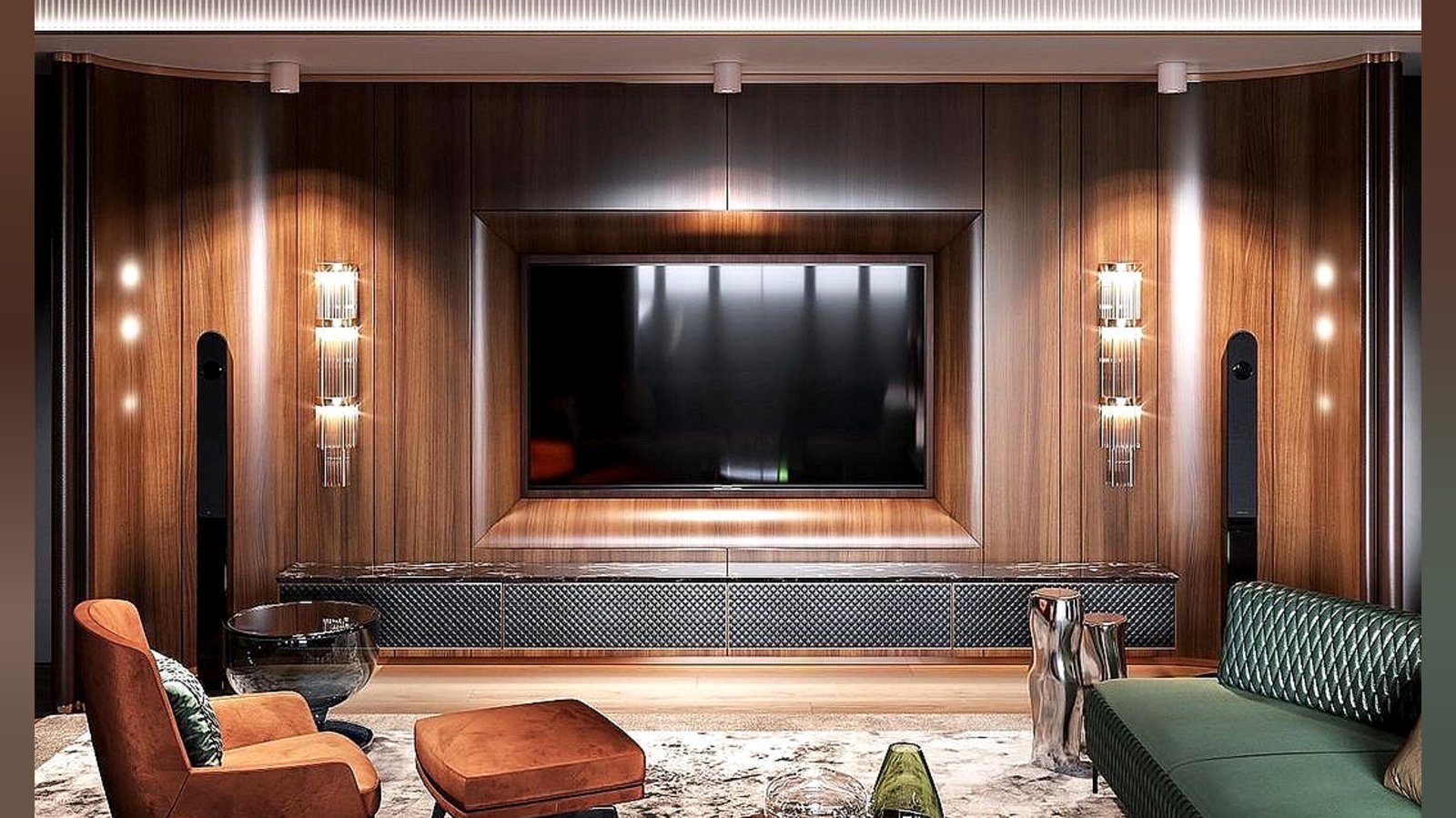
In a living room, the TV unit is often the largest piece of furniture in view, and what spoils its look most is rarely the furniture itself but the cables around it. The TV, sound system, router, games console and set-top box each have a power lead and a signal cable. When this is solved at the design stage rather than after the unit arrives, the result is both tidier and safer.
Start with a list of devices
A cable plan starts with an exact list of devices. Note which will sit inside the unit, which will stay on the wall or behind the TV, and what might be added later. Consider each device's size, especially its depth and the bending room needed for cables coming out of the back. An HDMI cable pressed against a back panel takes space and can be damaged if bent too sharply.
Where the wall sockets and aerial point sit is fixed at this stage as well. If a socket falls in the middle of the back panel, a cut-out is made to line up with it; if not, a power strip goes inside the unit.
Cable routes: grommets and channels
In a tidy unit, cables do not run where they can be seen. There are several practical solutions:
- cable grommets in the back panel, round openings with plastic or metal rims so the cut edge does not chafe the wire;
- a vertical channel behind the carcass to hide leads running from a wall-mounted TV down to the unit;
- pass-through holes between compartments so cables can be routed from one device to another inside;
- a removable section of back panel, so new cables can be added later without pulling the unit away from the wall.
If the TV is wall-mounted, the leads from it down to the unit go either inside the wall or behind a decorative panel fixed to it. Running cables inside the wall is renovation work and should be agreed with an electrician.
Ventilation: devices heat up in closed compartments
Routers, set-top boxes, games consoles and amplifiers give off heat when running. Putting them behind solid fronts makes the unit look cleaner, but in a box with no airflow the temperature climbs, which can shorten a device's life and slow it down.
The fixes are simple: leave clear space behind and above each device, cut ventilation slots in the back panel or the base of the compartment, or use an open niche or perforated front instead of a closed one. The side of a console that exhausts air should never face a closed panel. The ventilation requirements given by each device's manufacturer are the most reliable guide.
Remotes and wireless signals
A closed front can block signals as well as air. An infrared remote needs line of sight to the device, so a set-top box behind a solid door will not respond. A glass front or an open niche solves this. A router's signal weakens when it is surrounded by metal and thick panels, so it is better kept on an open shelf or on top rather than shut inside.
Unit size and proportion to the TV
The cable and device plan also shapes the size of the unit. The internal height and depth of the equipment compartment are set by the largest device, such as a console or amplifier, with extra space behind for plugging in cables. In a unit that is too shallow, devices stick out and the fronts will not close.
If the TV stands on the unit, its feet or stand should sit fully on the top, and the screen should not overhang the unit much at either end, which keeps the composition balanced. If the TV is wall-mounted, the gap between the top of the unit and the bottom of the screen is planned around a soundbar or decor. Viewing is comfortable when a seated person's eye level is close to the centre of the screen, so the unit height is planned together with the sofa seat.
Planning checklist
- Do you have a list of all devices with their dimensions?
- Behind which part of the unit will the sockets and aerial outlet be?
- Does each compartment have a cable opening and a route between devices?
- Is there ventilation space for devices that get warm?
- Is the front of any remote-controlled device left open?
- Will it be possible to open the back panel later?
Zaferoglu Mebel makes TV units to individual sizes. If you bring a list of your devices to the measuring visit, cable openings and ventilated compartments are built in during production, so nobody needs to drill the furniture after installation.