
For a long time modern furniture was associated with straight lines and sharp corners. In recent years, though, arched niches, oval mirrors, rounded cabinet edges and softly contoured headboards have become common. This language of form is not a passing fad: curved lines are calmer to the eye, create no corners to catch in a small room's walkway and make a home with children safer. Used without restraint, however, soft geometry can make a room look like a toy.
The arch: niches, shelves and door shapes
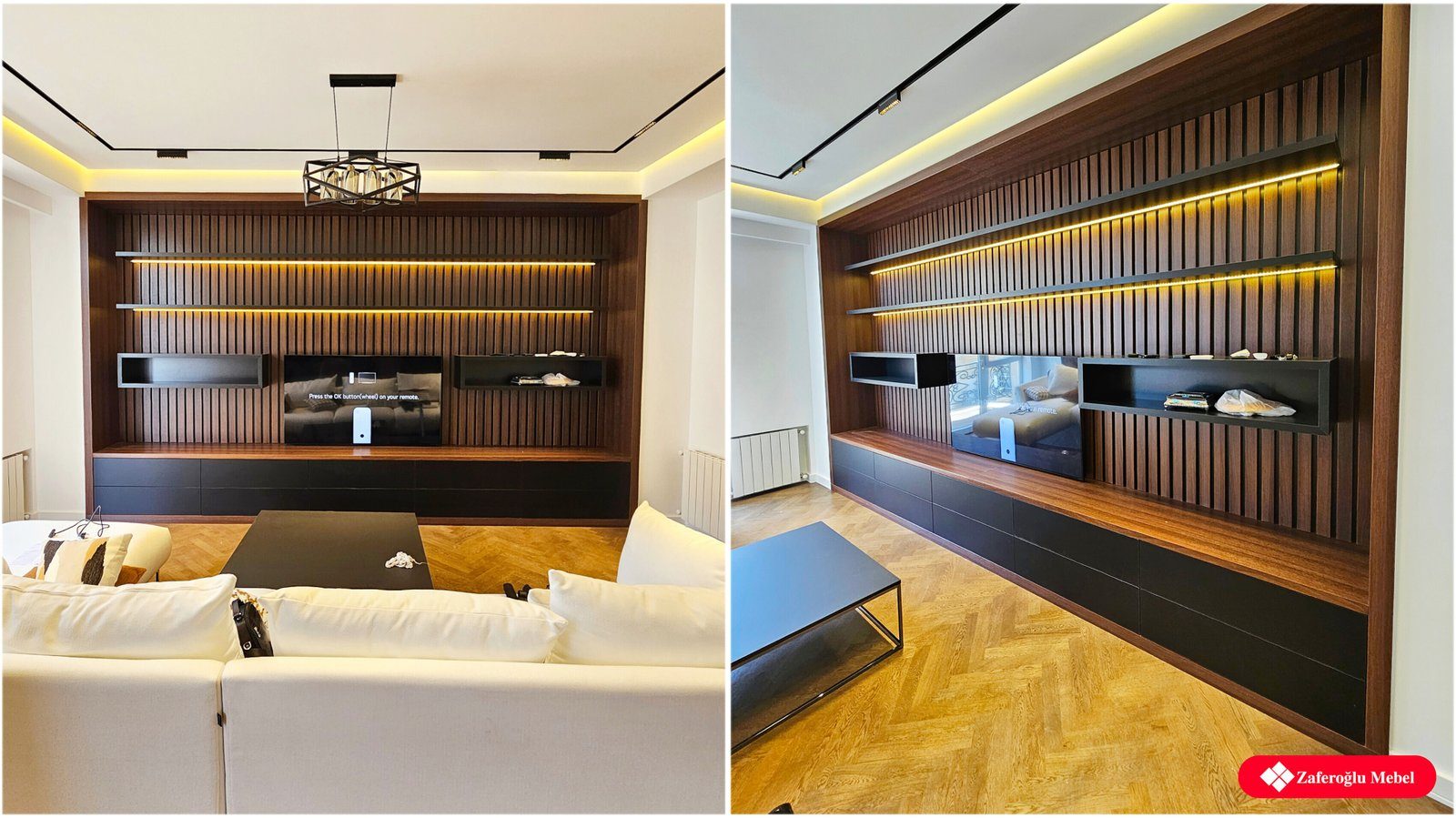
The most natural place for an arch is an open niche. In a wall unit, beside a TV stand or in bedroom shelving, a niche that ends in a semicircle at the top feels warmer and more "architectural" than a plain rectangular opening. Concealed LED lighting inside the niche picks out the curve and becomes a decorative light source in the evening.
Arched fronts — on wardrobe or sideboard doors, for instance — are a bolder choice. There are technical points to consider: because the top of the arch is cut as a curve, the edge of the front is shaped, and getting edge banding to bond tightly along a curve takes specific equipment and experience. Painted MDF suits this shape best, since the edge is painted along with the face and no seam shows. On laminated board the curved edge is banded, and the radius should not be too tight.
Rounded corners: practical softness
The most practical benefit of soft shapes appears in rounded corners. The sharp corner of a chest in a walkway, a desk in a child's room or a cabinet in a narrow hall can hit a hip, a knee or a child's head every day. A larger corner radius reduces that risk and also makes the furniture look lighter.
Making the ends of open shelving semicircular is another popular solution. When a run of shelves along a wall finishes in a curve at the corner, a person entering the room does not meet a sharp edge, and the shelving seems to flow out of the wall. Such curved shelves are made either from bent board or from several joined pieces; in both cases the neatness of the joint is a sign of quality.
Oval mirrors and headboards
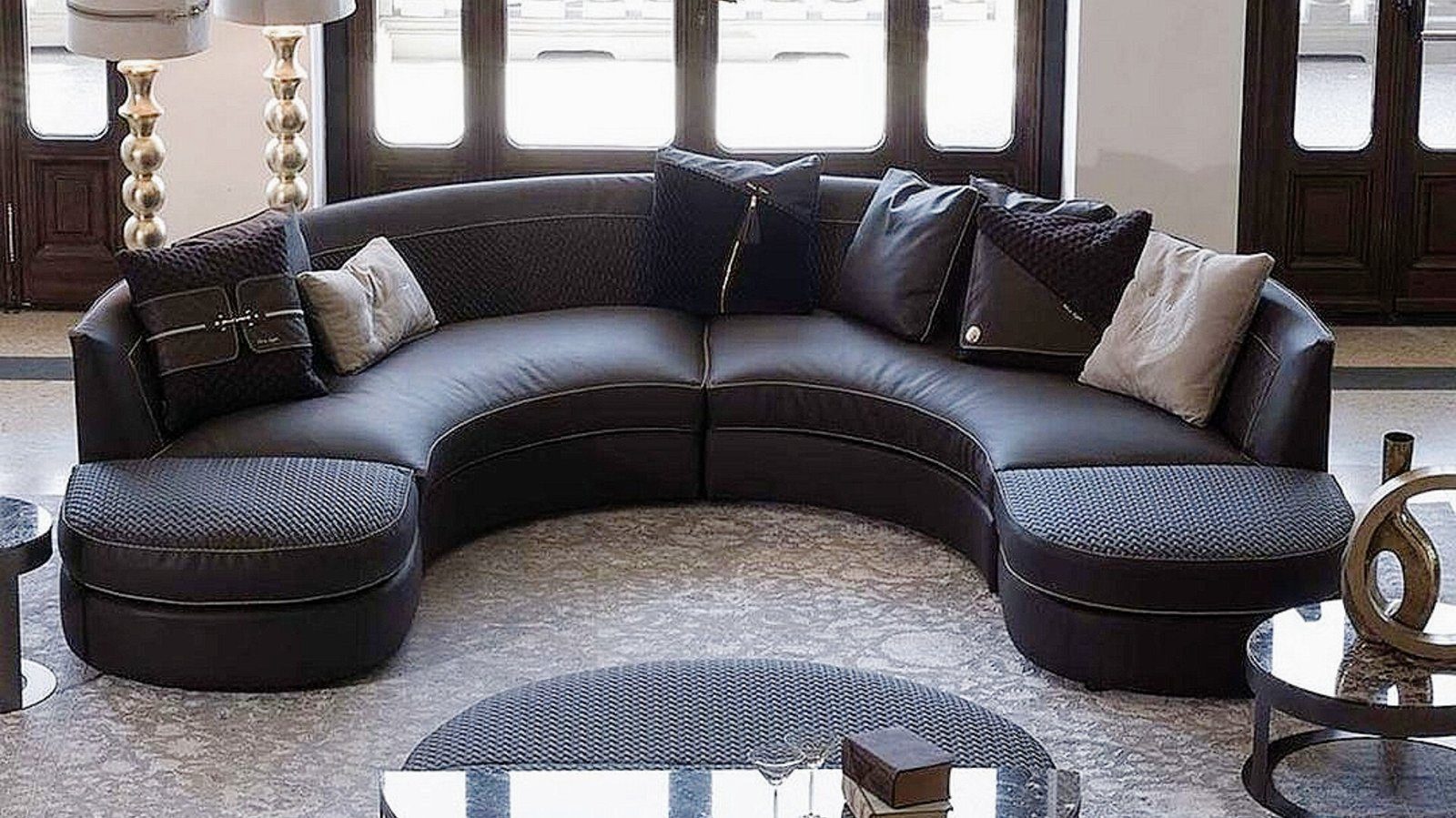
Oval and arched mirrors add a soft accent against rectangular furniture. In a bathroom, a hallway or above a bedroom dressing table, an oval mirror balances hard lines. Size the mirror to the width of the furniture beneath it: a mirror much narrower than the cabinet gets lost, while one wider than it makes the composition top-heavy.
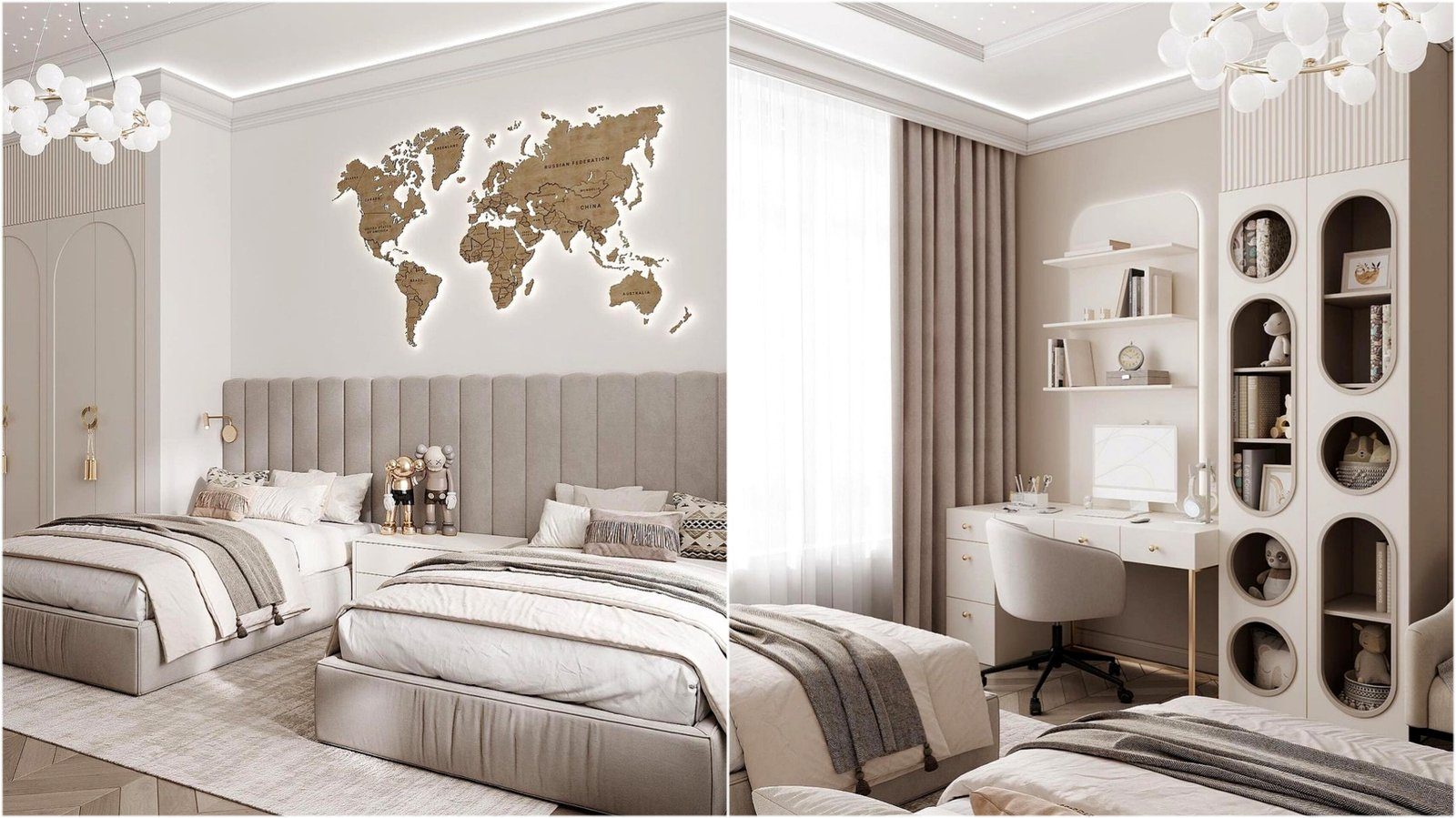
In the bedroom, an upholstered headboard with a rounded outline is one of the calmest ways to use this language. When the top line of the headboard is an arch or a gentle wave, the bed reads more clearly as the room's centrepiece. Bedside tables with rounded corners but otherwise simple shapes do not compete with it.
Soft geometry in the children's room
Arches and ovals feel most at home in a child's room, where they look friendly and also help with safety. Arched shelving reads as a little house for books and toys, and rounded corners on a wardrobe or desk mean fewer bruises. Overdo the curves, though, and the room ages fast, since very childlike shapes will not suit a teenager. Keep the big pieces in calm forms and put arches and waves on shelves and décor that are easy to replace.
Rules for balance
- Choose one leading shape per room: arch, circle or soft wave. All of them together create visual clutter.
- Balance curved elements with straight lines: an arched niche looks more striking between rectangular fronts.
- Match the radius to the size of the piece: a very large radius makes a small cabinet look bloated.
- Look at a sample of the edge finish on curved fronts.
- If an arched niche will be lit, define the electrical run before the furniture is made.
Zaferoglu Mebel works to individual designs in a workshop fitted with high-tech machinery. Sizing arched and oval elements and choosing their material alongside the rest of the furniture at the design stage helps the whole composition hang together.