
Loft style grew out of converting old factories and warehouses into homes. High ceilings, large windows, exposed structure and materials left ‘as they are’ form its basis. The furniture follows suit: simple, sturdy and functional, with metal frames, dark wood, open shelving and minimal decoration. Today loft elements are widely used in ordinary flats, offices and cafés. A good result, though, takes more than choosing black metal and dark colours; the balance of materials and practicality need thought.
Metal: frames and details
In loft furniture metal is mostly used for frames: desk legs, shelf supports, the frame of a TV unit, the outline of a headboard. Usually steel box or square section is chosen and finished with powder coating. Powder coating forms an even, tough layer that resists scratches better than ordinary paint. Matt black and graphite are the most common, though dark bronze or a raw metal effect are also used.
The quality of a metal frame shows in the neatness of the welds and the rigidity of the structure. A long shelving unit or wide desk should not wobble when loaded; back braces or diagonal members may be needed. Plastic or felt pads under metal feet stop them scratching the floor.
Wood: natural veneer or wood decor
In a loft, wood balances the coolness of metal. Dark walnut, smoky brown oak and weathered wood effects are the most popular tones. There are two main routes. Natural veneer gives the real figure and depth of wood, but it is more sensitive to care and every leaf is different. Laminated board with a wood decor is more durable, easy to look after and consistent in colour, and modern decors have a convincingly realistic texture.
For surfaces that see heavy use, such as desks, kitchen fronts or office furniture, laminated board is the practical choice. For pieces touched less often, such as a living room TV unit or sideboard, natural veneer can add to the look.
Open shelving: looks and practicality
Open metal shelving is the most recognisable loft element. It looks light, does not visually divide the space and puts books, plants and tableware on display. But open shelves gather dust and everything on them is visible. Untidily arranged items quickly turn the simplicity of a loft into clutter.
The practical approach is to mix open and closed storage. Items meant to be seen go on open shelves, while things needed daily but not meant to be on show go in closed cupboards or drawers below. This combination preserves the style and works in everyday life.
Keeping a room from feeling heavy
Loft furniture often comes in dark tones and looks great in a large, tall space. In a small room with a standard ceiling, the same furniture can make the room feel cramped. A few rules help keep the balance:
- place dark furniture against light walls or flooring;
- choose pieces raised on legs with visible floor underneath instead of solid dark carcasses;
- prefer slim metal profiles;
- next to dark surfaces, use warm light and textiles such as wool, leather and linen.
This keeps the character of a loft without making the room cold and dark.
Loft in offices and commercial spaces
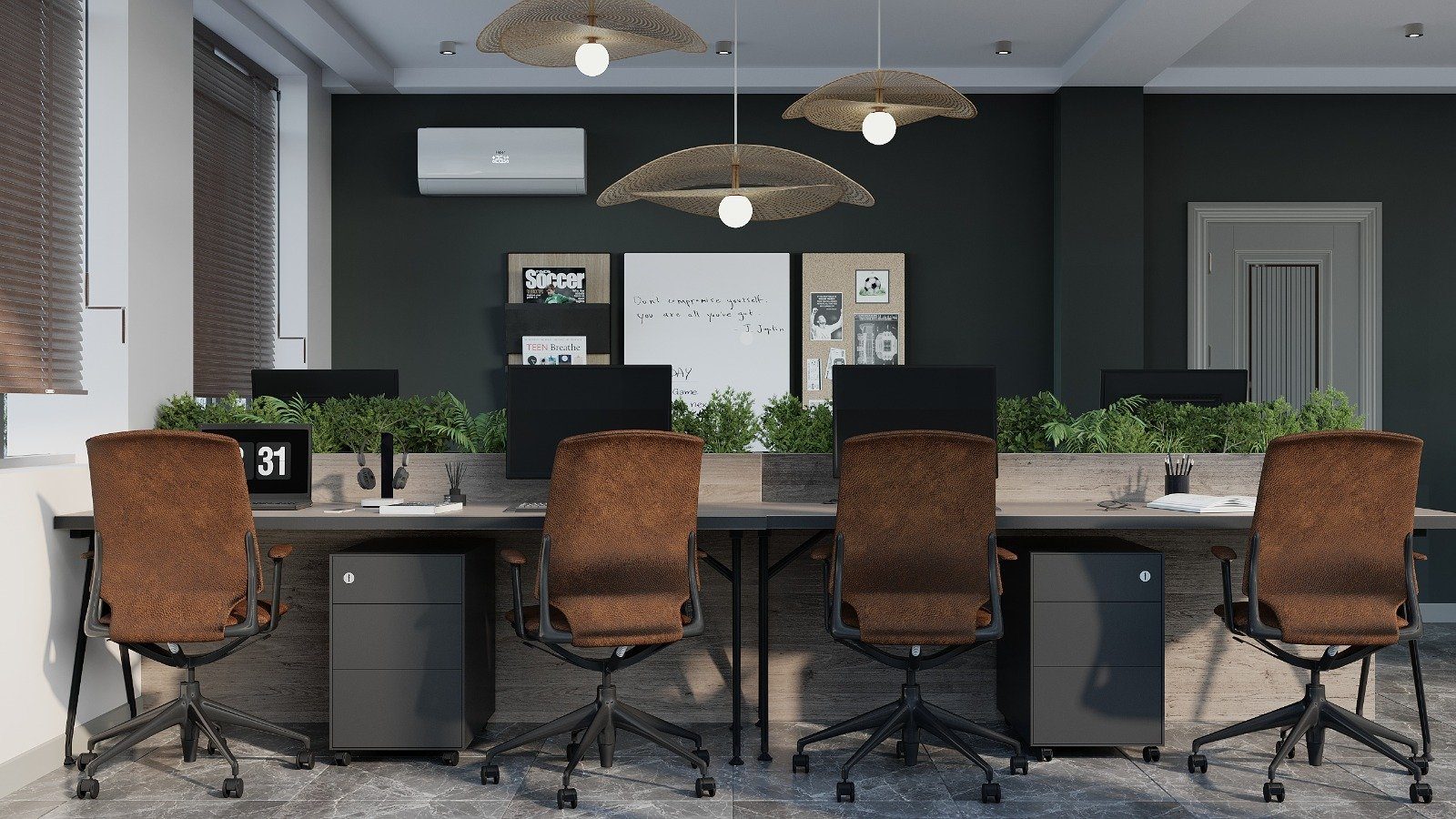
Loft style is also popular for offices and cafés, because its materials stand up to heavy use. Desks on metal legs, a meeting table in dark wood decor and open shelving used as dividers look contemporary and are easy to clean. In offices, hiding cables is especially important: on an open-frame desk wires are immediately visible, so cable channels should be planned in advance.
Checklist
- Is the metal frame powder coated?
- Do loaded shelves and desks wobble?
- Is the wood surface natural veneer or laminate decor, and does it suit the level of use?
- Is there closed storage alongside the open shelves?
- Does the dark furniture balance with the room's size and light?
Zaferoglu Mebel makes furniture for homes and offices with individual design. Choosing loft elements to suit the size and light of your space lets you combine the appeal of the style with everyday comfort.