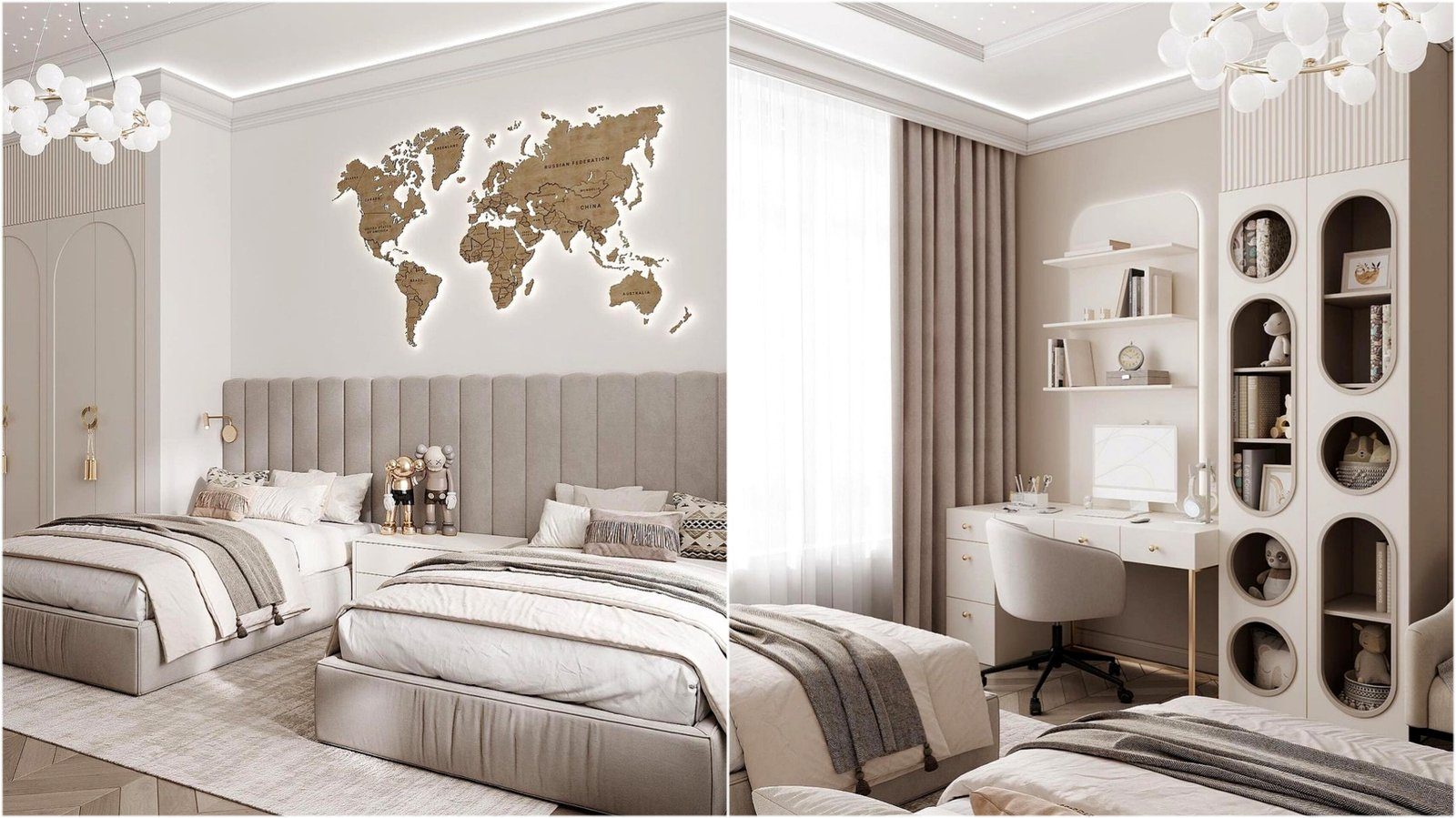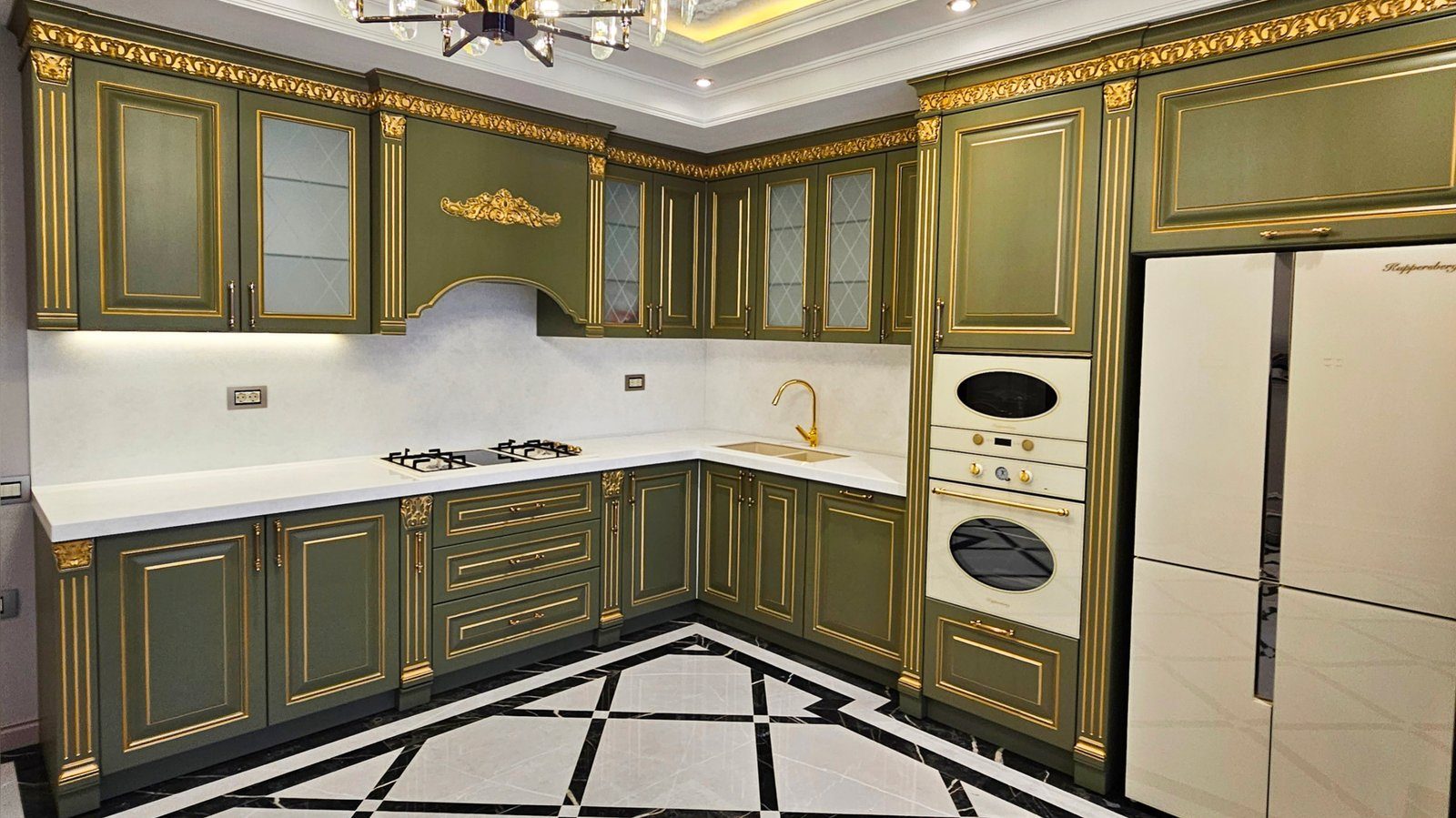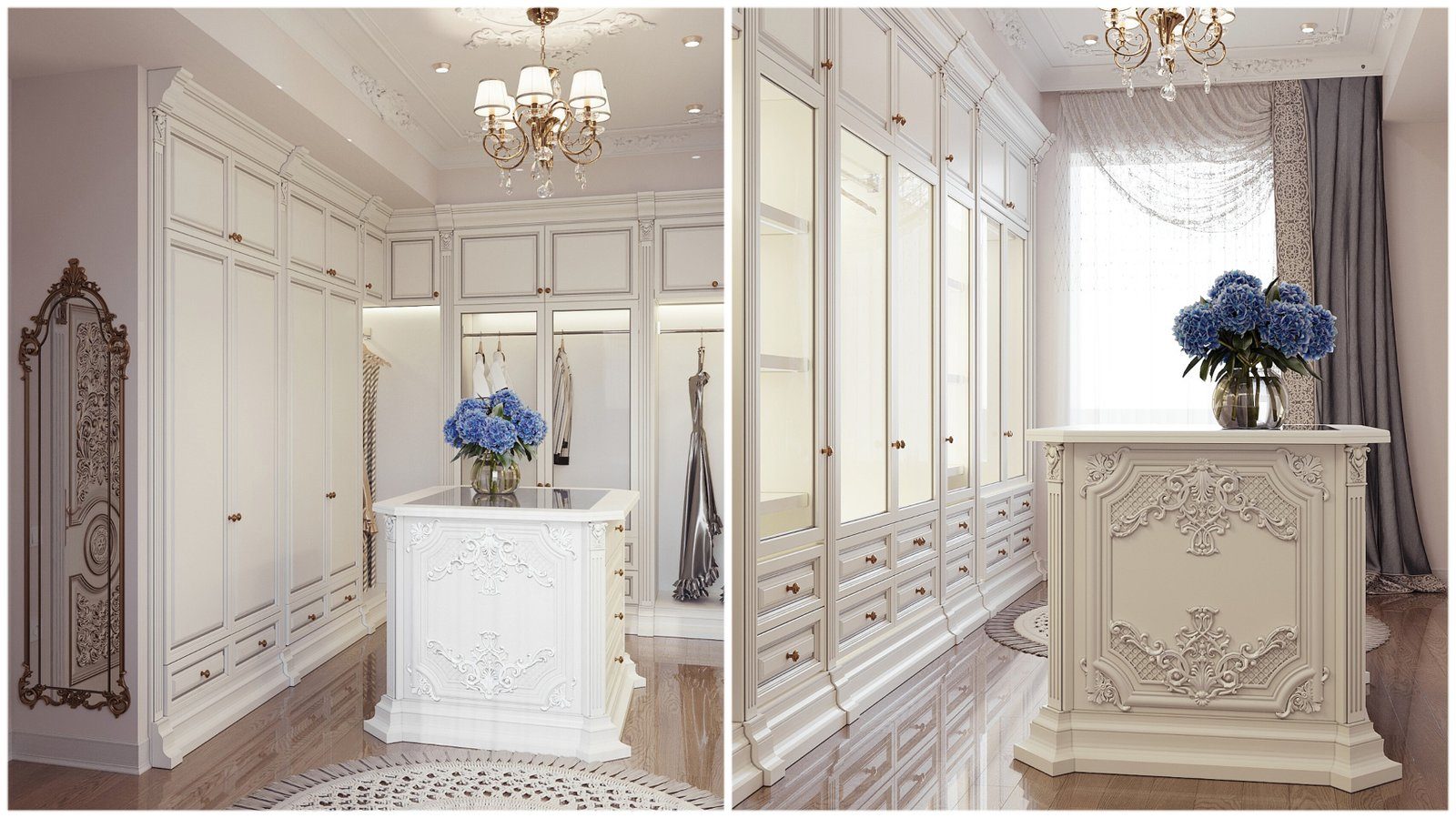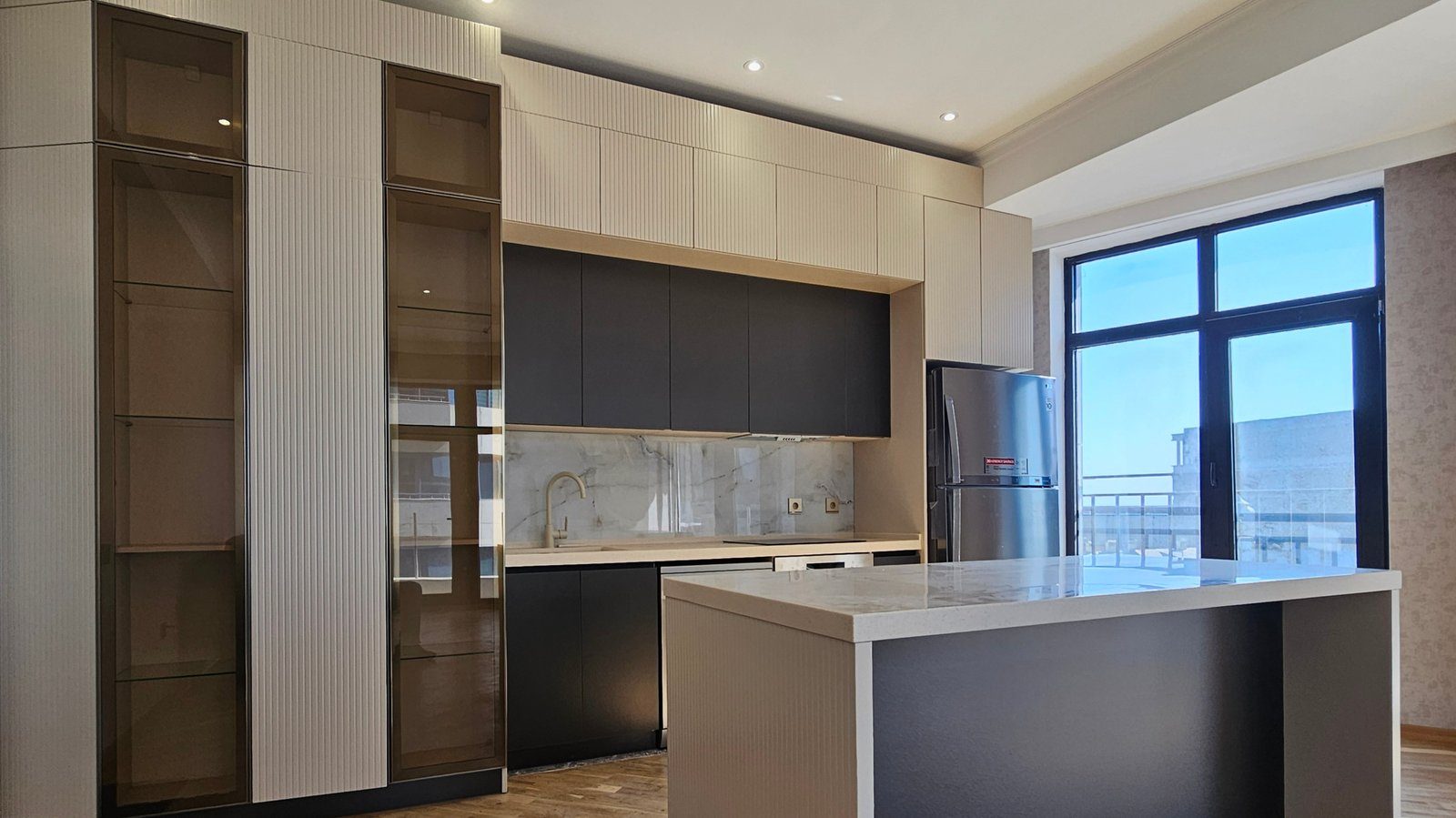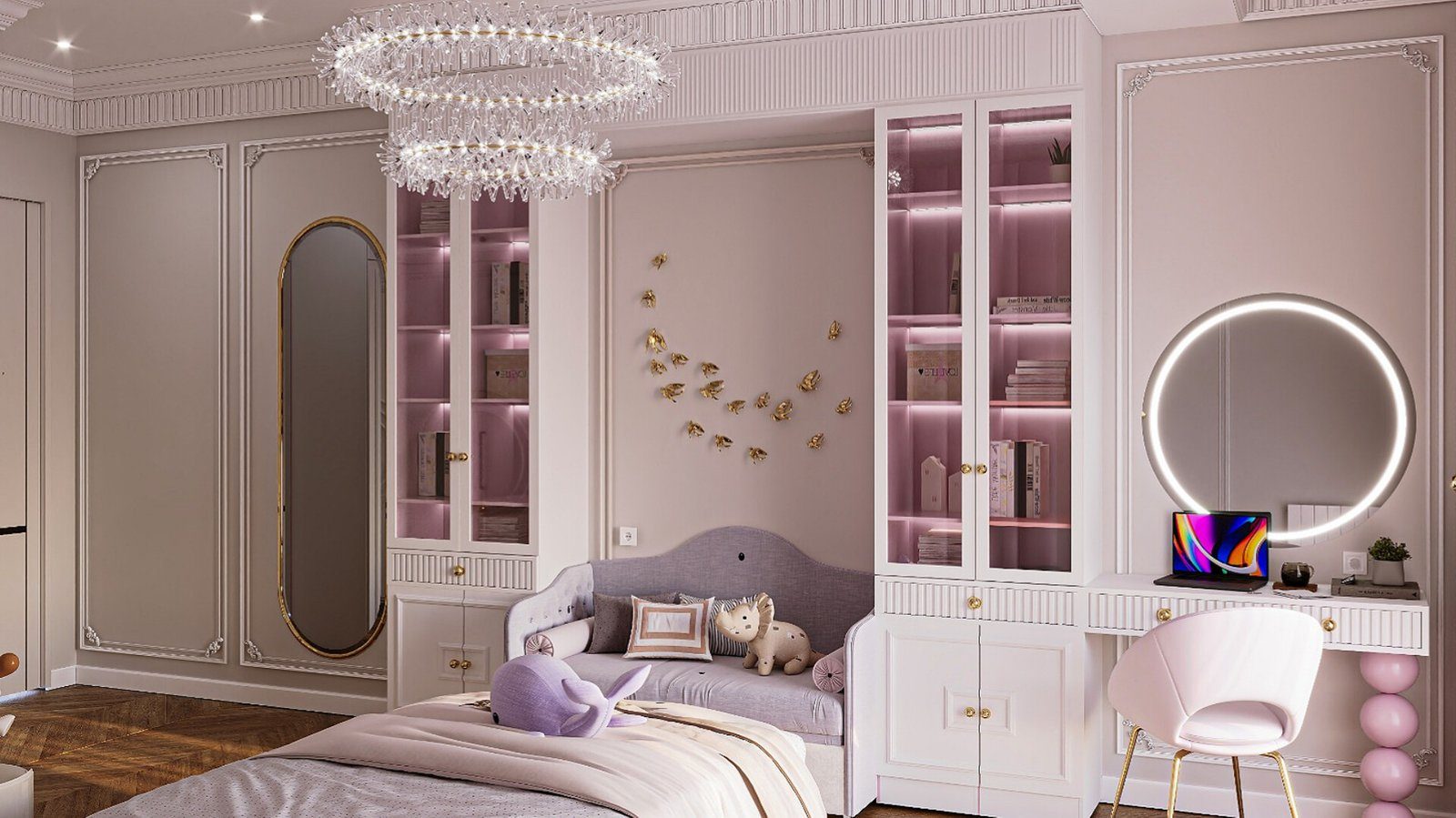

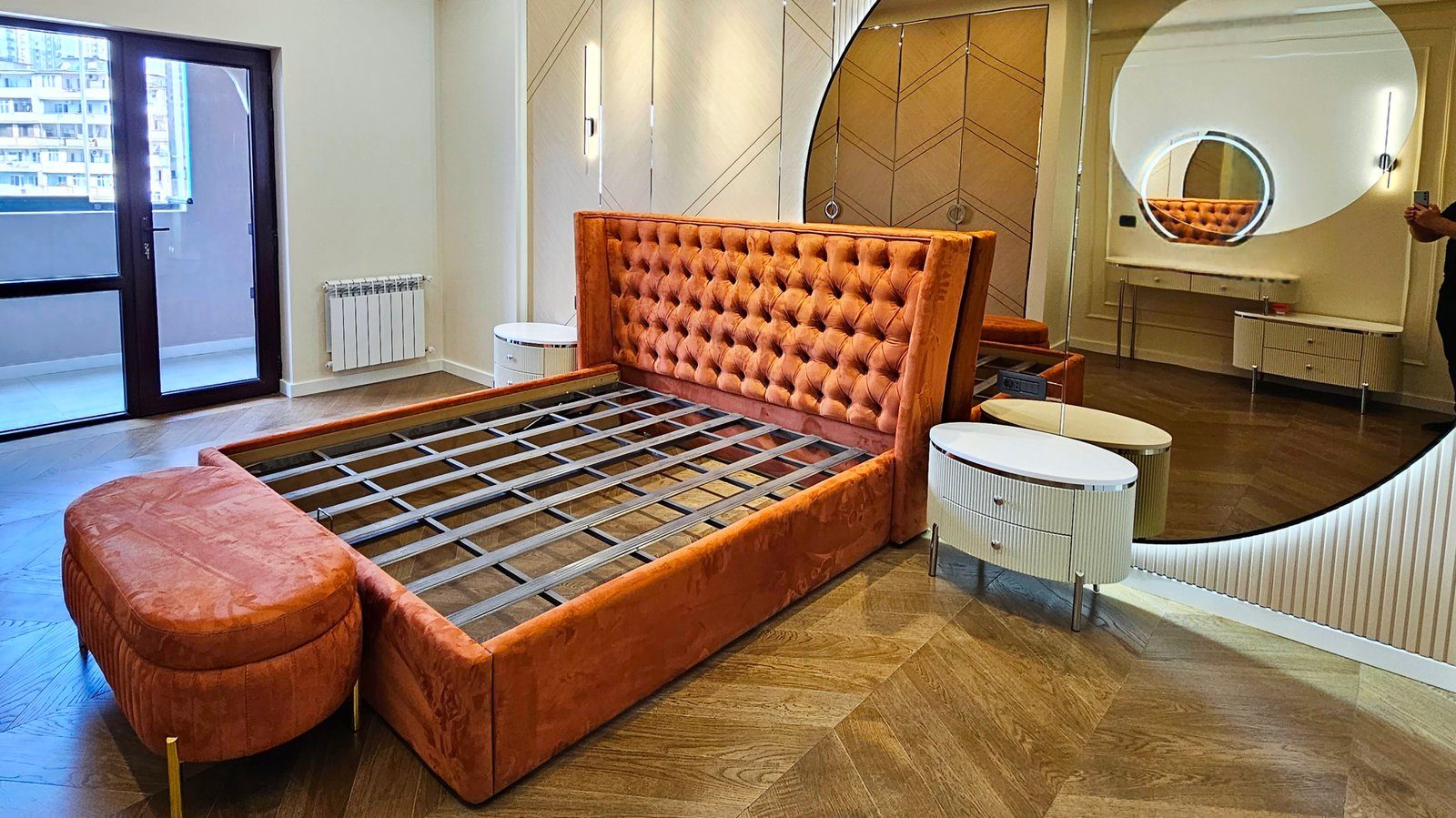
Even with exactly the same pieces, a room can feel completely different depending on how they are arranged. Matching bedside tables and lamps on both sides of a bed give a calm, classic mood. A bedside table on one side and a tall vase or an armchair on the other create a freer, livelier look. These are two different languages — symmetry and asymmetry — and both succeed when used well.
Symmetry: a central axis and repetition
A symmetrical composition places identical or very similar elements on both sides of an imaginary centre line, the axis. The eye immediately finds the centre and rests there, creating a sense of order, stability and formality.
Symmetry works most naturally in these situations:
- In a bedroom where the headboard is the focus: two matching bedside tables, two lamps, a centred picture or panel above.
- On a TV wall: the screen in the middle, with shelves or cabinets of equal width and height on either side.
- Around a fireplace, large window or sideboard: two armchairs, two display cabinets.
- In classic interiors, where symmetry is part of the style itself.
The weakness of symmetry is that overused, it makes a room feel formal and cold. When the whole room is split into two mirror halves, it feels more like looking at an exhibition than living in a home.
Asymmetry: balance through visual weight
In an asymmetrical composition the two sides of the axis differ, but that does not mean a chaotic arrangement. Balance is achieved not with identical objects but with equal visual weight. Several factors determine visual weight:
- Size: a large element looks heavier than a small one.
- Colour: dark, saturated colours are heavier than light ones.
- Texture: rough or patterned surfaces are heavier than smooth ones.
- Solidity: a closed cabinet looks heavier than open shelving.
- Height: elements placed higher attract more attention than lower ones.
For example, if one side of a TV wall has a tall closed cabinet, the other side can be balanced by a long, low but dark chest with a few decorative objects on top. The eye reads both sides as equal in "weight", yet the composition stays lively in form.
When the room is not actually symmetrical
Often the architecture itself does not allow symmetry: the window is off-centre, the door is in a corner, the radiator sits on one side. Forcing symmetry in such a room looks artificial. A better approach is either to create symmetry in a small zone — around the bed only, for example — or to accept asymmetry and balance it through visual weight.
Made-to-measure furniture is a big advantage here: the modules of a wall unit can be divided around the window and door so that the main zone — the TV screen, say — looks symmetrical, while the outer sections adapt to the architecture.
Rhythm: the element that ties it together
Whether a composition is symmetrical or not, repeated elements — rhythm — make it coherent. Fronts of equal width, evenly spaced shelves and matching handles lead the eye from one element to the next. Rhythm is especially important in asymmetry: when modules of different sizes are united by the same front material and a shared horizontal line, the arrangement looks deliberate rather than random.
Aligning horizontal lines is another powerful tool. When the top of a chest, the windowsill and the height of the TV unit are on one level, a calm, continuous line runs through the room.
Common mistakes
- Buying everything in pairs, but sizes that do not fit the room push the "symmetry" off the wall's centre.
- Piling things on one side in the name of asymmetry without considering visual weight.
- Not aligning the central axis with the window or ceiling light — the furniture is centred, the light is not.
- A single element that breaks the rhythm: all fronts identical except one with a different handle.
A simple question to decide
What do you want to feel in the room? Calm, formality and order point to symmetry. Comfort, movement and individuality point to asymmetry. Often the best result combines both: a symmetrical base with asymmetrical details.
Zaferoglu Mebel makes bedroom, living room and TV wall furniture to individual designs. Planning the composition's axis and module layout during measuring, based on the room's actual architecture, helps achieve a balanced result with both symmetrical and asymmetrical solutions.