
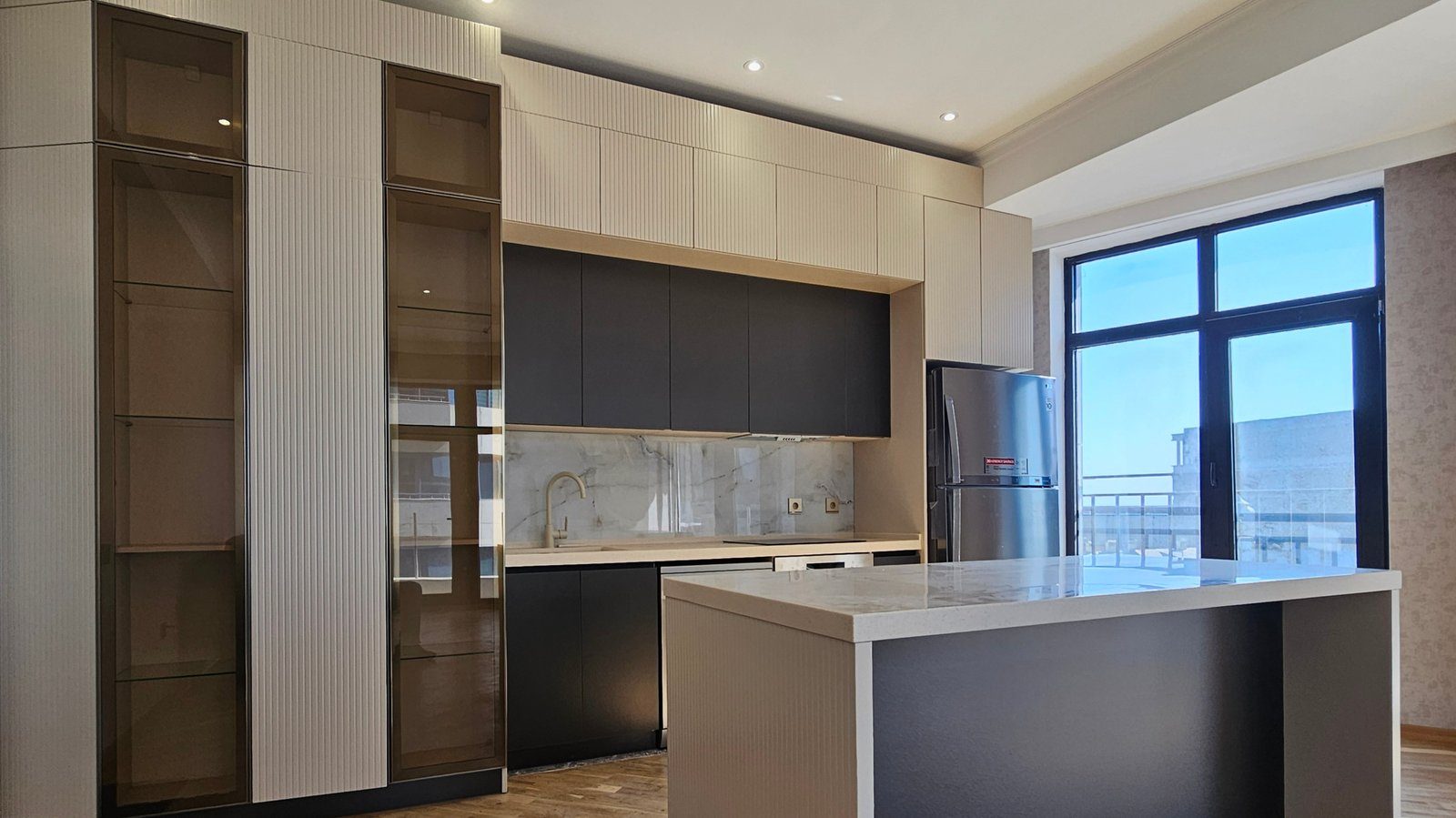
Neoclassicism is the direction many people choose when they like classic style but do not want heavy carving, lots of gilding and dark lacquer. It is not a copy of palace interiors. It takes the proportions and symmetry of classical architecture, reduces the ornament, lightens the colours and adapts everything to modern life. The result looks formal yet comfortable for everyday use. Below are the main features of the style and practical ways to work with them in a project.
Proportion and symmetry
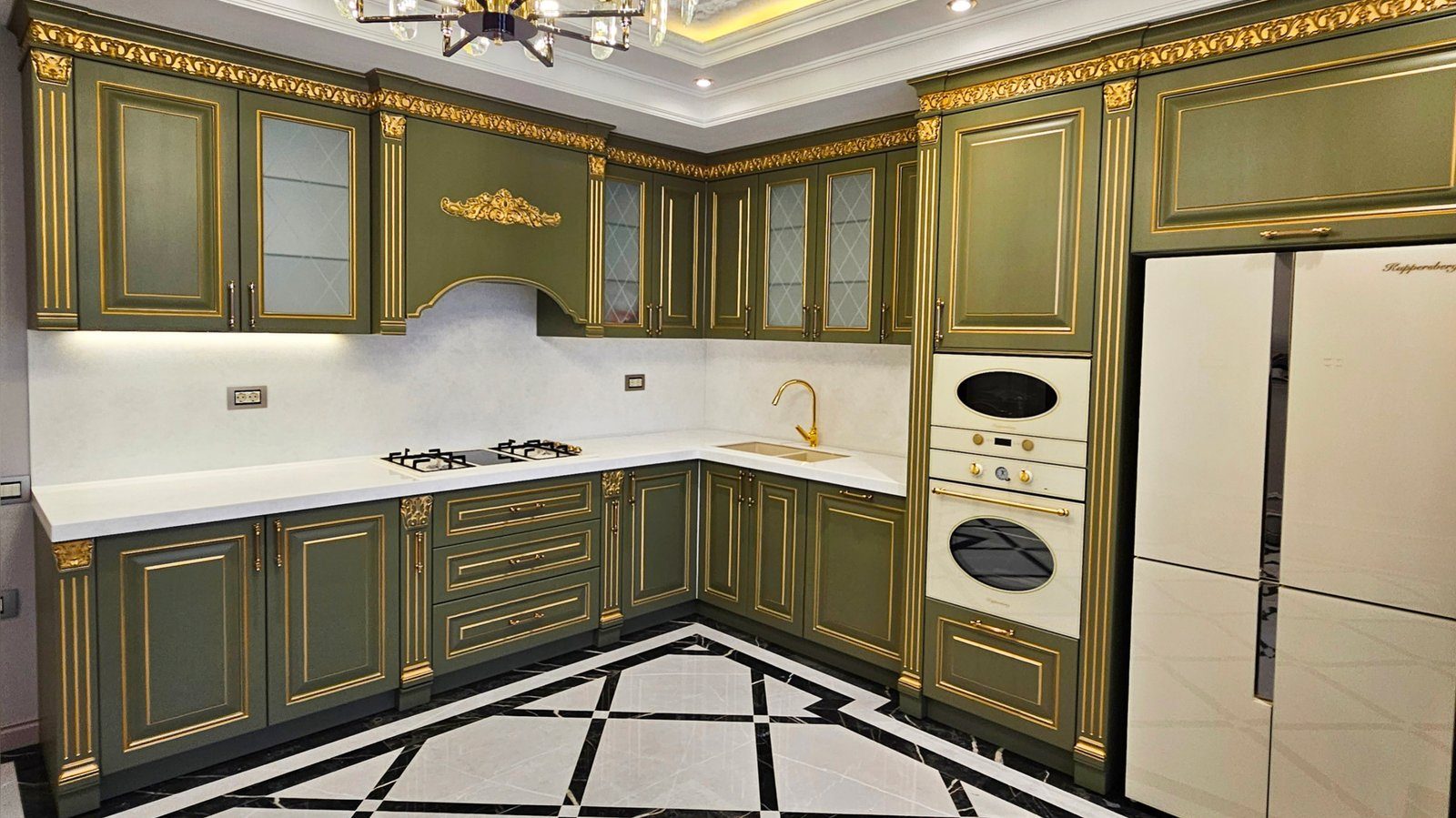
Correct proportion is the foundation of neoclassical furniture. Fronts are divided into matching sizes, a central axis is clearly felt, and left and right mirror each other. A TV area, for example, sits in the centre with display cabinets or closed cupboards of equal width on either side. In a kitchen, the extractor hood is usually highlighted as the central element, flanked by symmetrical wall units.
This approach makes demands on planning. If a window or door is off-centre, module sizes must be worked out in advance to find a solution that keeps the symmetry. In neoclassicism, one narrow unit of random width can weaken the whole composition.
Framed fronts and mouldings
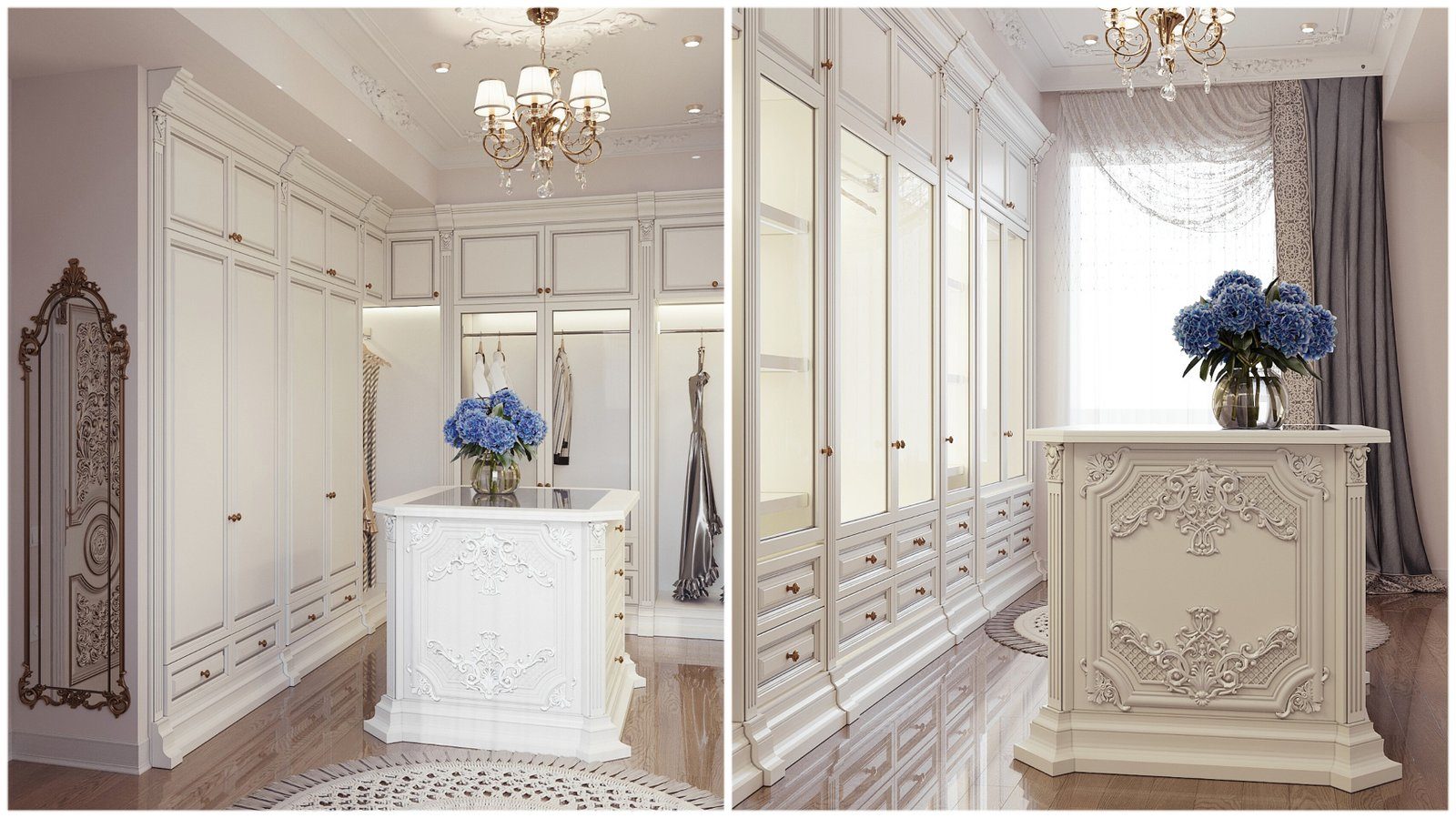
The most recognisable feature of the style is the framed front: a slim frame around the edge of the door with a slightly recessed panel in the middle. Unlike classic furniture, the profiles here are simple and slender, with no multi-stepped carving. Such fronts are usually routed from MDF and finished in paint, because a painted surface shows the shadow of the frame softly and cleanly.
A cornice at the top and a plinth moulding at the bottom complete the furniture as an architectural element. In neoclassical design these mouldings are restrained too: a cornice with one or two lines is enough. Slim glazing bars that divide glass doors into smaller panes are another detail that fits the style.
Colour palette
Neoclassical furniture is mostly light and calm in tone: ivory, creamy white, pale grey, sand, and soft shades such as olive or grey-blue. Dark colours like deep blue or green are used too, but usually for one accent area. Matt or semi-matt paint suits the style better than high-gloss lacquer.
When choosing a colour, consider the room's light. In a north-facing room a cool white can look grey, and a warmer white works better. Checking the sample at different times of day and under artificial light prevents a wrong choice.
Materials and details
Alongside light painted fronts, natural wood texture has its place: a veneered tabletop, shelf or the inside of an open display cabinet adds a warm contrast. Marble-effect stone on worktops or tops suits the style particularly well.
Hardware changes the character of furniture a great deal. Brass, antiqued bronze or satin nickel handles, slim knobs or small rings are typical neoclassical details. Handle size and position should follow one system across all fronts; symmetry is the rule here as well. The internal hardware can be fully modern: soft-close hinges and full-extension drawers do not break the style.
Working in modern appliances
In a neoclassical kitchen or living room, appliances cause the most difficulty. A large black TV screen, a stainless-steel fridge or hood can disrupt the calm rhythm of framed fronts. That is why integrated appliances, fridges and dishwashers hidden behind fronts, and a decorative canopy over the hood are common choices. For a television, a niche within a wall panel or a screen kept behind opening doors is also possible.
Neoclassicism does not suit every interior. In small rooms with very low ceilings, cornices and frames can make the space feel tight; there, fewer mouldings and simpler fronts are the answer. The essence of the style lies not in the amount of decoration but in getting the proportions right.
A quick project check
- The central axis of the composition is defined and modules are divided symmetrically.
- Front profiles are simple, and the cornice and plinth are restrained.
- The colour sample has been checked in the room's real light.
- Handle material and position follow one system throughout.
- Appliances are integrated or concealed.
Zaferoglu Mebel works to individual designs, so the proportions of neoclassical fronts can be worked out for your particular room at the design stage.