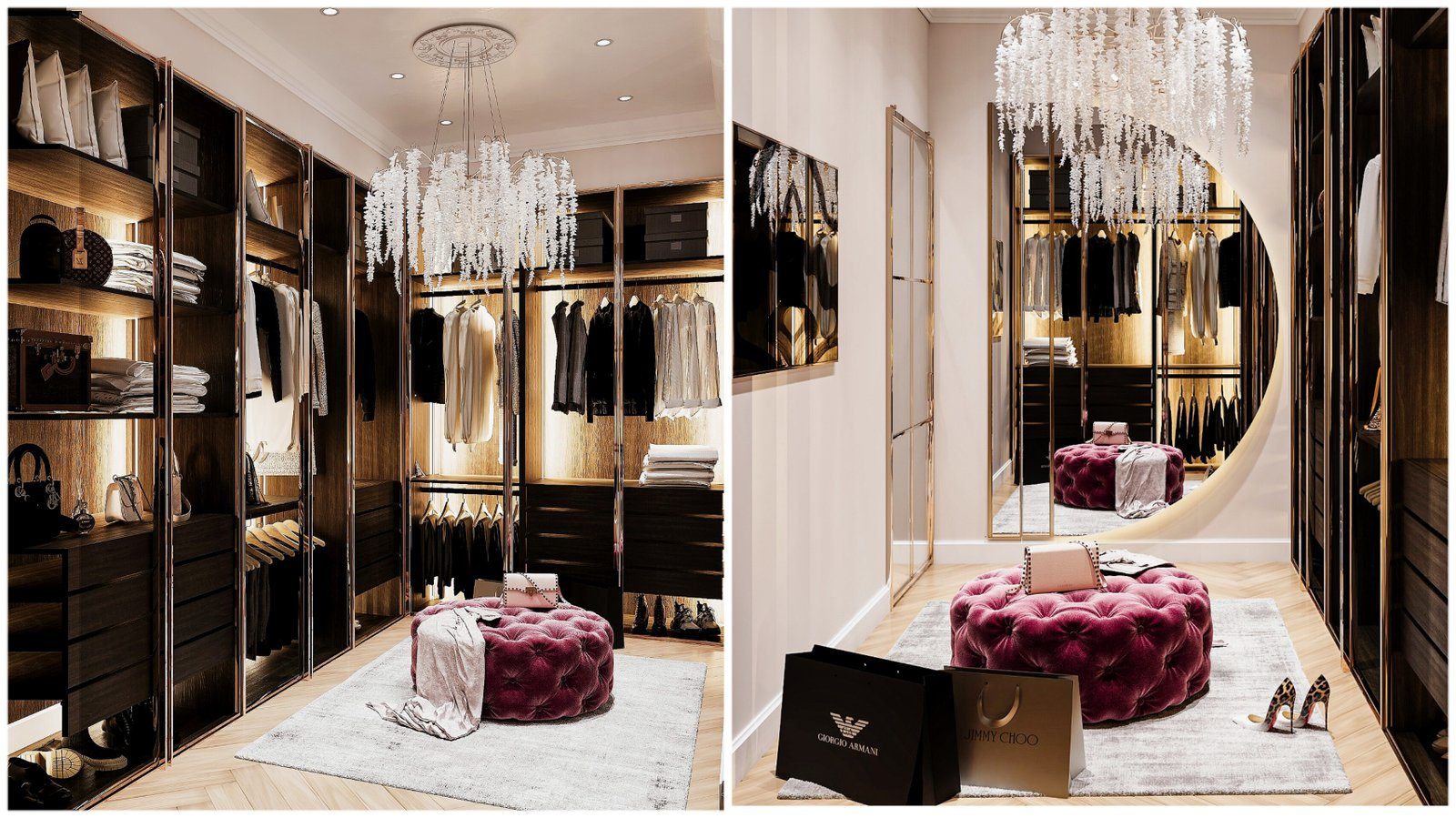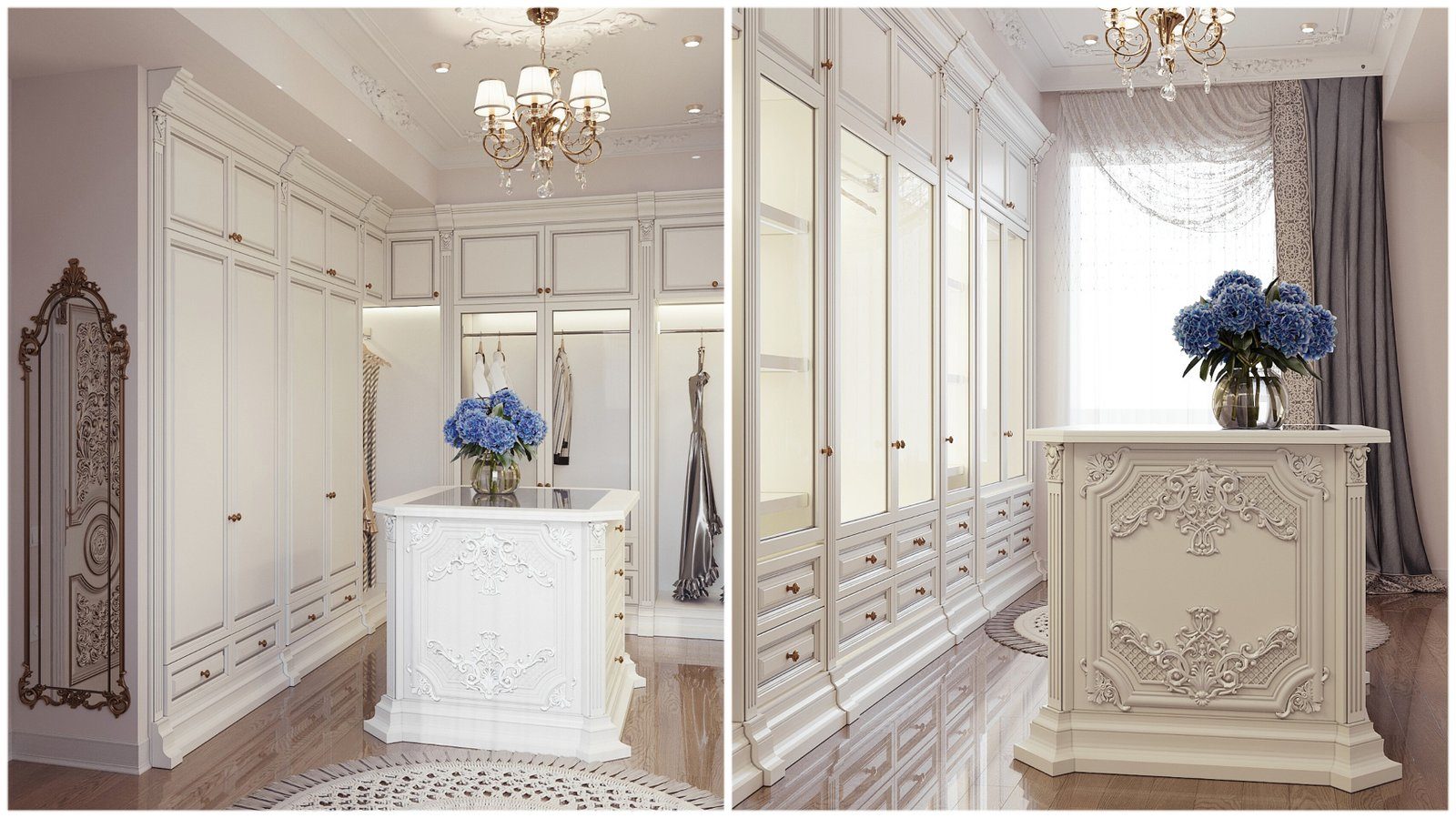

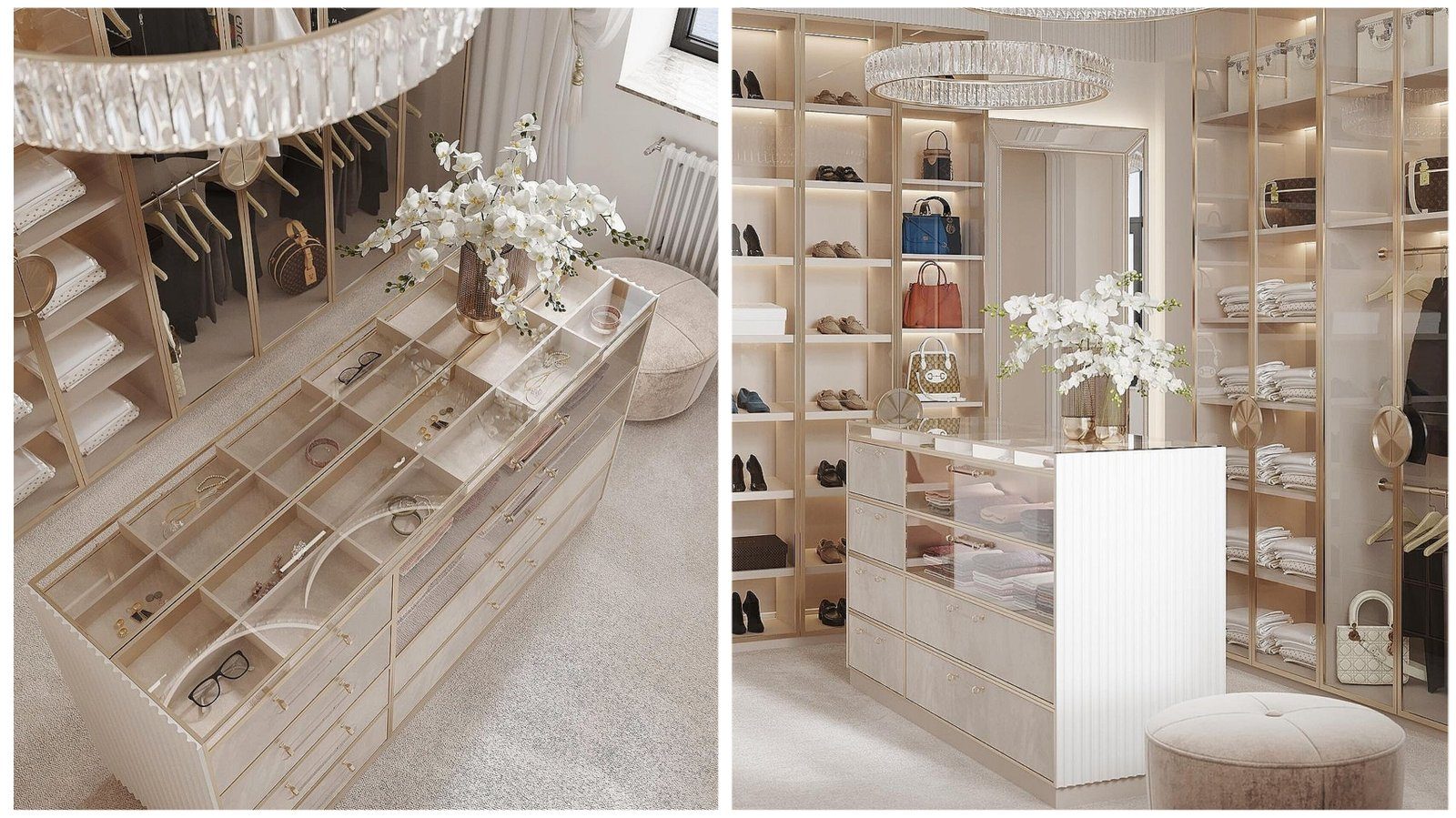
You take a garment out of the wardrobe and the fabric has a heavy, stale smell. Some time later, grey-green spots appear on the back wall, in the corners or on the shoe shelf. Very often the cause is not the wardrobe itself but where and how it stands, and whether air moves inside it. When wardrobe ventilation is considered at the planning stage, most of these problems can be avoided.
Where odours and mould come from
Mould needs three things: moisture, food (dust, fabric fibres, wood) and still air. A closed wardrobe can easily provide all three. The risk rises in particular when:
- the wardrobe stands against a cold external wall of the building;
- there is no gap at all between the wall and the back panel;
- the wardrobe backs onto a bathroom wall or is near a damp room;
- clothes that are not fully dry, sports kit or wet shoes go inside;
- the room itself is rarely aired.
The cold wall problem
In winter, the inner surface of an external wall is colder than the room air. Moisture in the air condenses on that cold surface as tiny droplets. On an open wall, that moisture can dry out into the room. When a wardrobe is pushed tight against the wall, air behind it does not move, the moisture stays, and ideal conditions for mould develop.
That is why it is better to place a wardrobe against an internal wall when possible. If the external wall is the only option, a small gap is left between the back of the wardrobe and the wall so air can circulate. This works when there are also openings for air at the bottom and top: cooler air enters from below and leaves at the top.
Ventilation inside the wardrobe
Air also needs to circulate inside. Several simple solutions help:
- ventilation slots in the plinth or bottom, with outlet gaps at the top;
- perforated or louvred door fronts, especially useful for shoe sections;
- a back panel that is set slightly off the wall rather than fitted tight against it;
- a narrow gap between the back edge of the shelves and the back panel, so air can move up and down past the shelves;
- a mix of open hanging areas and closed sections instead of very deep, fully enclosed compartments.
If there is a walk-in dressing room, its own ventilation, whether a window, an air gap under the door or an extract vent, needs to be planned separately.
Shoes and sports kit
The biggest sources of odour in a wardrobe are shoes and sportswear. Keeping them in the same closed compartment as other clothes lets the smell transfer to fabrics. A separate, ventilated section for shoes, or a separate cabinet in the hallway, makes more sense. Drying wet shoes before putting them away and never storing unwashed sports kit in the wardrobe are the simplest and most effective rules.
Materials and everyday habits
Laminated board does not absorb moisture through its face, but exposed cut edges can swell and harbour mould. It is therefore important that every edge of the wardrobe, especially around the bottom and back panel, is sealed with edge banding.
Day to day, these habits help:
- air the room regularly and leave the wardrobe doors open from time to time;
- do not hang clothes away straight after steam ironing; let them cool first;
- do not pack clothes tightly; leave room for air between them;
- store seasonal items in breathable fabric covers rather than plastic bags;
- moisture-absorbing granules are only an aid and do not remove the cause.
A simple household hygrometer tells you how humid the room actually is. For living spaces, a moderate level of roughly 40–60 percent is generally considered comfortable. If condensation regularly collects on the window panes in winter and the hygrometer keeps showing the upper end, the problem is not just the wardrobe but the ventilation of the whole room, and furniture alone cannot solve it.
If mould has already appeared
If you see mould, find the cause first: a cold wall, a water leak, the neighbouring bathroom? Then pull the wardrobe away from the wall, inspect the back, clean and dry both the wall and the back of the wardrobe. If clothes still smell musty, wash and dry them fully. If a board has swollen or mould has penetrated it, replacing that part is the more reliable option.
When ordering a wardrobe from Zaferoglu Mebel, make sure the measurer notes whether it backs onto an outside wall and whether a bathroom or other damp room is next door, so ventilation gaps go into the design from the outset.