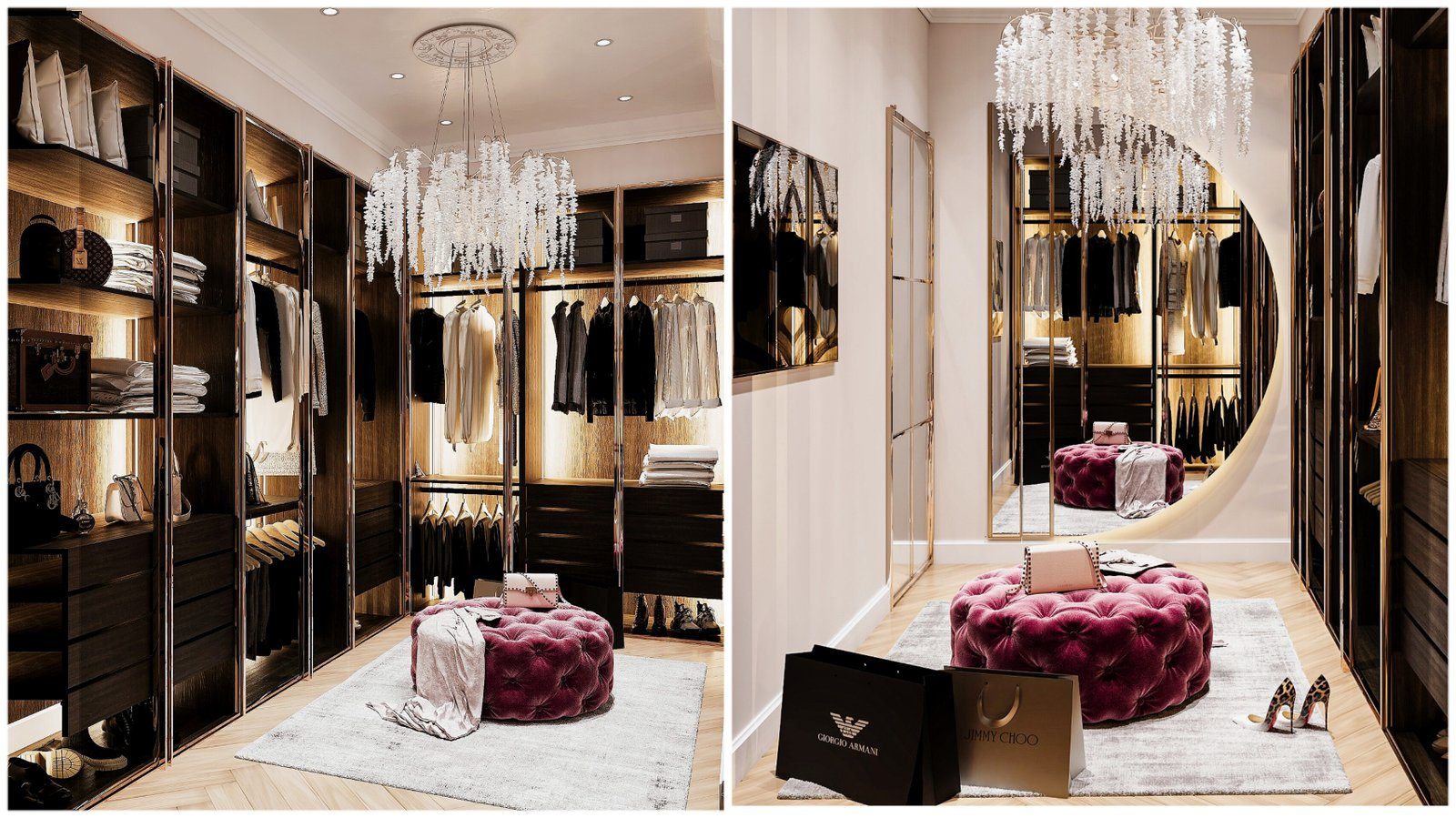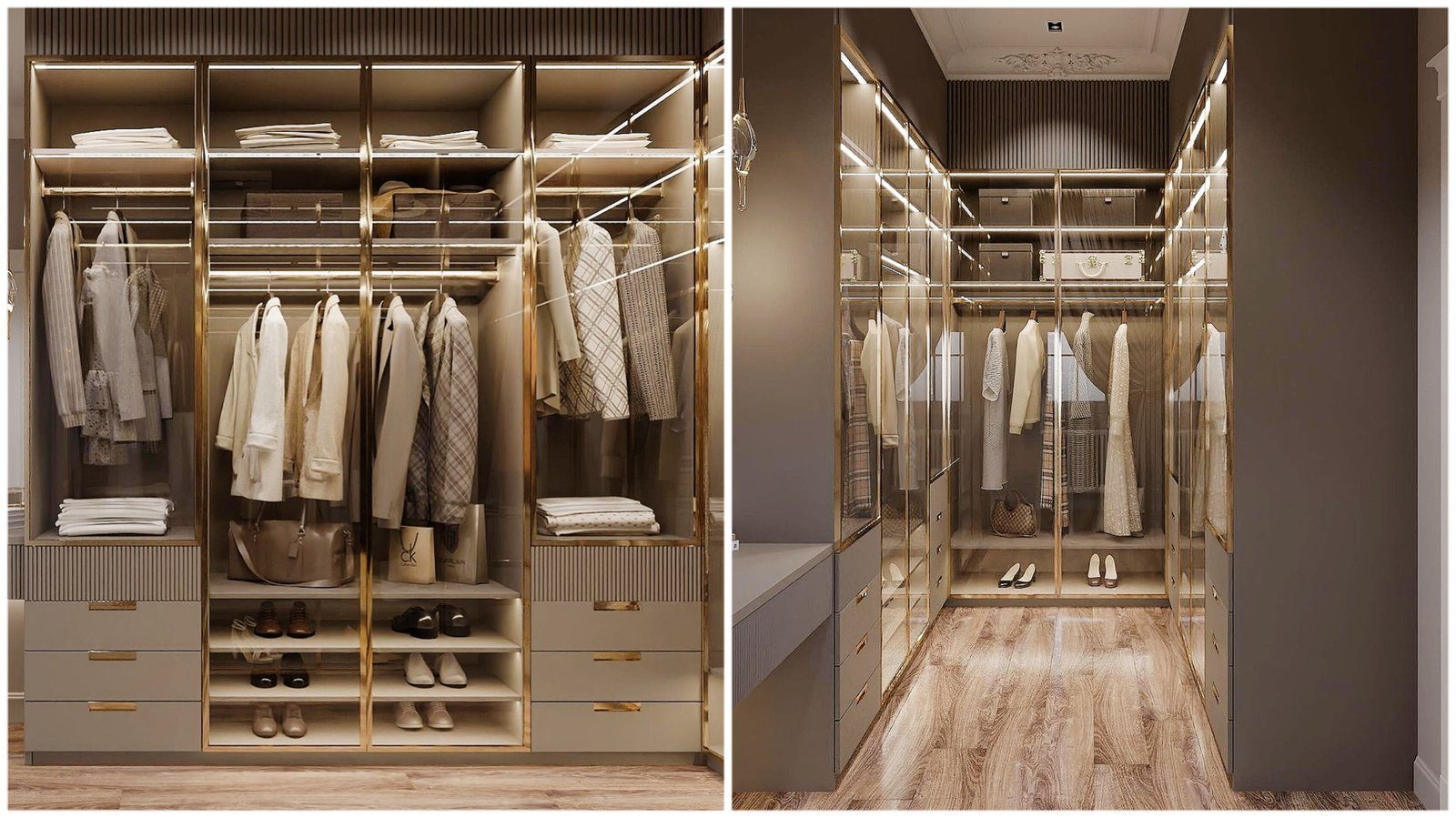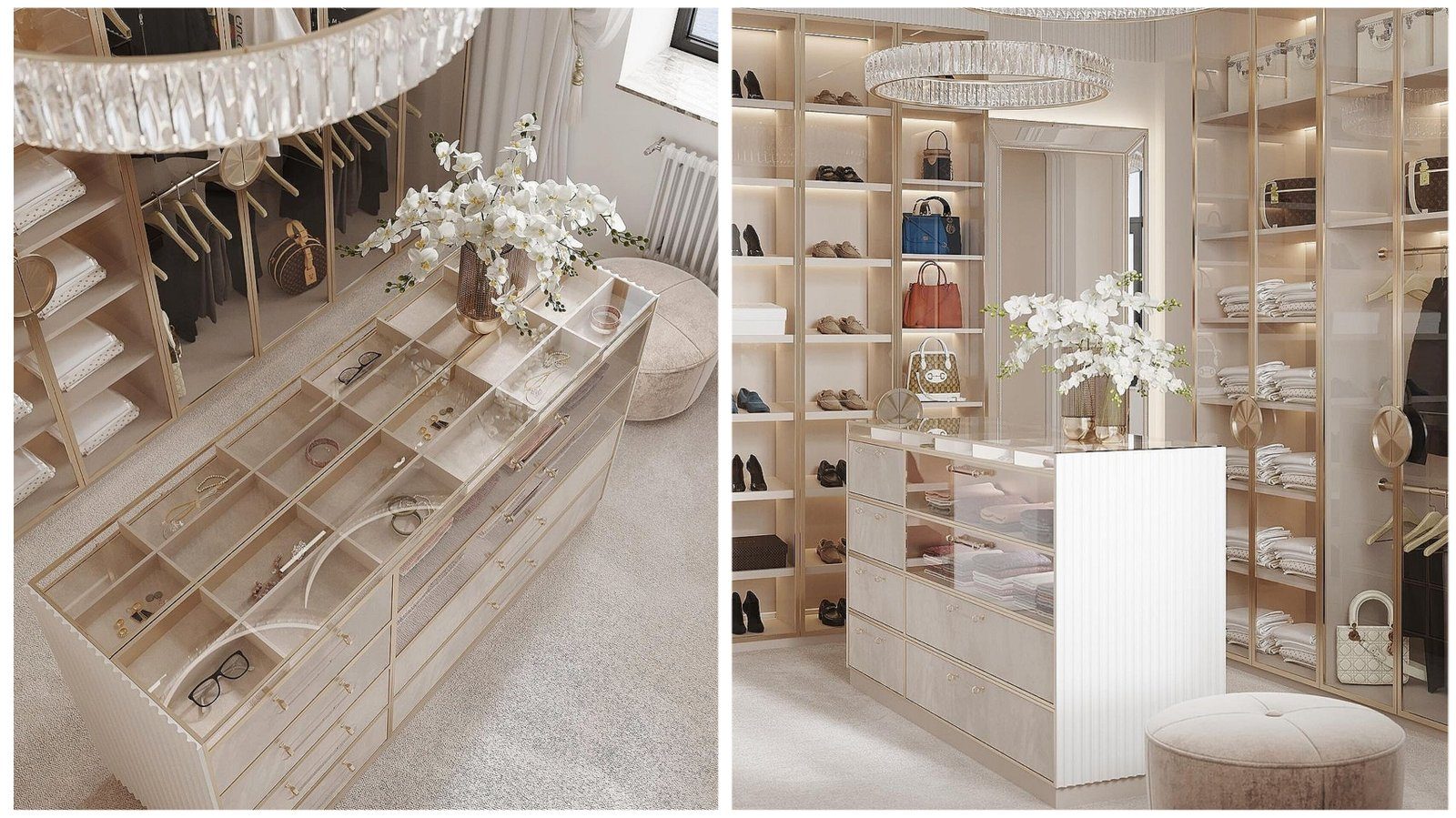

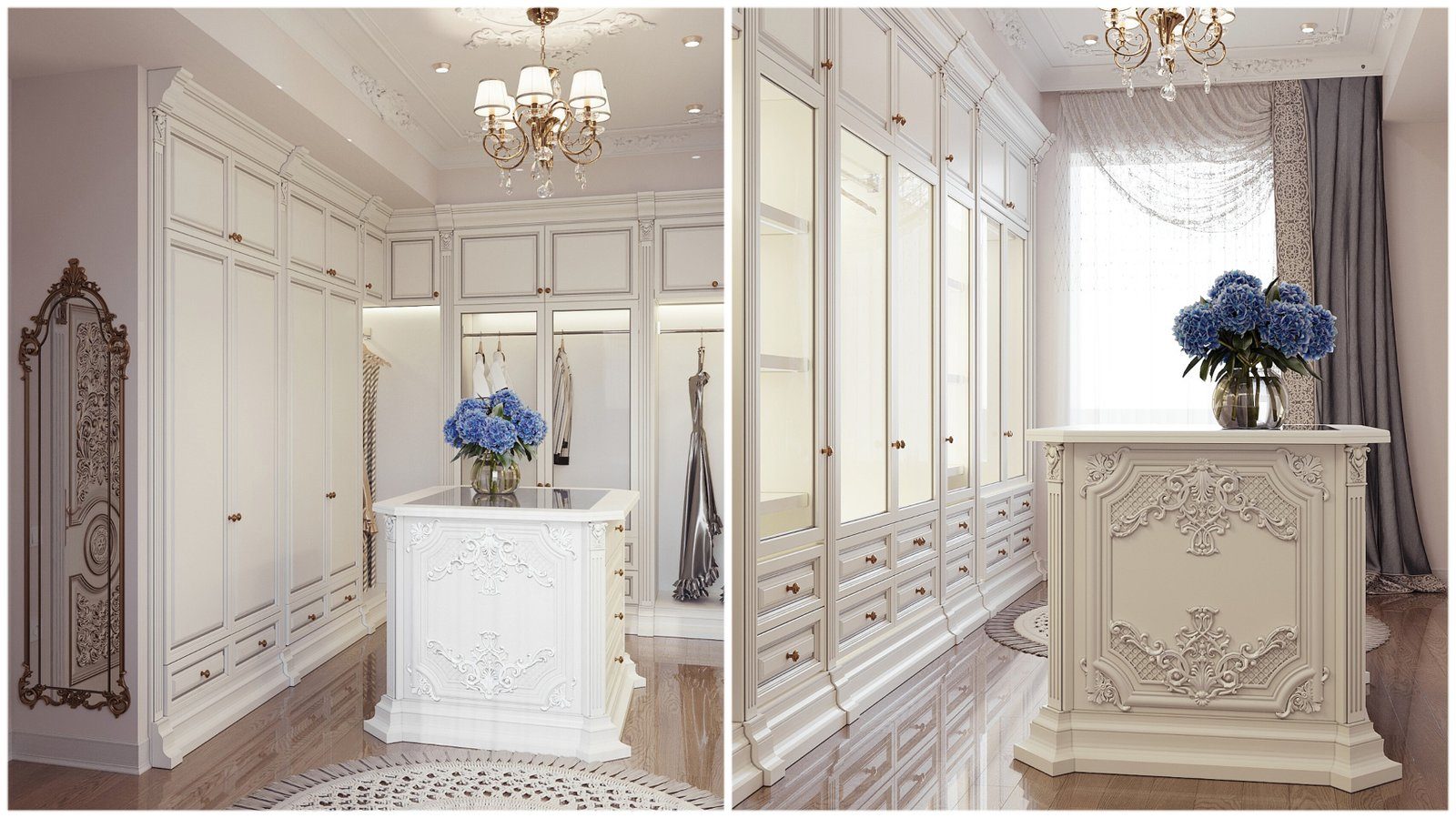
When ordering a shared wardrobe, the simplest solution is to split it down the middle: the left side for one person, the right for the other. A few months later it turns out that long dresses touch the floor on one side, while on the other half a metre of space sits empty beneath the shirts. One person's drawers overflow while the other's shelves are half empty. An equal split is not a fair split. The interior of a wardrobe should be built around both people's real clothing volume and habits.
Counting clothes: where the plan begins
Wardrobe planning should start from the clothes you have, not from a drawing. Each person can sort their clothes into three groups and measure them:
- Hanging clothes: shirts, jackets, trousers, dresses, coats. What matters is not the number of items but how many centimetres of rail they take up. Pushing hanging items together in your current wardrobe and measuring the rail length is enough.
- Folded clothes: jumpers, T-shirts, jeans, and the shelf length and height they need.
- Small items: underwear, socks, accessories, and the number of drawers for them.
This measuring often gives surprising results: one person may have lots of hanging clothes, the other lots of folded ones. Two sections of equal width ignore that difference.
Long and short hanging zones
Hanging clothes fall into two groups by length. A long zone is needed for dresses, coats and trousers hung full length. A short zone is enough for shirts, blouses and jackets, and a second rail or shelves can go beneath it. With two rails one above the other in a short zone, the same width gives twice as much hanging space.
In a wardrobe for two, each person does not necessarily need their own long zone. If only one person has long garments, the long zone goes on their side and a double short zone is planned on the other.
The ratio of shelves to drawers
Shelves are convenient for folded clothes, but items at the back of a deep shelf get lost. Drawers and pull-out shelves solve this but take more space and hardware. A practical approach is open shelves at eye level for frequently used items, drawers at waist level for small things and shoes and heavy items at the bottom.
Each person's number of drawers depends on how many small items they have. One may want a divided drawer for accessories and jewellery, the other a shallow drawer for watches and belts.
A shared section
A wardrobe for two also holds shared items: bedding, towels, suitcases, seasonal duvets. Putting them inside personal sections causes a muddle. The best approach is a separate section for shared items, often at the top of the wardrobe or at one end.
The shared section also acts as flexible space: when clothing volume changes, for example with winter coats, one person can use it temporarily.
Different habits, different solutions
Two people often have different wardrobe habits. One prefers to hang everything, the other to fold. One wants neat shelves, the other finds baskets easier. The wardrobe design should reflect this: one section can have shelves and another baskets.
If they get up at different times, placing each person's everyday clothing at opposite ends of the wardrobe stops them getting in each other's way. In a sliding-door wardrobe, only one part can be open at a time, so it helps if each person's section is behind its own door.
Life changes: work patterns, clothing style, seasonal needs. Adjustable shelves, removable rails and modular drawers inside the wardrobe allow the layout to be reorganised later. In systems such as RaumPlus and Aristo, interior fittings can usually be rearranged without replacing the carcass.
A planning checklist
- Measure the rail length of each person's hanging clothes.
- Note whose long garments there are and how many.
- Work out the number of shelves and drawers for folded clothes and small items.
- Set aside a separate section for shared items.
- Consider how the door type affects two people using the wardrobe at once.
Zaferoğlu Mebel designs wardrobe interiors around individual measurements and the items to be stored. Sharing information about both people's clothing volume at the measuring stage helps the sections be planned more precisely.