
Open wardrobe systems, meaning hanging rails, shelves and drawer units without doors, have become increasingly popular in both dressing rooms and bedrooms. A dressing area that looks like a boutique display, where everything can be found at a glance, is appealing. But the absence of doors brings both advantages and daily responsibility. Both sides are worth weighing before choosing.
The pros
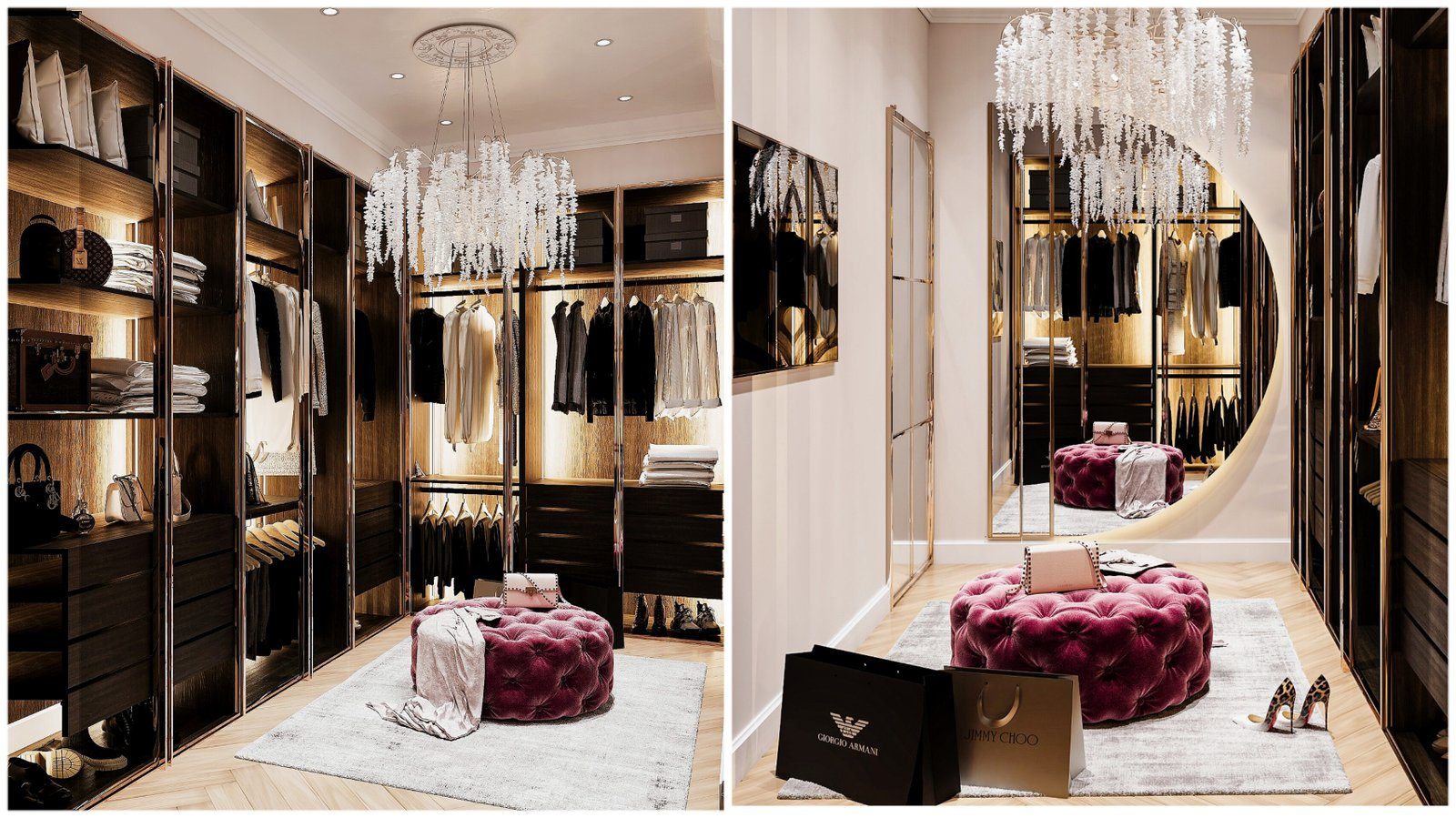
The clearest benefit of an open system is visibility and access. All your clothes are visible at a glance, there are no doors to open, and choosing an outfit in the morning is faster. Other advantages:
- with no door swing needed, it is easy to fit into narrow rooms and passages;
- without fronts and door hardware, the construction is lighter;
- it weighs less on the room visually, since there is no large wall of doors;
- it is easier to change the system later and add shelves or rails;
- air circulates well, clothes stay aired and the musty smell of closed wardrobes is less likely.
The cons
The main problems of an open system are dust and appearance. Without doors, dust settles directly on the shoulders of clothes and on folded items on shelves. Garments worn rarely, such as seasonal clothes or formal suits, gather dust if left out for long and need cleaning again.
Other drawbacks:
- in a sunny room, fabrics left exposed can fade over time;
- everything is visible, so constant tidiness is needed, and a messy open wardrobe spoils the look of the whole room;
- pets, especially cats, easily reach open shelves and rails, and hair ends up on clothes;
- close to a kitchen or bathroom, smells and moisture can get into clothes.
Who it suits
An open wardrobe does not suit everyone equally. It works especially well for:
- people with fewer but carefully chosen clothes, a minimalist wardrobe;
- those who keep things tidy as a daily habit;
- people with a separate dressing room with a door, since the open system stays behind that door;
- people who change outfits often and want to see everything.
For families with lots of clothes, children or pets, or with the wardrobe in plain view inside the bedroom, a fully open system can become a daily irritation.
The compromise: a partly open system
In most cases the most practical solution is a mixed system. Some approaches:
- everyday clothes on open rails, seasonal and rarely worn items in closed sections or the top storage area;
- only good-looking items such as bags and shoes on open shelves, with underwear and small items in drawers;
- a light curtain in front of the open system, drawn when needed;
- closed, ventilated sections or covers for valuable or delicate garments.
This keeps the convenience of an open system while reducing the dust and appearance problems.
Setting up an open system well
In an open wardrobe, aesthetics matter more because every detail is on show. When setting it up:
- use hangers of the same type and colour, since mixed hangers look messy;
- group clothes by colour or type;
- keep stacks of folded items on shelves low, as tall piles topple;
- choose matching boxes or baskets for small items;
- choose a sturdy rail profile whose colour and material match the frame;
- lighting should show the true colour of clothes and not heat the fabric.
Structurally, wall fixing is especially important in an open system. A closed carcass provides its own rigidity, whereas in an open system the load is transferred to the wall through fixings and vertical supports. The wall material, whether concrete, brick or plasterboard, determines the type of fixing.
Care
An open wardrobe needs regular but simple care. Wiping shelves and rails once a week, using breathable fabric covers for rarely worn clothes and limiting sunlight with a curtain keep the system tidy for a long time.
If you tell Zaferoglu Mebel roughly how much clothing there is, which room the open or mixed system will stand in and what the wall is built from, both the sections and the fixing method can be chosen to match.