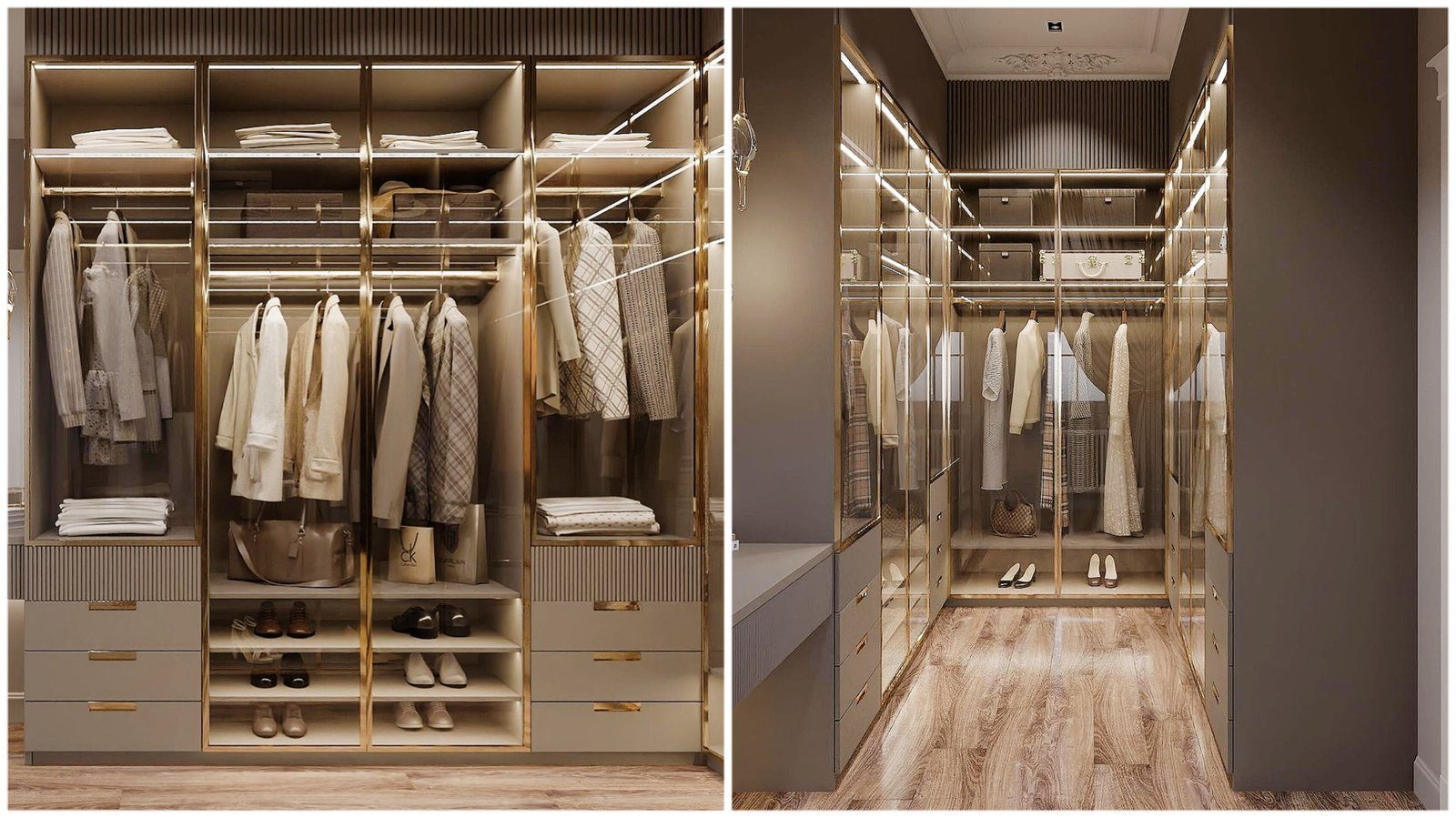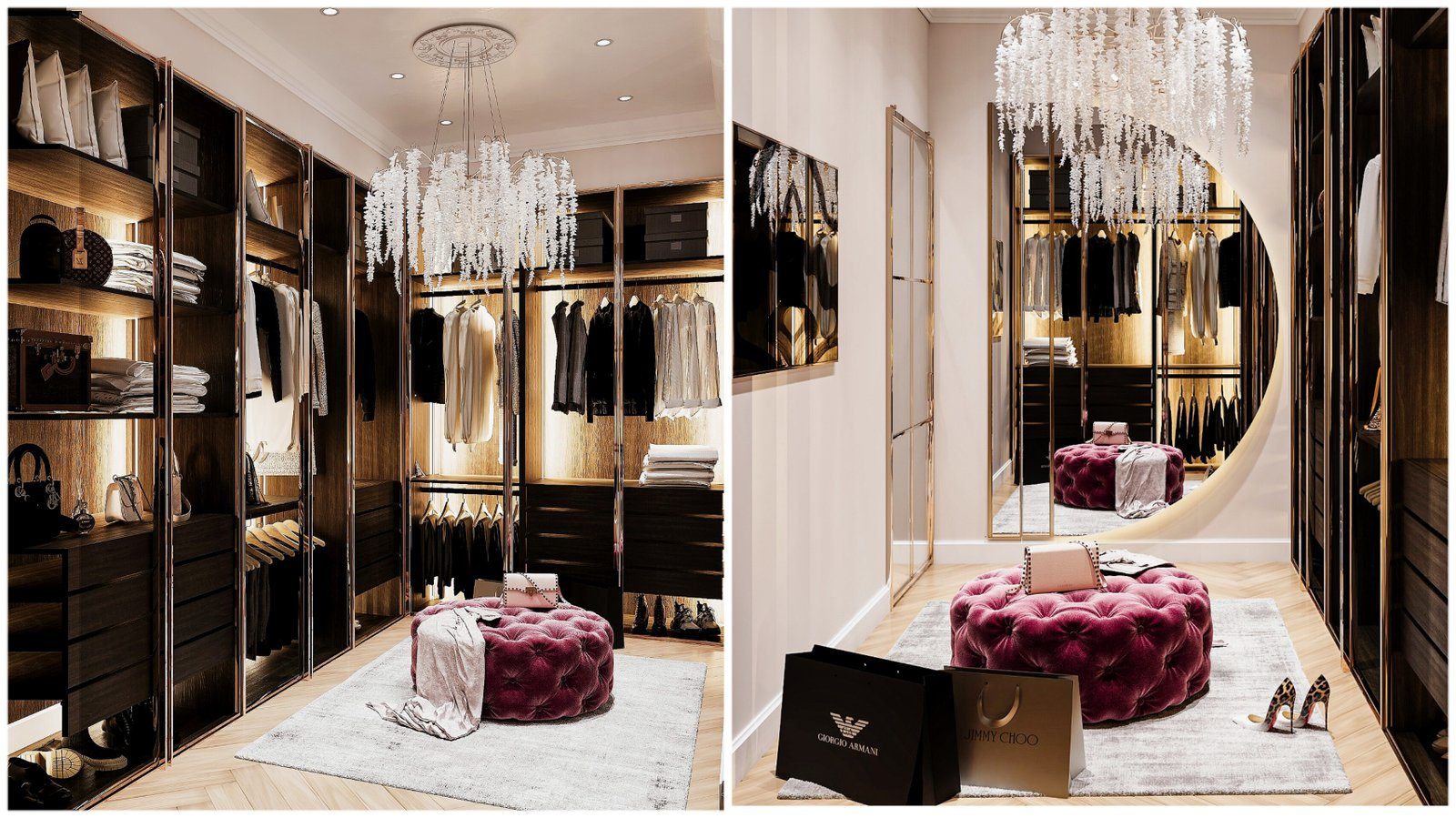

Classic style is usually associated with living and dining rooms, yet a dressing room is a natural place for it too. Framed doors, moulded cornices, warm wood tones and refined handles make the daily routine of getting dressed feel special. At the same time a dressing room is above all a storage system that has to work. The main challenge of a classic design is to keep decorative elements from reducing function or weighing down a small room.
Framed doors: profile and proportion
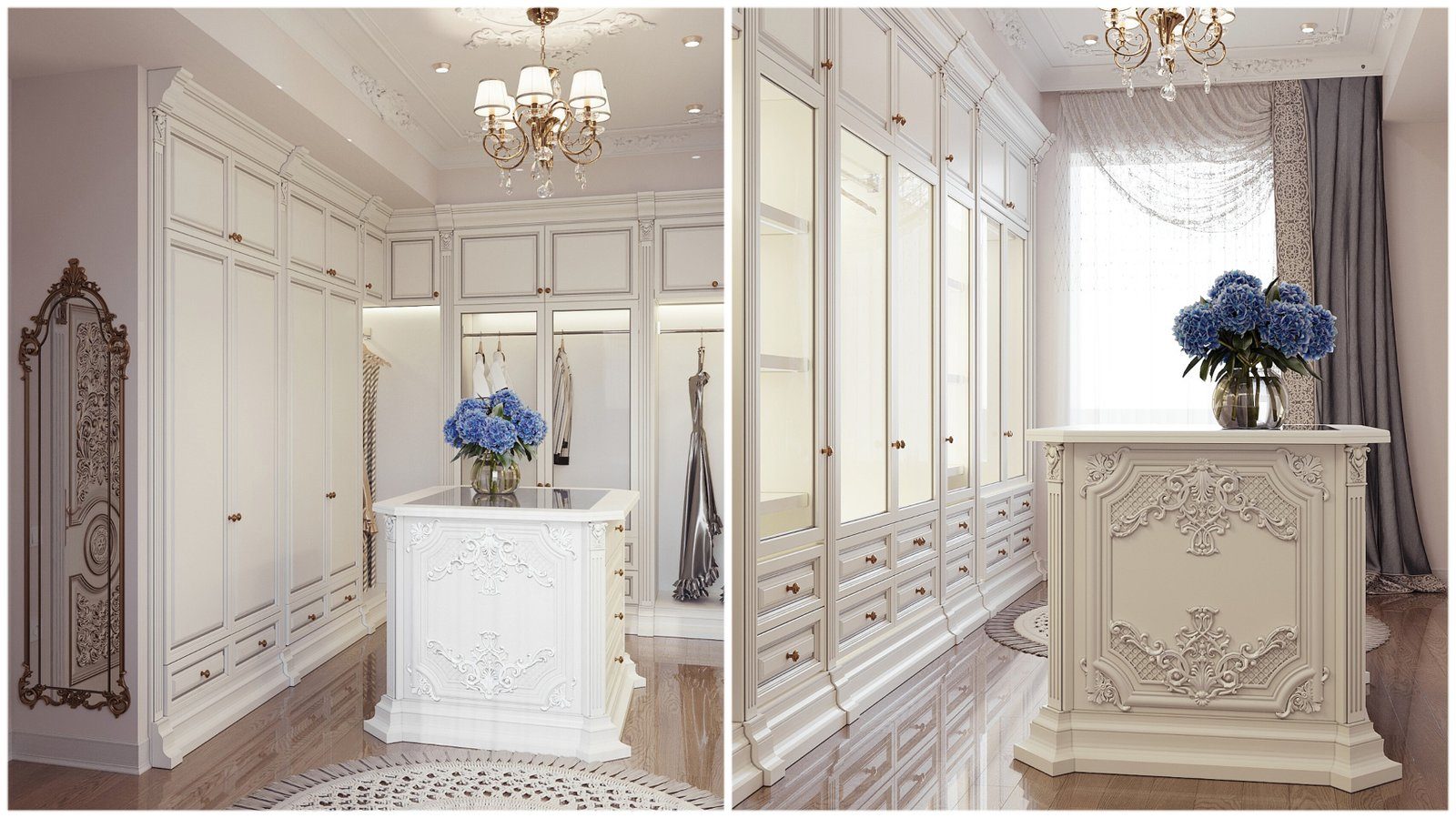
The hallmark of classic style is the framed door: a moulded frame around the edge and a flat or slightly recessed panel in the middle. The profile shape sets the character. A simple, square-cut frame is close to neoclassical or Shaker style and sits comfortably in a contemporary interior. A multi-step decorative profile creates a grander, more traditional look.
Proportion is decisive here. On a tall, narrow door, a frame that is too wide shrinks the panel and makes the front look heavy. On floor-to-ceiling wardrobes, splitting the door into two, with a small panel above and a large one below, suits the classic style and lets the top section open separately.
Cornices, plinths and pilasters
The elements that turn a classic dressing room into a single furniture composition are the cornice, the plinth at the bottom and vertical pilasters. The cornice links the wardrobe to the ceiling, the plinth gives a neat transition to the floor, and pilasters separate sections and set the rhythm of the fronts.
A few points to bear in mind:
- with a low ceiling, a large cornice makes the room look lower still, so choose a slim profile;
- walls and ceilings are never perfectly straight, and a cornice helps hide the irregularities;
- plinth height is calculated from door clearance and the thickness of the floor covering;
- the more pilasters there are, the slightly smaller the internal storage becomes.
Colour and materials
Two directions are most common in classic dressing rooms. The first is warm wood tones such as walnut, cherry and honey oak. They bring richness and comfort, but in a small windowless dressing room dark wood can feel cramped. The second is light painted fronts in ivory, cream or pale grey-green. This emphasises the classic profiles while keeping the room light.
Framed fronts are widely made from routed and painted MDF, because the profile comes out precisely and the colour choice is wide. Wood-decor versions suit those who want a wood texture.
Handles and hardware
In classic style the handle is part of the decoration. Knobs or pulls in bronze, antique brass or matt gold go well with framed doors. Handle size should match door height: a tiny knob on a tall door gets lost and makes the door awkward to open.
The fittings nobody sees can, and should, be up to date. Soft-close hinges, fully extending runners and pull-down rails leave the classic look untouched while making daily use much easier; Blum is among the brands Zaferoglu Mebel fits.
Inside: classic looks, modern function
When the doors open, the inside should look orderly. In a classic dressing room the interior often includes:
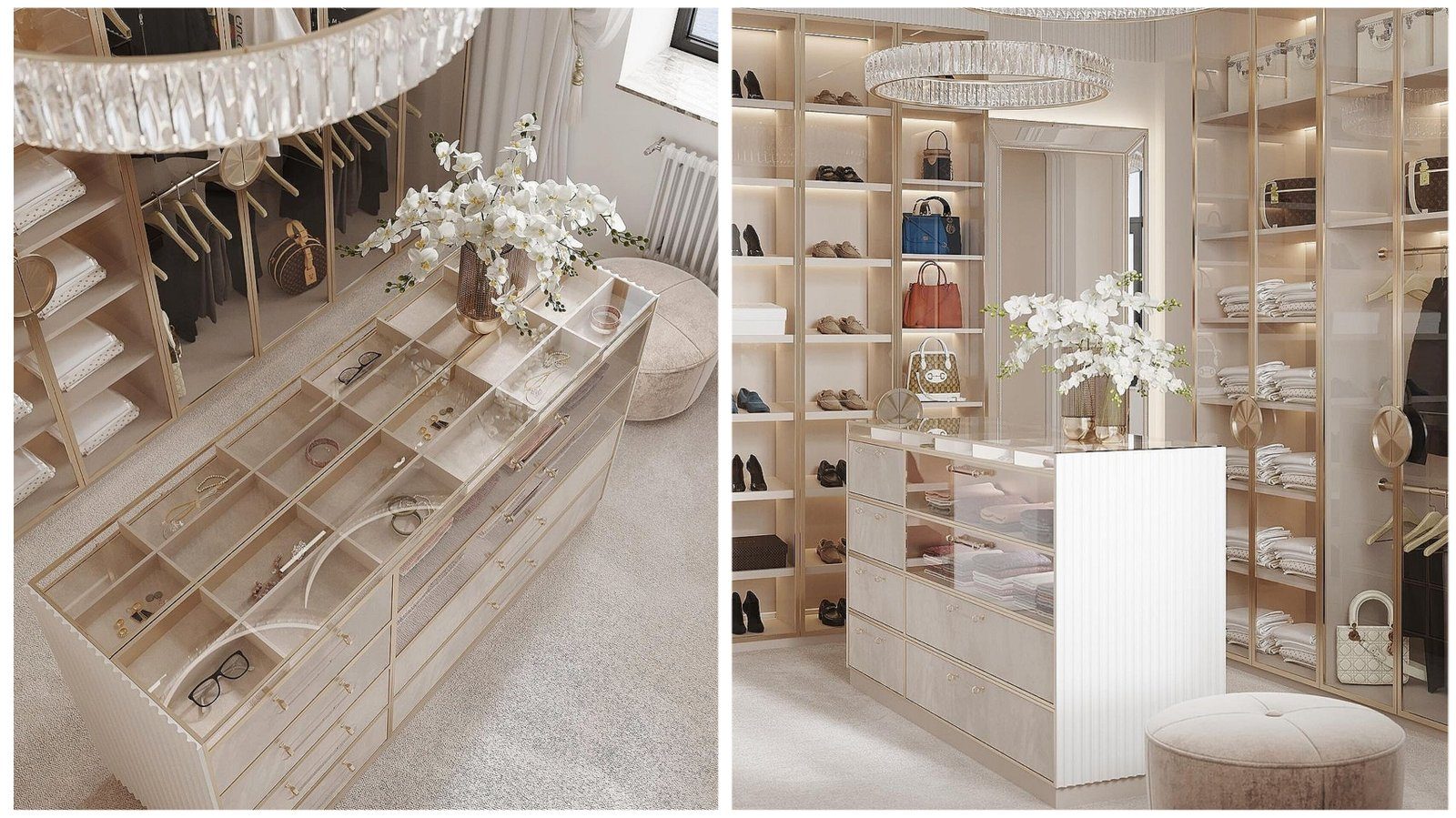
- drawers with fabric- or velvet-lined compartments for jewellery and accessories;
- angled shoe shelves, sometimes in a glass-fronted display section;
- pull-out racks for ties, belts and scarves;
- a separate full-height section for long dresses;
- a glass-topped accessories island in the middle if space allows.
Lighting is part of the effect. Warm hidden LED light along shelf edges or soft light inside display sections highlights classic details and shows the true colour of clothes.
When to simplify
If the dressing room is small, using every element of classic style can make it feel overloaded. In that case simple framed fronts, a slim cornice and a light colour, with the decoration left to the handles and lighting, work better. A large dressing room, on the other hand, can take pilasters, display sections and an accessories island and show the style in full.
When ordering a classic dressing room from Zaferoglu Mebel, looking at moulding profiles and colour options with the ceiling height and room lighting in mind helps keep the ornament at the right level.