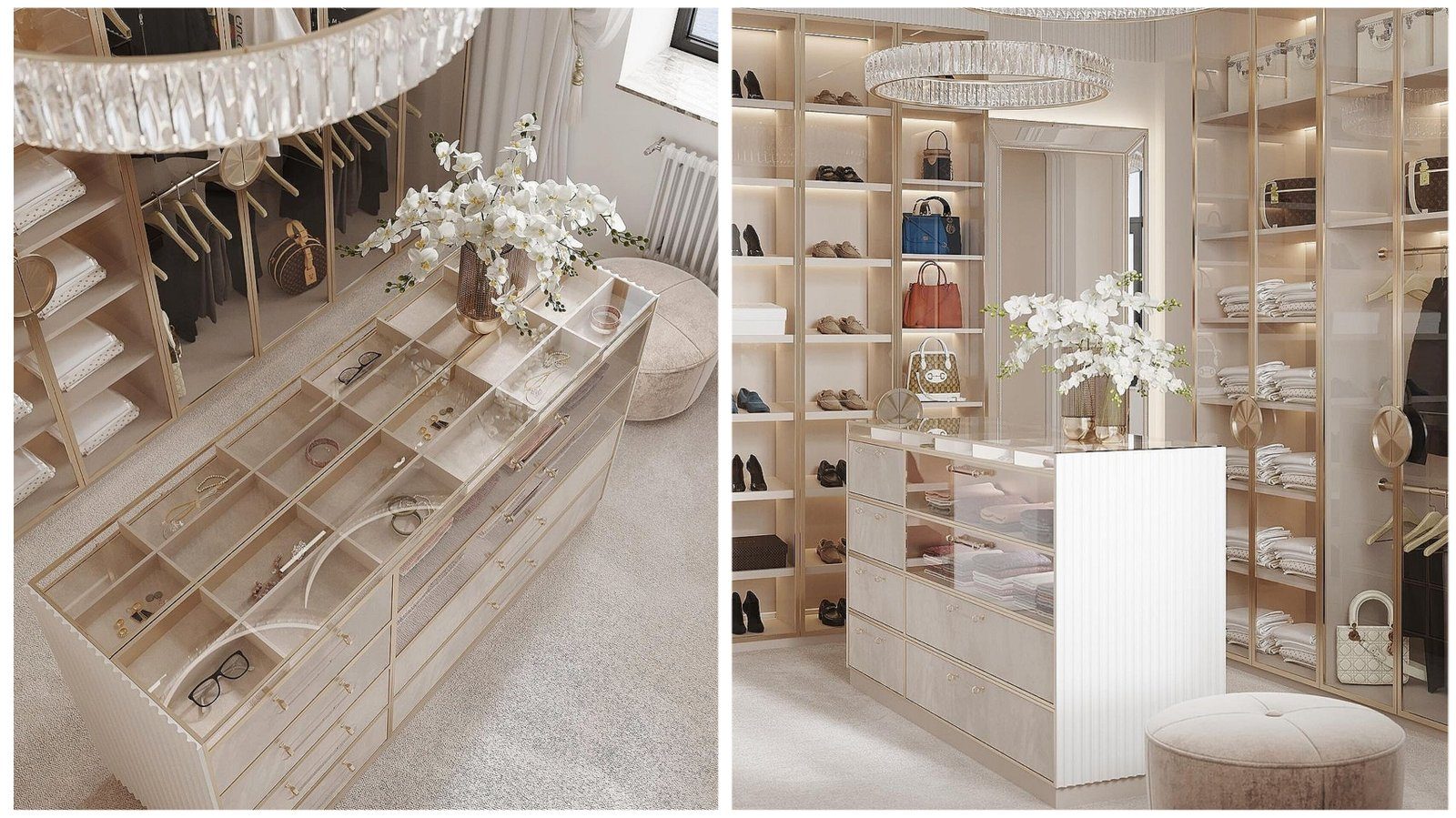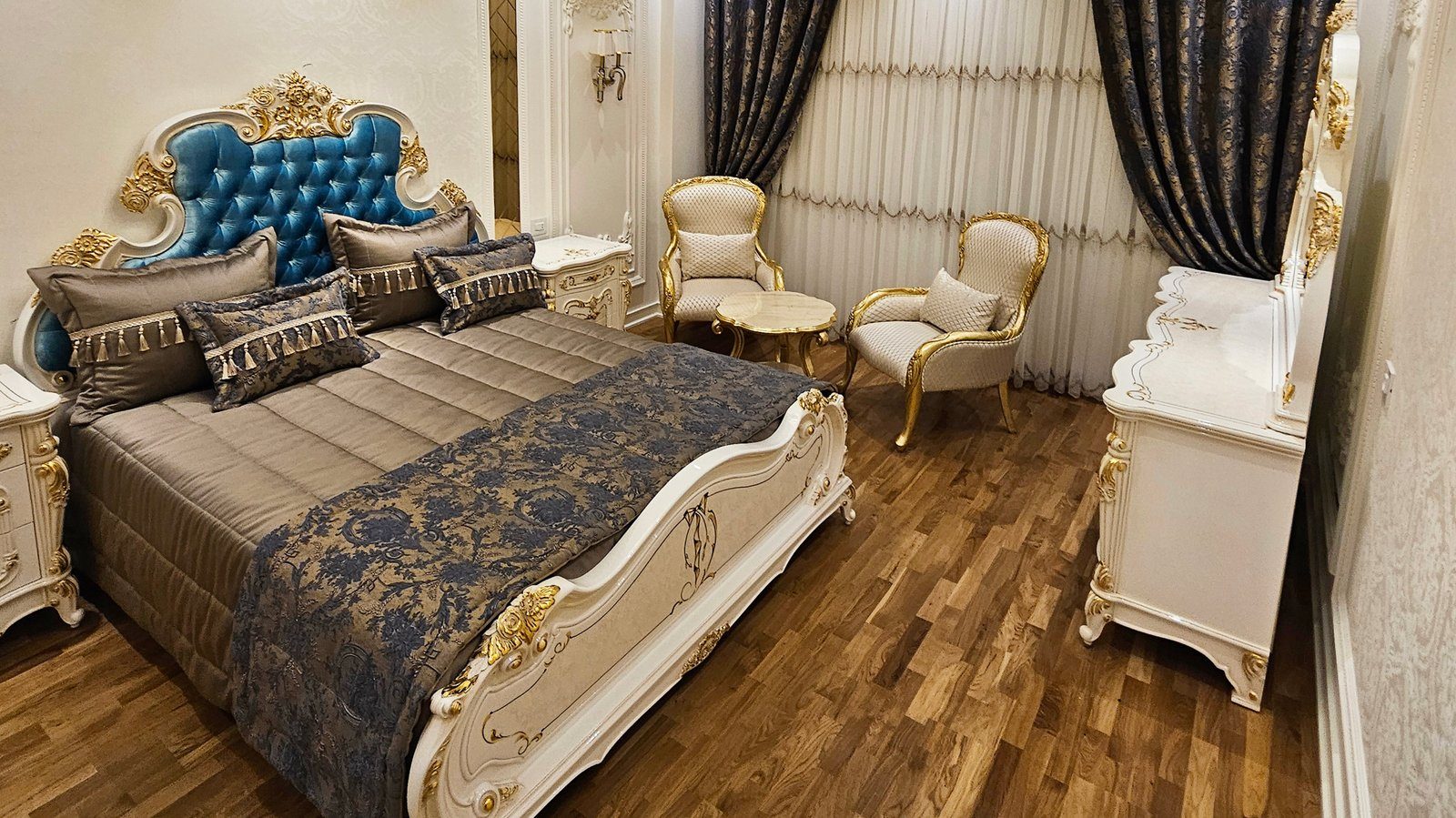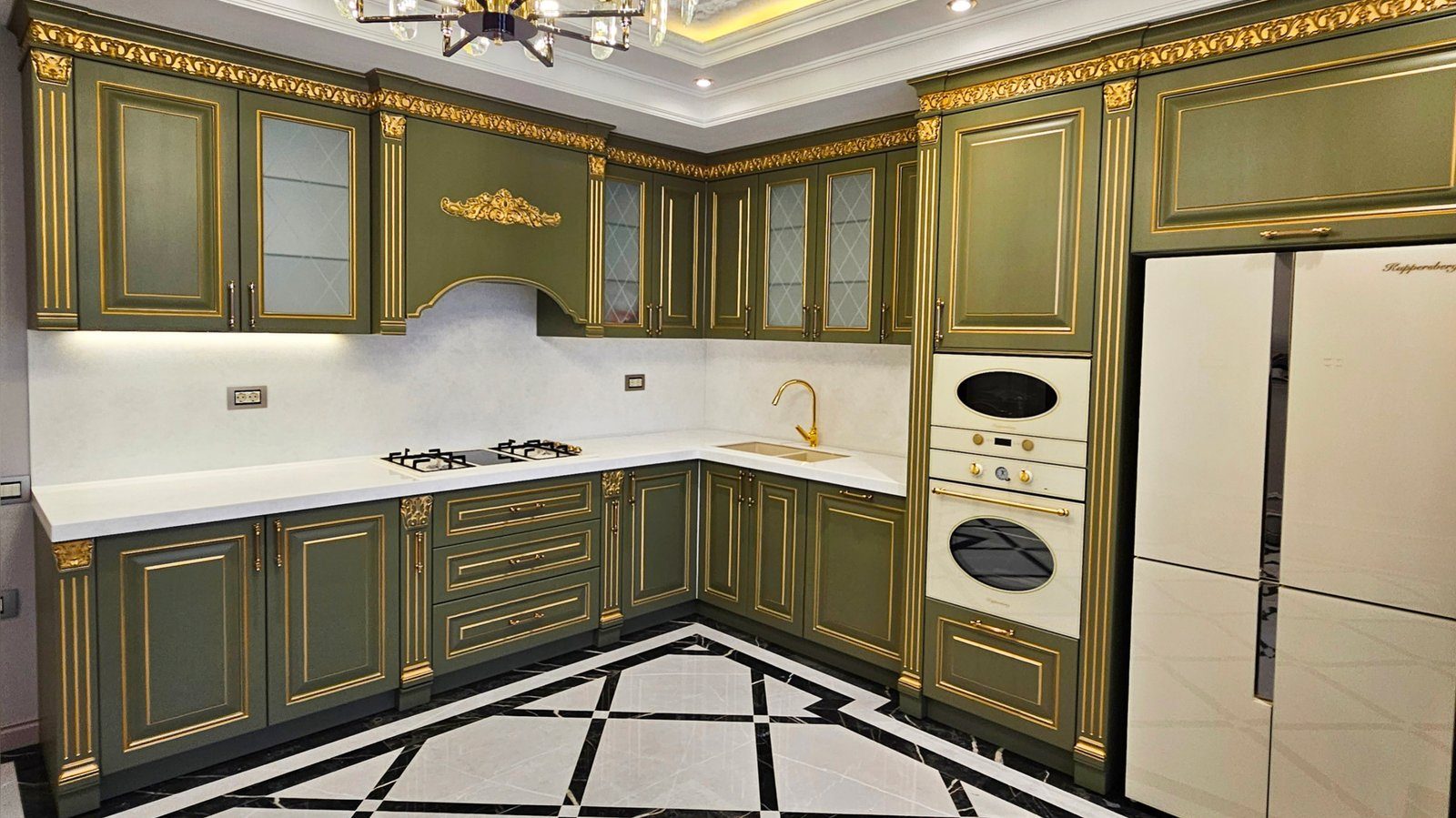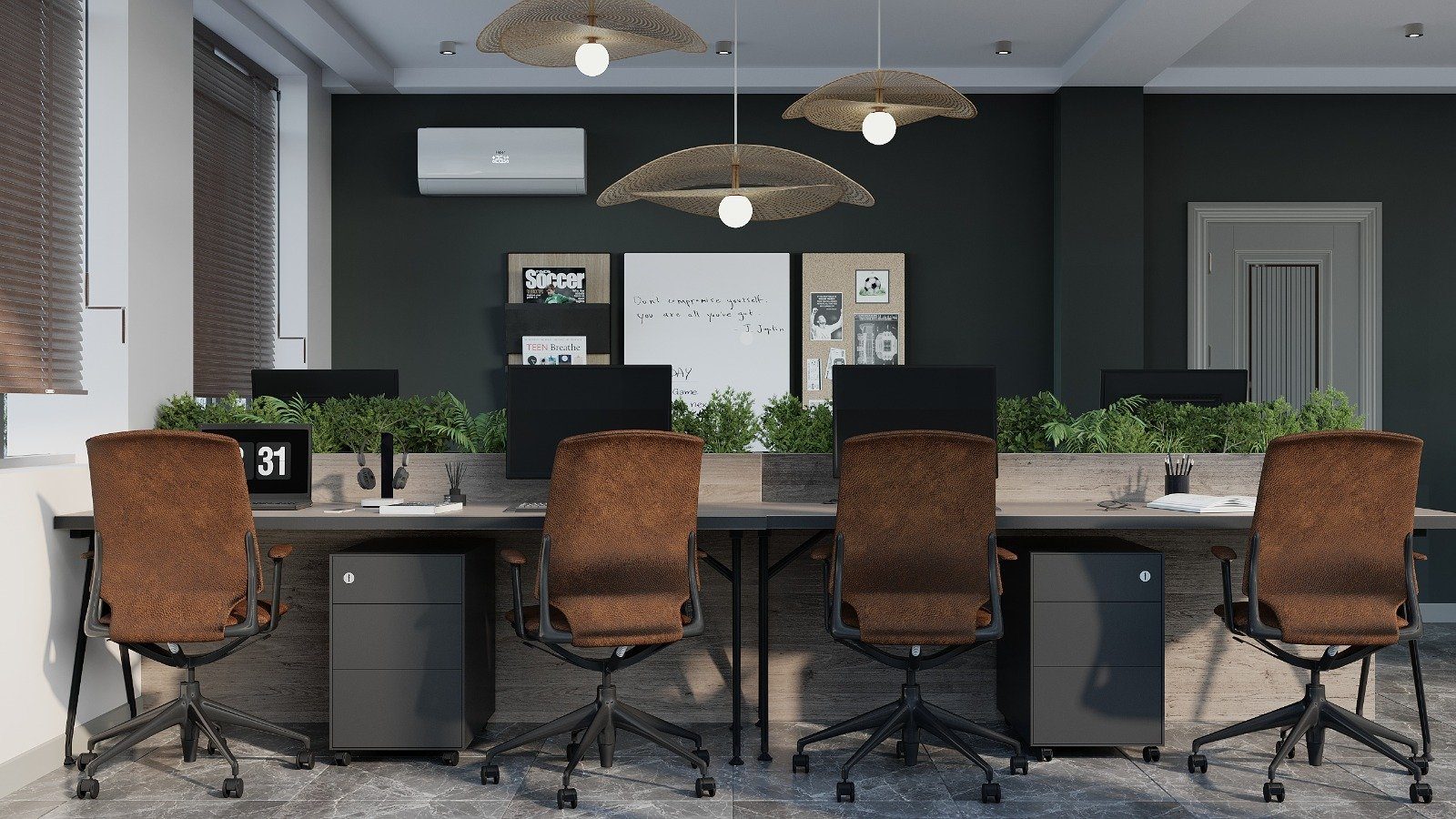

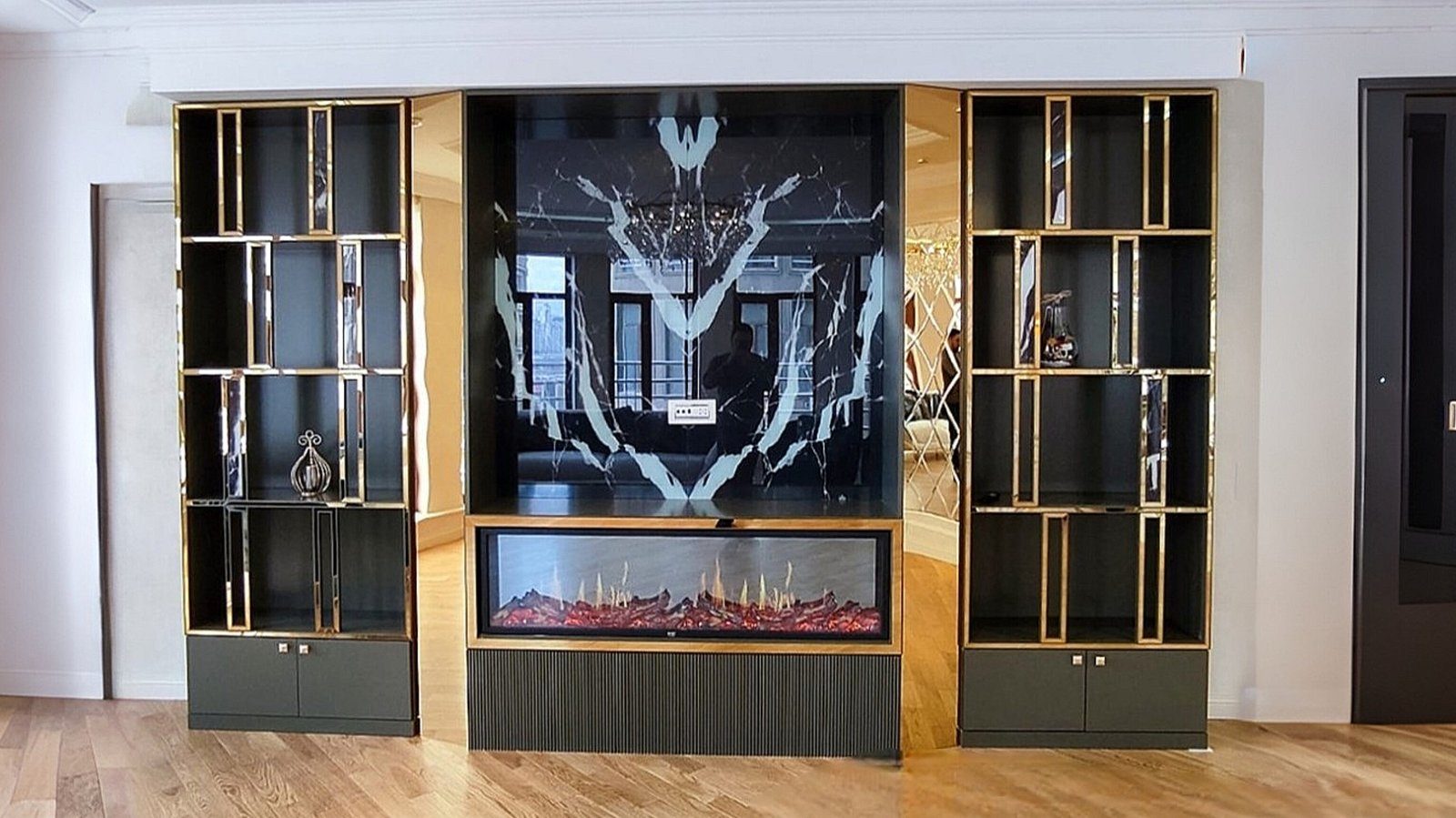
From the hallway you can see three rooms at once: a white gloss kitchen on the right, a walnut classic living room ahead and a grey concrete-effect bedroom on the left. Each might be appealing on its own, but together the flat looks assembled from three different homes. Consistency does not mean making every room the same. It means the rooms speak the same language: each has its own character, but moving from one to the next feels natural.
The basis of a shared language: two or three constants
You do not need to match everything. Two or three constant elements repeated through the home are enough. That might be a core neutral colour, one wood decor, a single type of metal detail or a common character of line. If fronts in every room are a calm light tone and the wood is always the same warm oak, a green accent in the kitchen and a deep blue one in the bedroom sit comfortably together.
The rule is simple: keep the constants few, but repeat them consistently. When every room gets a new wood decor, a new metal finish and a new handle shape, the shared language disappears.
A palette in three layers: base, supporting, accent
A practical approach is to think of the palette in three layers. The base colour covers walls and large furniture surfaces and stays the same, or nearly so, throughout. The supporting colour is the wood, fabric or a second front tone, and can vary slightly between rooms. The accent is used in small doses: cushions, one armchair, the inside of an open shelf, a single wall in a child's room.
This split makes decisions easier. When choosing furniture for a new room, the question becomes not whether you like a colour, but which layer of the palette it belongs to.
Repeating materials and decors
Furniture boards come in hundreds of decors, and products all called oak can look quite different. When the wood in the kitchen is close to, but not exactly the same as, the TV unit in the living room, the difference is more noticeable side by side. In such cases it is better either to use the same decor code or to choose two clearly different woods on purpose, such as one light and one dark. Two tones that are almost the same are the hardest combination.
Working within one manufacturer's board collection makes this simpler. Manufacturers such as Egger and Kronopol list decors by code, so the same code can be specified for every room.
Small details, big effect
Handles, furniture legs, lighting profiles and even switch colours affect the overall look more than expected. Matt black handles in the kitchen, gold in the bedroom and chrome in the living room add up to a muddle, even if each is attractive. Choosing one metal tone for all furniture, with a deliberate exception in just one room, gives a cleaner result.
Front profiles also create a common language. If the living room has framed classic fronts and every other room has completely flat ones, the transition is abrupt. Echoing the frame motif in simplified form elsewhere, for example with a fine routed line, softens that contrast.
Keeping each room's character
Consistency should not become monotony. A child's room should not be a miniature copy of the bedroom, and a study should not look like an extension of the living room. It helps to give each room one element of its own: a coloured front or playful shape in the child's room, an upholstered headboard in the bedroom, open bookshelves in the study. The shared palette and details tie these individual elements together within one home.
A simple check before planning
- Draw the floor plan and mark the rooms visible together from the hallway; that is where consistency matters most.
- List what will stay, such as flooring, doors and existing furniture; the palette starts from them.
- Put the chosen board and fabric samples side by side in daylight.
- Settle on one main tone for metal details.
- Choose one distinguishing element per room in advance so random accents do not multiply later.
This list is especially useful if furniture is ordered in stages: the decor codes and handle model chosen for the first room are recorded and become the reference for the rooms that follow.
If several rooms are ordered from Zaferoglu Mebel at once, whether kitchen, bedroom, living room, nursery or wardrobes, the decors, front profiles and handles can be drawn from a single agreed list for the whole flat.