
Despite digitalisation, paper documents remain part of daily work in many offices: contracts, accounting records, personnel files and project materials. When they pile up on desks, working space shrinks, people hunt for the paper they need, and confidential documents sit in plain view. To build a sound storage system, first group documents by how often they are used, then choose suitable furniture for each group.
A three-level approach
Office documents can usually be divided into three groups:
- Everyday working documents: files an employee uses daily or several times a week.
- Active archive: current-year or current-project documents consulted from time to time.
- Long-term archive: documents that must be kept by law but are rarely opened.
Each level lives in a different place: daily documents within reach, the active archive within the department, and the long-term archive in a separate room or storeroom. This division clears desks and prevents clutter across the office.
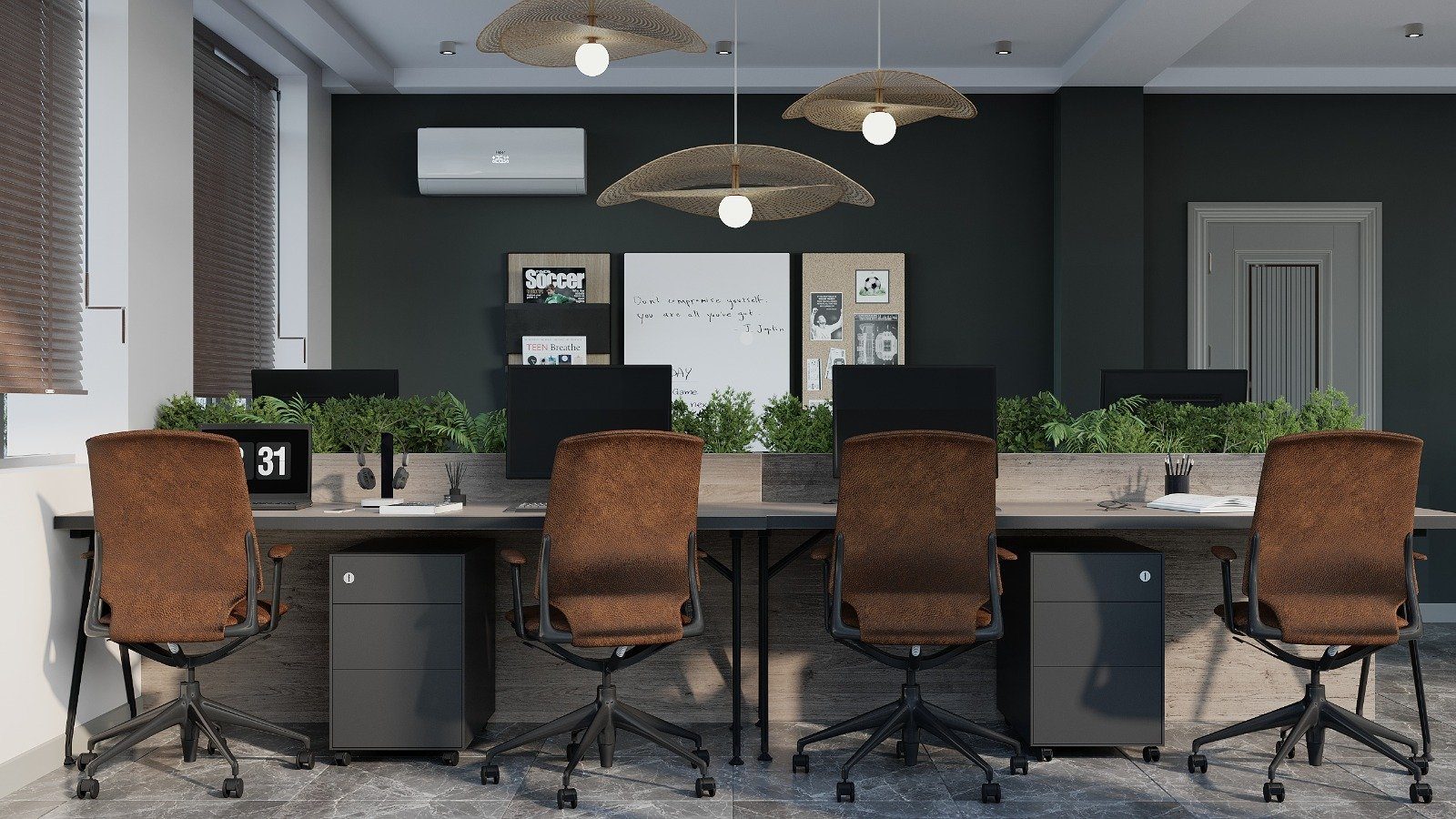
Mobile pedestals: storage at the desk
A mobile pedestal under or beside the desk is the main piece of furniture for daily documents. It usually has three drawers: a shallow top drawer for stationery, a middle one for papers and a deep bottom drawer for suspension files. Suspension files hold documents upright, with labels readable from above.
A central lock secures all drawers with one key. Castors make the pedestal easy to move for cleaning or when desks are rearranged, but at least two should lock so it stays put during work. The pedestal must fit under the desk while leaving knee room.
Filing cabinets: department level
Tall or mid-height filing cabinets serve the active archive. Internal dimensions should be calculated from binder sizes: standard lever arch files stand upright on shelves, so shelf spacing and depth must hold them without squeezing. With poorly calculated shelves, binders either do not fit or leave too much wasted space.
Door type matters too. Hinged doors reveal the whole interior, sliding doors save space in narrow walkways, and tambour doors roll up out of the way. All cabinets for confidential documents should lock. Open shelving suits only public information, catalogues and reference books.
The archive room: load and density
If a separate room is set aside for long-term archives, capacity and durability matter more than looks. Paper is heavy, and a shelf full of binders carries a considerable weight. Shelf thickness, spacing and supports are chosen for that load, and long shelves need intermediate supports or a metal frame to prevent sagging.
For dense archives, mobile shelving on tracks is used. It opens an aisle only where needed, fitting more shelving into the same area. Such systems must be planned around the floor's load-bearing capacity.
Security and protection
Document storage is also about protecting information. Personnel, financial and contract documents need a separate lockable cabinet, a record of who holds keys and restricted access. Special fire-resistant safes exist for very valuable documents; an ordinary furniture cabinet does not serve that purpose.
In an archive room, humidity and direct sunlight damage paper. The room should be ventilated, and shelving should not be placed next to water pipes or radiators. Tall cabinets must be fixed to the wall, as a full cabinet toppling over poses a serious injury risk.
Simple planning steps
Before ordering furniture, it helps to measure the current volume of documents: how many metres of binders there are and how much they grow each year. That figure lets you calculate the number of cabinets and spare capacity for the future. Then define each department's daily and active archive needs separately.
When ordering office storage from Zaferoglu Mebel, giving an estimate of how many metres of files you keep and the room plans allows pedestals, filing cabinets and archive shelving to be sized accurately.