
People who sit at a desk all day often complain of back and neck fatigue by evening. Height-adjustable desks are appearing more and more in offices and homes as a response. But such a desk does not solve the problem on its own: the mechanism, stability and habits of use all need to be right. Otherwise an expensive desk stays at one height and turns into an ordinary table.
Types of mechanism
Height can be changed in several ways, and each affects daily use differently:
- Electric desks rise and lower at the touch of a button. Single-motor models are designed for lighter loads, while dual-motor models handle heavier loads and move more steadily.
- A hand-crank mechanism needs no power, but changing height takes time and effort, so people tend to adjust it less often during the day.
- Gas-lift or pneumatic mechanisms are quick, but their load range is limited and they must be set for the weight on the desk.
If you plan to change position several times a day, an electric mechanism is in practice the most widely used option. Memory preset buttons reduce switching between sitting and standing to a single touch.
Load and stability
Wobble at standing height is the most common complaint. If the monitor shakes while you type, it gets in the way of work. Several factors affect stability: the leg profile and number of telescopic stages, the cross-bracing of the frame, the size and thickness of the desktop, and whether the desk is raised to its maximum height. A desk is least stable at its highest position.
The load rating given by the manufacturer includes monitors, monitor arms, a computer tower, a printer and the forearms resting on the desk. Choosing it with a margin also extends motor life. After assembly, tightening all frame bolts and levelling the desk with the floor glides noticeably reduces wobble.
Desktop and cables
The desktop on an adjustable desk is chosen much as on a fixed one, with one difference: it moves regularly. A laminated board gives a durable surface for daily work, and the edge banding should be firmly bonded against knocks. The width and depth should suit the number of monitors and the screen distance, while an oversized desktop should not add load and wobble to the mechanism.
Cables need separate planning. When the desk rises, all cables, including power, monitor and network, must be long enough, with none pulled tight. A cable tray under the desktop and a cable spine running down the leg keep them together. If the desk stands near a wall, window sill or neighbouring cabinet, check that nothing catches as it moves up and down.
Correct height and working routine
The right height follows the same principle whether sitting or standing: shoulders relaxed, elbows at roughly a right angle and forearms free above the keyboard. The top edge of the monitor sits at or slightly below eye level, with the screen about an arm's length away. When standing, the monitor has to rise by the same amount, so the monitor mount should move with the desk.
Standing is not a complete substitute for sitting all day. Standing all day puts its own strain on the legs and back. What helps is changing position regularly. Many users start with short standing periods and link switching positions to daily events such as phone calls or meetings. When standing, a soft anti-fatigue mat and comfortable shoes also make a difference.
Checklist when choosing
- How many monitors and what equipment will be on the desk, and roughly how much do they weigh?
- Do the minimum and maximum heights suit the user's height?
- Does the desk shake at its highest position while typing?
- Is there a memory preset function?
- Are cables long enough when the desk is raised, and gathered together?
- If a drawer pedestal goes under the desk, does it obstruct movement?
- If several people share the desk in an office, is adjustment simple for everyone?
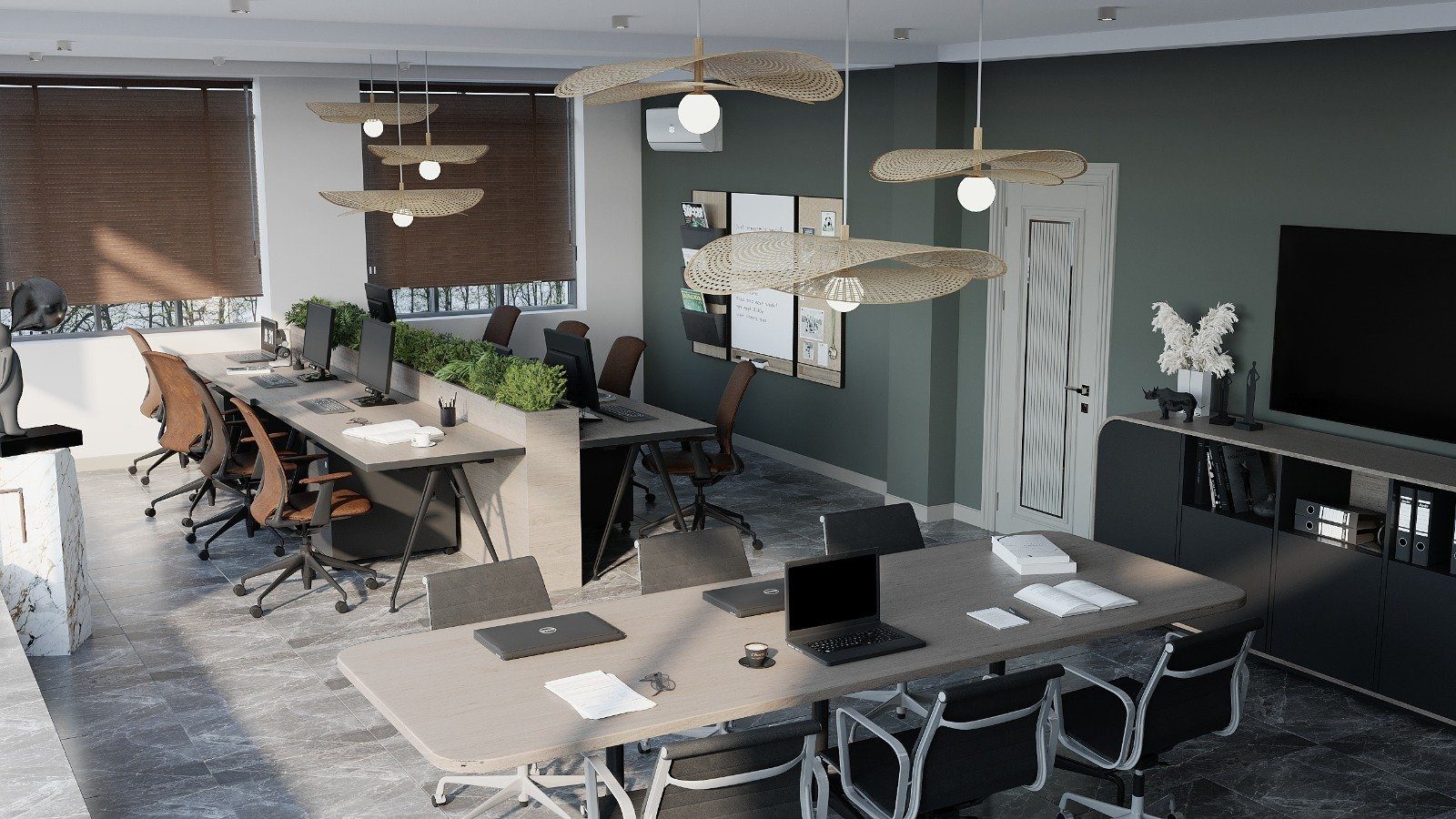
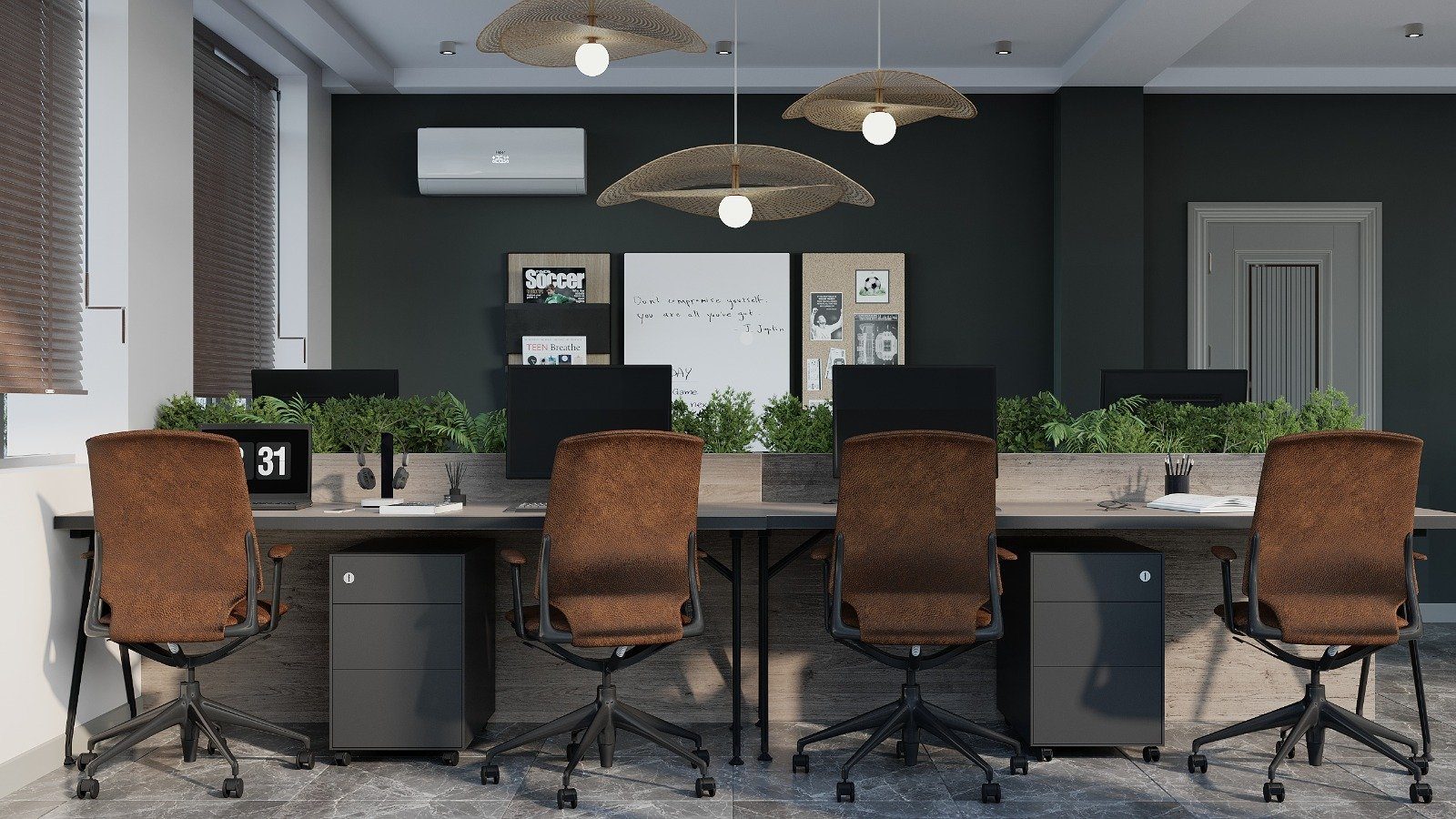
Zaferoğlu Mebel makes office furniture to individual measurements. Planning an adjustable desk together with the rest of the workstation, including storage, partitions and cabinets, allows cable routes and movement clearances to be solved in advance.