
A desk for a child starting school is usually bought once and used for years. The trouble is that a desk that fits in the first year feels low by the fifth and cramped by the seventh. If growth is not considered from the start, the child either hunches over it or carries homework to the kitchen table. Some planning avoids that.
Height: the desk and chair together
There is no single correct desk height, because it depends on the child's height and on the chair. A simple check works well: when seated, the child's feet should rest flat on the floor or on a footrest, the knees should be at roughly a right angle, and the forearms should rest on the desk without raising the shoulders. When the elbows are at about the level of the desktop, writing and typing are not tiring.
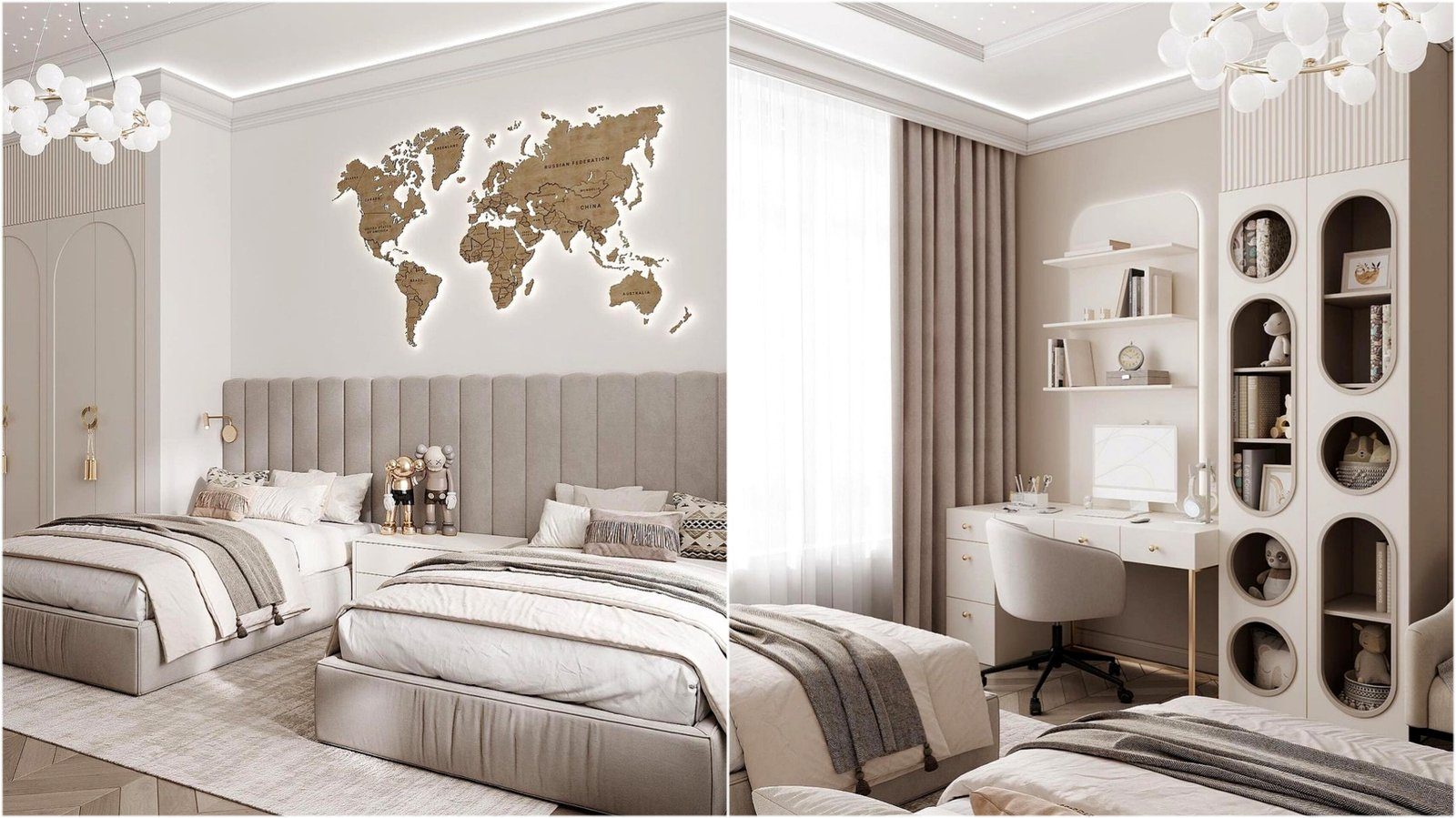
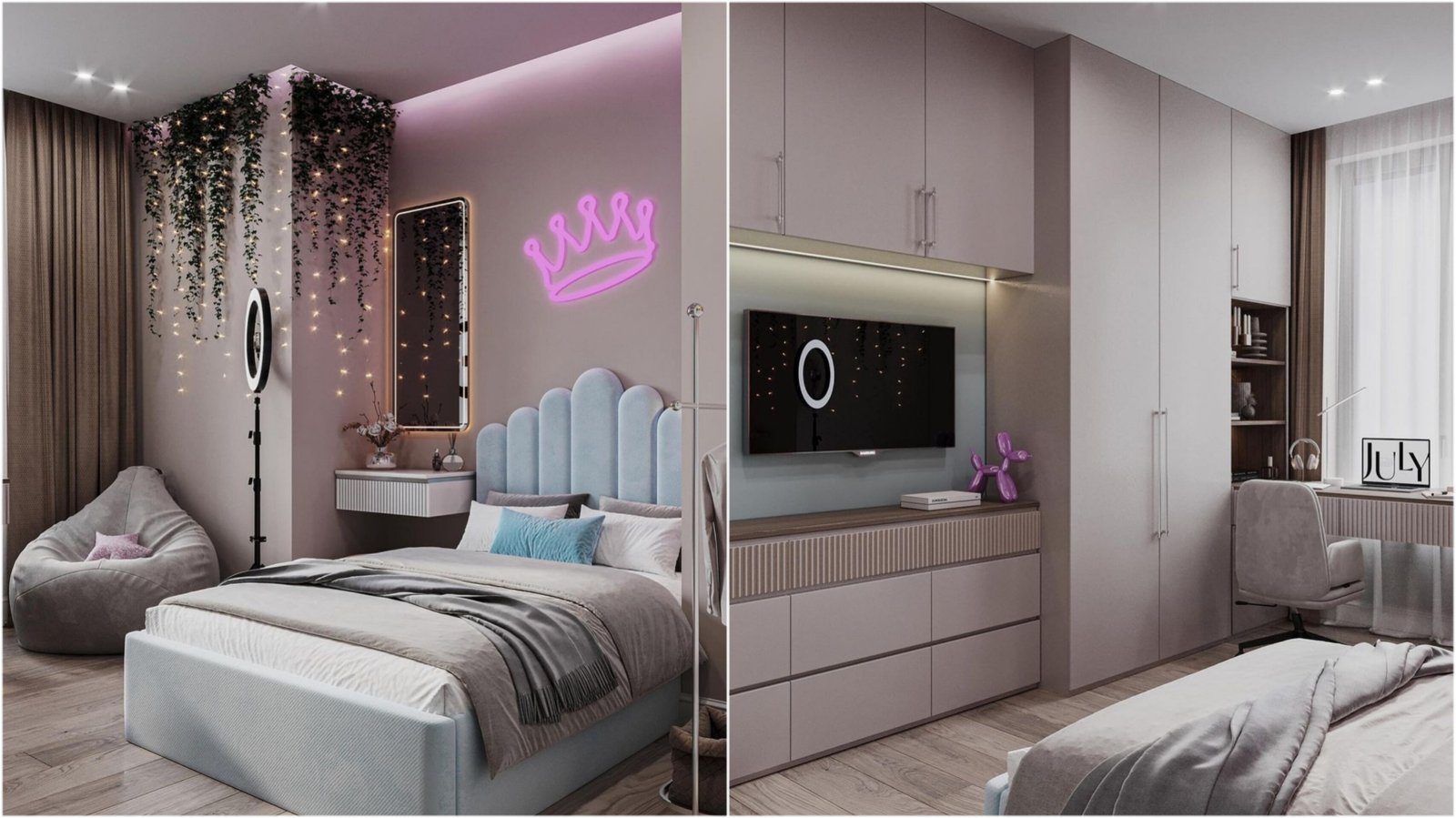
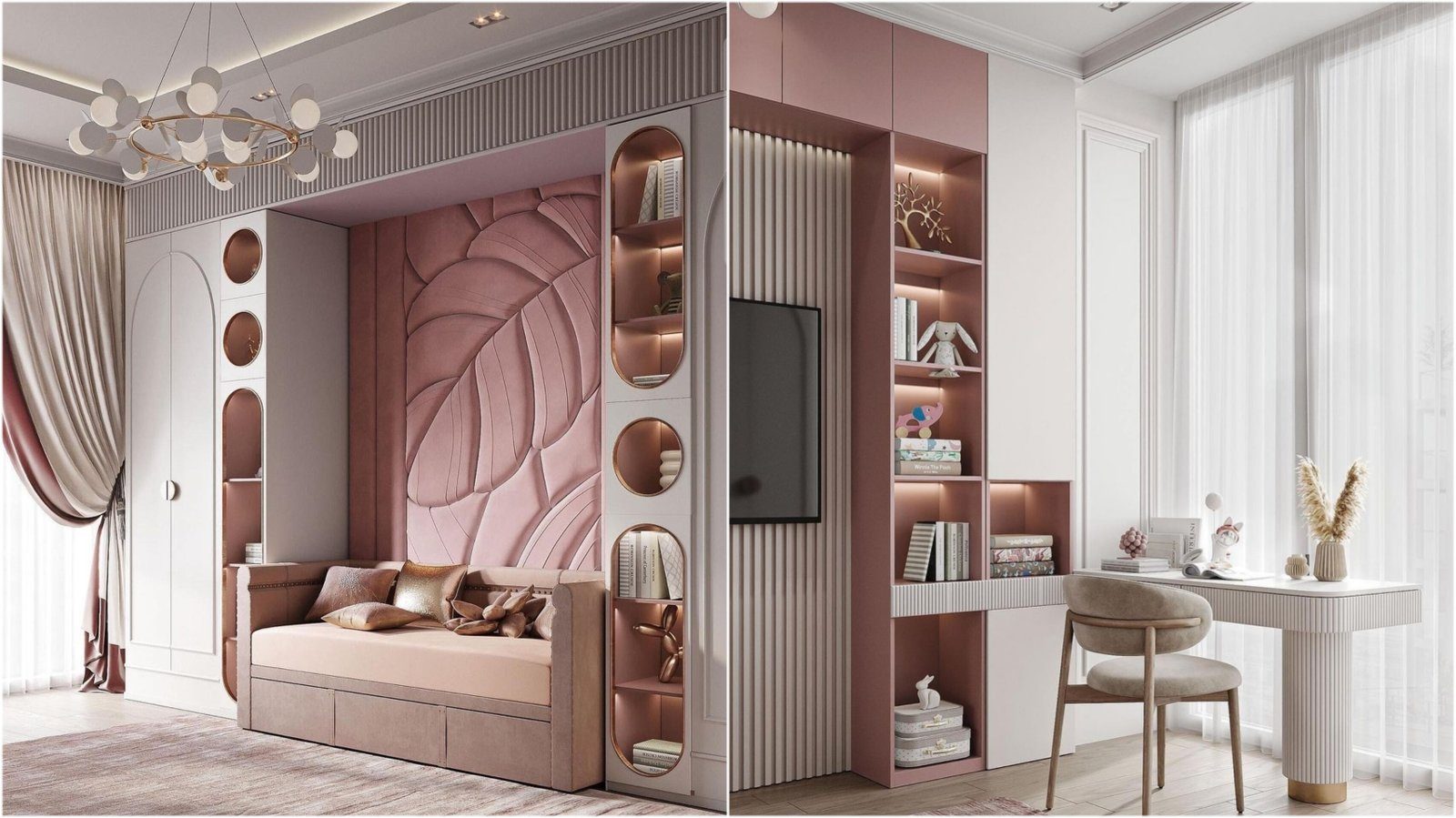
There are two ways to keep that relationship as the child grows. One is a height-adjustable chair plus a footrest: the desk is made at adult height, and for a younger child the chair is raised and a footrest added. The other is adjustable desk legs. In made-to-measure furniture the desktop is often joined to pedestals or wall units, so the first option tends to be more practical.
Depth and width: notebooks, books and a computer
A school desk is not just for opening an exercise book. A textbook, a notebook, a pencil pot and sometimes a laptop or monitor need to fit at the same time. On a shallow surface a monitor ends up too close to the eyes and books hang off the edge. Before choosing the depth, decide whether there will be a monitor or only a laptop.
For width, it helps to think in two zones: a clear area for writing and an area for the computer. When a child does not have to clear everything away to switch tasks, the desk stays tidier.
Placement: light and focus
Putting the desk near a window makes good use of daylight, but direction matters. For a right-handed child, light should ideally come from the left, otherwise the hand casts a shadow over the writing; for a left-handed child it is the other way round. A monitor placed with its back to the window or facing it causes glare and eye strain, so screens are usually positioned side-on to the window.
Some children feel uneasy sitting with their back to the door, and it distracts them. If possible, the child should be able to see someone entering from the side. A socket for a desk lamp for evening homework is part of the plan too.
Storage: within reach, but off the desktop
The desktop fills up quickly, so storage should be planned with the desk:
- a drawer pedestal for pens, rulers and small items;
- open shelves above or beside the desk for textbooks, within reach from the chair;
- a closed section to keep games and hobby items apart from the study area;
- a cable grommet or channel so computer and lamp wires do not trail underfoot.
If shelves are hung low directly above the desk, the child may hit their head when standing up, so check the shelf height against how the child sits and gets up.
Desktop material and edges
A school desk is tested every day: pen marks, felt tips, modelling clay, glue and the occasional spilt glass of water. A matt laminated surface hides these marks better than a glossy one and wipes clean with a damp cloth. Ink stains show more on very light surfaces, while dust and fingerprints show on very dark ones; mid tones and a subtle wood grain cause the fewest problems.
The front edge where the child's forearms rest matters most. A sharp edge presses into the arms and is a hazard if the child bumps into it. A desk with a rounded front edge sealed with thick edge banding is more comfortable and lasts longer, because that front edge is exactly where banding is most likely to come away.
Quick check
- When seated, are the child's feet supported and shoulders relaxed?
- Is the desk deep enough for a computer and an open book together?
- Does the lamp sit on the opposite side to the hand the child writes with?
- Can the chair or desk be adjusted as the child grows?
- Are corners rounded and edges sealed with banding?
If the desk is designed by Zaferoglu Mebel together with the shelves, wardrobe and bed, even a small bedroom can give a child a proper study corner.