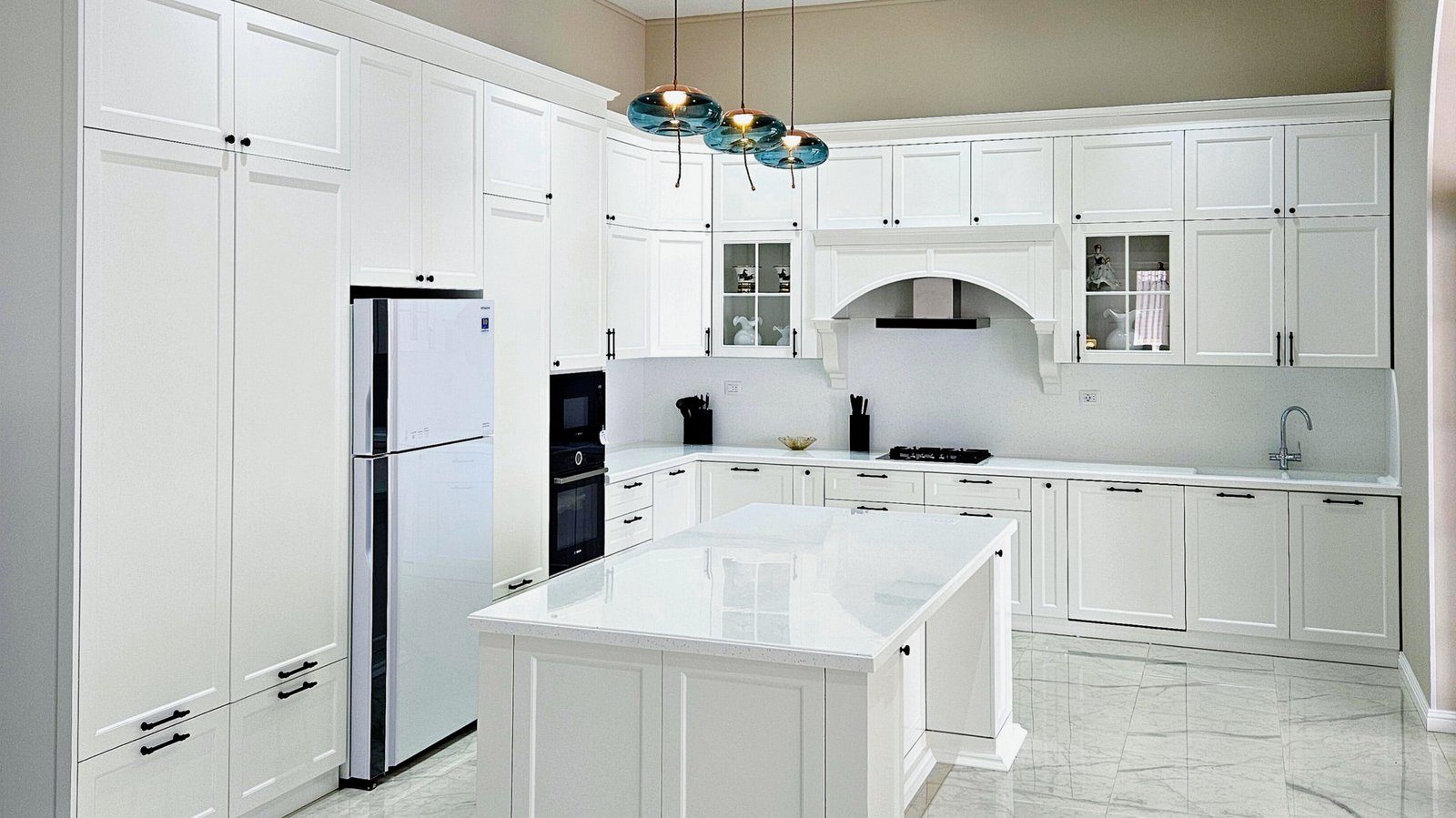

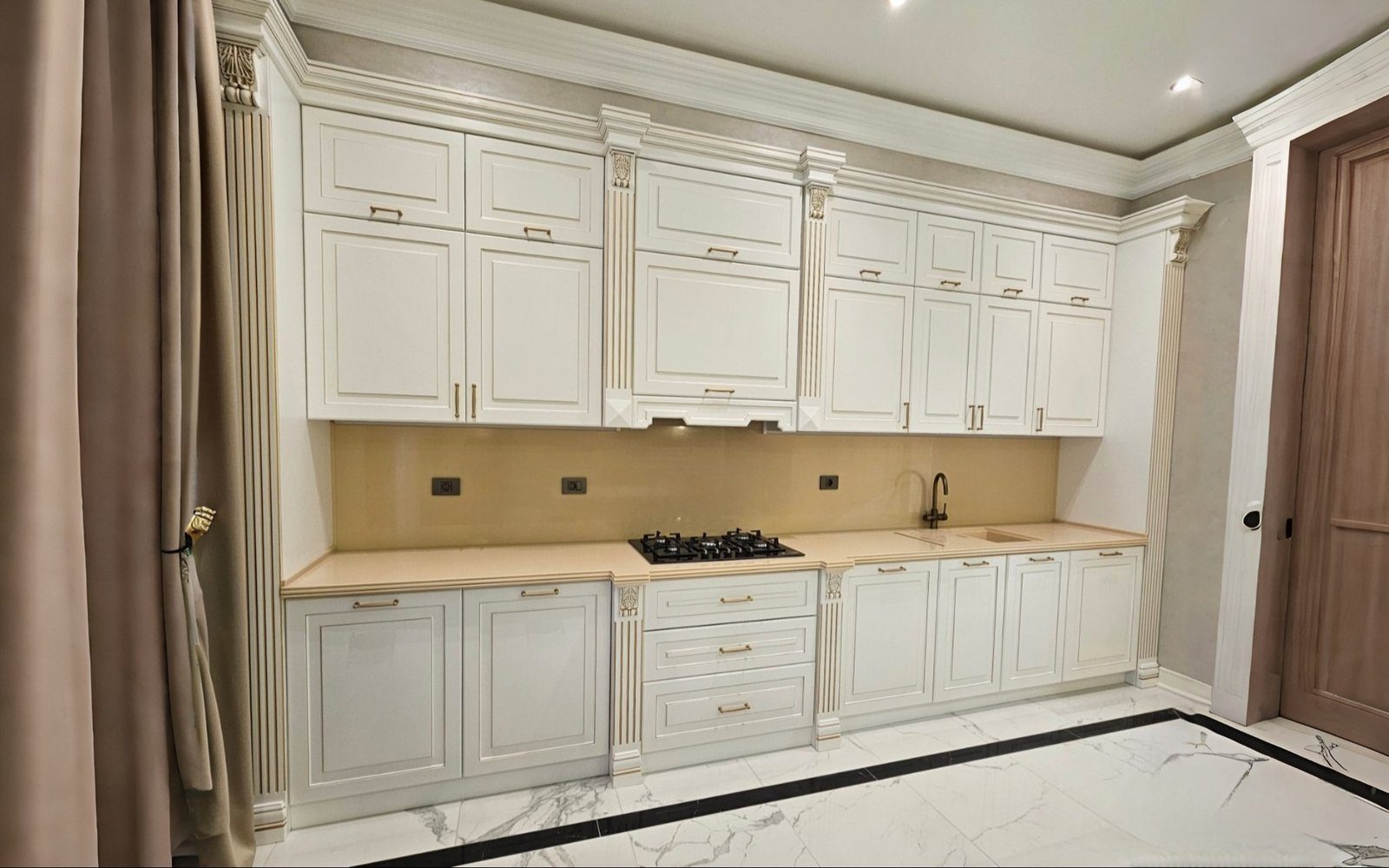
Choosing materials is one of the most exciting moments in a furniture project: samples of fronts, worktops, edging and handles are laid out, set side by side and compared. But these samples are usually seen in office or showroom light, lying flat, and small. The kitchen or wardrobe itself will stand at home, upright along a wall, in different light and surrounded by other surfaces. To choose well, check samples in conditions as close as possible to where they will end up.
Check samples where they will be
Taking samples home, or at least picturing the room and its light, makes the choice much more accurate. Instead of laying a front sample on a table, lean it against a wall: fronts stand vertically and catch light that way. A worktop sample should lie flat, because light falls on it from above and from the window.
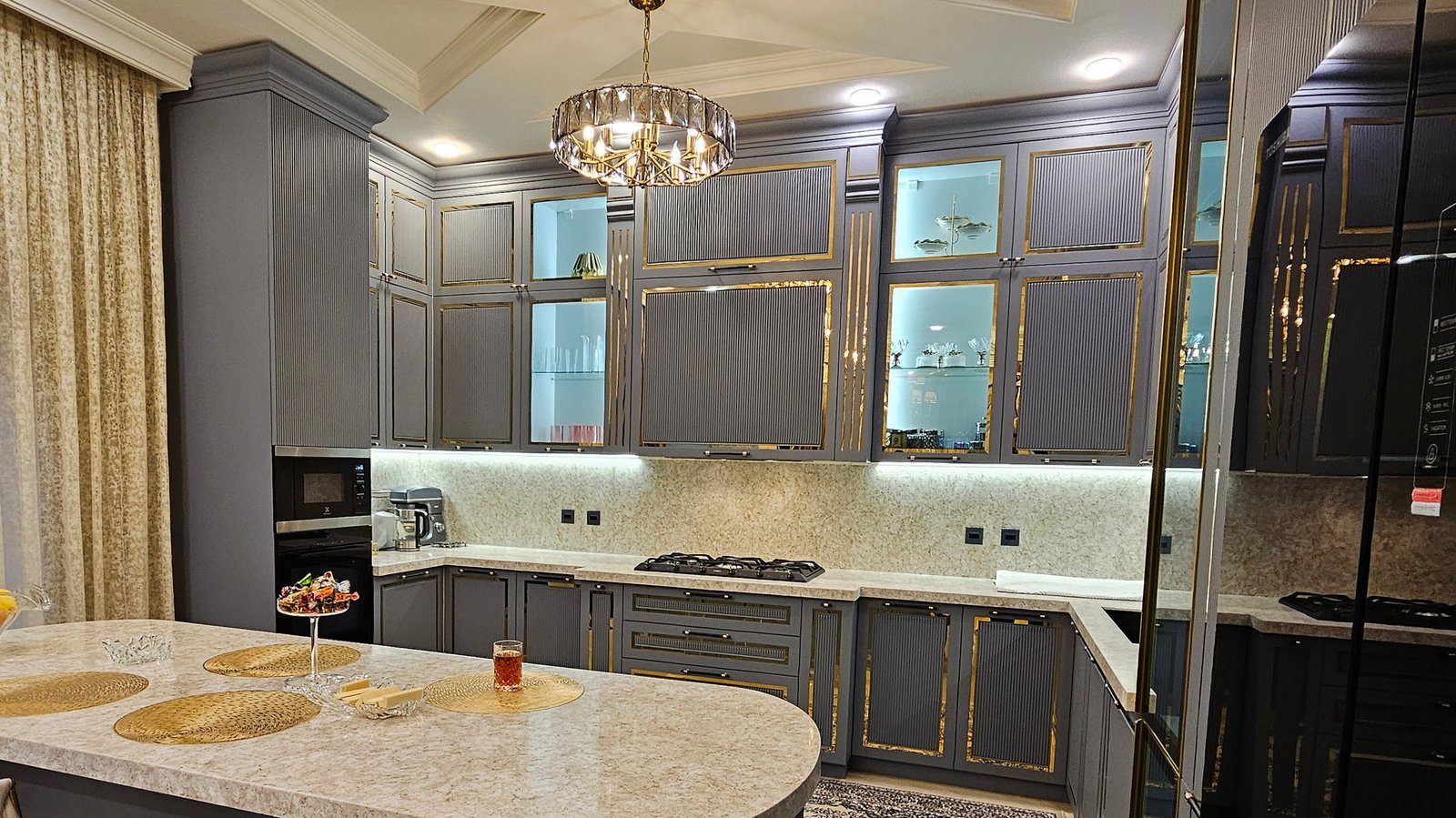
In a kitchen, under-cabinet lighting makes the worktop and splashback look completely different. If such lighting is planned, light the sample close up and at an angle with a torch or desk lamp. This shows texture, sheen and possible reflections.
Day and evening: two different kitchens
Daylight is cool and shows colours relatively accurately. In the evening homes usually use warm lamps, which make white and grey surfaces look yellowish and cool colours look faded. A cool white front can drift towards cream in warm evening light, and a light grey can take on a beige cast.
Think about which light your decision should rest on: if the kitchen is used mainly by day, daylight matters most; if the family gathers there in the evening, evening light is more important.
The direction of the windows matters too. A north-facing kitchen gets even, cool light all day and colours look slightly cooler. In a south- or west-facing kitchen, late afternoon sun washes surfaces in orange-gold. The same sample gives a different impression in each, so a material you admired in someone else's home should be checked separately in the light of your own kitchen. Ideally, the sample should please you in both. If it looks lovely in one and unsettling in the other, it is better to look for another shade.
Gloss and texture
A gloss front looks deep and striking as a sample. Across a large surface, though, it mirrors windows, lamps and the opposite wall, and fingerprints and dust show more. A matt surface scatters reflections and gives a calmer colour. Hold the sample at an angle towards the window: however many reflections you see on it, you will see on the full front.
With textured and woodgrain boards, check the grain direction too. On a small sample it is often unclear whether the grain will run vertically or horizontally. Along a long kitchen, horizontal grain widens the space, while vertical grain emphasises height. Whether the grain continues from one front to the next should also be settled in the design.
From small square to large surface
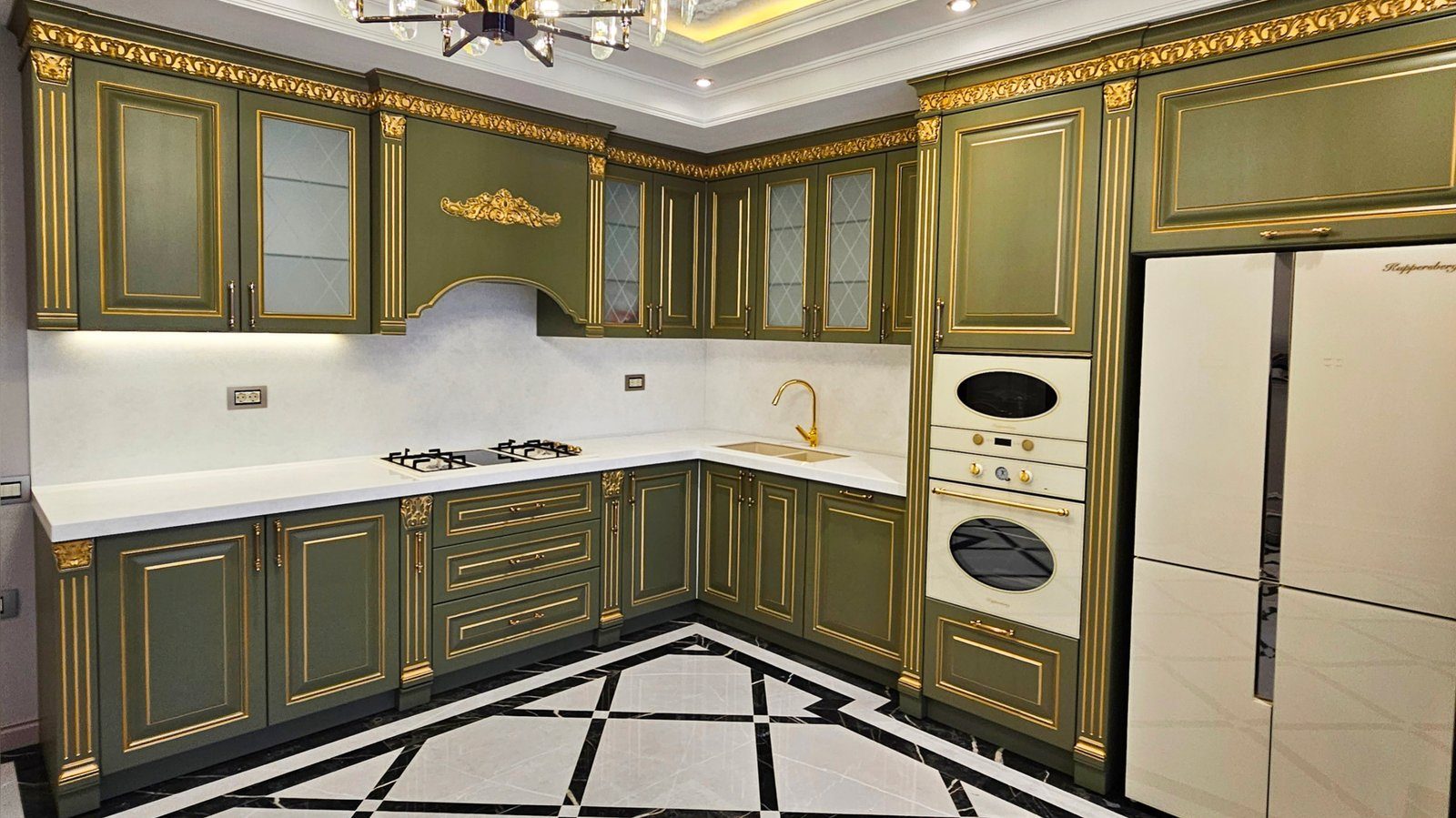
The same colour looks stronger and darker across a large area than on a sample. When choosing a light shade, it helps to include one tone lighter in the comparison. With dark, saturated colours the effect is sharper: a small dark green square looks tasteful, while fronts along an entire wall can make the room feel smaller. If possible, look at the maker's photos of real projects to see how the material looks on a large surface.
Matching different materials
In a kitchen, the same colour does not look the same on different materials. A laminated board carcass, painted MDF fronts, a quartz or stone worktop and plastic edge banding can differ in shade even when the catalogue gives them the same name. A sensible order for checking is:
- Put all the samples together in their future positions: fronts upright, worktop flat.
- Add a sample of the floor and wall colour.
- Place handles and profiles on the front sample.
- Look at each combination in daylight and evening light.
- Note the codes of the chosen samples or photograph them so the order is right.
When ordering a kitchen from Zaferoglu Mebel, putting front, carcass and worktop samples together, ideally in the light of the room where they will be fitted, shows most accurately whether they match.