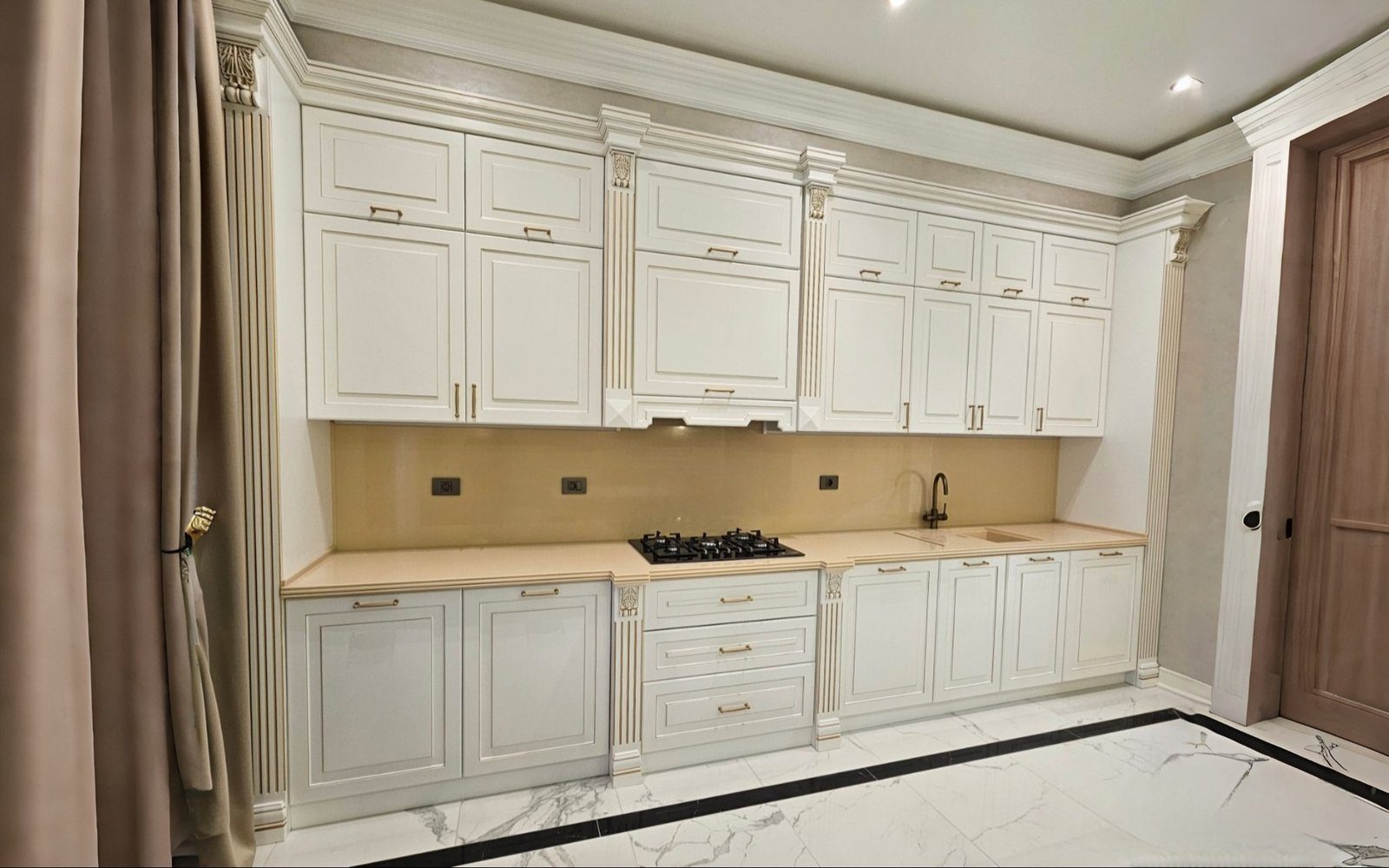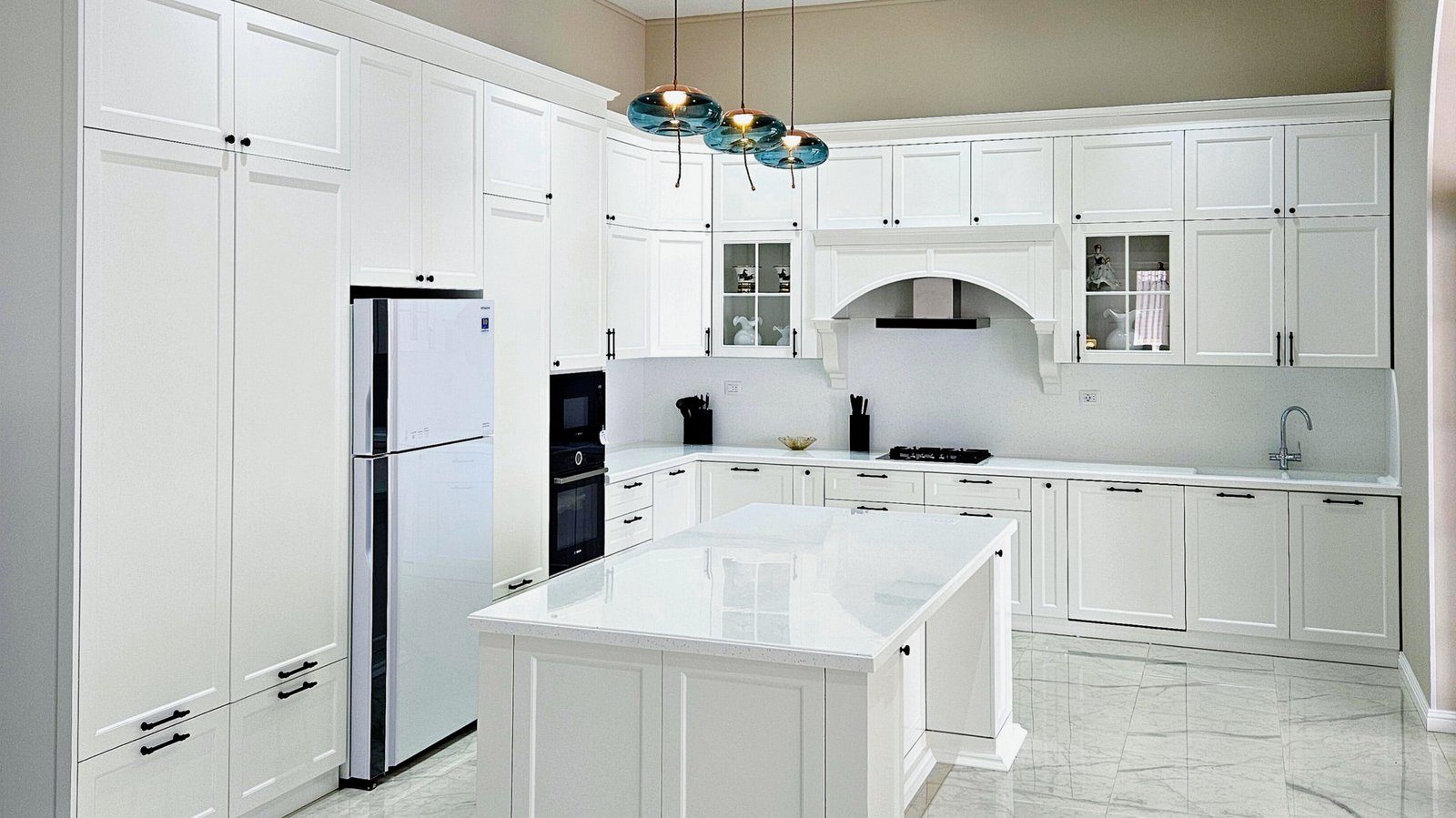

Acrylic is one of the first options people come across when they want high-gloss kitchen fronts. A near-mirror surface, deep colour and a seamless look make a small kitchen feel brighter. Yet the question asked most often about acrylic is always the same: "Does it scratch?" The answer comes from understanding the material and how it is used day to day.
What an acrylic front is made of
What furniture makers call an "acrylic front" usually consists of an acrylic (PMMA) sheet bonded to an MDF core. Colour and gloss sit in that top layer, while the MDF gives the front its shape and rigidity. The back is often covered with matching laminate or plastic so the board reacts evenly to changes in humidity.
Because the acrylic layer is coloured through its thickness, a small scratch does not reveal a different colour underneath, unlike a painted surface. That makes it partly repairable: surface scratches can be softened with a special polishing paste.
Gloss and scratches: setting the right expectations
Acrylic is softer than glass or stone. In everyday use, fine web-like micro-scratches gradually appear, especially around handles and on the doors of the dishwasher and bin units. On dark gloss colours — black, navy, burgundy — these marks are clearly visible against the light, while on white and pale beige they are hardly noticeable.
The main sources of scratches are often the "invisible" ones:
- Wiping dust with a dry cloth — fine particles in the dust act like sandpaper.
- Coarse cloths that are not microfibre.
- Abrasive powders and the rough side of sponges.
- Metal objects such as rings, watches and belt buckles rubbing against the surface.
Matt acrylic is also available. It shows fingerprints and micro-scratches far less, but it does not have the mirror effect of gloss acrylic.
Edges: the secret of a seamless look
Edge finishing does more than anything else to determine the quality of an acrylic front. The edge banding should match the front in colour and gloss, and the joint line should be as thin as possible. With laser or PUR-glued edges the glue line is almost invisible and more resistant to moisture. With banding applied with ordinary glue, a thin dark line or a lifting edge may appear over time.
Slightly rounded corners withstand knocks better: a sharp corner is the first place acrylic chips.
Heat, light and the protective film
Acrylic can deform at high temperatures. Fronts next to the oven, hob and dish drainer need the clearances recommended by the appliance maker and heat-protection profiles. The hot steam released when the dishwasher opens should not hit the front of the drawer above it directly.
New acrylic fronts arrive covered with a protective film. It protects the surface during installation but should not be left on for long: sunlight can leave adhesive residue. Once installation is finished, peel the film off in one movement at an angle. In the first days the surface still carries a static charge and may attract dust; an antistatic cleaner reduces this.
Care rules
- Remove dust with a slightly damp microfibre cloth, not a dry one.
- For ordinary grease, warm water with mild soap is enough.
- Do not use products containing alcohol or acetone, or abrasives.
- Wipe in one direction rather than in circles.
- For surface scratches, use only a polish made for acrylic, testing it first on a hidden area.
Who acrylic suits
Acrylic fronts are a good choice for anyone who wants a glossy, smooth, simply shaped kitchen and is prepared to give the surface regular, gentle care. On heavily used lower units that children touch often, a light colour or matt acrylic may be more practical, while on wall cabinets gloss acrylic shows its full effect.
Combining acrylic with other materials also works well. Gloss acrylic on the wall cabinets and matt laminate or a woodgrain board in the same colour family on the base units, for example, gives a kitchen both brightness and practicality. In that case it is important to check the colours side by side on samples, because the same tone reads differently on gloss and matt surfaces. On handleless fronts, profile handles reduce direct finger contact with the surface and help the acrylic keep its gloss for longer.
When ordering an acrylic-front kitchen from Zaferoglu Mebel, it helps to judge the material against the room's light and your cooking routine, and to hold an acrylic sample next to painted and HPL fronts before deciding.