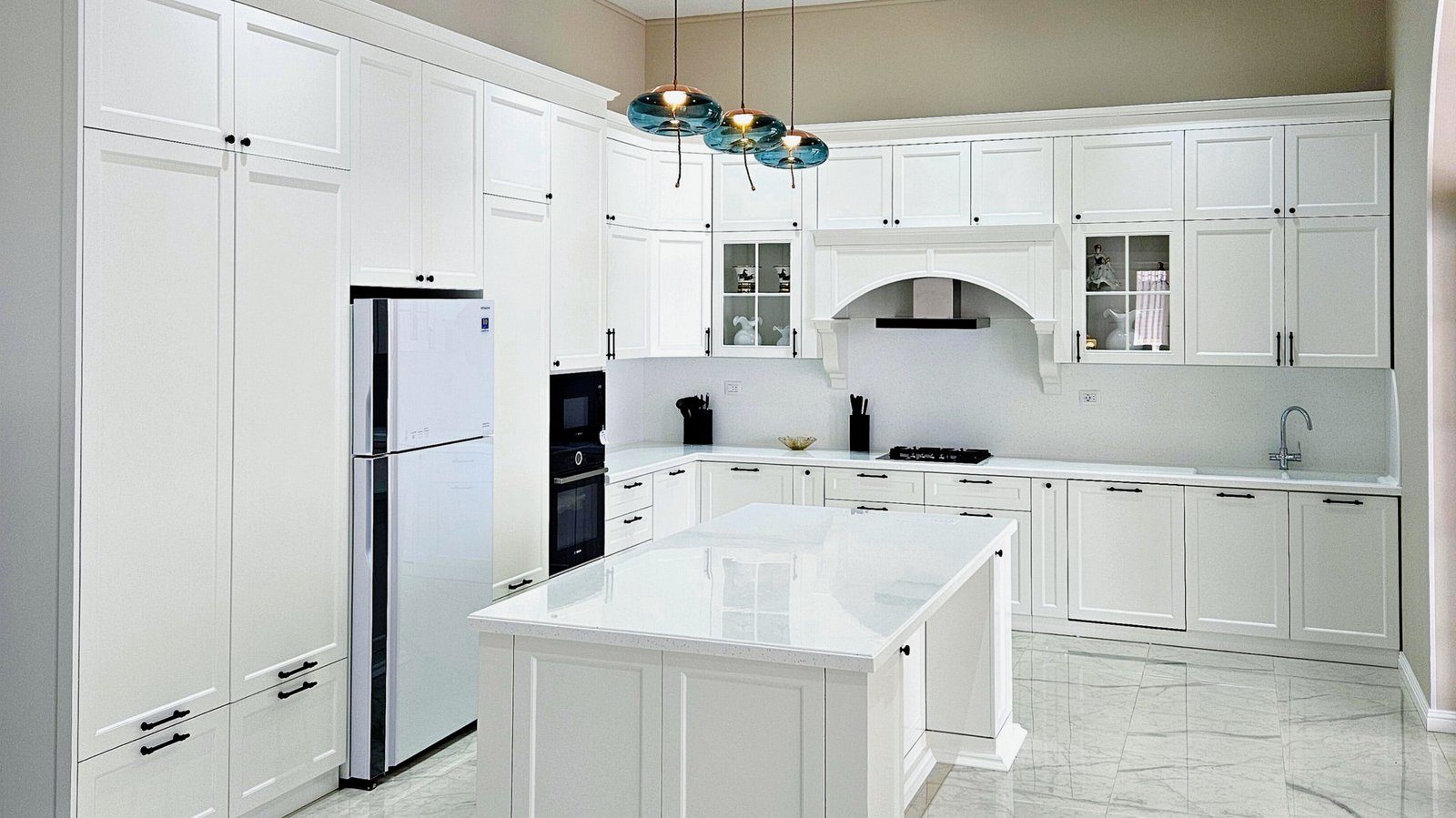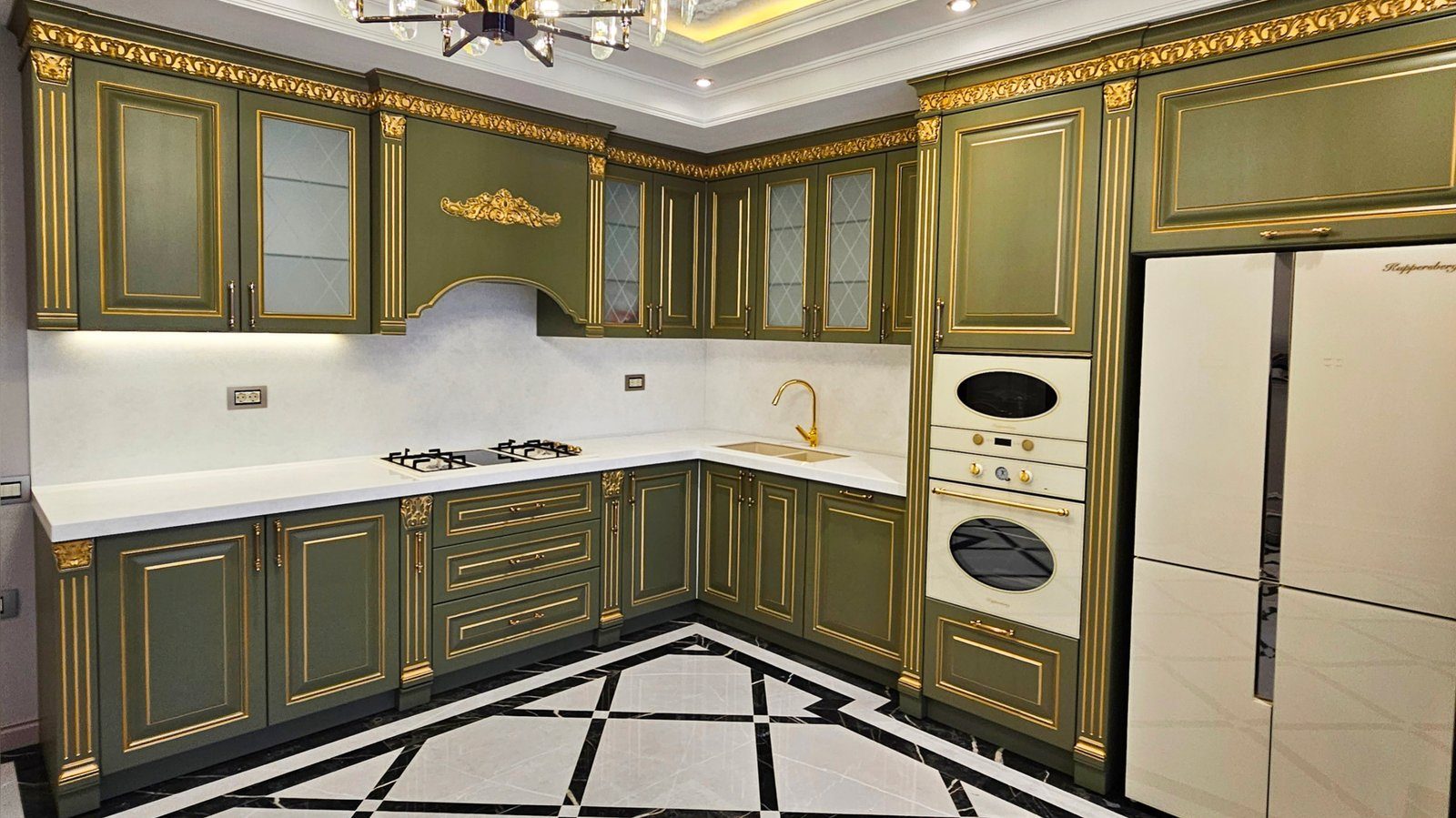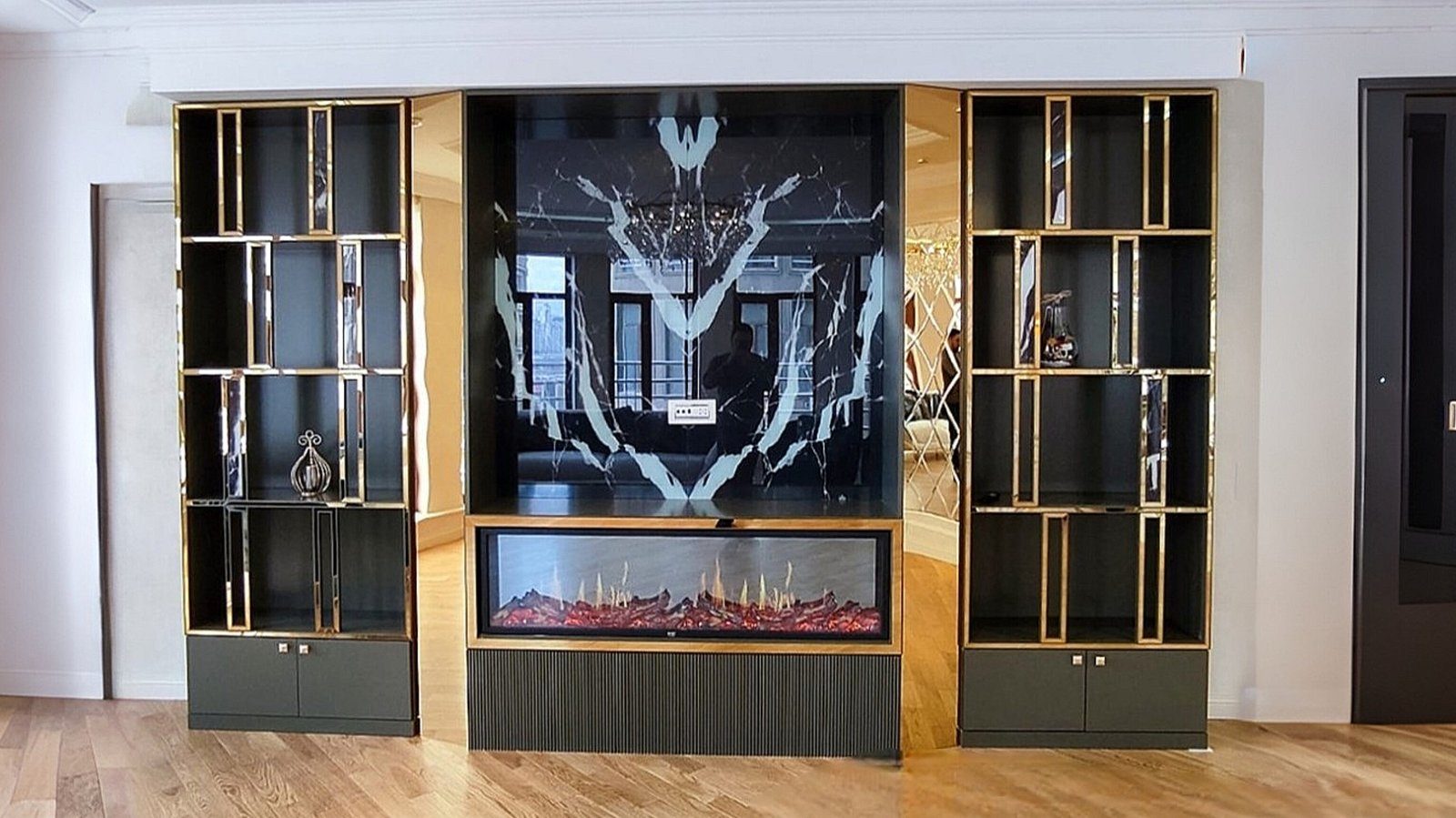

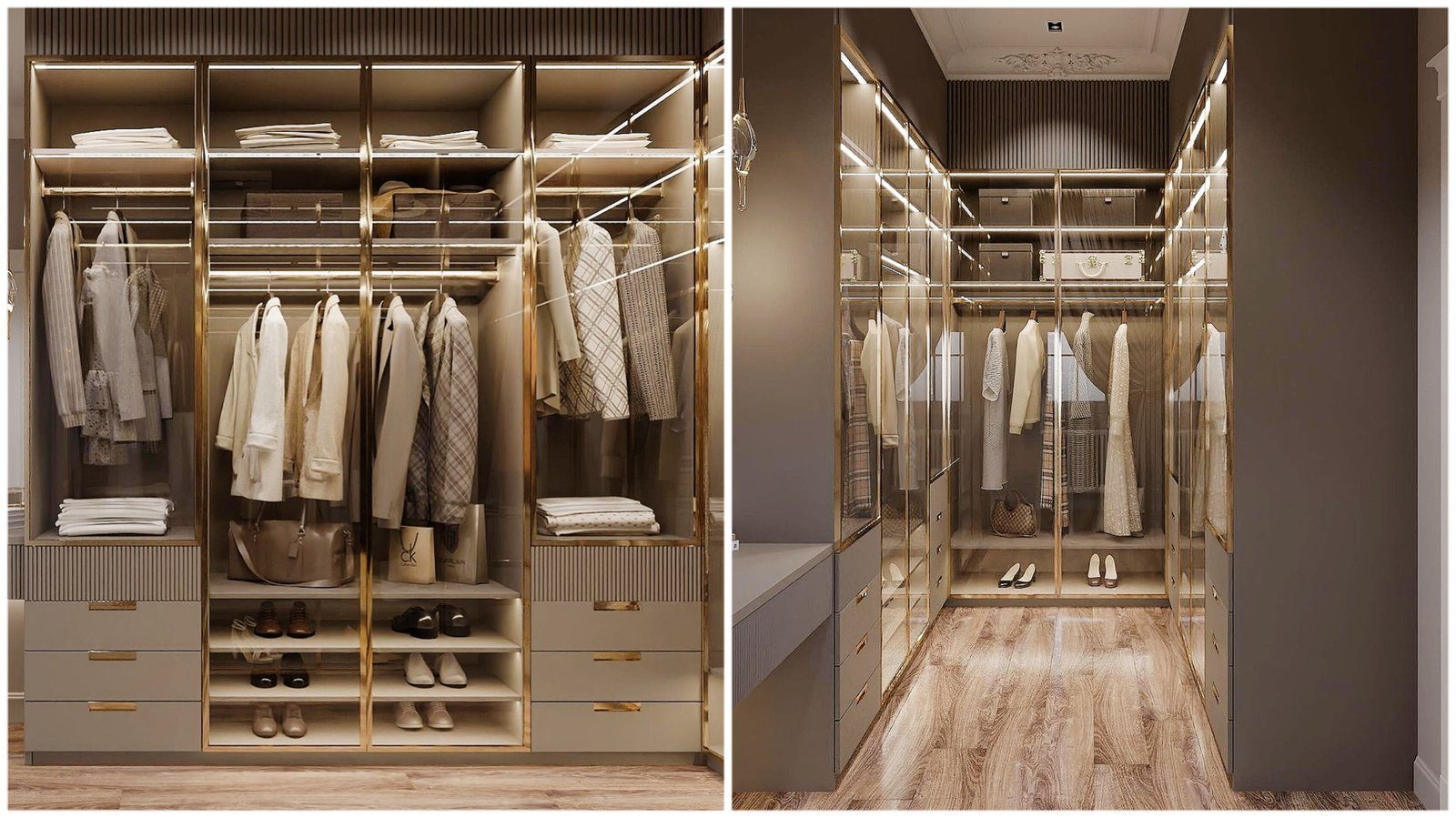
A slim dark frame with frosted or textured glass inside has become a familiar sight on wardrobes, kitchen display cabinets and living room units. Unlike solid board fronts, aluminium-framed doors look light, let light through and give an interior a character that is part industrial, part refined. But they do not suit every piece of furniture, and a few technical points are worth knowing before choosing them.
Construction: frame and infill
These fronts have two parts. The frame is cut from aluminium profile and joined at the corners with special connectors. An infill sits in a groove inside the profile: clear, frosted, textured or tinted glass, back-painted glass, mirror, or sometimes a thin decorative panel or woven material such as rattan. A rubber gasket holds the infill in the profile to prevent rattling and noise.
Profiles come in different widths. A very narrow profile looks minimal and light but is less rigid on a large door. A wider profile is sturdier and allows the handle to be built into the profile itself. Colours typically include black, anthracite, silver, champagne and gold.
Advantages
- Resistant to moisture and temperature changes: aluminium does not swell or warp.
- A light look: even a large wardrobe does not weigh the room down with glass infill.
- Replaceable infill: broken glass or a decor you have tired of can be changed without replacing the frame.
- Protected edges: there is no edge banding to chip off with knocks, as on board fronts.
- Light transmission: with LED lighting inside the cabinet, frosted glass gives a soft glow.
Limitations
These fronts are heavier than ordinary board doors, especially with glass or mirror infill. Tall doors need more hinges, and hinges rated for heavy doors. Because a standard hinge cup cannot be bored into an aluminium frame, hinges with special adapters or ones designed for the profile are used. This should be checked in the hardware manufacturer's catalogue.
Clear or semi-transparent infill shows what is inside. If the wardrobe interior is untidy, the mess will be visible through the front. That is why clear glass is chosen more for display and crockery cabinets, and frosted or textured glass for wardrobes.
One less obvious point is cleaning: dust can gather in the corners between profile and infill and needs a soft brush.
Matching colour and detail
The profile colour does not exist on its own in a room. A black profile looks coherent with black handles, light fittings and window frames, but in a kitchen with chrome taps and silver switches it can look like a random element. Gold and champagne profiles sit better with warm wood decors and beige tones. Listing all the metal details in the room before choosing, and matching the profile to one of them, is a simple but effective method.
The colour of the infill also changes with light. Dark tinted glass looks deep and rich by day but turns almost black under artificial light in the evening. Frosted white glass looks more consistent day and night. Checking a sample in the room where the front will be installed, at different times of day, gives a more accurate result than judging it in a showroom.
Where they suit
- Wardrobes and walk-in closets: with frosted or fluted glass, especially with interior lighting.
- Upper kitchen display cabinets: as one or two units, an accent among solid fronts.
- Living room display and drinks cabinets: with clear glass so the glassware can be seen.
- Small spaces: instead of a heavy row of solid fronts, they help preserve a sense of space.
- Office filing cabinets and partitions: in keeping with an industrial style.
There are less suitable places too. In a child's room or anywhere balls are thrown, glass infill is a risk. Making every front in a whole kitchen framed can be both heavy and visually tiring.
Questions to ask when choosing
- What glass is the infill: tempered, or with safety film?
- Do the profile width and colour match other metal details in the room?
- How many hinges are planned for the size and weight of the door?
- Is the handle integrated into the profile or fitted separately?
- For sliding doors, which track system does the frame use?
If you are considering aluminium-framed fronts, Zaferoglu Mebel can coordinate the infill, profile finish and hardware with the rest of the wardrobe or cabinet in a single design.