
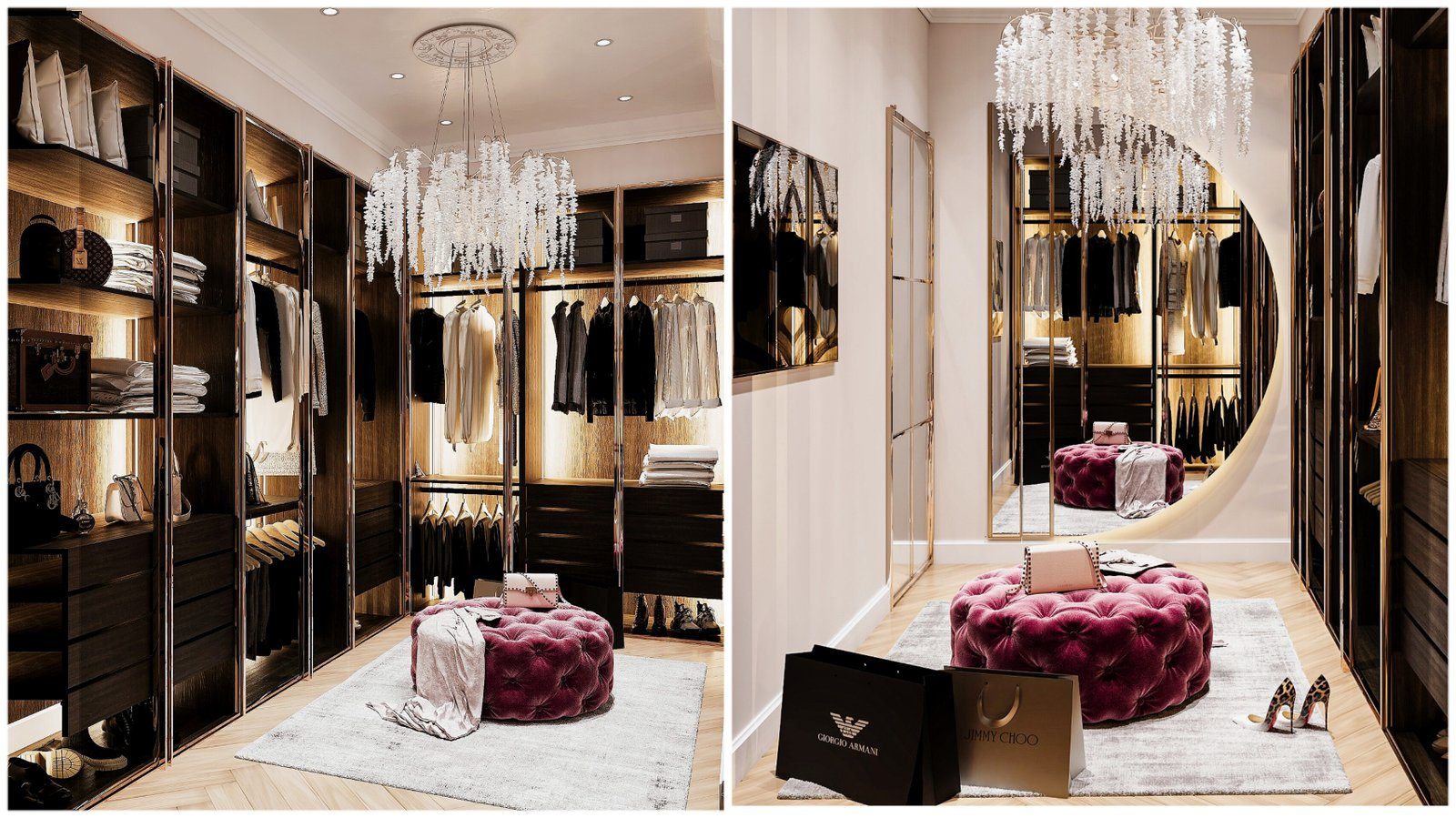
Glass brings lightness, sheen and depth to furniture. On a sliding wardrobe door, a kitchen front, a display shelf or a coffee table it looks like the same material. Yet each of these places asks something different of it: in one, colour and easy cleaning matter; in another, resistance to impact; in a third, not injuring anyone if it breaks. The right choice starts not with the glass's name but with where and how it will be used.
Back-painted glass (lacobel)
Lacobel is made by applying a special paint layer to one face of the glass. Because the colour sits at the back, the front stays smooth and glossy and the paint is protected from scratches. It is widely used on wardrobe doors, kitchen fronts, wall panels and tabletops. Its strengths are the depth of colour and a surface that wipes clean: grease and fingerprints come off with a damp cloth.
Two points need attention. First, it is ordinary glass and can break on impact; on busy moving doors, a safety film on the back reduces the scatter of fragments if it does break. Second, with very pale colours the natural green tint of standard glass can shift the shade. If you want white or a pastel tone, look at a sample made on low-iron, extra-clear glass.
Tempered glass: for loads and knocks
Tempered glass is strengthened by heating it and cooling it rapidly. It is considerably stronger than ordinary glass, and when it breaks it shatters into small blunt pieces rather than long sharp shards. That makes it a logical choice for tabletops, display shelves, frameless glass doors and places where children may be around.
One important point: tempered glass cannot be cut, drilled or edge-ground afterwards. All sizes, hinge holes and cut-outs must be defined before tempering. Such parts are therefore ordered after precise measuring, and there is no trimming them to fit on site.
Laminated glass: stays in place when broken
Laminated glass sandwiches a plastic interlayer between sheets. If it breaks it cracks but holds together, as the shards remain bonded to the film. That makes it the safer option for tall panels, partitions and glass fitted above head height, and a tinted or frosted interlayer adds decorative possibilities.
Frosted, textured and mirror
If you want to hide clutter behind a door but keep the light, frosted glass is a good answer. Sandblasted and acid-etched surfaces feel different; acid-etched glass usually holds fingerprints less. Textured and fluted glass blurs the outline of objects behind it and adds a decorative effect to display cabinets and sideboards.
Mirror is also glass, and one of the most common wardrobe door finishes. Its backing is sensitive to moisture, so near a bathroom keep an eye on the edges. On sliding doors a safety film is applied to the back of the mirror as well.
A quick checklist
- Will the part carry weight, like a shelf or table? Consider tempered glass.
- Is it a large surface or in a child's room? Choose something that holds fragments: laminated glass or safety film.
- If the goal is colour and easy cleaning: back-painted glass.
- If the contents should stay out of sight: frosted or textured glass.
- If an edge stays exposed, ask for polished edges and softened corners.
Thickness and hardware matter as much as the glass type: if a heavy glass door is not paired with suitable hinges or a sliding system, problems will follow however good the glass is.
Living with glass day to day
When choosing glass fronts, think about cleaning too. Glossy back-painted glass and mirror show fingerprints but wipe clean easily; frosted glass shows fewer marks, but greasy smudges are a little harder to remove from its textured surface. Abrasive powders and hard scourers can scratch both, so a soft microfibre cloth and a glass cleaner are enough. On a sliding wardrobe door, check how the glass panel sits in its frame: a rubber gasket reduces rattling and noise as the door moves. For kitchen fronts, it is worth asking how the paint on the back reacts to the adhesive used, since some adhesives can alter the shade.
If you are thinking of glass fronts for a wardrobe or display cabinet, Zaferoglu Mebel can settle the glass type, tint and matching hinges and handles at the design stage.