
A common assumption among clients is that MDF costs more and must therefore be better. That is only half true. MDF and laminated chipboard were made for different jobs, and one is superior to the other only in the context of a specific task. Below we separate the cases where MDF is genuinely irreplaceable from those where choosing it makes little sense.
Where the difference comes from: structure
Chipboard is pressed from relatively coarse wood particles. Cut it and the core looks porous and uneven. MDF is formed from very fine wood fibres into a dense, uniform mass. That difference drives every practical consequence: an MDF cut edge is smooth, routed patterns do not crumble, and paint lies evenly on the surface.
Routed fronts
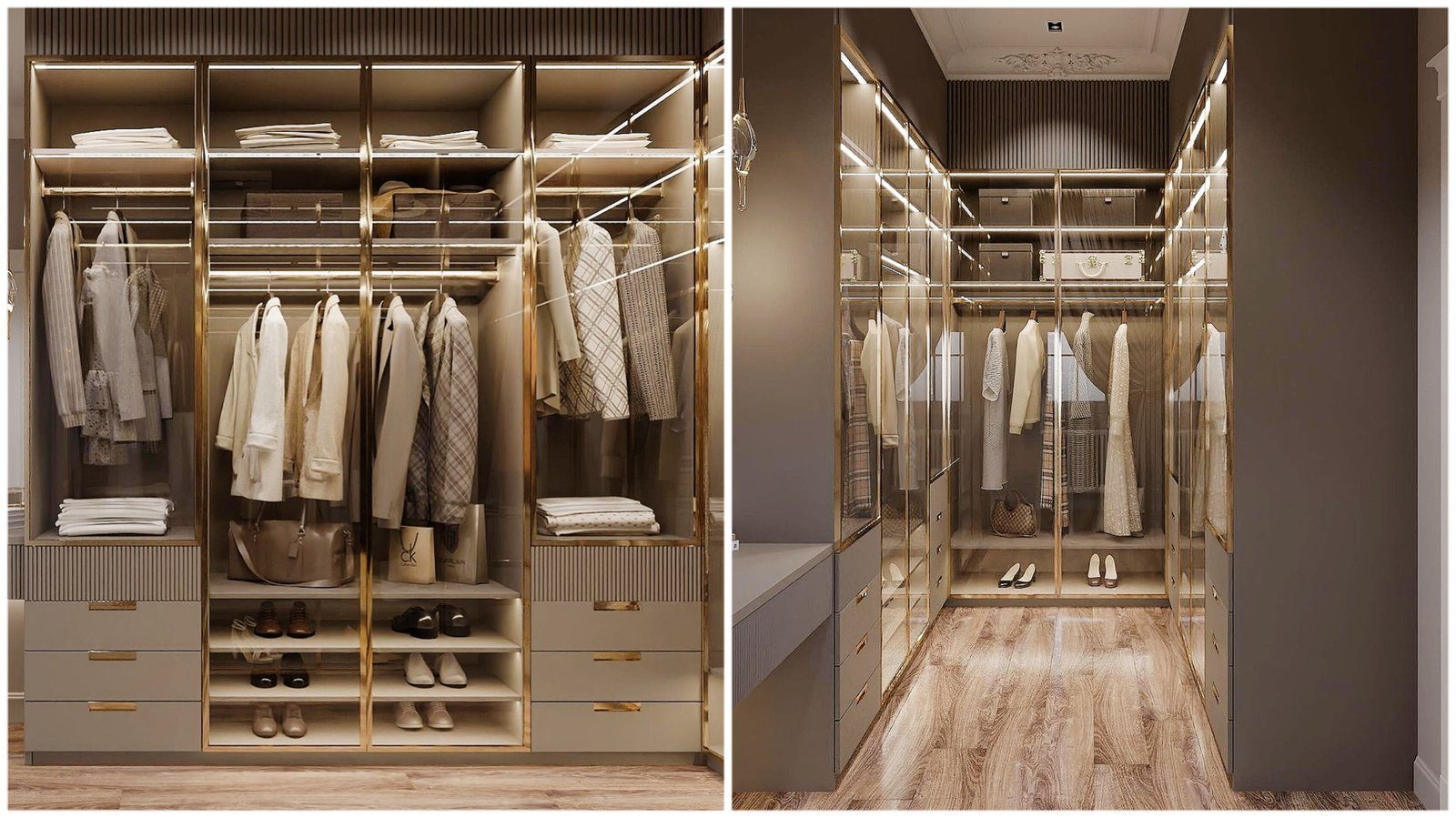
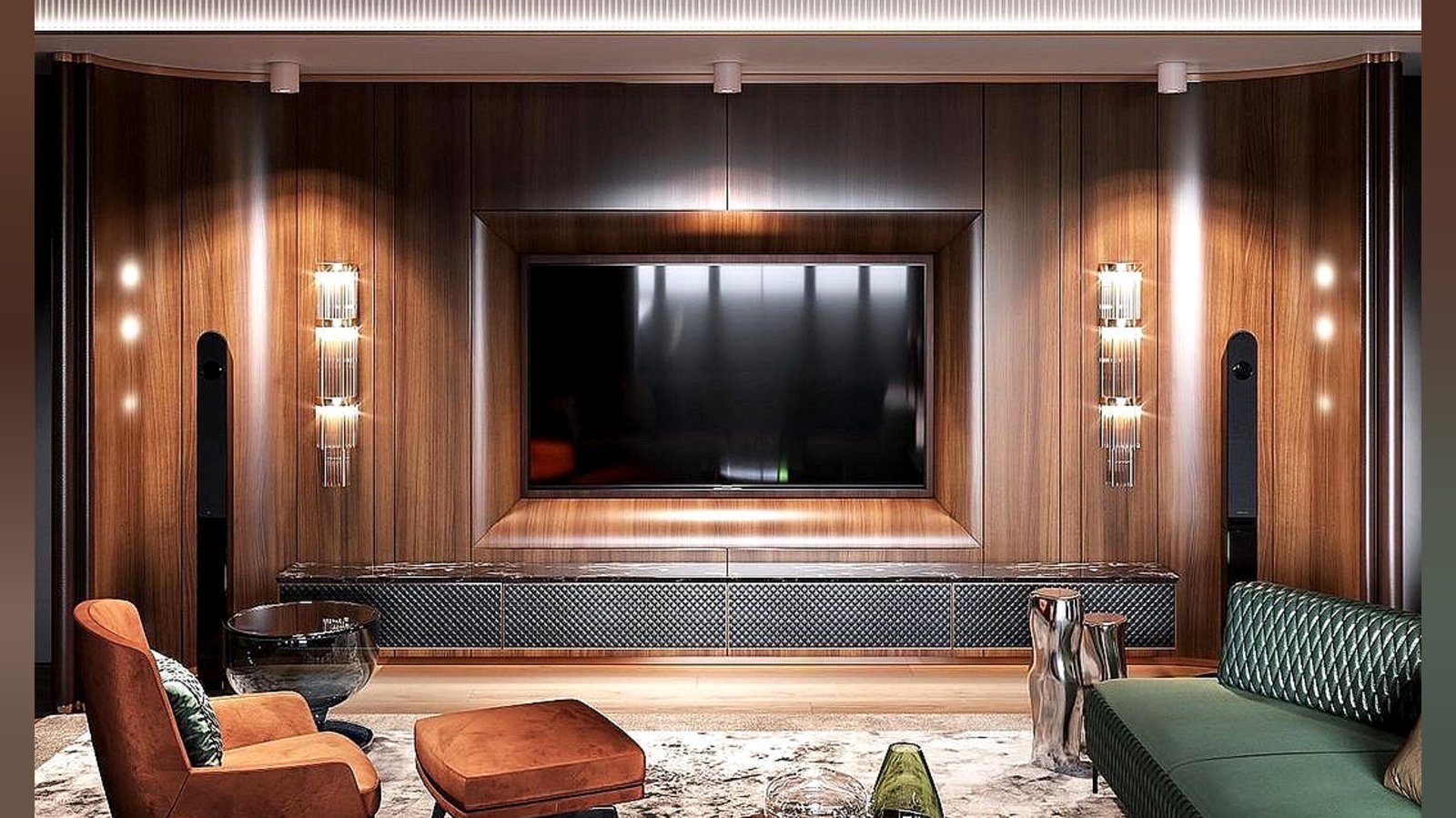
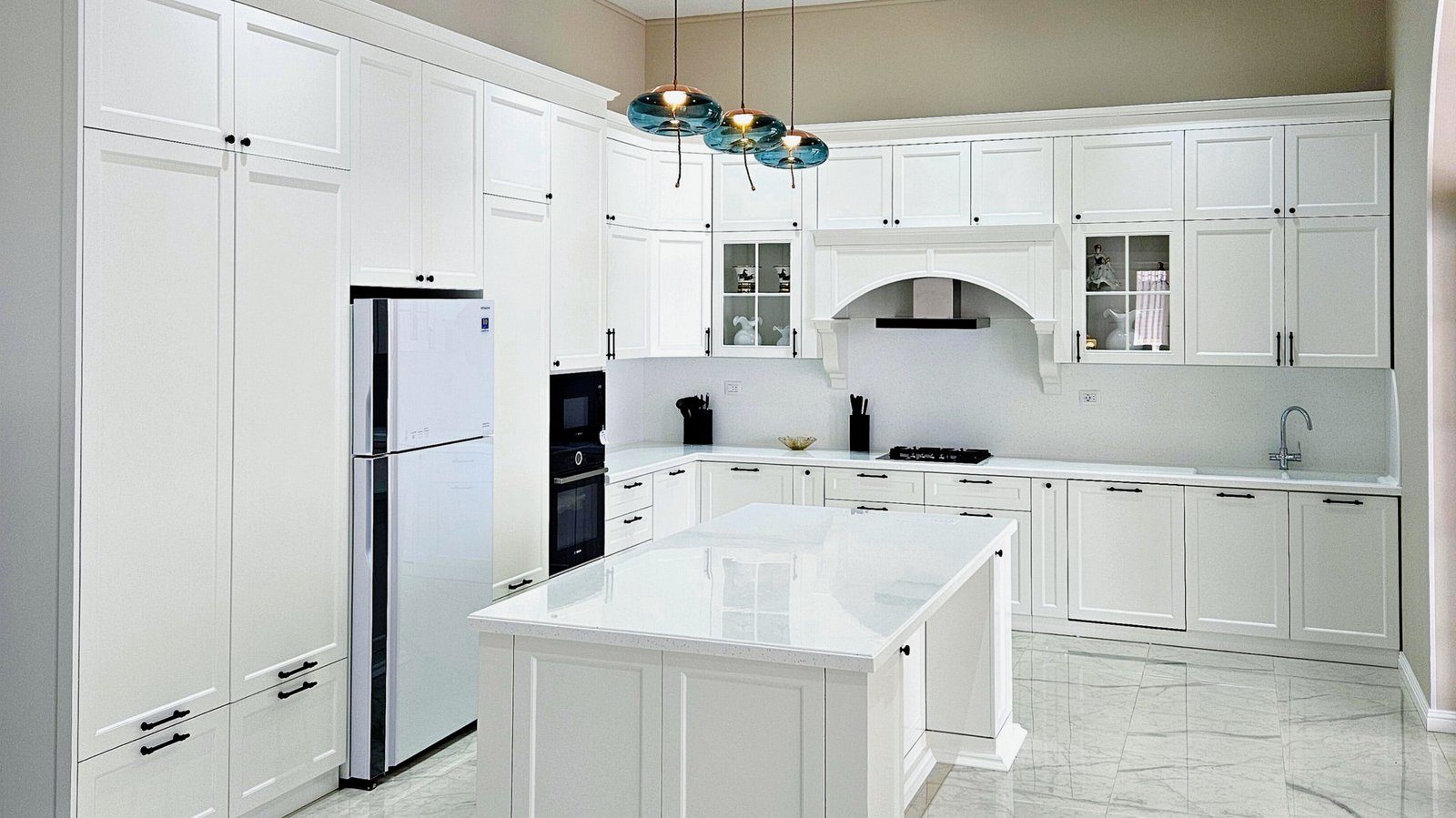
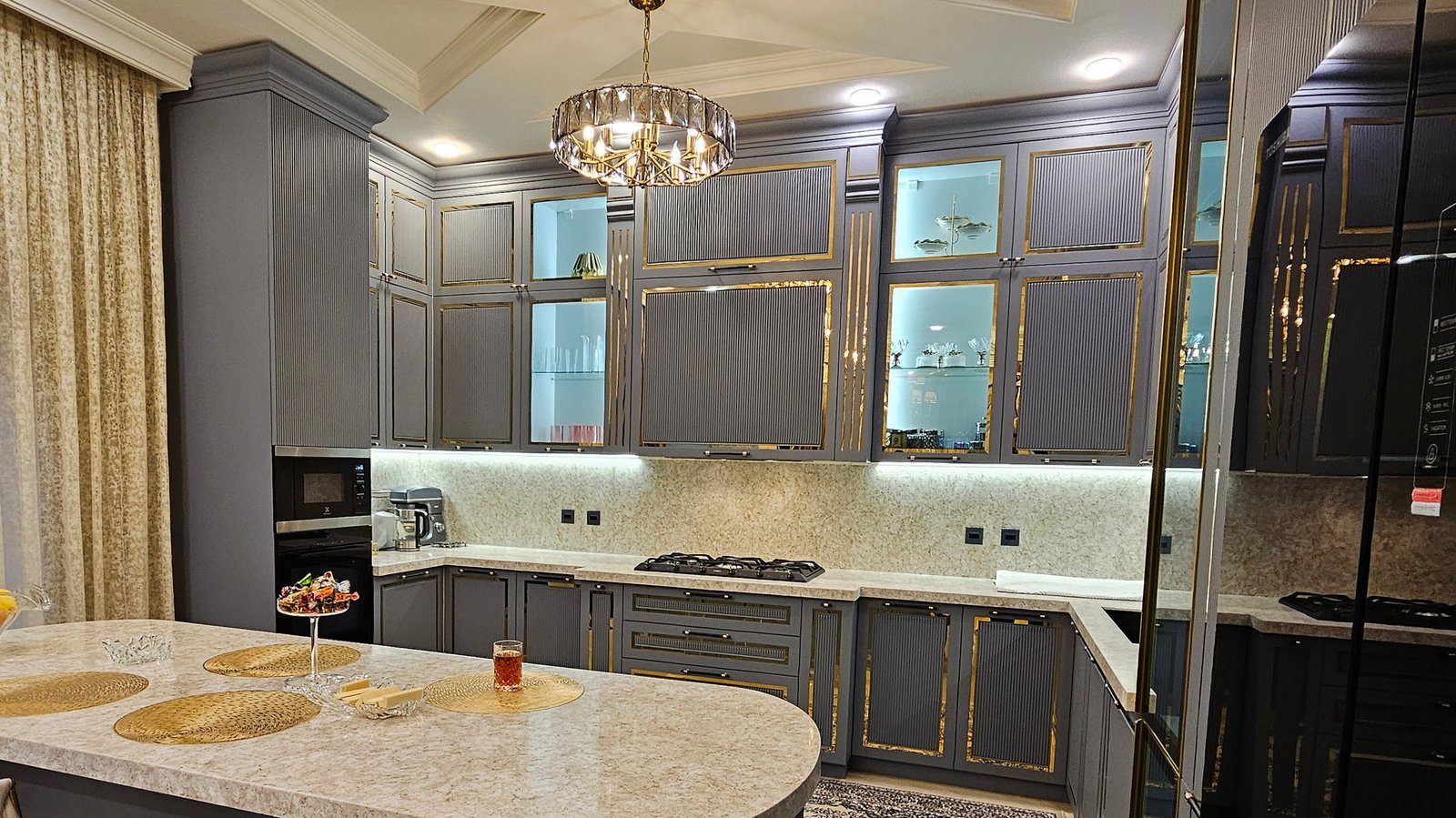
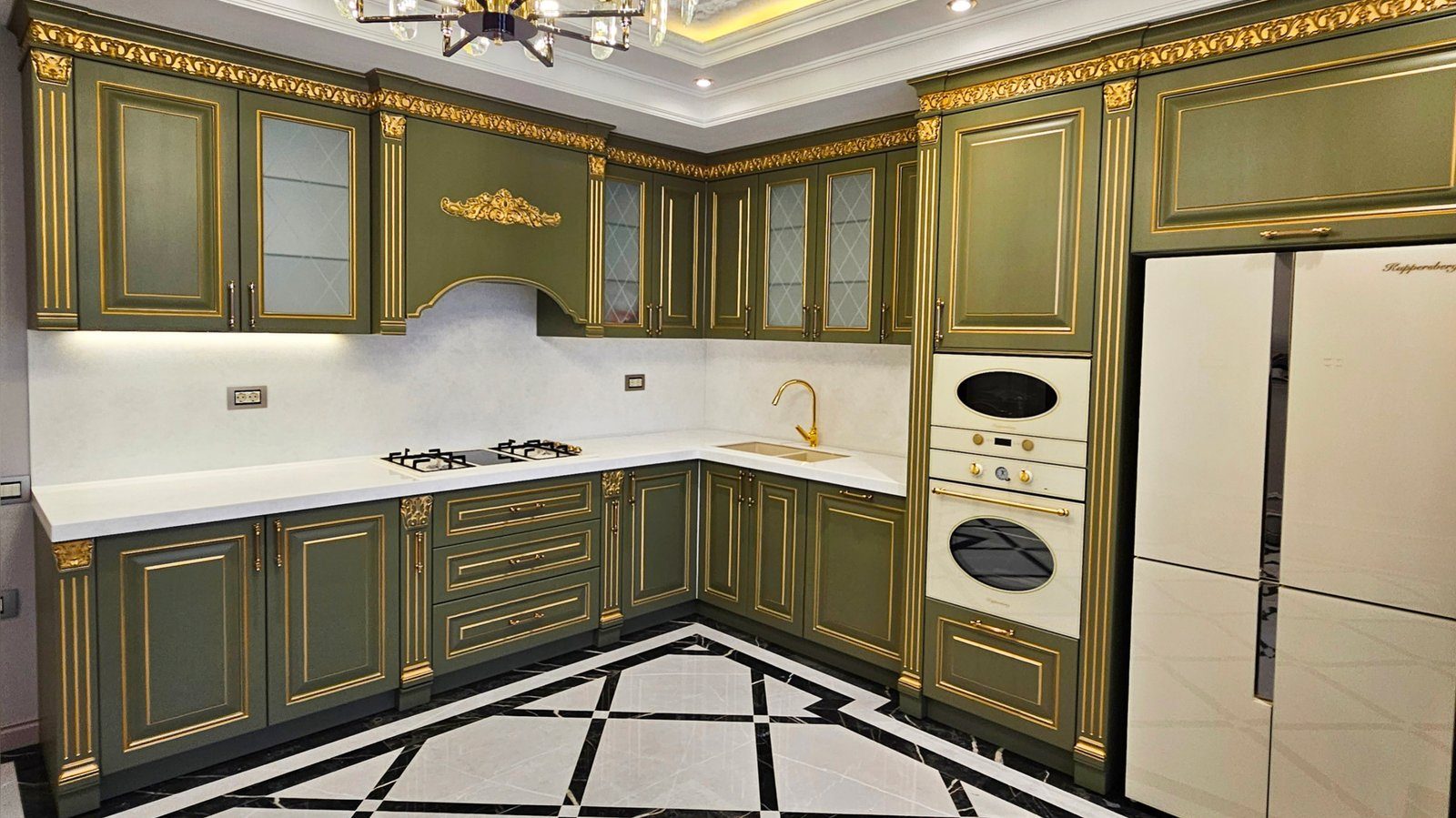
On classic and neoclassical kitchens, or on contemporary fronts with fine vertical grooves, the pattern is cut into the board itself. In chipboard such routing leaves a rough, chipped result that cannot be painted. MDF keeps deep routing, framed-panel profiles and soft radiused edges clean.
A routed front is then either vacuum-wrapped in foil or painted and lacquered. Both finishes need a uniform core, and that is MDF's direct advantage.
Painted and high-gloss finishes
If you want lacquered or matt painted fronts, the core material is almost always MDF. The surface is primed, sanded and built up with several coats. Chipboard's structure does not suit this process: the particles telegraph through the paint.
Painted MDF has another benefit: the edge is not banded separately but painted together with the face. Corners look seamless, and there is no risk of edge banding lifting over time.
Curves, fine details and front quality
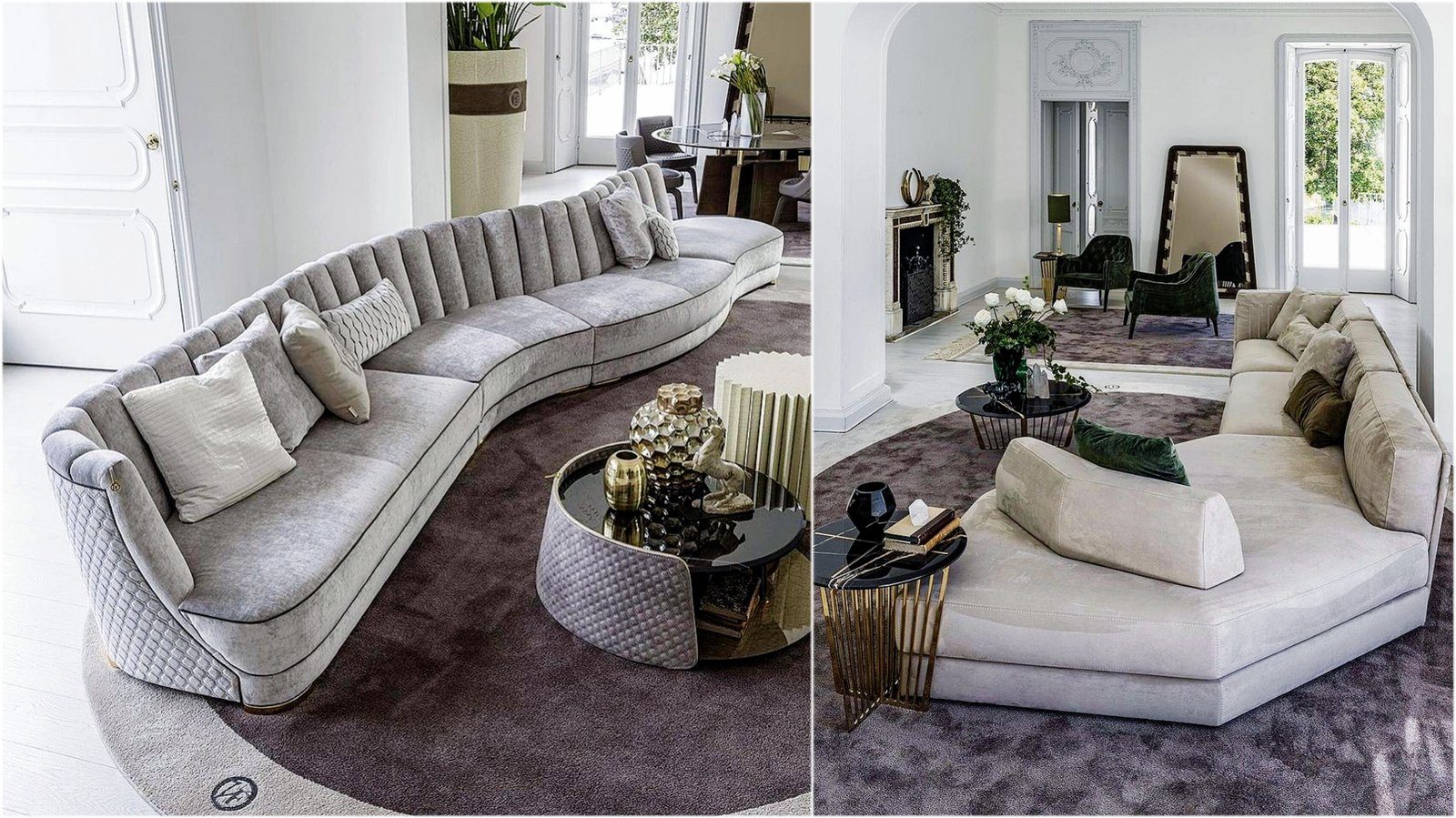
Radiused corner units, wavy shelves, stands with rounded ends and curved fronts are far easier to make in MDF. It cuts precisely, its edge can be rounded with a router, and it looks smooth once painted. Special flexible MDF grades make tighter curved panels possible.
Cornices, plinths, decorative mouldings and profiles routed in place of handles all need a dense, uniform material. Thin strips and small profiles cut from chipboard crumble easily. MDF holds these shapes for a long time.
Choosing a colour and a pattern is not enough when ordering MDF fronts. Ask how the back is finished: a front coated the same way on both sides reacts more evenly to humidity, which reduces the risk of warping over time. On foil-wrapped fronts, a tight bond at the edges matters, especially next to the hob and kettle, because heat quickly exposes weak adhesion.
On painted fronts, look at the surface under a raking light. A smooth, ripple-free surface and an even sheen show that the preparation was done properly. Seeing a sample front in the real light of your kitchen also reduces mistakes in choosing the colour.
The limits of MDF
MDF's strengths are not a reason to use it everywhere. A few things are worth knowing:
- It is heavy. Large, tall fronts put more load on the hinges, so the number and type of hinges must be chosen carefully.
- Standard MDF absorbs moisture at unprotected edges and can swell. Damp areas call for moisture-resistant grades and a quality finish.
- A painted surface can chip on impact and is harder to repair than laminate.
- In carcasses MDF usually brings little practical benefit: it adds cost and weight without significantly improving internal shelving.
A simple rule for deciding
If a part will be routed, painted, curved or have an edge that is meant to be seen as a design feature, think MDF. If it is flat, its decor can be handled by ready-made laminate and it stays mostly inside, laminated chipboard is enough. The best result often comes from combining the two: carcasses in chipboard, fronts and visible decorative parts in MDF.
With Zaferoglu Mebel, the carcass is Egger or Kronopol board, while the front material and finish are chosen for the style and the conditions the piece will face.