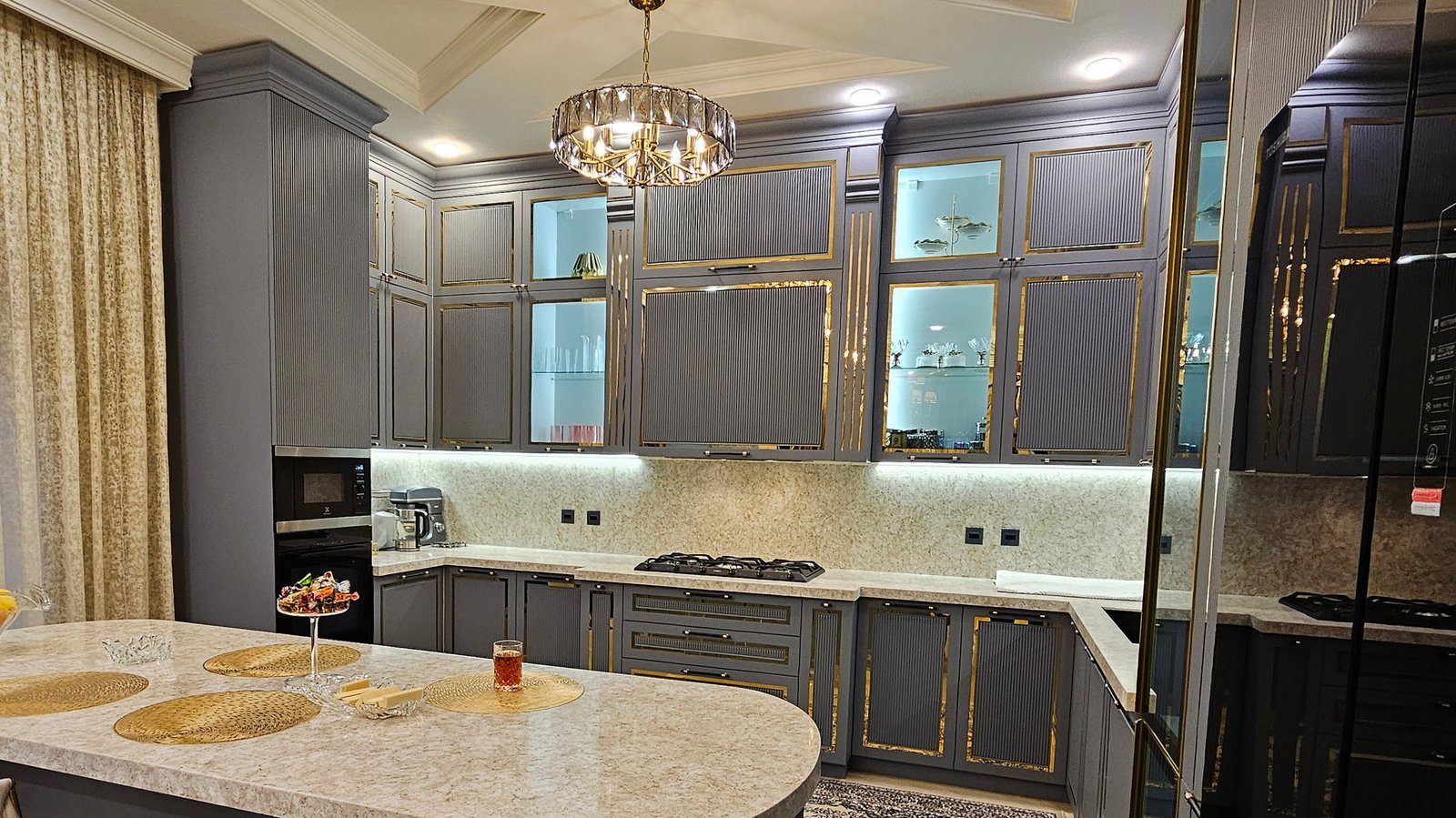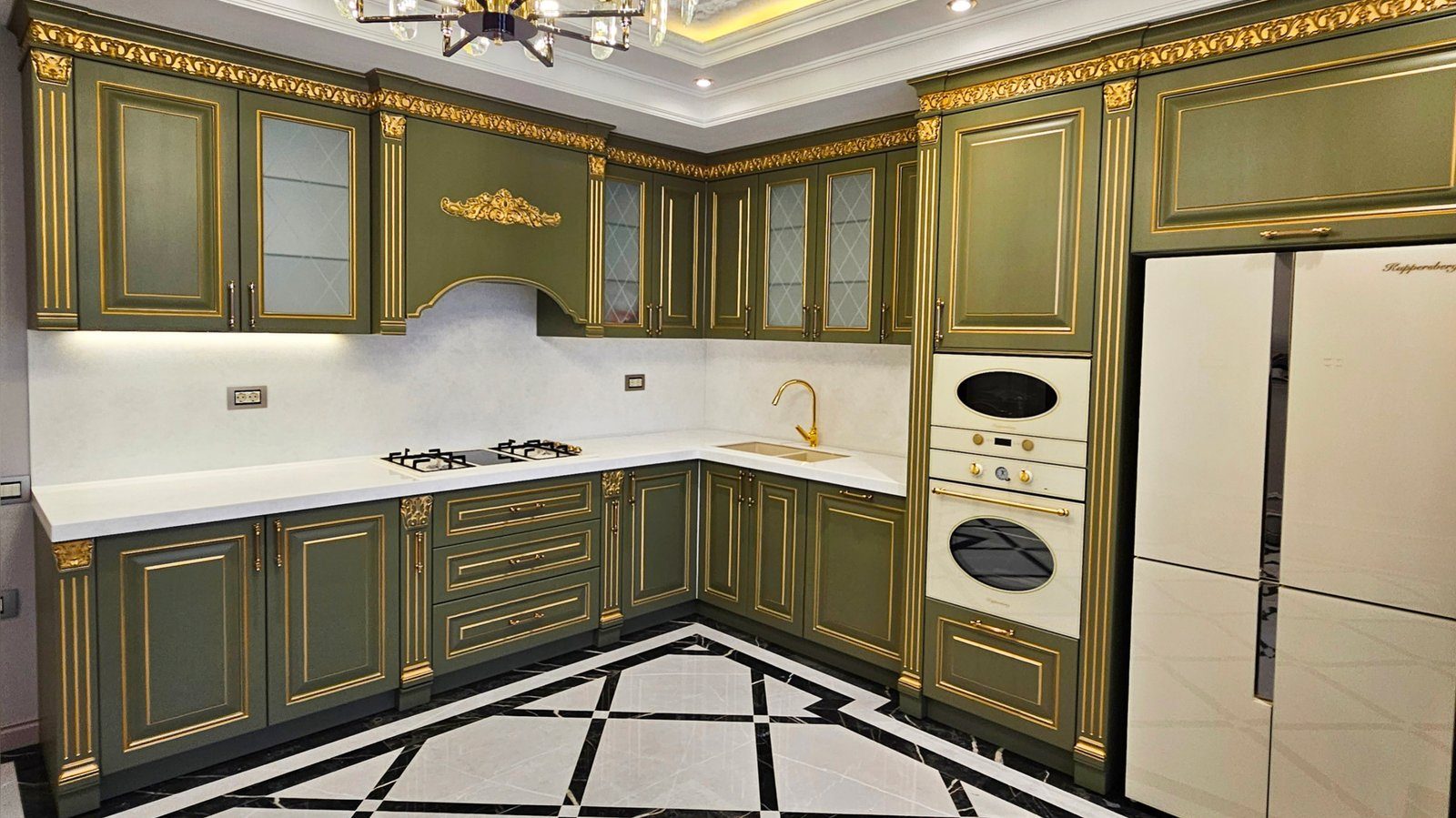

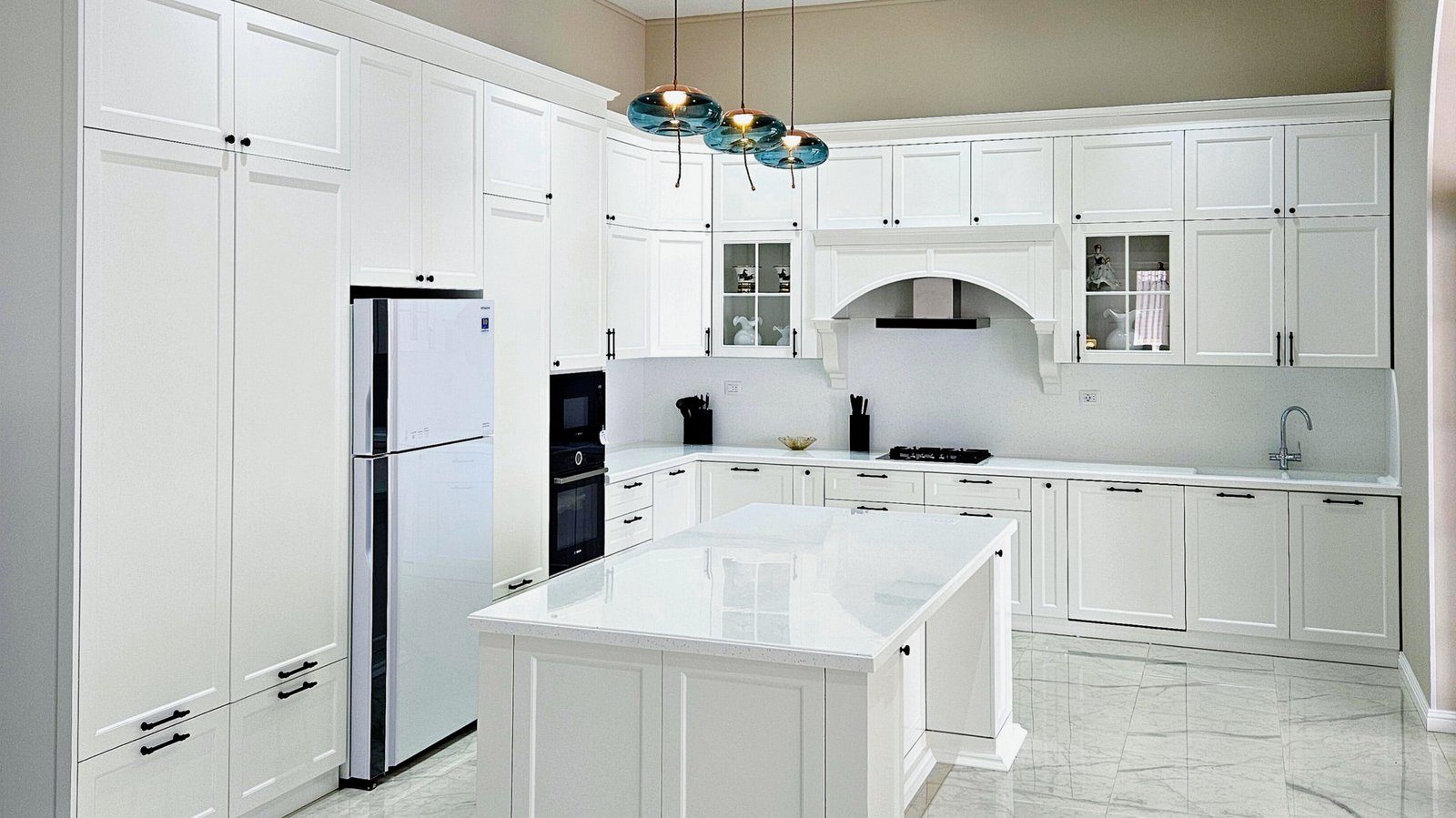
When choosing cabinet doors, the same colour is often shown in two samples. One shines like a mirror, the other looks soft and almost velvety. In the showroom both are attractive. The difference appears at home a few weeks later, when morning sun falls across the doors and a child runs a hand along a cupboard. Choosing between matt and gloss is less about taste than about daily habits and the light in the room.
How light is reflected
A gloss surface sends light back in one direction, like a mirror. In a small, dark room that is an advantage: the doors carry daylight from the window deeper into the room and the space looks larger. The same property can be a nuisance opposite a window or under a bright ceiling light, because clear hot spots and reflected objects appear on the surface.
A matt surface scatters light. The colour looks the same from every angle and there are almost no reflections. That suits large, bright rooms and people who want a calm, understated look. In a dark room, dark matt doors absorb light and can make the space feel a little smaller.
Fingerprints and marks
The common view is that gloss shows fingerprints and matt is forgiving. The reality is more complicated and depends heavily on colour:
- dark gloss colours such as black or navy show fingerprints and dust most clearly;
- gloss white and light colours show marks far less;
- cheaper matt finishes can hold greasy fingerprints as dark patches and develop shiny streaks when wiped;
- matt finishes treated against fingerprints reduce the problem considerably.
So a useful test with a sample is to press it with your finger and then wipe it. That tells you more than the catalogue description.
Colour itself also affects the choice. The same shade looks slightly lighter and softer in matt, and deeper and more saturated in gloss. So a colour you like in the catalogue should be viewed side by side in both finishes. Sometimes only that comparison reveals that the gloss version is too dark or the matt version paler than expected.
Scratches and damage
On gloss, fine scratches show clearly under light because the smooth surface is broken. Micro-scratches usually come from the wrong cleaning: abrasive sponges, dust rubbed off with a dry cloth, or coarse fabric instead of microfibre. On matt the same scratch is less visible, but deep damage is difficult to repair on either finish.
Matt surfaces have their own risk. Where they are rubbed hard or cleaned often with aggressive products, the surface can polish up into a shiny strip. On handle-less doors, for instance, the edge that hands touch may start to look different over time.
Choosing by room and zone
Both finishes can be combined in one kitchen. A practical split might be:
- matt or textured surfaces for base units, especially where children and pets touch them;
- gloss for wall units, to spread light towards the ceiling and around the room;
- an easy-clean finish next to the hob, where splashes will be wiped often;
- matt on large doors facing a window directly, to cut reflections.
In living rooms and bedrooms, doors are touched less, so the drawbacks of gloss are felt less. In a child's room, durable matt surfaces are more practical.
Differences in care
Both finishes start with the same kit: a soft microfibre cloth, lukewarm water and a mild, pH-neutral cleaner. Never dust gloss with a dry cloth, since the grit scratches it. On matt, do not scrub one spot hard.
Before choosing, ask yourself which side daylight comes from, who touches the doors and how often, and how much time you are prepared to spend cleaning. When ordering from Zaferoglu Mebel, comparing matt and gloss door samples in your own light, by the window and under an evening lamp, gives the most accurate answer.