
The word plywood is often associated with construction and packaging. Yet in furniture it is widely used in upholstered frames, drawer bottoms and, in recent years, as a design element with its edges left exposed. Knowing what it is, how it differs from particleboard and MDF and where it has the advantage helps you compare materials more knowingly when ordering.
How plywood is made
Plywood is made from thin peeled sheets of wood veneer. The layers are stacked so that the grain of each runs perpendicular to the next, then bonded with adhesive under pressure. There is usually an odd number of layers so the board is balanced and does not warp.
This cross-laminated structure gives plywood its main properties:
- strength in both directions, since solid wood's tendency to split along the grain is removed;
- dimensional stability, with less expansion and contraction than solid timber when humidity changes;
- lighter weight and better bending resistance than particleboard of the same thickness;
- good holding power for screws and fixings.
Plywood quality depends on the wood species, the number of layers, whether there are voids between layers and the type of adhesive. Plywood made with moisture-resistant adhesive lasts longer in damp places.
In upholstered furniture: the frame
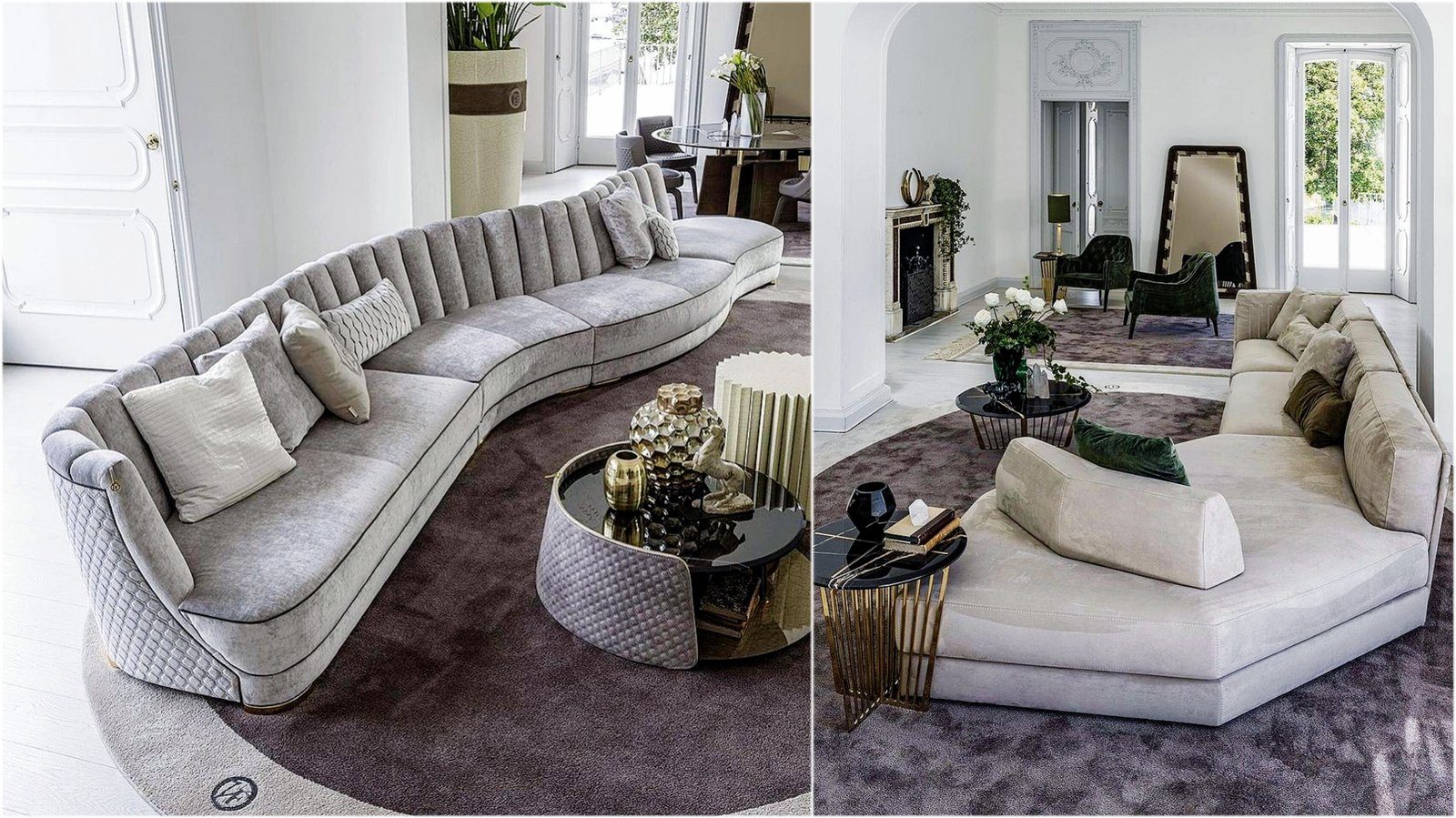
The most common use of plywood in furniture is the frame of upholstered pieces. Inside a sofa or armchair, under the cover and padding, the frame both carries weight and is subject to movement. Plywood has several advantages here:
- it is light, so the sofa is easier to carry and move;
- curved parts such as arm and back profiles can be cut from it;
- it holds staples and screws well, which matters when upholstery is stretched over it;
- it copes well with dynamic loads from sitting down, getting up and flopping onto the seat.
In frames, plywood is often combined with solid timber rails: the rails carry the main load, while plywood provides shape and rigidity.
Hidden parts of cabinet furniture
In cabinet furniture, plywood usually appears in smaller but critical places:
- drawer bottoms, especially in wide drawers for heavy items;
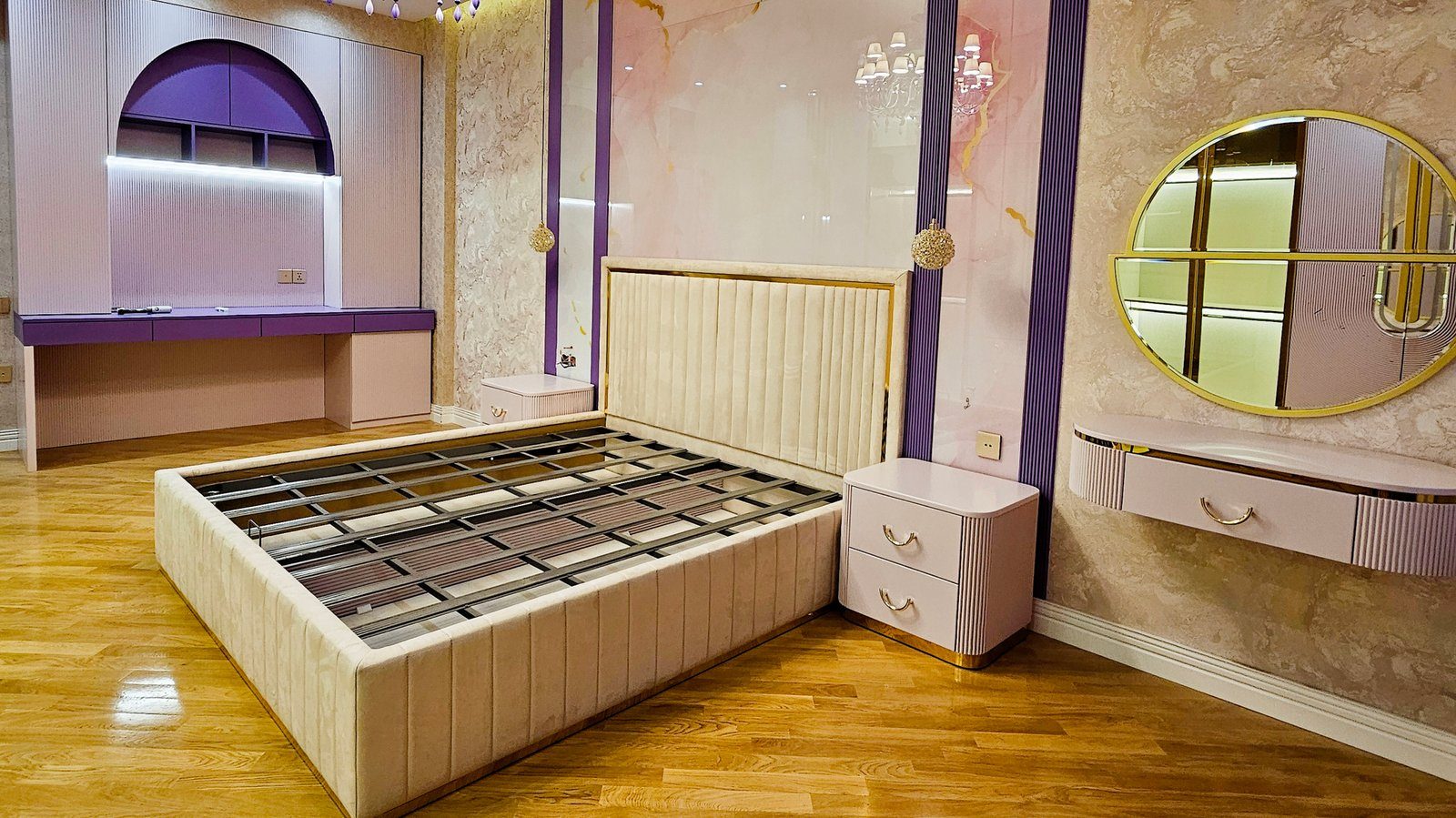
- bed base slats, flexible supports made from bent plywood strips;
- back panels or supports in places at risk from moisture;
- specially shaped, curved components.
Bed slats are the best example of plywood's flexibility: thin layers are glued in a curved shape and work like springs under the mattress.
As a visible design element
In recent years plywood has moved from hidden material to decorative one. Plywood with exposed edges showing the striped pattern of its layers is used in shelving, children's furniture and Scandinavian-style interiors. The look highlights the material's natural structure and feels light and friendly.
For decorative use, bear in mind:
- the face veneer quality matters, so choose knot-free, evenly coloured veneer;
- exposed edges should be protected against moisture and dirt with lacquer or oil;
- plywood can be faced with decorative laminate or veneer for durability while the edges remain visible;
- being real wood, it may change colour with light over time.
Compared with particleboard and MDF
Each material is good in its place:
- laminated particleboard is widely used for cabinet carcasses, offering a ready decorative surface, stable dimensions and a wide colour range, but it is heavy and sensitive to screws being refixed;
- MDF has a uniform structure that is ideal for routing and painting, so it dominates for fronts;
- plywood is light and strong and suits dynamic loads and curved shapes, but for large decorative surfaces it is usually more expensive and less standard.
That is why several materials work together in one piece: carcass in particleboard, fronts in MDF, frame and drawer bottoms in plywood.
What to ask when ordering
- What material is the upholstered frame made from, and how is it joined?
- What are the bottoms of heavy drawers made from?
- Is moisture-resistant material used for parts in damp places?
- How will exposed plywood edges be protected?
Zaferoglu Mebel makes cabinets from Egger and Kronopol board and upholstery to order. Whatever you buy, asking what each component is made of tells you a lot about how it will age.