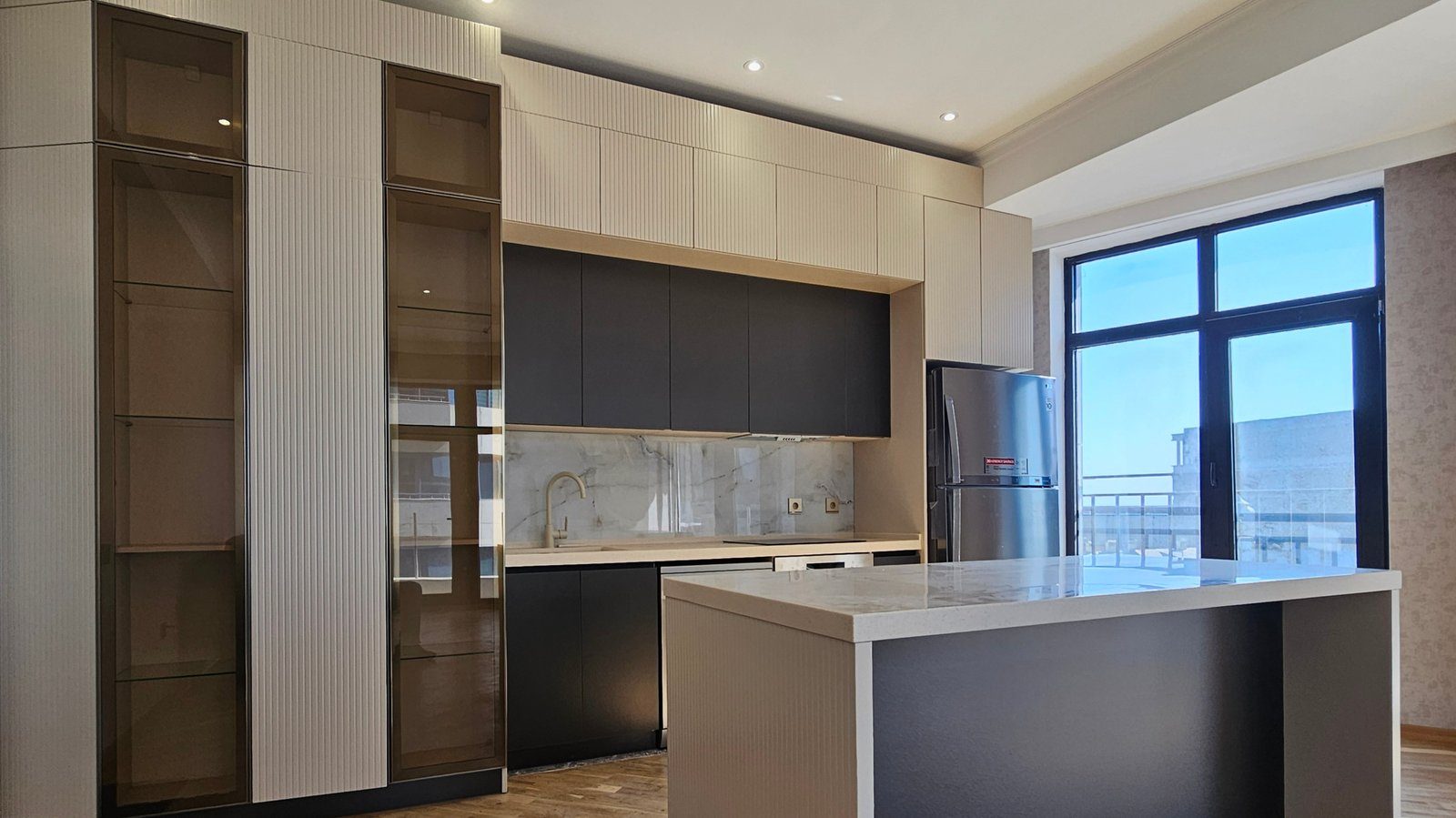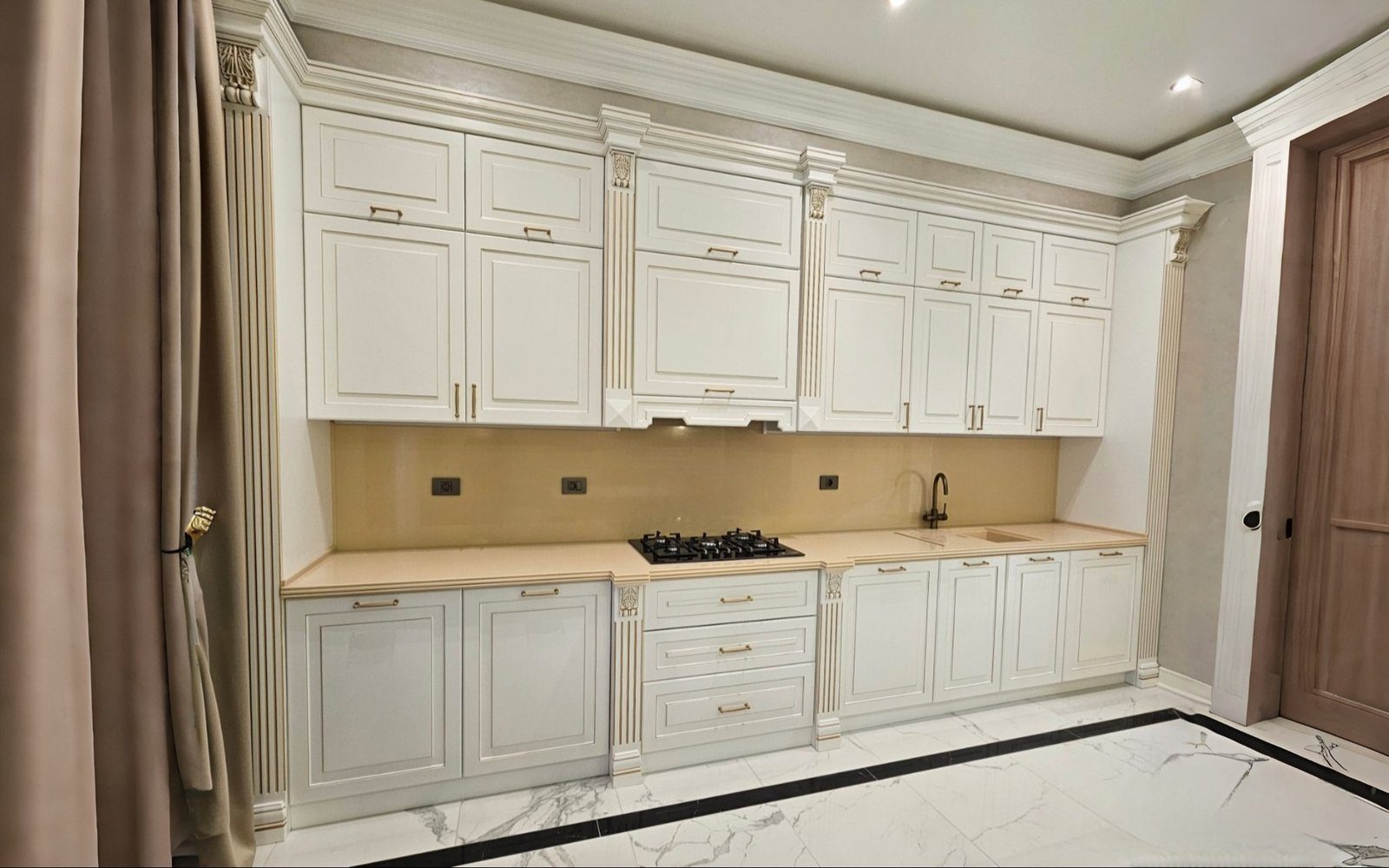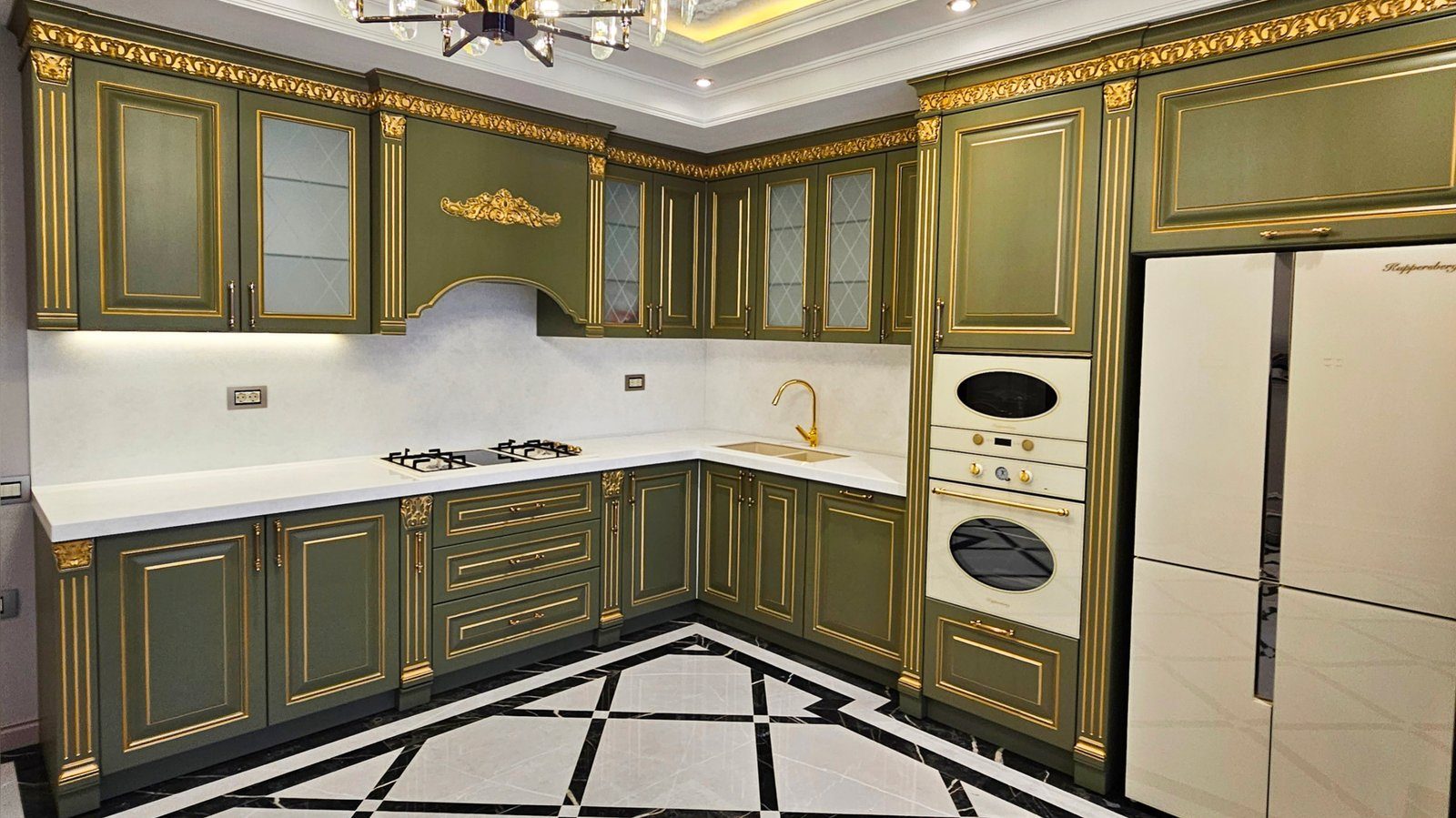

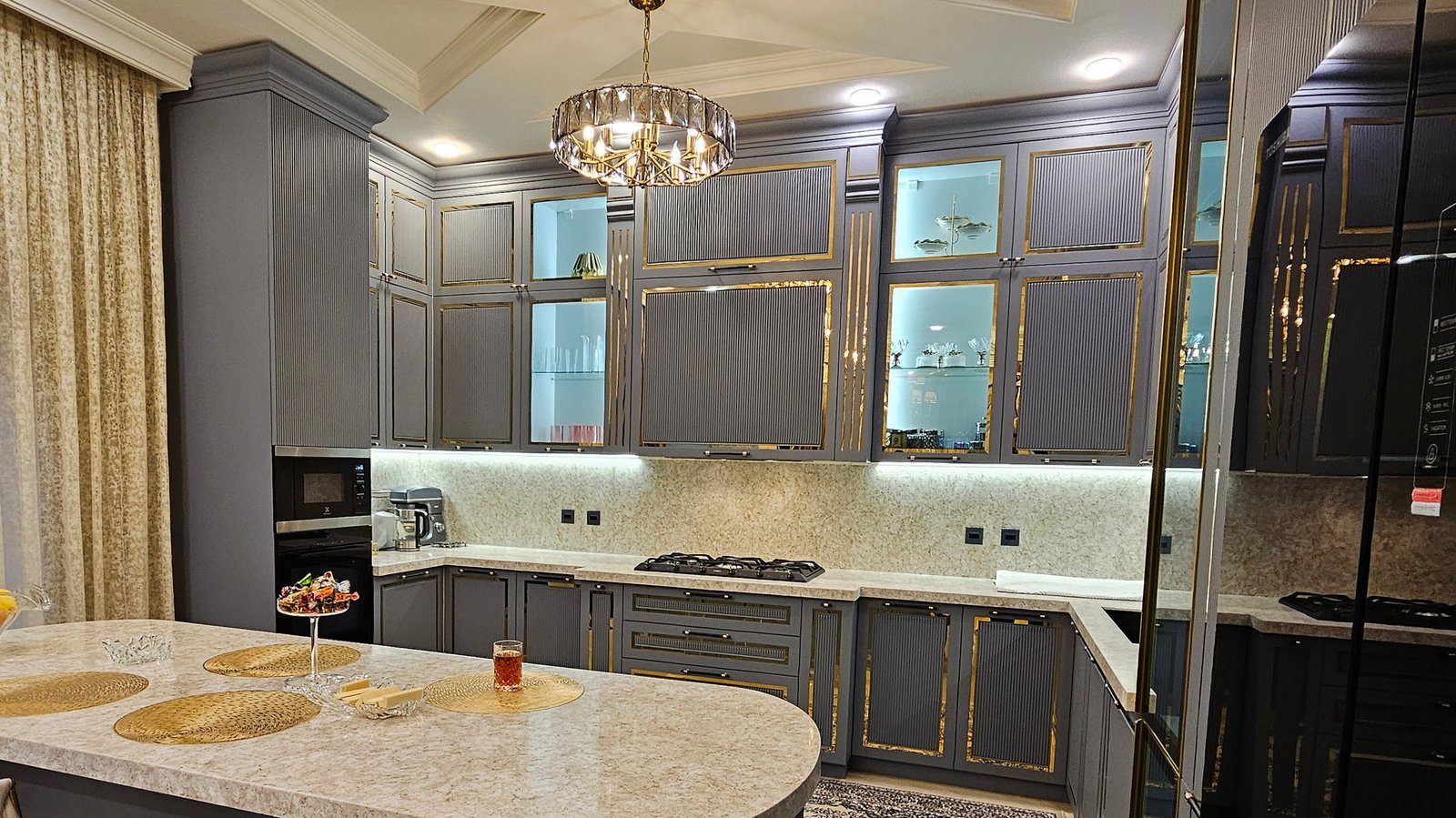
For many people, "classic kitchen" brings to mind heavy, dark, ornate furniture. In fact the essence of the classic style is not weight but architectural logic: fronts are built from frames and panels, cabinets are finished with a cornice at the top, and corners and transitions are divided by pilasters. Chosen well, these elements make a kitchen look light in pale colours or refined in dark wood tones.
The framed front: the basis of the classic look
The best-known classic front is a frame with a panel inside. Traditionally, four solid wood frame members are joined and a flat or raised panel is set into the middle. This construction allows the wood to expand and contract with humidity and keeps the front from warping.
In modern production the same look is achieved in several ways:
- A solid wood frame with a veneered or solid panel: the most refined option, but the one needing most care.
- A frame pattern routed from a single MDF board, then painted or wrapped in foil: with no joints, no cracks appear at the seams, which is why this is widely used for painted classic fronts.
- An MDF frame with a glass panel: for display-style wall cabinets.
The shape of the panel refines the style. A flat panel with a simple frame gives the calm, neoclassical look known as "Shaker". A raised panel with bevelled edges recalls traditional English and French kitchens. An arched top rail is the most formal option and is usually used only on a few accent doors.
The cornice: crowning the cabinets
A top cornice finishes the upper edge of the wall cabinets and gives the kitchen a "complete" look. In a classic kitchen the cornice is more than decoration: it visually closes the gap between cabinets and ceiling and sometimes hides concealed lighting.
Key criteria when choosing a cornice:
- Height and profile must suit the ceiling height. In a low-ceilinged kitchen a large, stepped cornice "squashes" the cabinets; a slim, simple profile is better.
- If the cabinets go up to the ceiling, the cornice meets it and hides any unevenness.
- Corner joints should be mitred at 45 degrees with the profile lines matching exactly; the neatness of this joint is the most visible sign of quality.
- At the bottom edge of wall cabinets, a slim "light rail" is used to hide an LED strip.
Pilasters, balusters and columns
A pilaster is a flat column that projects slightly from the surface. In a classic kitchen it is placed at the ends of cabinet runs or around the cooker niche or extractor, making the furniture resemble an architectural element. A baluster — a turned, rounded column-like piece — is more often used at the corners of an island or breakfast bar.
The main rule for these elements is symmetry. Matching pilasters on both sides of a cooker niche centre the composition. A pilaster placed at random loses its meaning. In a small kitchen, keep pilasters to a minimum and use them only to emphasise the main axis.
The classic look and modern appliances
The hardest task in a classic kitchen is fitting modern appliances without breaking the style. There are several practical solutions:
- Integrated dishwashers and fridges are chosen and hidden behind framed fronts.
- The extractor is concealed in a canopy with a cornice, in the same material as the fronts, turning the cooking area into the kitchen's focal point.
- The microwave and coffee machine are placed behind fronts or in an open niche rather than on the worktop.
- Handles are chosen in classic shapes — knobs or cup pulls — and matched in colour to the tap and other metal details.
In a traditional kitchen, too, fit heat-shield strips and keep the gaps the appliance maker specifies: lacquered timber and painted fronts react badly to heat.
Care and material choice
The relief lines of framed fronts collect dust and grease, especially around the hob. Light painted fronts should be wiped regularly with a soft, slightly damp cloth, with the corners of the profile cleaned using a soft brush. Solid wood fronts are protected with the product recommended by the manufacturer and should not be exposed directly to water.
If the kitchen is used heavily, routed painted MDF fronts can be more practical than solid wood: no cracks form at frame joints, and damage is easier to repair.
Check before ordering
- Is the front frame jointed from solid wood or routed in MDF?
- Does the cornice profile suit the ceiling height?
- Do the pilasters emphasise a symmetrical axis?
- Can all appliances be hidden behind fronts?
- Does cleaning relief surfaces fit your daily routine?
Zaferoglu Mebel's workshop is equipped with high-tech machinery. For a classic kitchen, drawing the cornice, pilasters and front details together with the appliance sizes at the design stage keeps the whole run looking consistent.