
The cooker hood is one of the largest and most visible appliances in a kitchen. A wall-mounted glass or steel chimney model does not suit every interior: among classic fronts an industrial-looking flue feels out of place, and in a minimalist kitchen it adds an extra shape. That is why many people want the hood built into the cabinetry or enclosed in a surround styled like the fronts. Both are possible, but a good result depends on planning for how the appliance works from the start.
Types of concealed hood
There are several main types of hood that can be hidden in furniture. A telescopic model is fitted into the bottom of a wall cabinet and is invisible when off; in use, a front panel slides out to enlarge the capture area. The cabinet above usually keeps some storage, but because the duct runs through it, it cannot be used as a full shelf.
Integrated units, by contrast, sit entirely within the base of a wall cabinet or a purpose-built box, with only the filter panel visible from below. This keeps the fronts uninterrupted and preserves the lines of the kitchen. There are also solutions built into the ceiling or the hob, but they place different demands on the furniture and need separate planning.
Decorative surrounds in classic and modern kitchens
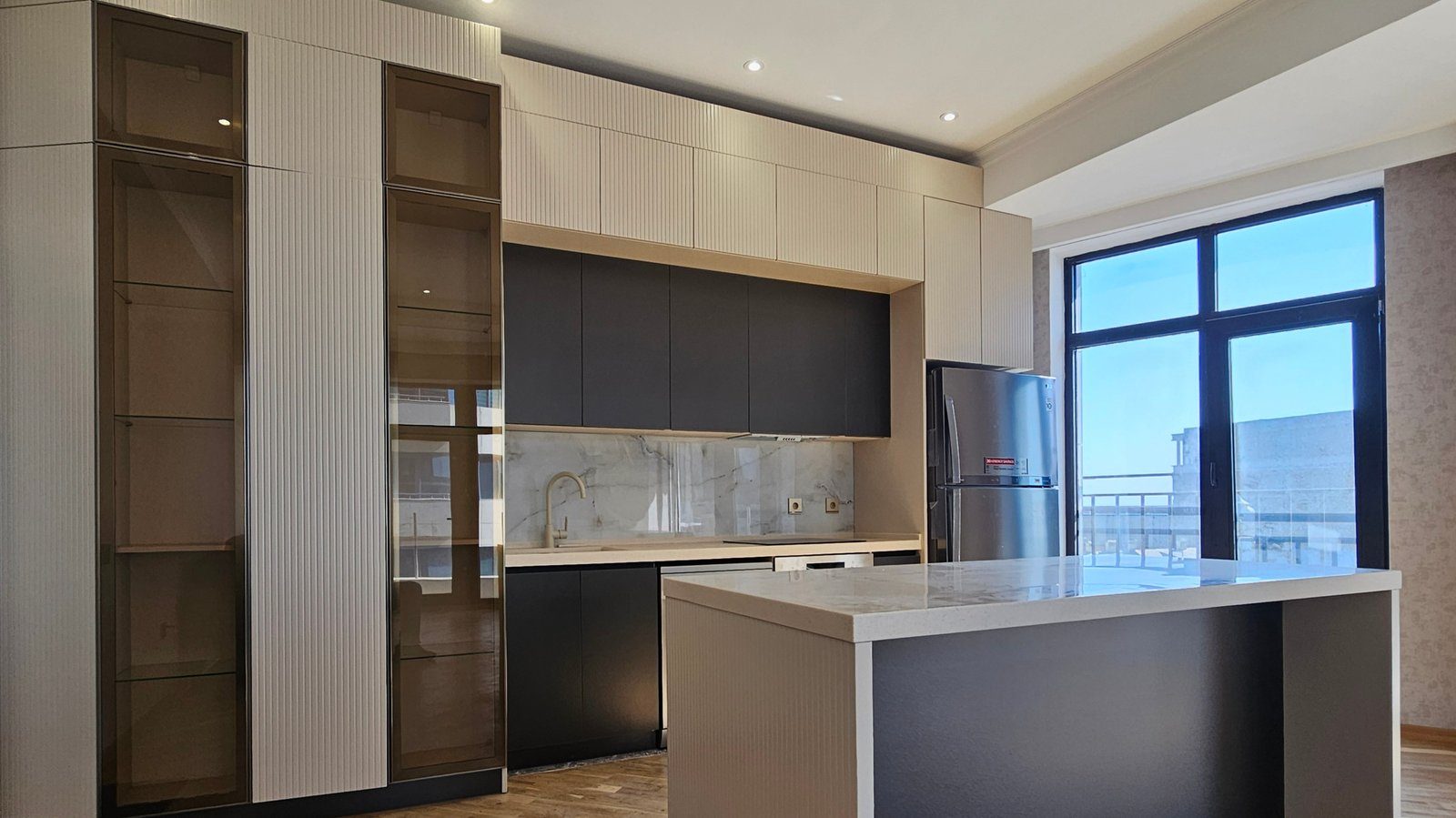
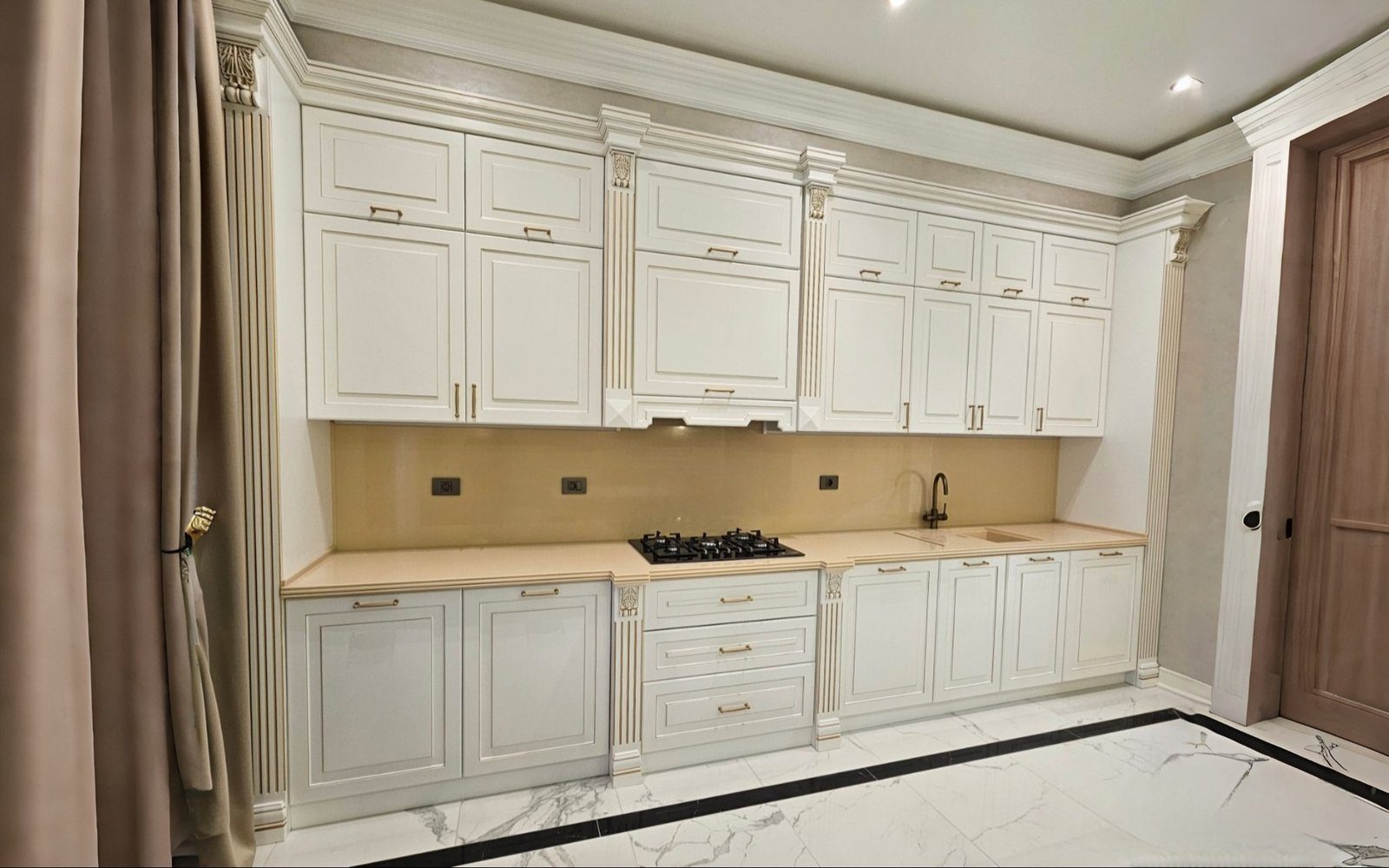
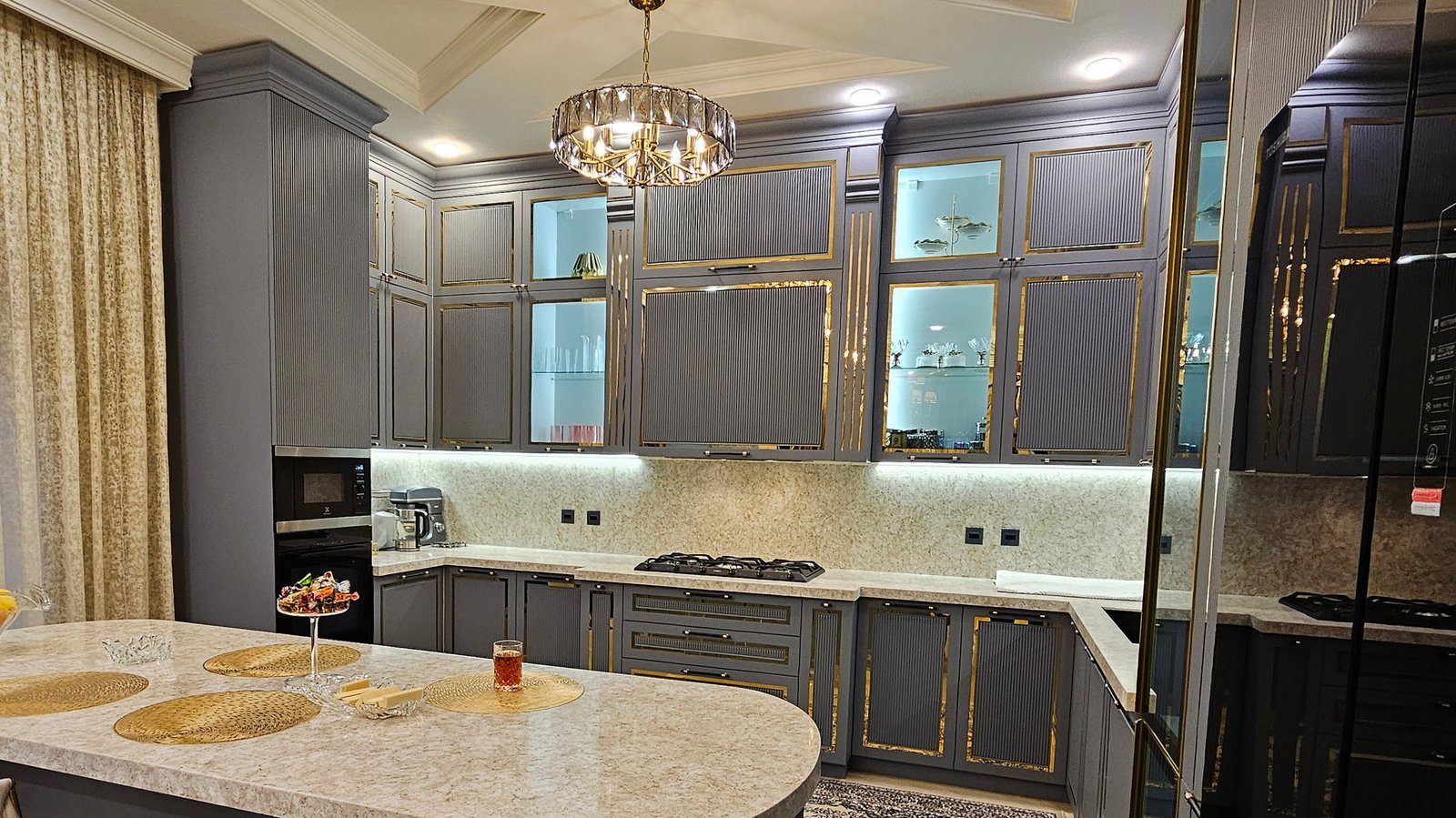
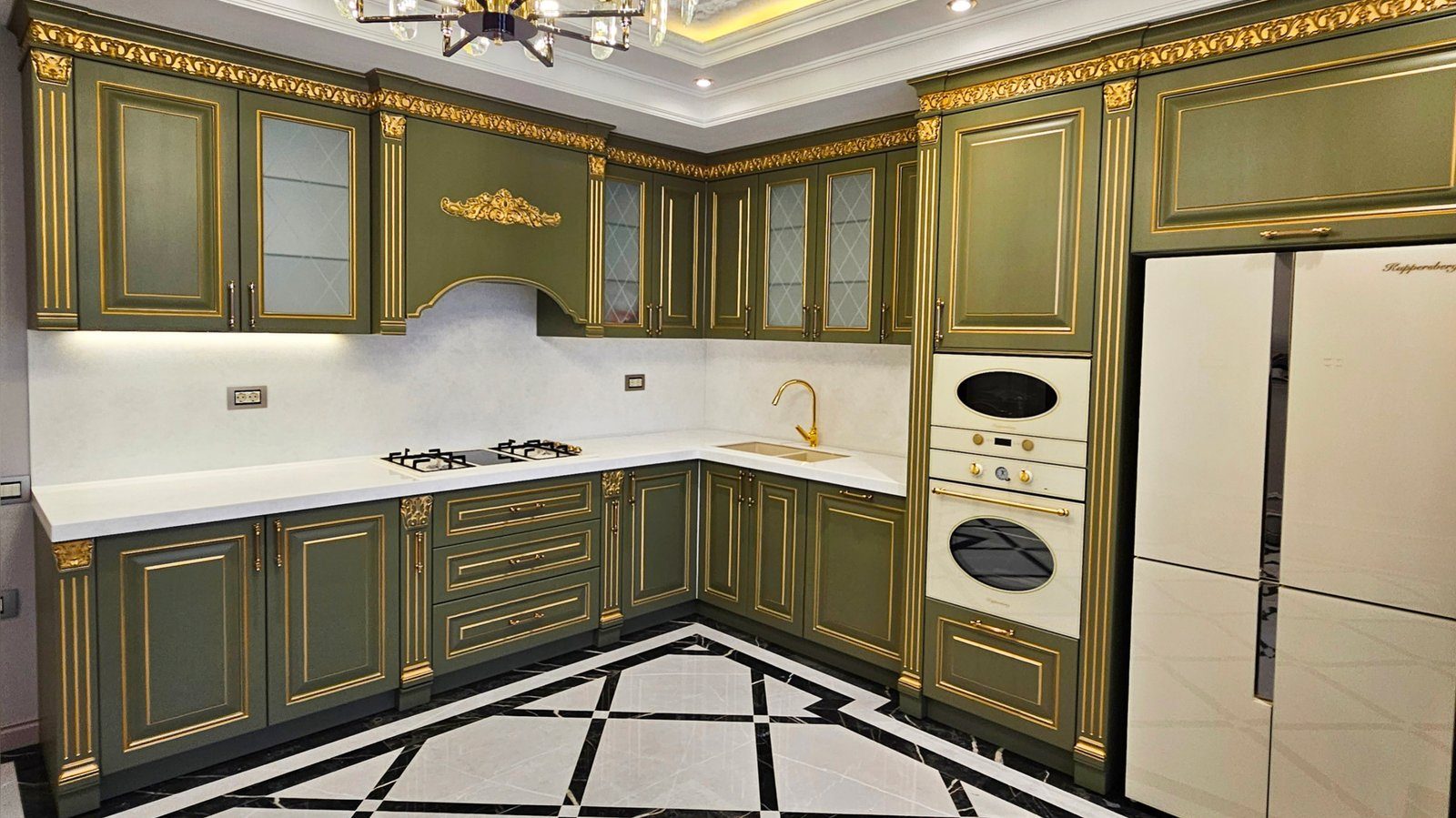
In classic kitchens the hood is often enclosed in a surround with a cornice, pilasters or an arched shape. Made from the same material and colour as the fronts, it turns the cooking area into the centrepiece of the kitchen. In a modern kitchen a plain rectangular box rising to the ceiling works better: it lines up with the tall units and hides the hood completely.
Inside a decorative surround sits a real hood insert; the surround is only a casing. Its internal dimensions are set by the size of the appliance and its installation instructions, so the hood should be chosen before the furniture is designed. If the hood may be replaced later, bear in mind that there is no guarantee a new model will have the same dimensions.
Ducting and the cabinet interior
With an extracting hood, the duct runs through the cabinet or surround. Its route should be as short and straight as possible, because each extra bend weakens airflow and adds noise. In the furniture design, shelves and back panels are cut where the duct passes, and that part of the cabinet loses storage space. If the space left for the duct is too tight, the pipe gets squashed and the hood never delivers its rated performance.
A recirculating hood filters the air and returns it to the kitchen, so it needs no duct and is easier to fit into furniture. Its charcoal filters must be replaced regularly, however, and the surround design must leave an opening for the air to come back into the room. If the outlet is closed off, the hood still runs but does far less good.
Heat, grease and clearances
How high the hood hangs above the hob is dictated by the appliance manual, not by the cabinet design. Too low and it sits in the heat of the burners; too high and it misses much of the steam. The bottom edges of nearby wall units and the inner faces of the surround take steam and grease directly, which is why sealed edges and wipeable finishes are needed. Raw, porous board soaks up grease and discolours with time.
There is also a simple rule for width: the hood should generally be no narrower than the hob. A decorative surround is often made somewhat wider than the appliance for visual balance.
Access for servicing and cleaning
The most often forgotten aspect of a hidden hood is how to reach it later. Filters need regular removal and washing, and the motor and electrical connection may need checking by a technician. The design should allow for:
- opening the filter panel without dismantling the surround;
- a socket or electrical connection reachable from the cabinet above the hood;
- the front of a decorative surround being screwed on so it can be removed when needed;
- the possibility of replacing the hood's light bulbs.
Zaferoglu Mebel's kitchen projects include a classic kitchen with an arched hood surround. Once the hood model is chosen, the dimensions of the surround and neighbouring cabinets are added to the design according to the appliance's installation documents.