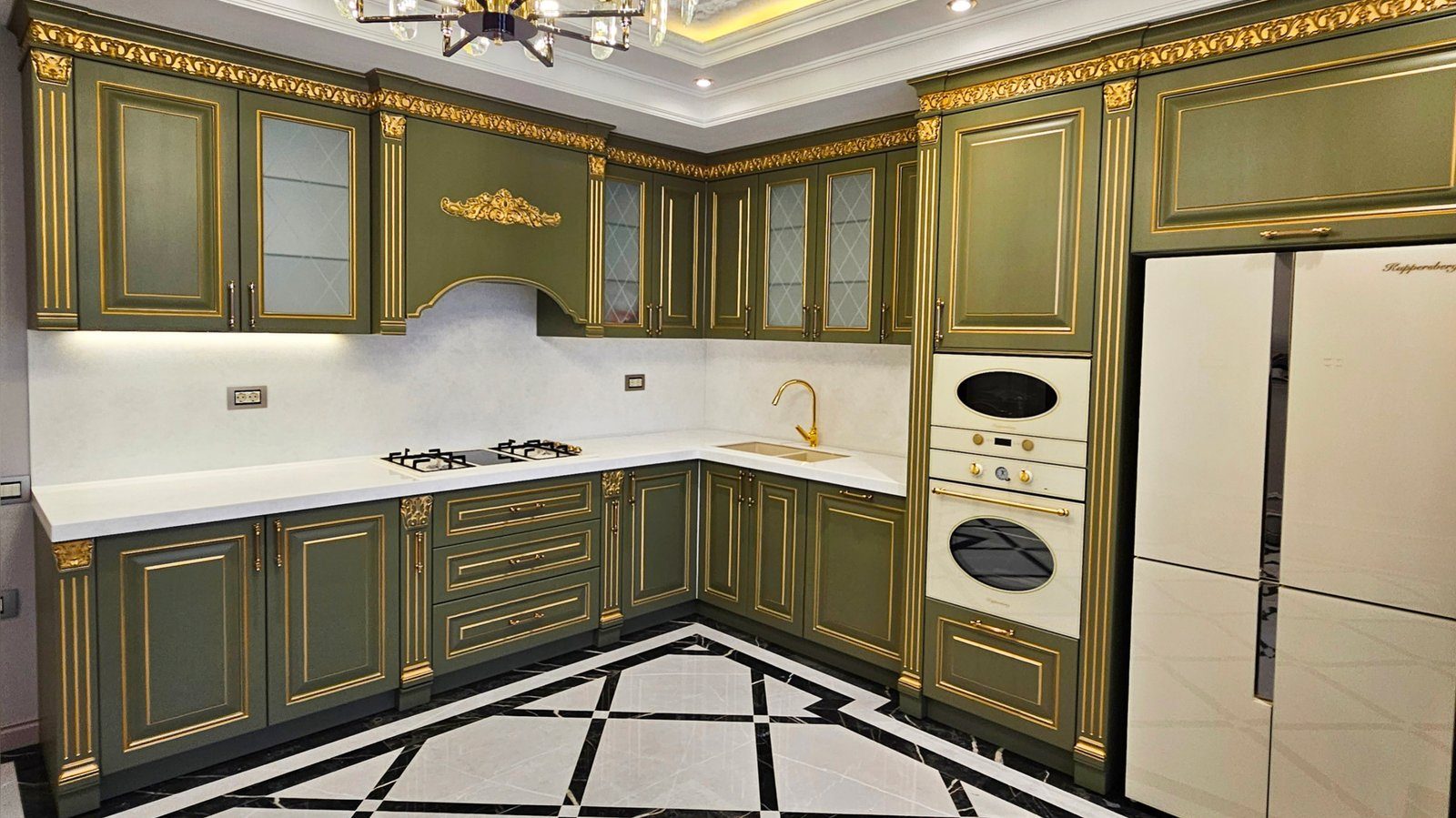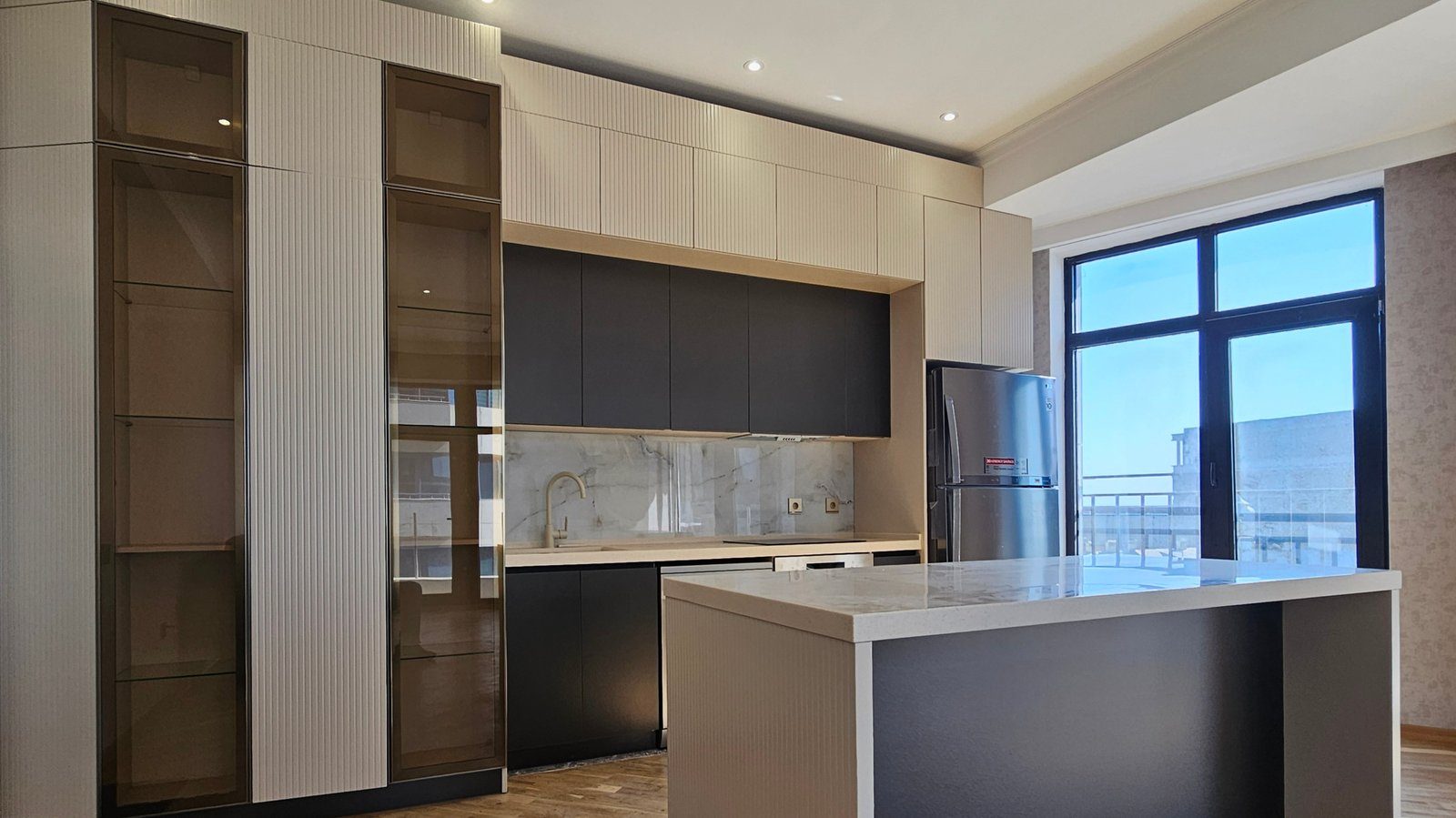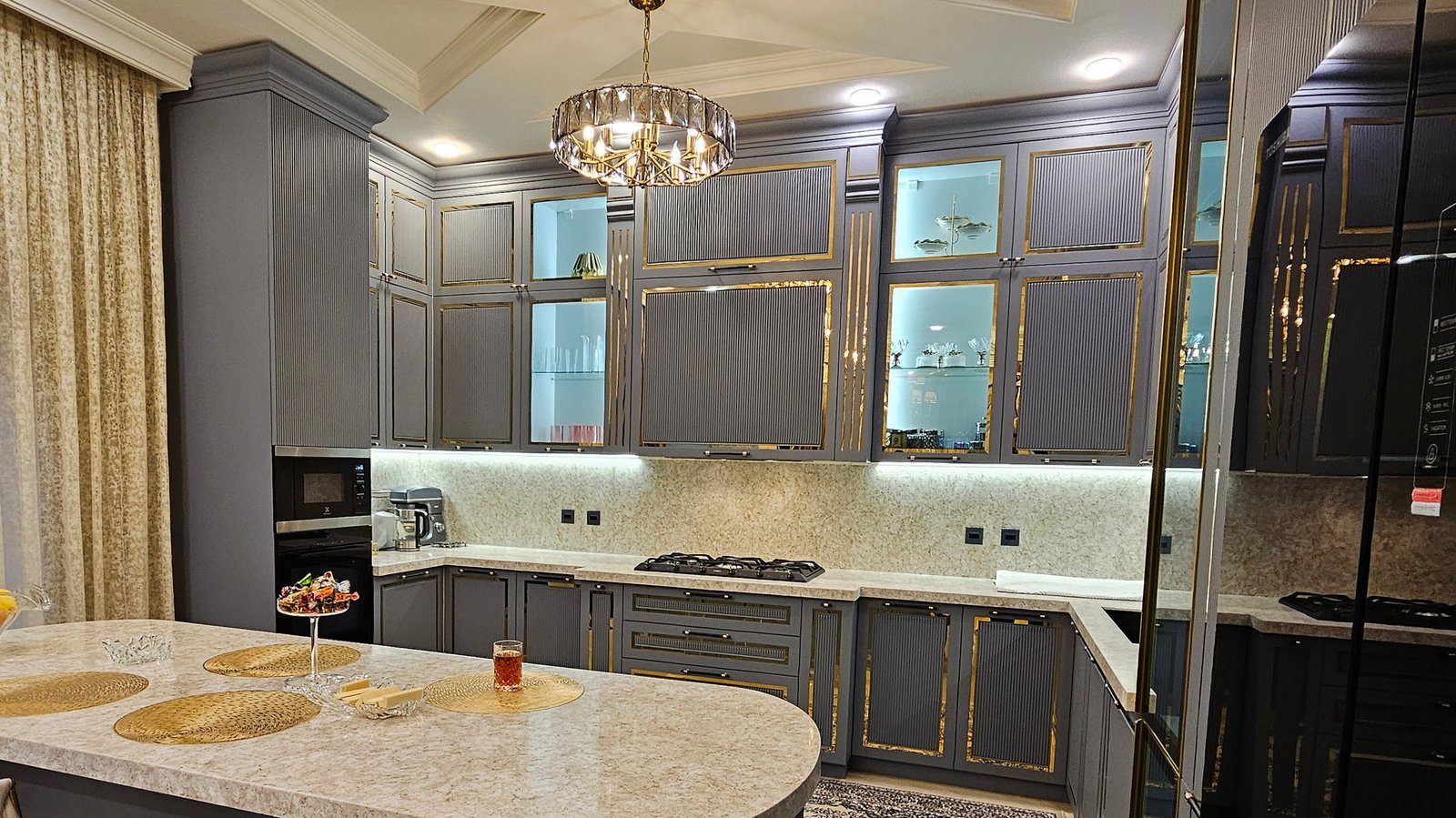

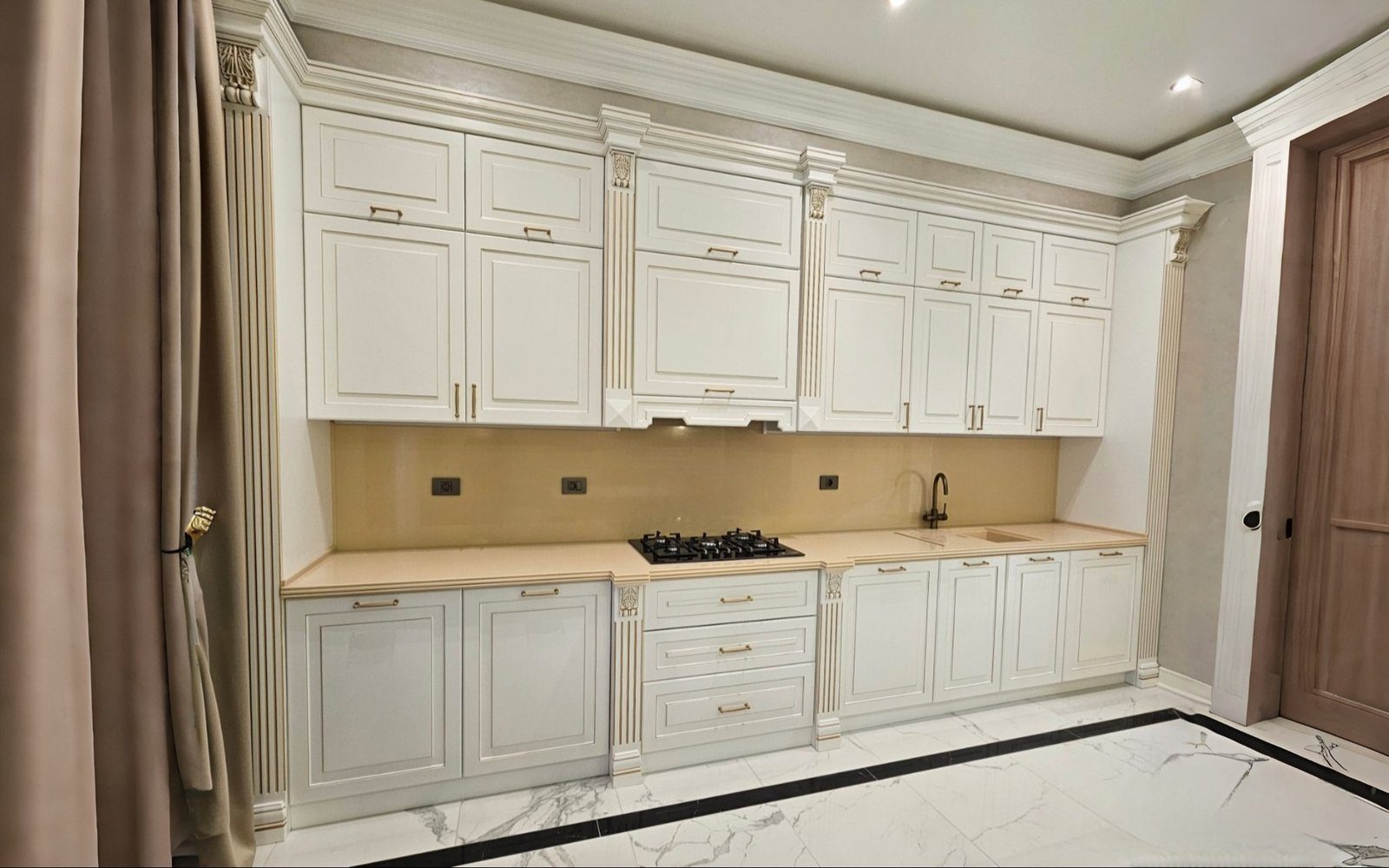
A row of fully closed wall cabinets can make a kitchen wall feel heavy. Add one or two glass-front units and the same row looks lighter and more lively. But a glass door is not just decoration: whatever stands behind it will be on show every day. That is why a display cabinet should be planned around your storage habits rather than looks alone.
When a display cabinet makes sense
A glass-front unit works best when it holds items worth showing and kept in order: matching tableware, glasses, ceramics, a few books. Everyday mixed items such as packets, multicoloured boxes and medicines look untidy behind glass and add visual noise to the kitchen.
Placement matters too:
- One or two units placed symmetrically at the end or centre of a wall run balance the composition.
- In a kitchen open to the living room, a display unit acts as a transition between cooking and living areas.
- Directly above the hob, glass gets greasy quickly and fogs with steam, so that spot is not suitable.
- Near a window, daylight shows the contents nicely, but fading of coloured items should be considered.
Type of glass
Clear glass shows everything and demands the most order. Frosted or sandblasted glass shows only the outlines of items, keeping the display effect while hiding minor clutter. Textured, fluted or tinted glass gives a decorative effect and is often used in contemporary kitchens.
For safety, furniture doors usually use toughened (tempered) glass or glass with a protective film on the back. If toughened glass breaks, it crumbles into small, blunt pieces rather than sharp shards. In families with children, it is sensible to ask about this at the design stage.
It also helps to compare a display cabinet with open shelving. Open shelves look just as light, but in a kitchen greasy steam and dust settle directly on the items, so they need frequent washing. A glass door shows things off and protects them at the same time. The difference is especially noticeable for tableware that is used only occasionally.
Frame and hinges
Glass doors are made in two main ways. The first is glass set into an MDF or aluminium frame. The frame strengthens the door and links it visually with the other fronts: a slim aluminium profile looks contemporary, while a wide milled MDF frame gives a classic look. The second is a frameless all-glass door, which needs special hinges that hold the glass without drilling or with a dedicated hole.
A glass door can be heavier than a standard board door, especially on a tall unit. The number and model of hinges should match the weight, and a soft-close mechanism is particularly useful to stop glass knocking against the carcass.
Lighting and shelves
The effect of a display cabinet often depends on light. An LED strip or spotlights inside the cabinet bring the contents forward in the evening. A few technical points apply: the cable route should be planned when the carcass is made, the light source should not shine straight into your eyes, and the switch or sensor should be easy to reach.
Shelf material is a choice as well. Glass shelves let light pass down and make the whole cabinet glow, but their thickness and supports must suit heavy tableware. Shelves made from the carcass board carry more weight but keep the light at their own level. The colour of the back panel, whether a wood decor or a contrasting colour, helps separate the contents from the background.
Daily use and care
A glass door quickly shows fingerprints around the handle. With a handle-free push-to-open mechanism, the spot you press can get smudged, so think about the opening method in practical terms too. Clean the glass with a soft microfibre cloth and glass cleaner; spraying the cleaner onto the cloth rather than the glass keeps liquid from running into the frame and edges.
A short check before deciding:
- Can you list exactly what you will keep in the display unit?
- Is the cabinet away from the hob and steam zone?
- Does clear, frosted or textured glass suit your storage habits?
- If lighting is planned, have the cable route and switch position been decided?
- Are the shelf material and supports adequate for heavy dishes?
Zaferoğlu Mebel makes kitchens to individual measurements and uses Blum hardware. The position of a display unit, the type of glass and the lighting can be planned together with the other cabinets at the design stage.