
The name Art Deco is tied to the 1925 decorative arts exhibition in Paris, and the style became a symbol of the years between the two world wars. It celebrates the speed of the industrial age, luxury and bold geometry: stepped skyscrapers, sunbursts, glossy lacquer, rare woods and metal. Today Art Deco is returning to interiors, not as a museum reconstruction but as characterful details added to contemporary furniture.
Signature features
Art Deco is above all geometry. In place of the plant motifs and soft curves of classical styles come precise lines, symmetry and repeated motifs. Typical motifs include:
- stepped, ziggurat-like silhouettes;
- fan and sunburst patterns;
- chevron and diamond arrangements;
- vertical fluting and fine parallel lines;
- semicircles and circles, especially in mirrors and arches.
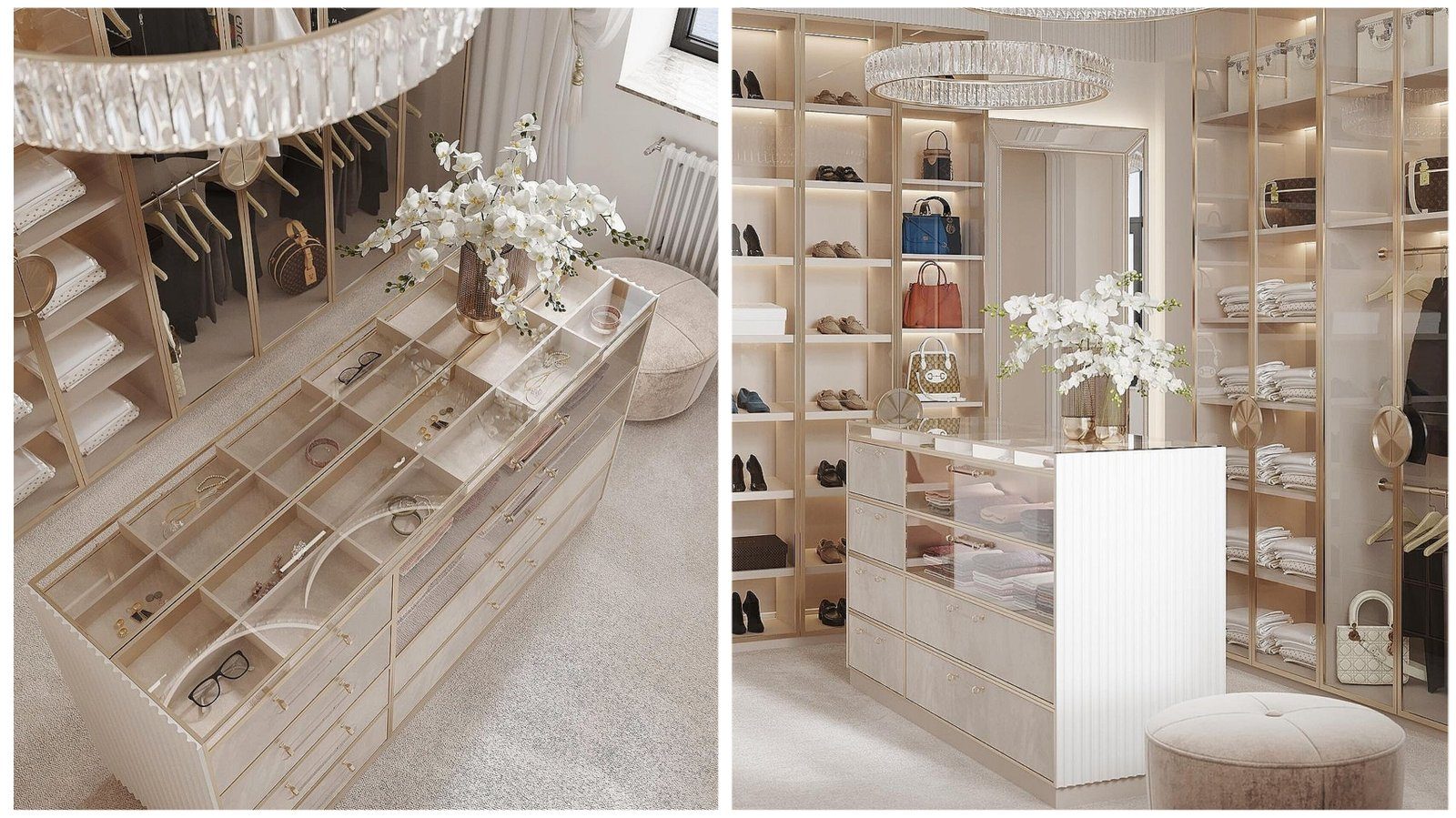
Contrast of materials plays a central role: dark glossy wood or lacquer against light metal, gloss against velvet, marble against brass. That tension gives the style its dramatic, slightly theatrical character.
Bringing geometry into furniture
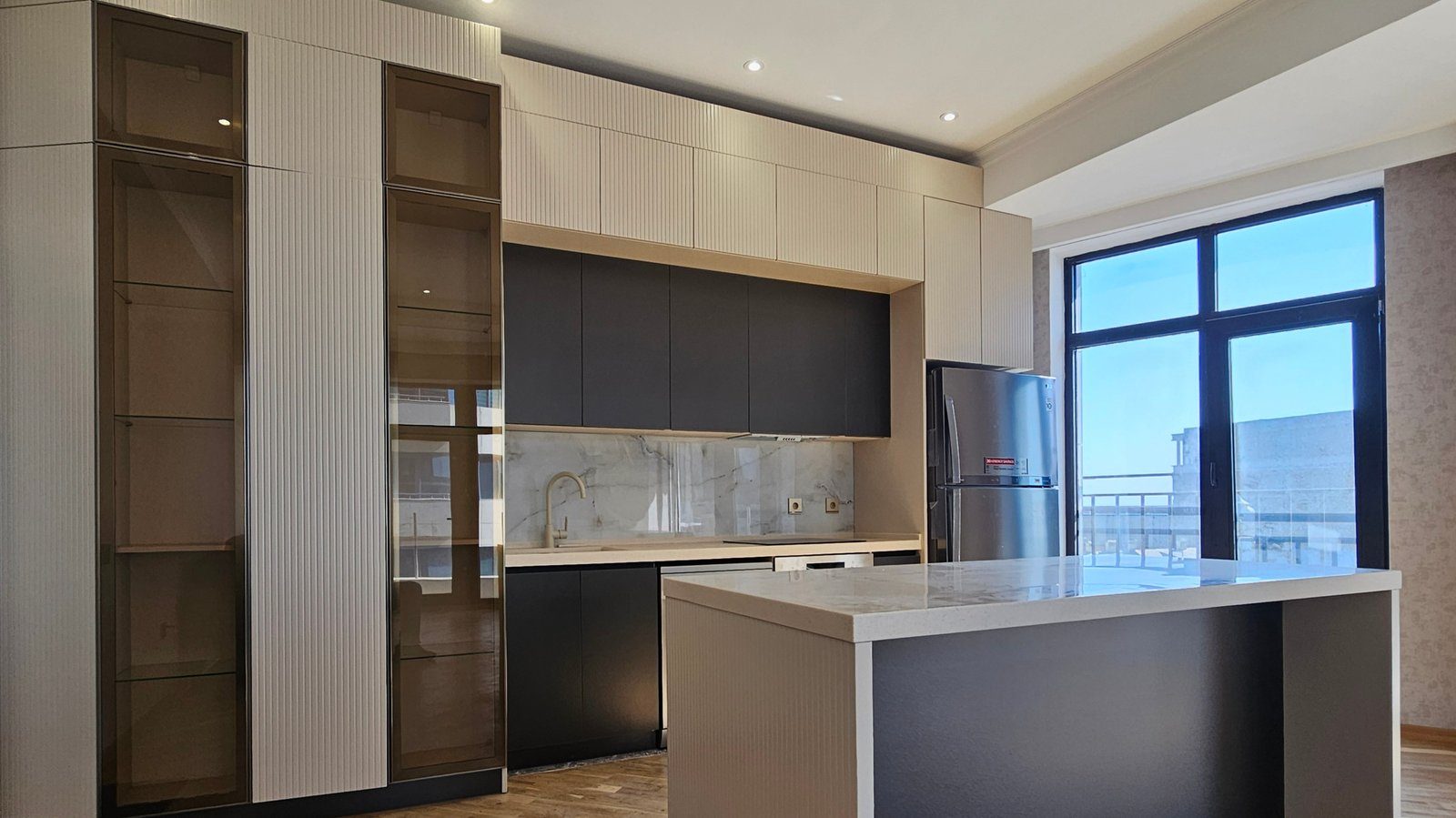
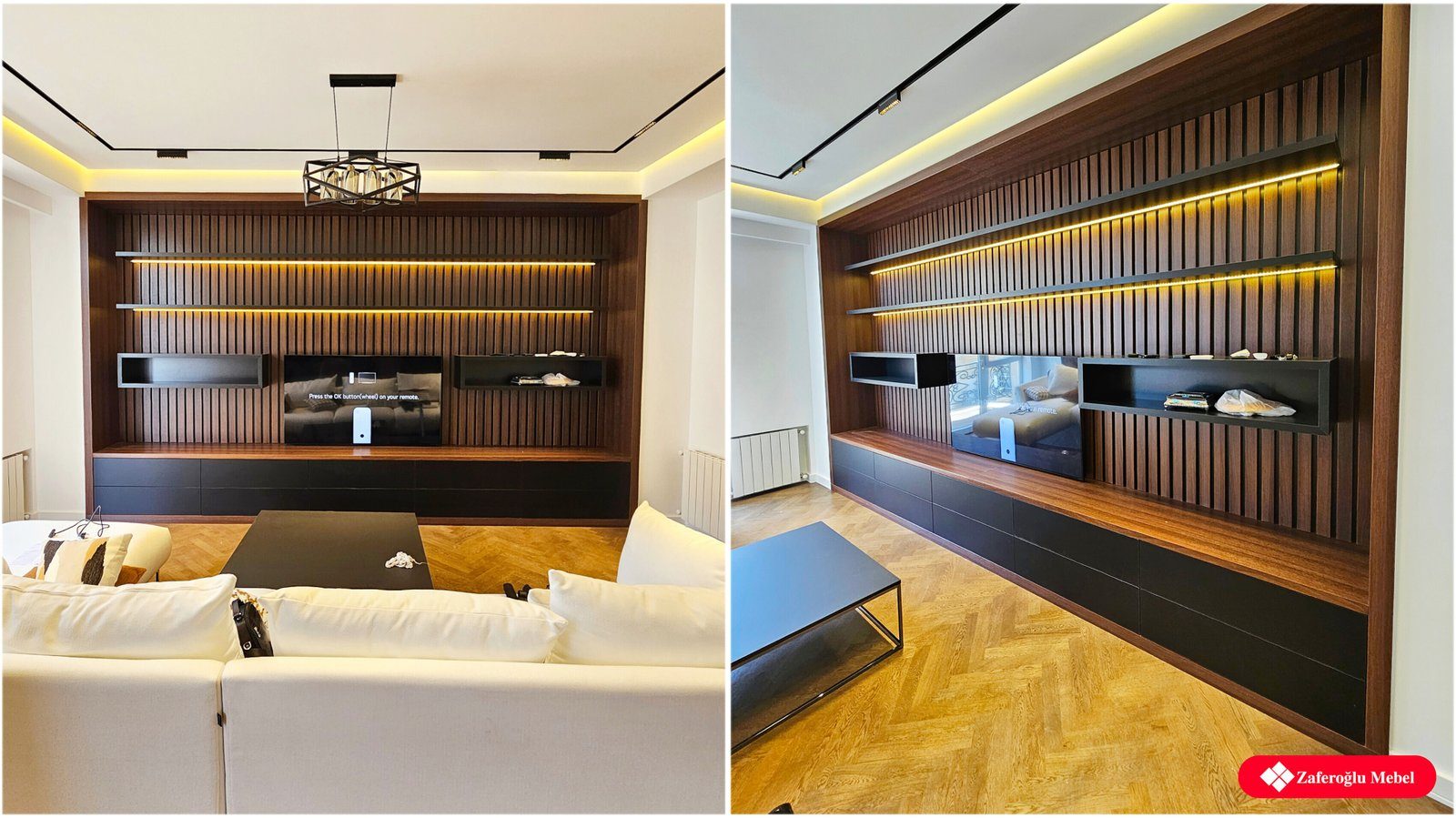
The Art Deco spirit often starts with how fronts are divided. Symmetrically arranged doors, an emphasised central section and units stepping down towards the sides immediately give a wardrobe or TV wall the rhythm of the style. Routed fan or vertical fluting patterns on fronts add character; such work is usually done on MDF fronts.
Round forms are an important part of the language too. Rounded cabinet corners, arched niches and semicircular mirrors balance the hard lines. In upholstery, channel-stitched fan headboards and armchairs with rounded backs continue the theme.
Surfaces: shine and depth
Art Deco is not a style of matt, quiet surfaces. Historic pieces relied on dark lacquer, highly polished wood and figured veneer. In modern furniture the effect can be achieved with gloss painted fronts, deep-coloured acrylic panels or dark, expressive veneer. Book-matching veneer, laying neighbouring leaves as mirror images, is a classic Art Deco technique.
Remember the practical side of gloss: it shows fingerprints and scratches more. Where fronts are touched often, such as handleless drawers, a semi-gloss finish is more comfortable to live with.
Metal details and a sense of proportion
Brass and gold-toned metal are the most recognisable Art Deco elements: thin inlays, metal caps on legs, handles, shelf edges. But the more metal there is, the sooner the room turns into stage scenery. In a contemporary interior one or two repeated metal elements, such as matching handles and a slim leg frame, are enough.
Match the metal tone across the room. When the brass on the furniture shares its shade with lamps and mirror frames, the interior reads as a whole. Mixing polished and brushed metal in the same zone looks like a mistake.
Colour palette
Historic Art Deco is known for deep, rich colours: emerald green, dark blue, burgundy, black, ivory and gold. They look striking in a large room but can feel oppressive in a small flat. In that case, keep most of the furniture in a neutral light tone and give the deep colour to one accent, such as an upholstered armchair, the inside of a bar cabinet or a headboard.
Black-and-white contrast is another classic Art Deco device, but it looks more contemporary in details, inlays and patterns than across large surfaces.
Avoiding heaviness in a modern home
When bringing Art Deco elements into a contemporary flat, this checklist helps:
- Choose one main Art Deco feature per room: a TV wall, a bar cabinet or a headboard.
- Limit geometric motifs to one type, for example only fans or only fluting.
- Keep metal tones consistent across the room.
- Keep gloss away from surfaces touched often.
- Use deep colours as accents and neutral tones as the background.
- Do not sacrifice function for form: drawers must open easily and shelves must fit real belongings.
Zaferoglu Mebel makes furniture to individual designs, which makes it possible to adapt Art Deco motifs to the size of a specific room and the degree the client wants. At the design stage, visual references can be used to choose together which elements of the style to keep.