
When a wardrobe is designed, attention usually goes to hanging space, shelves and drawers. Belts, ties, scarves, bags and jewellery are left for later and end up in the corner of a drawer or hung on the back of a door. These items are small, but as their number grows they become hard to find, bags lose their shape and belts get tangled. Planning dedicated interior fittings for them in advance makes a wardrobe much easier to use every day.
Start with a list: how many and what kind
Before choosing fittings, count what you have. How many belts are there, and should they hang or be rolled? Are ties worn daily or rarely? What size are the bags, and do they need support to keep their shape? Does the jewellery include chains, rings and watches? The answers determine which fittings you need and where they go in the wardrobe. It is also sensible to allow for more items in future and leave a little spare space in each fitting.
For belts and ties
There are two main approaches for belts. The first is a pull-out rack fixed to a side panel or divider: it slides fully forward, belts hang by the buckle on hooks, and everything is visible at a glance. Such racks can fit narrow gaps, for example a slim space between two sections. The second is a drawer with a cell insert, where each belt is rolled and placed in its own compartment. This is gentler on leather belts because they do not get fold marks, but the drawer height must suit a rolled belt.
Pull-out racks with rods are also common for ties. Each tie hangs on its own rod, so ties do not pile on each other or crease. If you have only a few ties, narrow long compartments in a drawer are enough.
Shelves and dividers for bags
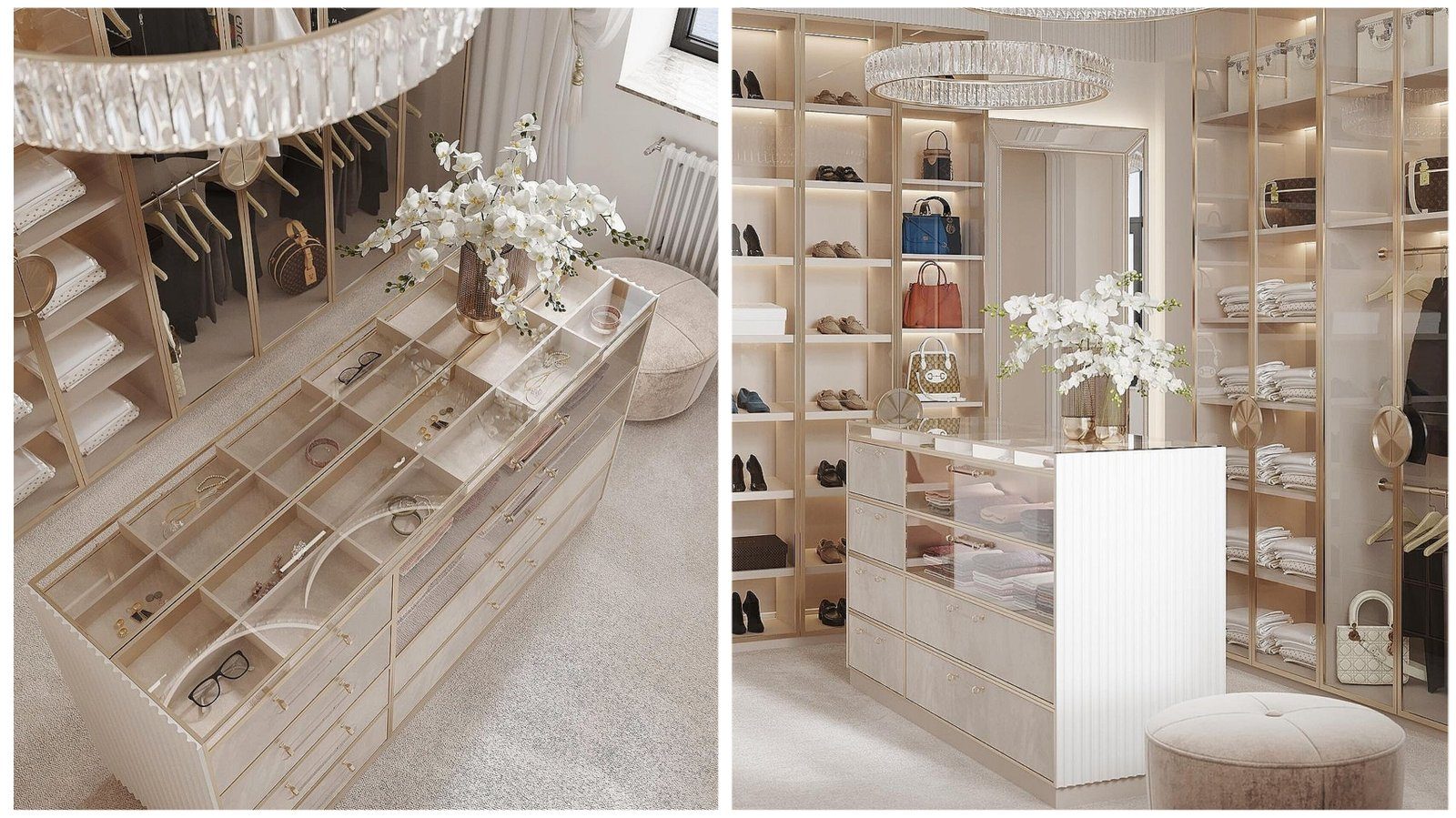
Bags take the most space and lose their shape most easily. Stacking them causes creasing and scratches on both leather and fabric bags. A better solution is a shelf divided by vertical partitions: each bag stands upright in its own slot without leaning on the next one. The spacing of partitions follows the width of the bags, and shelf heights are chosen to suit taller ones.
To keep bags free of dust, this section can have solid or glass doors. For one or two bags used often, an open slot or hook near the door is more practical. Keeping very heavy bags in the middle of a thin shelf can make it sag, so shelf thickness and supports should be considered here.
Scarves, jewellery and small items
Scarves and shawls go on pull-out racks with rings or rods, or in shallow drawers. Silk scarves stay uncreased when hung, while thick wool scarves keep better folded on a shelf or in a drawer.
Shallow drawers are more convenient for jewellery, because small items get lost under each other in a deep drawer. A soft-lined tray with compartments inside the drawer keeps rings, earrings and watches apart and stops chains from tangling. A multi-level sliding tray fits more items into the same height.
For valuables, a lockable drawer or small safe can be hidden inside the wardrobe. If a safe will be fitted, its size and fixing position need to be known before the carcass is made.
Placement, height and light
Where accessory fittings sit in the wardrobe directly affects daily use:
- Belts and jewellery used every day belong at eye and hand level, roughly between waist and shoulder height.
- Rarely used bags and seasonal scarves can go on upper shelves.
- Pull-out racks must not block door opening; with hinged doors, allow for the space taken by the door leaf and hinges.
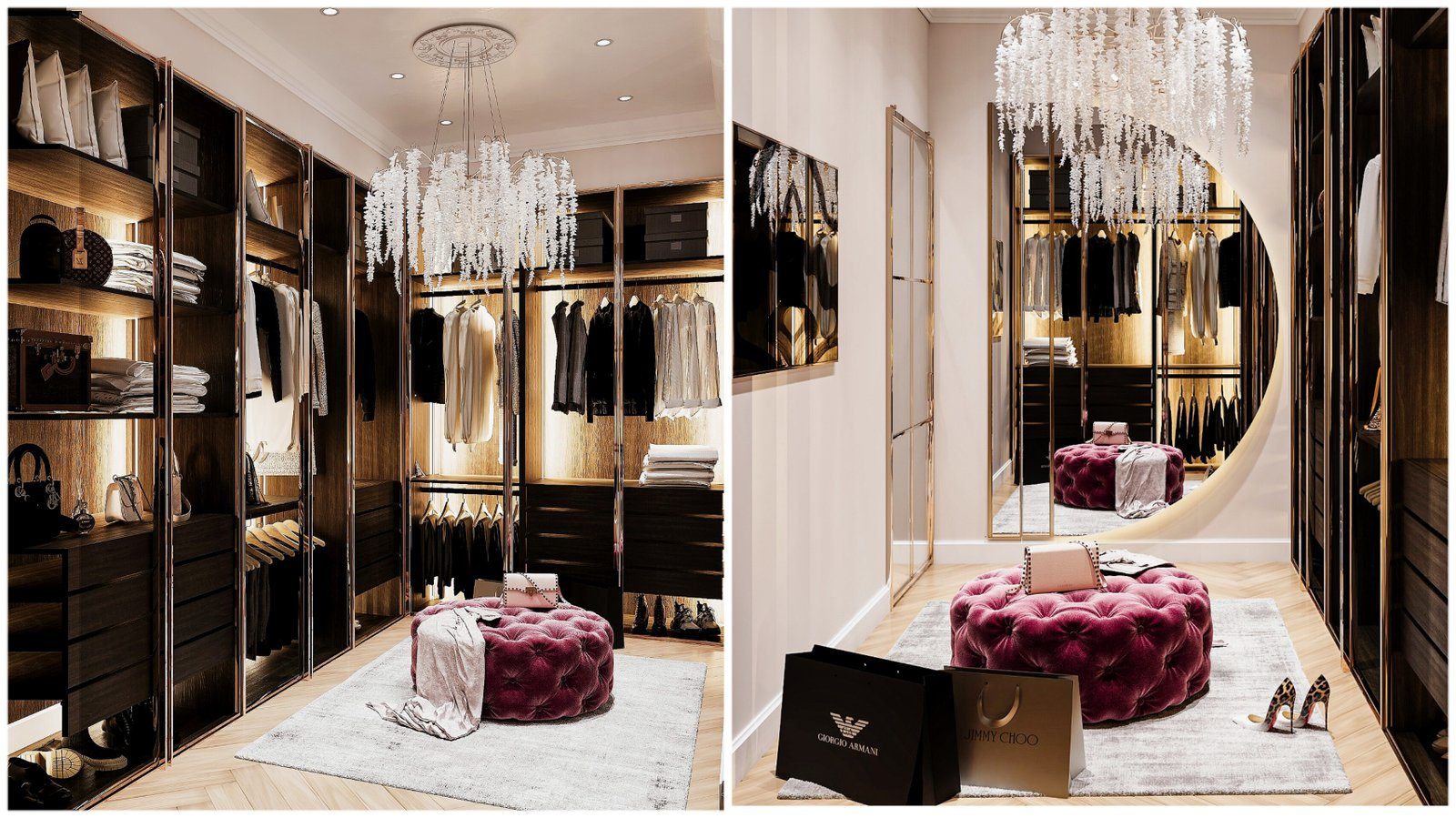
- A mirror near the accessories section makes choosing easier.
- Soft opening and closing of drawers and racks stops small items from being jolted out of place.
Small items are hard to see in the deep parts of a wardrobe. An LED light that switches on when a drawer opens, or a strip light under a shelf, makes the accessories section much more convenient. The cable route and sensor type should be allowed for in the carcass design.
Zaferoğlu Mebel makes wardrobes to individual measurements and uses hardware and mechanisms from brands such as Blum. Bringing a list of your accessories to the design meeting makes it possible to plan exactly which fitting goes where.