
Within a few months, the wall next to a child's bed can be unrecognisable: drawings, shoe marks, chipped paint. A small child turns in their sleep and bumps their head on the wall, and an older child sits on the bed leaning against it. Upholstered wall panels answer these everyday situations simply: they protect both the child and the wall and give the room a warm, cosy look. But their value depends on choosing the right place, material and size.
Where panels are needed
Covering an entire wall with soft panels rarely makes sense. They work where there is daily contact:
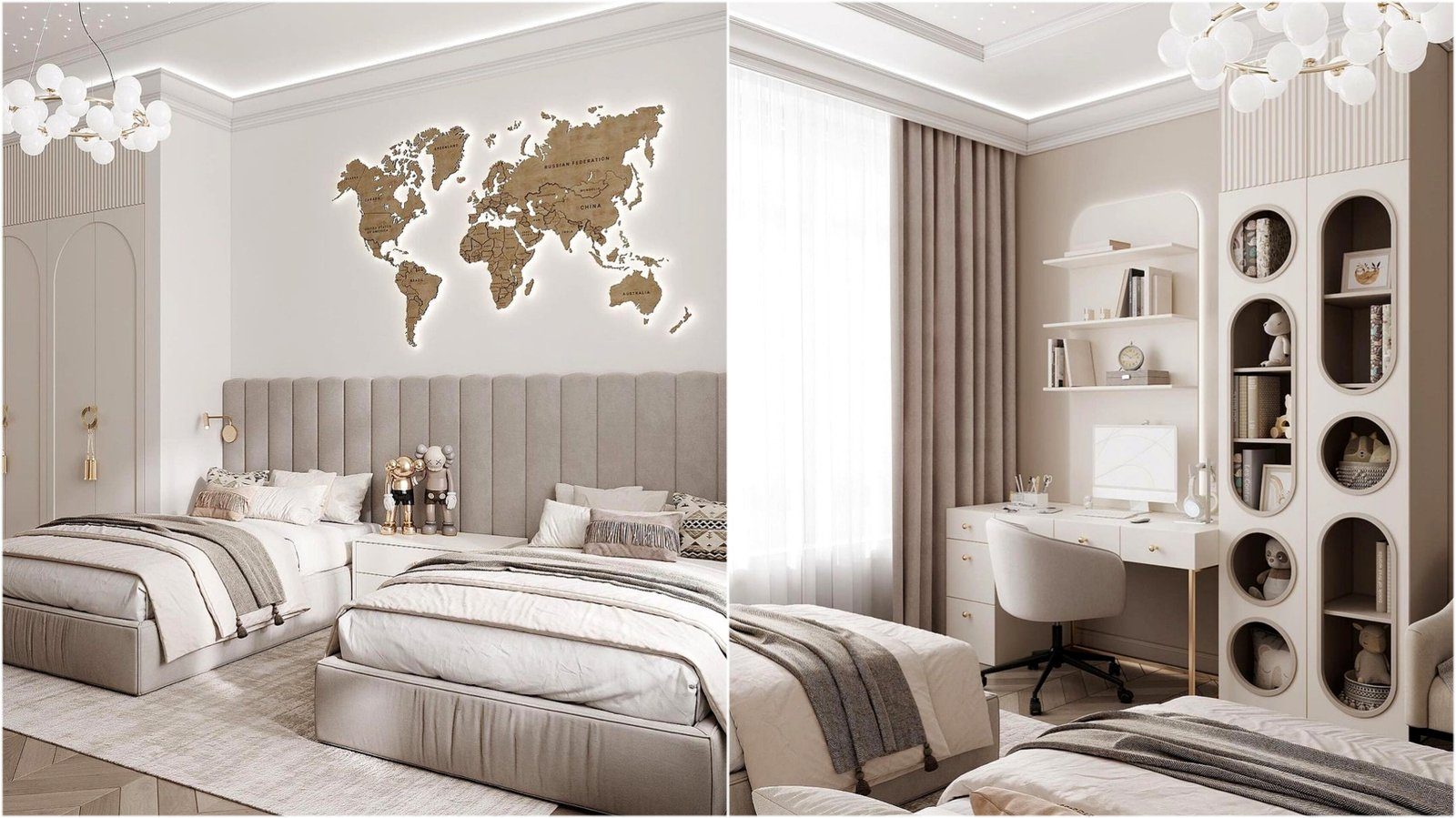
- The wall side of the bed: the zone the head and elbows hit when a child turns in their sleep.
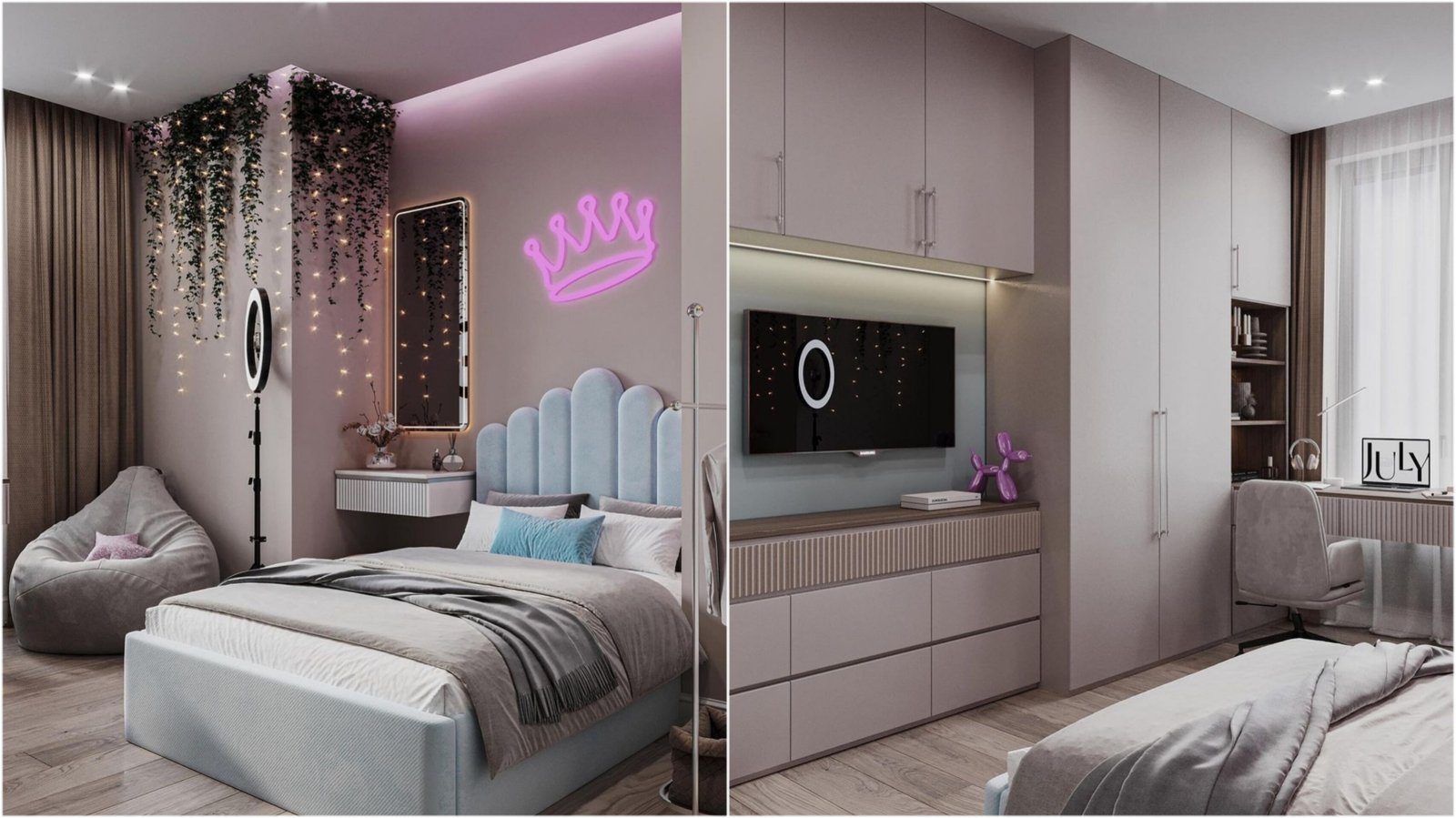
- The headboard: for leaning back while reading in bed.
- The wall beside the upper level of a bunk or loft bed.
- The play area, especially where small children play actively.
- A seating nook under a window or between shelves.
Panel height is also chosen by use. Beside a bed, panels a little above mattress height are enough; in a play area, the part up to the child's height is what matters.
How a panel is made
A soft panel usually has three layers: a rigid base, a soft filling and a cover. A thin board or plywood serves as the base. The foam filling determines softness: very thin foam does little to cushion a knock, while very thick foam makes the panel heavy and stand out too far from the wall. The fabric or faux leather cover is stretched over the foam and fixed at the back of the base.
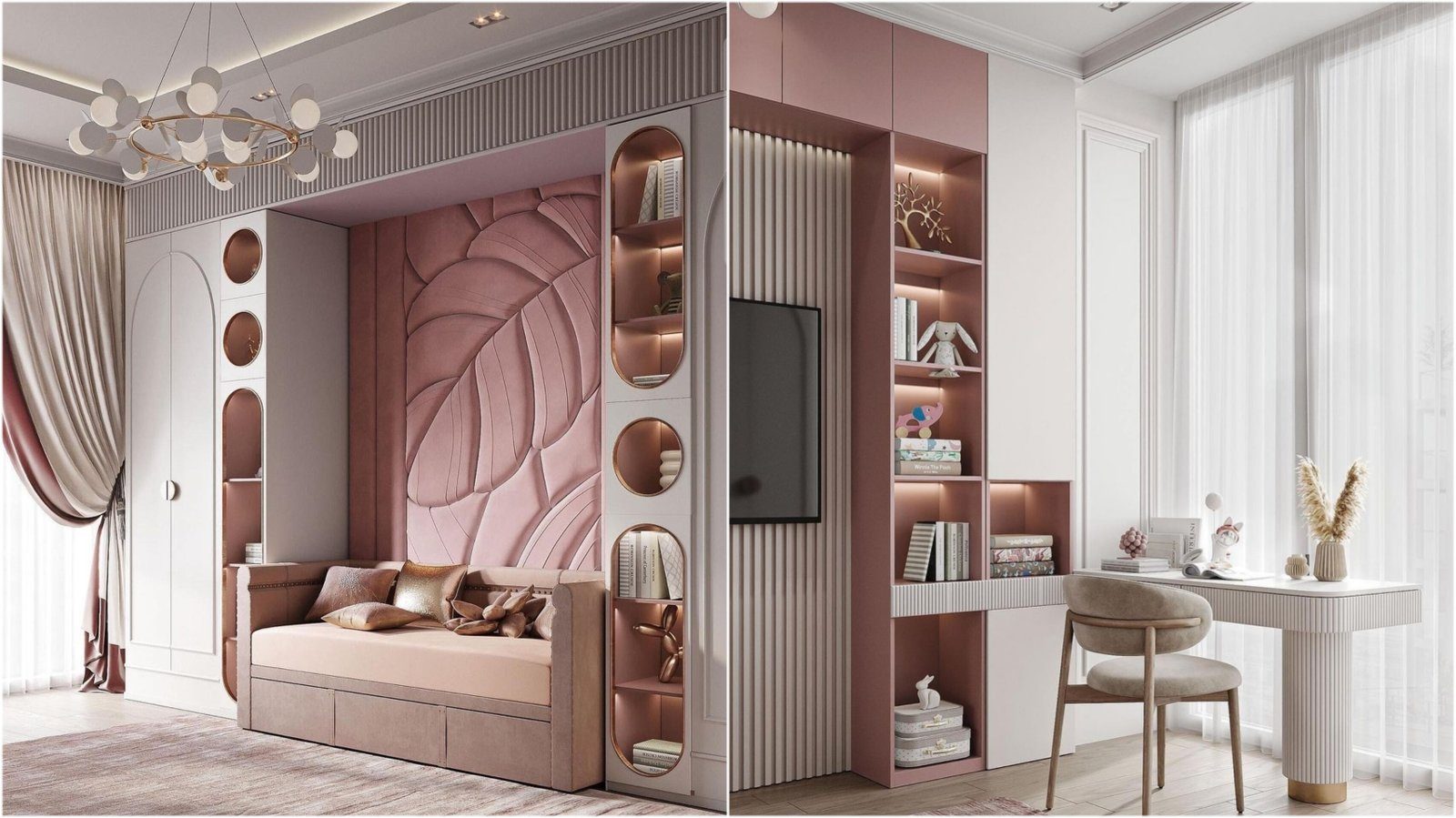
Panels come in many shapes: rectangles, squares, hexagons, and figurative forms such as waves or clouds. Panels assembled from small modules allow only the damaged module to be replaced.
Covering: fabric or faux leather
In a child's room, the main requirement of a cover is easy cleaning.
- Faux leather: the surface is smooth, and felt-tip, food and dirt marks wipe off with a damp cloth. It can feel cool and slippery, and low-quality types crack over time.
- Velour and upholstery fabrics: warm, soft and comfortable. Fabrics treated with a stain-resistant finish cope well with daily use.
- Removable covers: in some systems the cover can be taken off and washed, which is particularly practical for small children.
For colour, light pastels make the room feel airy but show marks sooner. Mid-tone fabrics with a slight melange look soft and hide daily wear.
Fixing and safety
Soft panels are fixed to the wall with screws, special hanging profiles or strong adhesive. In a child's room it is important that panels cannot come off, because children lean on them, pull at them and sometimes climb. Profile systems allow panels to be removed later and replaced.
Around sockets and switches, panels need accurate cut-outs, and cables must not be pinched behind them. Panels should not be installed too close to heaters or radiators.
Material safety deserves attention as well. It is reasonable to ask the maker about the fabric, foam and adhesives used in a child's room. For small children, avoid decorative buttons and small details on the cover that could come loose.
Soft panels as decor
Panels can be the room's main decorative feature, not just protection. A geometric arrangement of modules in different colours, a house-shaped headboard panel or mountain outlines give a child's room character. The rest of the furniture is then kept calm so the panel remains the focal point.
As the child grows, the panel design may feel dated. With modular systems, colours or shapes can be changed without redoing the whole wall.
Care
- Remove dust regularly with a soft brush or the soft nozzle of a vacuum cleaner.
- Blot stains with a damp cloth rather than rubbing.
- Test strong cleaning products on a hidden area first.
- Wiping faux leather occasionally with a gentle conditioner helps prevent cracking.
Zaferoglu Mebel can draw soft wall panels in the same design as the bed, shelves and desk, so the panel size, shape and fabric colour are matched to the rest of the room from the start.