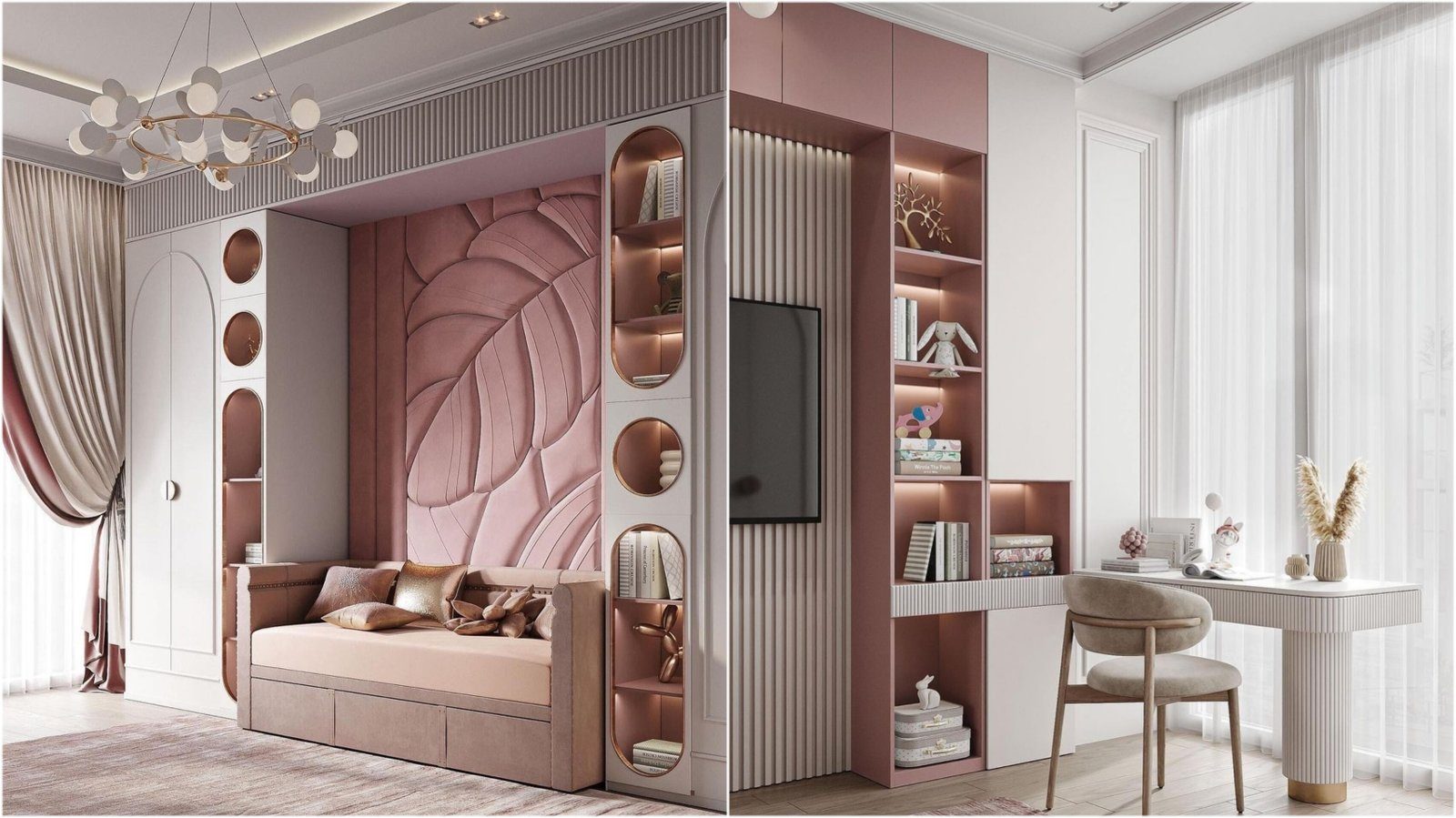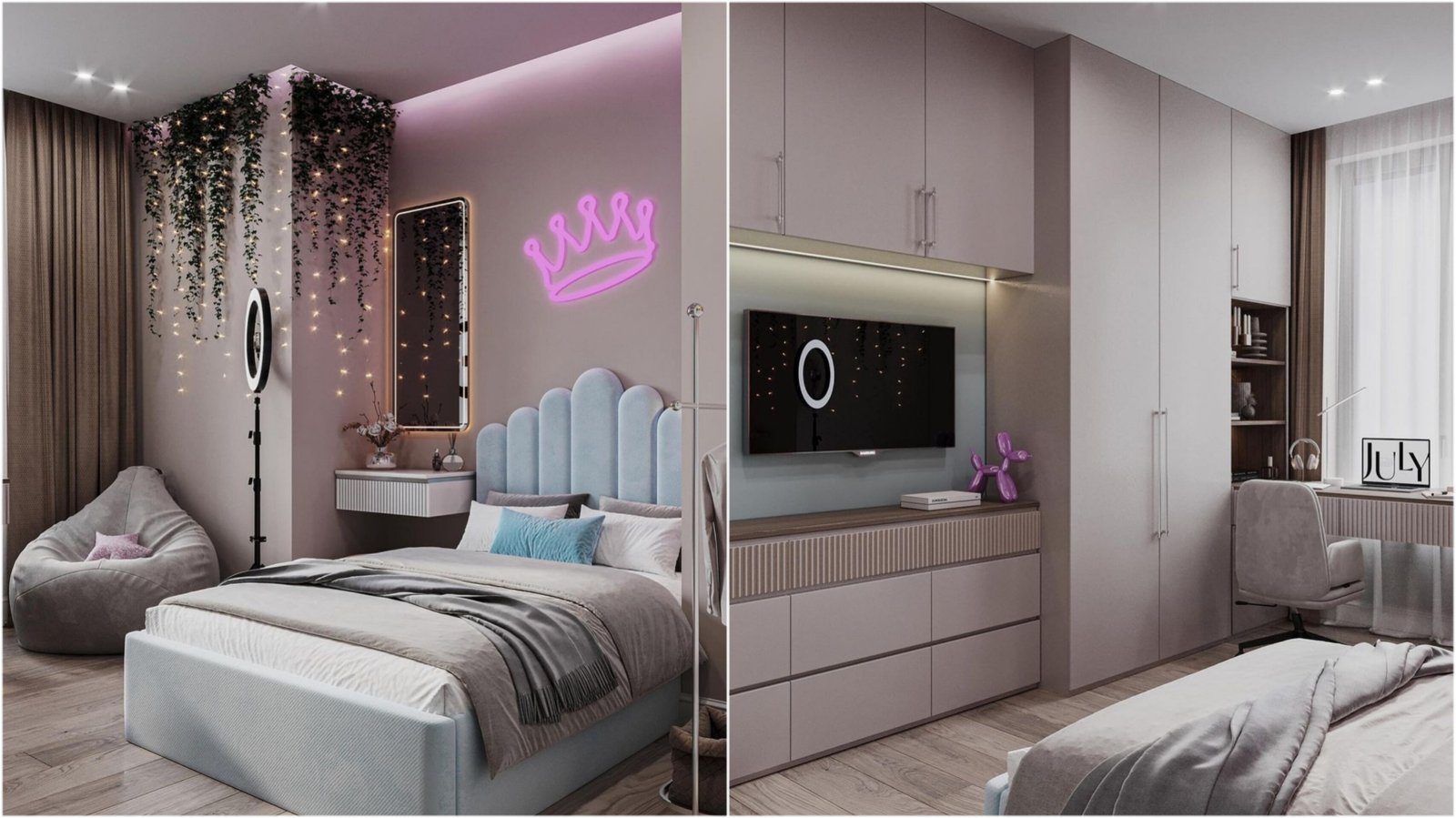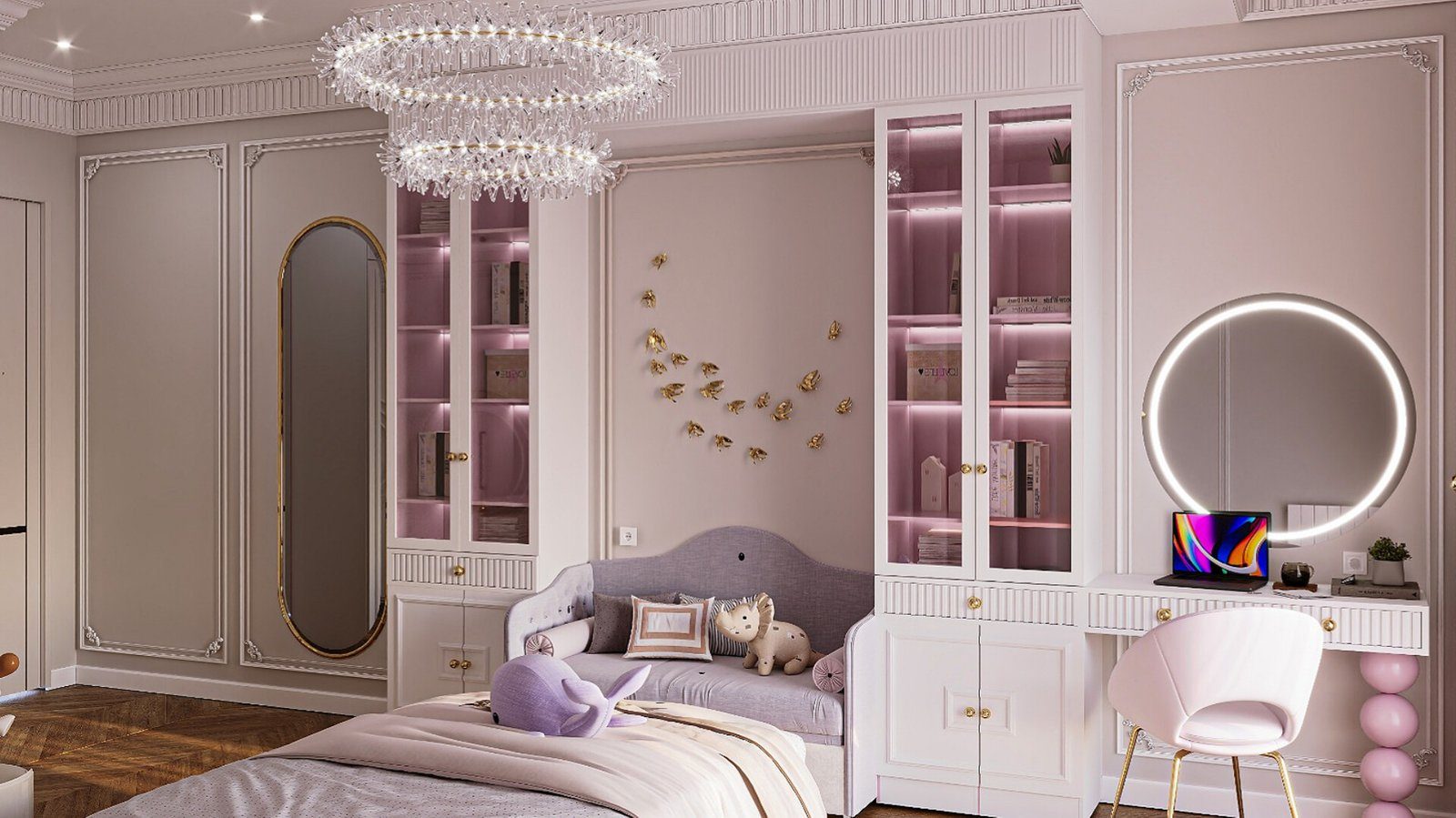

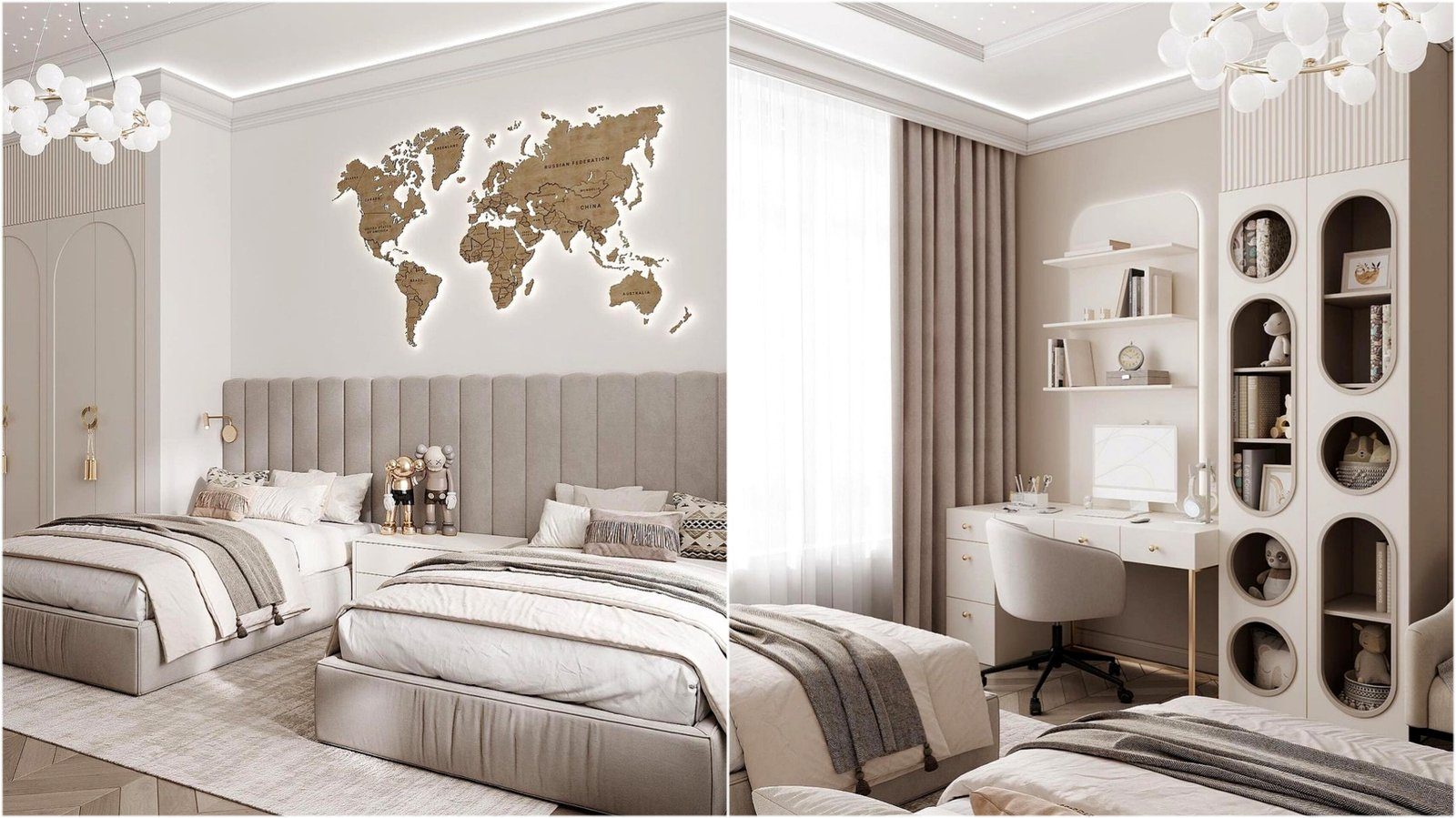
When planning a child's room, many parents say no as soon as they hear the word glass. The reaction is understandable: for a child who runs, throws balls and climbs furniture, a breakable surface looks like a hazard. On the other hand, a mirror helps a child learn to dress, a glass-fronted cabinet keeps a collection dust-free, and a translucent divider makes a small room feel bigger. The question is not whether to avoid glass entirely but where and how to use it.
What determines the risk
Whether glass and mirrors are dangerous in a child's room depends on three factors: height, the likelihood of impact, and how the material behaves when it breaks. The zone from the floor up to waist height is the most active: this is where children fall, throw toys and ride scooters or toy cars. Glass placed higher up, above the child's head, rarely takes a knock.
The second factor is moving parts. A glass door carries a higher risk of trapped fingers or being slammed than a fixed panel.
Types of glass: ordinary, toughened, laminated
Ordinary (untreated) glass in furniture breaks into long, sharp shards and should not be used in a child's room. The alternatives are:
- Toughened (tempered) glass is much stronger than ordinary glass and breaks into small, blunt granules. Its edges cannot be reworked after toughening, so dimensions must be precise.
- Laminated glass consists of two layers of glass with a film between them. Even if it breaks, the pieces stick to the film and stay in place.
- Acrylic and polycarbonate are glass-like plastics that do not shatter. They scratch more easily but are the most practical choice for low zones.
Rules for mirrors
A mirror is useful in a child's room, especially on a wardrobe door or in a dressing area. To make it safe:
- the back of the mirror should carry a safety film, so that if it breaks the pieces stay on the film;
- the mirror should be bonded to the door or panel over its whole surface, not hung from clips at the corners;
- the edges should be polished or protected by a profile;
- for a small child the mirror can start a little above the floor, although a full-length dressing mirror is fine if the conditions above are met.
Mirrors are common on sliding wardrobe doors, where the frame protects the edges. The main focus there is on the stops and brakes that keep the door from slamming.
Where the mirror goes is not only about physical safety. A large mirror directly opposite the bed reflects moving shadows from a night light or streetlight, which frightens some children. A mirror facing the window can bounce daylight straight onto the child's desk or bed. That is why a mirror is usually placed on a side wall that cannot be seen from the bed, or on the inside of a wardrobe door.
Where yes and where no
In practice it helps to divide the room into zones:
- Upper display shelves and collection cabinets above the child's height: toughened or laminated glass is suitable.
- A mirror on a wardrobe door: a fully bonded mirror with safety film on the back is suitable.
- A desk top: glass is not recommended, as it is cold, slippery and has edges to bump into.
- Low doors, toy units and parts of the bed: acrylic, polycarbonate or simply chipboard or MDF instead of glass.
- A decorative translucent divider: laminated glass or acrylic.
An approach by age
For a child between one and three, it makes sense to have no glass at all in the lower zone. A school-age child treats furniture more carefully, and a display shelf gives them a place to show off favourite things. In the teenage years, mirrors, glass shelves and even a glass partition can be planned as for an adult room.
If you are planning furniture several years ahead, it helps to design glass parts to be swapped later, for example a chipboard door now and a framed glass door on the same hinges a few years on.
Quick check
- Is the glass part below the child's height?
- Is the glass toughened, laminated or ordinary?
- Does the mirror have safety film on the back?
- Does a glass door have soft closing and protection against trapped fingers?
- Are the edges polished or protected by a profile?
Zaferoglu Mebel makes children's room furniture as individual projects. Discussing where glass and mirrors go in light of the child's age and how they play in the room leads to a result that is both attractive and safe.