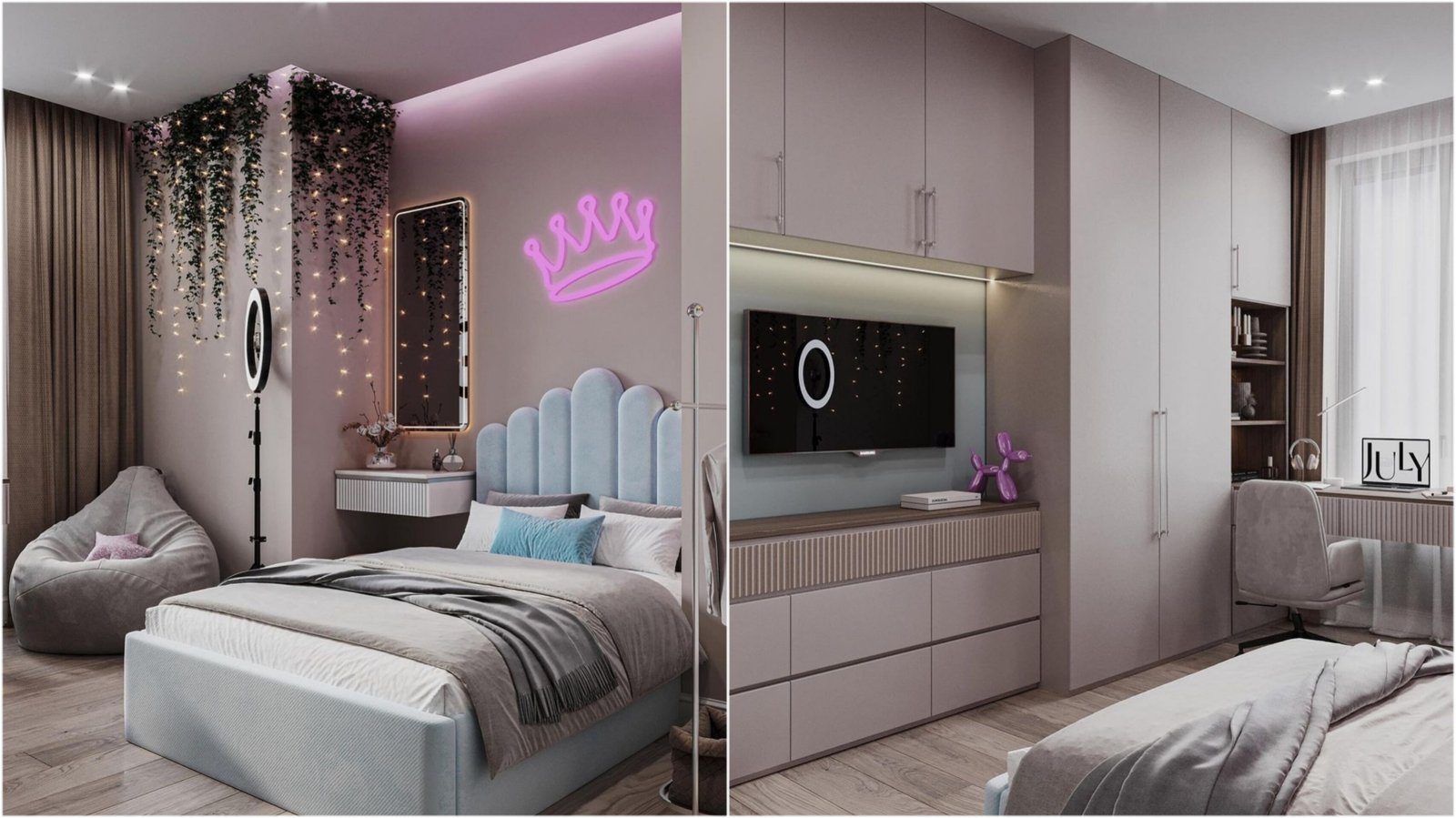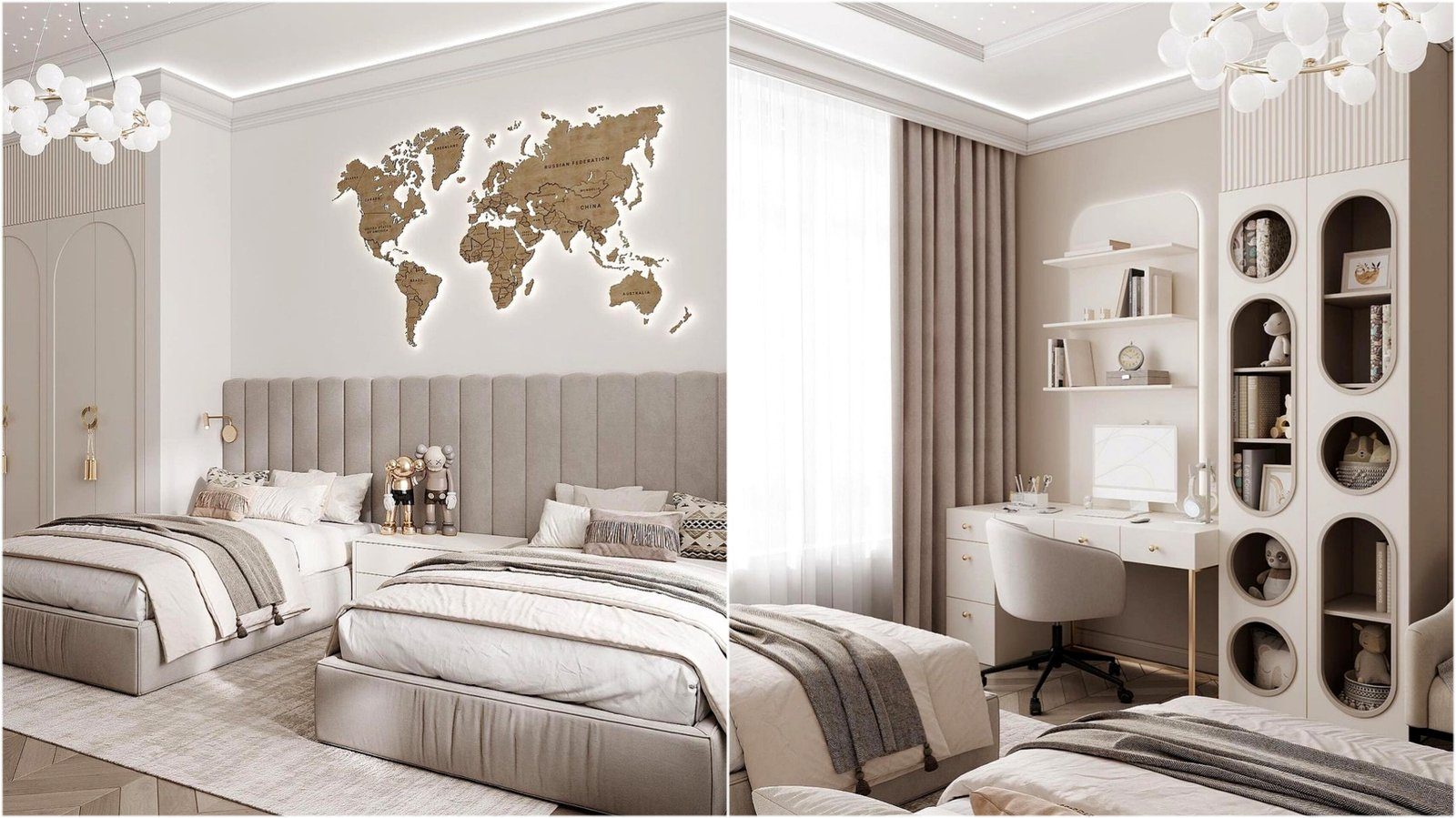


In a child's room furniture is not only for storage and sleep but also a creative space. Drawing, modelling with clay and cutting and gluing often happen directly on the desk, and sometimes on a wardrobe door or the headboard. A parent's first reaction is to remove the mark quickly with something strong, but it is exactly these hurried steps that do more harm to the surface than the stain itself. The right approach considers the type of stain and the surface material together.
Know the surface first
The same cleaner may work perfectly on one surface and make things worse on another. The most common surfaces in children's furniture are:
- laminated board, the most stain-resistant thanks to its dense, non-porous top layer;
- painted or lacquered MDF fronts, smooth but sensitive to solvents and abrasives;
- solid wood and veneer, where liquid can soak in if the lacquer is damaged;
- fabric-covered soft elements such as headboards, pouffes and seats, where stains get into the fibres quickly.
If you are unsure of the material, test any product first on a small hidden spot, such as the inner edge of a cupboard.
Felt-tip pens and pencils
Water-based children's felt-tips usually come off laminate and lacquered surfaces with a damp microfibre cloth and a drop of neutral detergent. If the line is fresh, water alone is often enough. The key is not to press harder but to wipe lightly several times.
Alcohol-based markers are more stubborn. A little alcohol wipe is sometimes used on laminate, but on painted MDF, lacquer and high-gloss acrylic it can dull the shine or fade the colour. On those surfaces, check the manufacturer's care advice before trying anything aggressive.
Coloured pencil and wax crayon marks are greasy. They come off better with a dry soft cloth first, then warm soapy water. Melamine sponges, often called magic erasers, are micro-abrasive and can leave marks on matt and gloss finishes, so use them only on durable laminate and very carefully.
Modelling clay and glue
Trying to wipe off clay while it is warm just spreads it. A better method is to chill it: a bag of ice placed on top for a few minutes hardens the clay so it lifts away easily with a plastic spatula or an old plastic card. Do not use knives or sharp metal tools, which scratch the surface. Wipe the remaining greasy trace with warm water and detergent afterwards.
Children's glue is usually water-based and softens under a damp cloth. Leaving the damp cloth on the spot for a minute or two before wiping is enough, and the same works for glue-stick residue. Glitter can be picked up with sticky tape or a damp cloth; rubbing it with a dry cloth can scratch the surface.
Stains on fabric
The most important rule for upholstered headboards and seats is not to rub in a hurry. Blot liquid first with a dry towel or paper napkin, then wipe with a damp cloth working from the outside towards the centre. Otherwise the stain spreads and leaves a ring.
Approaches for different stains:
- juice and fruit: cold water and a little neutral soap, since hot water can set the stain;
- chocolate: remove the solid part while dry, then use warm soapy water;
- felt-tip: often does not come out of fabric completely, so act quickly;
- modelling clay: chill and lift, then treat the greasy trace with a fabric cleaner.
Always follow the care symbols on the fabric label, such as water-based cleaning only or dry cleaning only.
Prevention is easier than cleaning
- Use a wipeable cover or large mat on the desk for drawing and clay.
- Keep craft materials at a height suited to the child but in a supervised place.
- When ordering, choose easy-clean, stain-resistant surfaces for the desk and lower fronts.
- Prefer removable, washable covers on soft elements.
- Give a child who wants to draw on walls and doors a magnetic or whiteboard zone.
What not to do
Acetone, bleach, white spirit, abrasive powders and steel wool are unsuitable for most children's furniture surfaces. They can dissolve lacquer, change the colour or leave a permanent cloudy patch. Residues of such products are also undesirable on surfaces a child touches all the time.
Tell Zaferoglu Mebel the child's age and whether the room is for drawing, games or homework, and surfaces can be chosen to take frequent scrubbing.