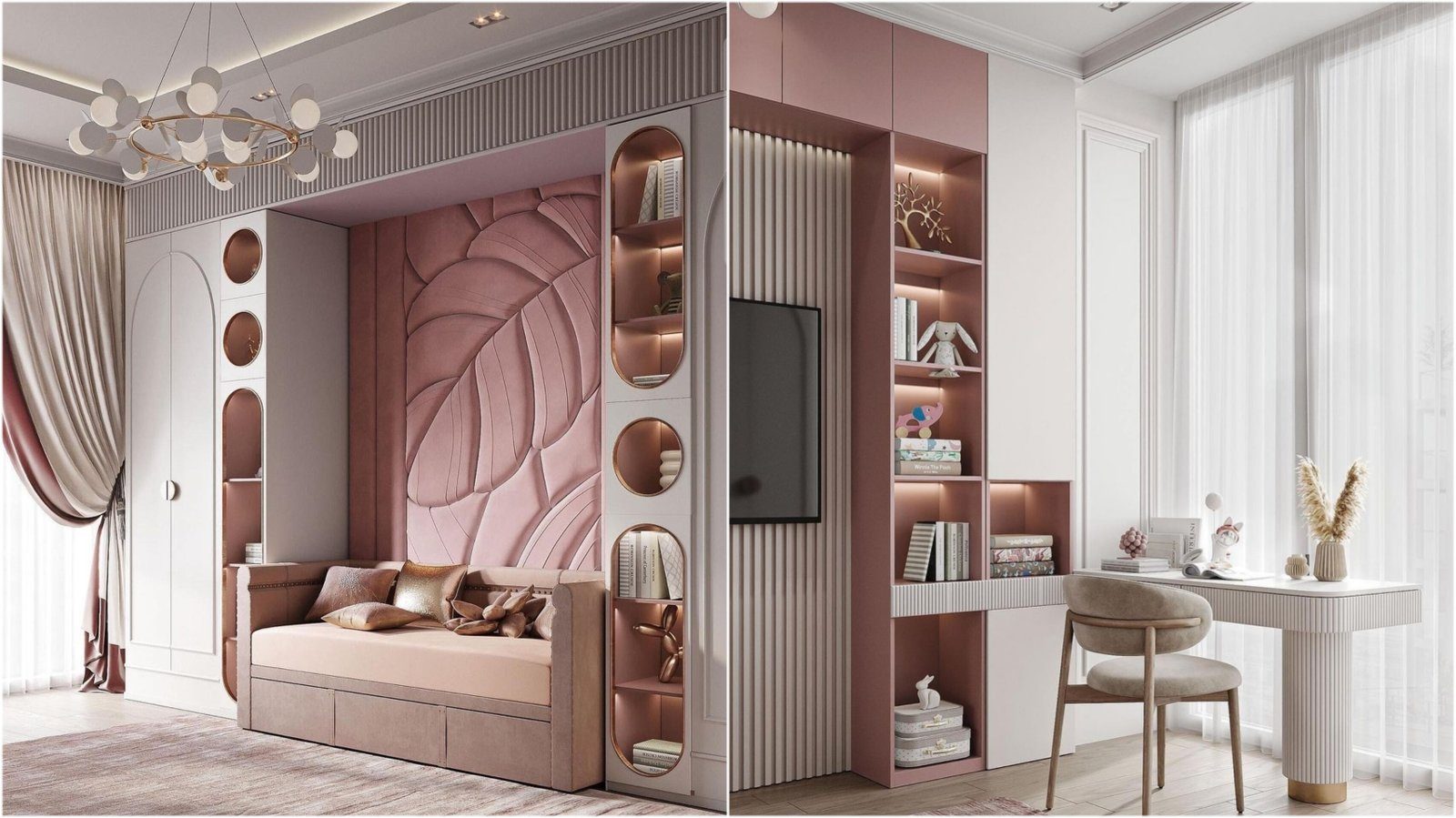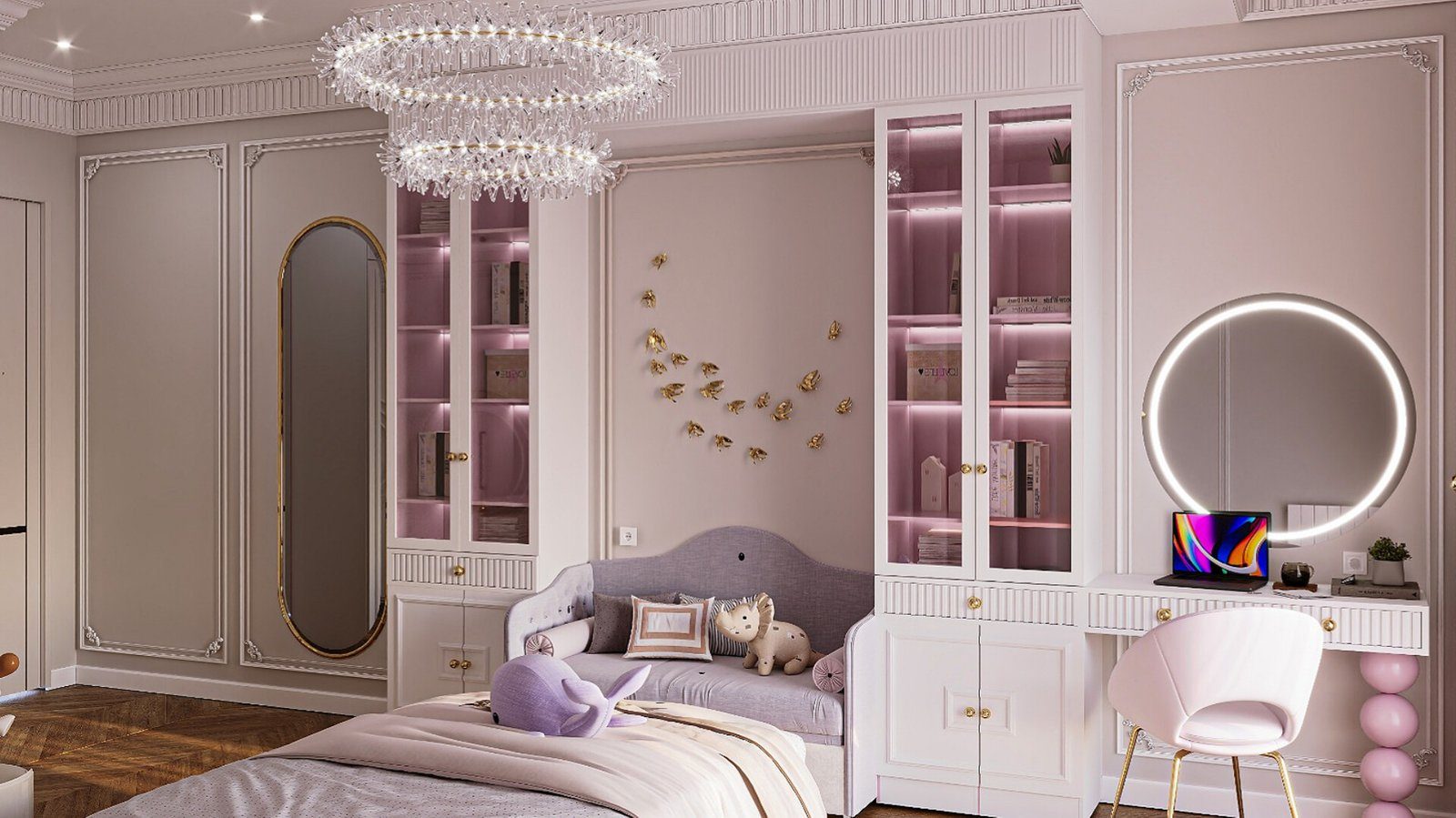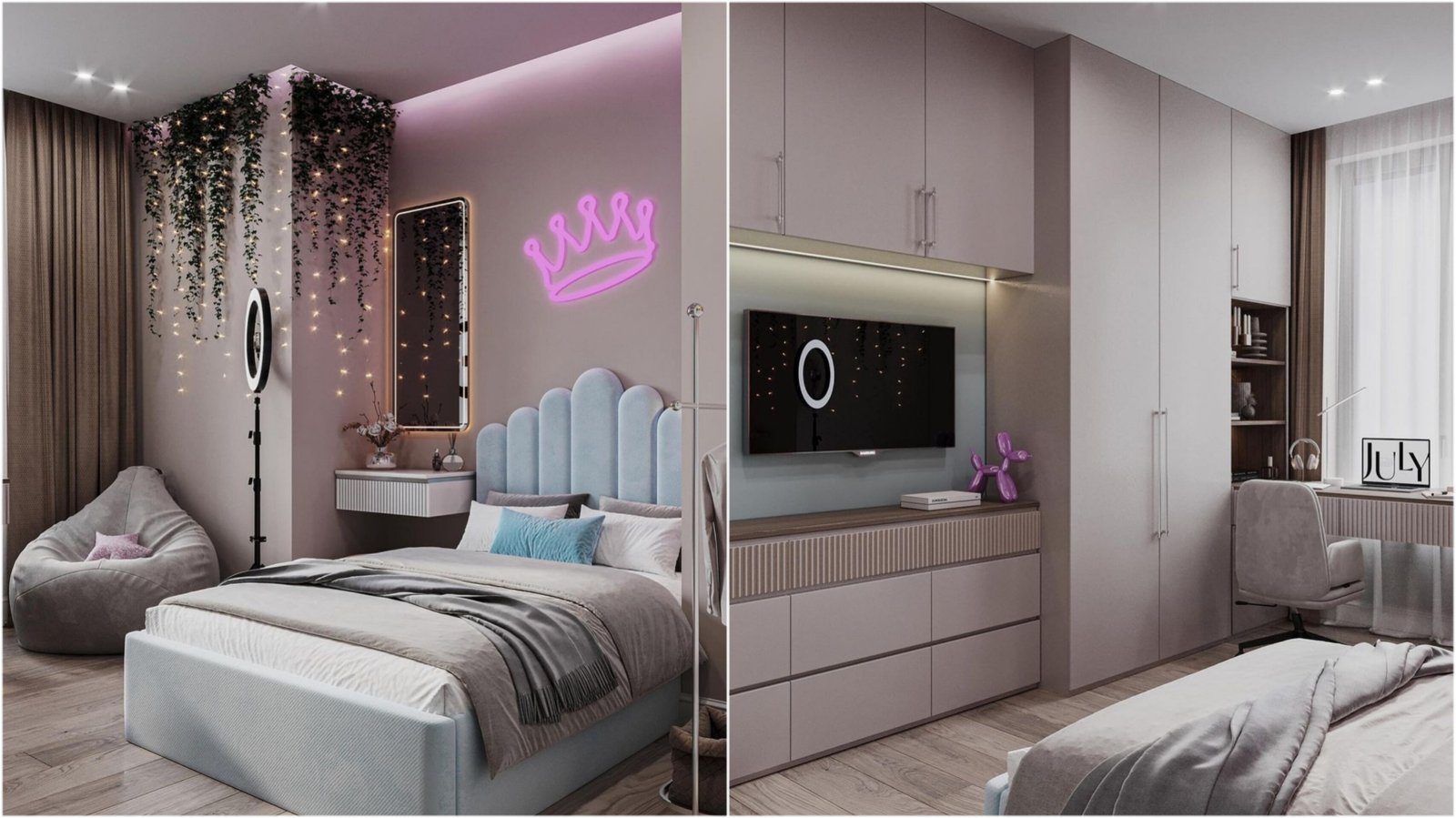

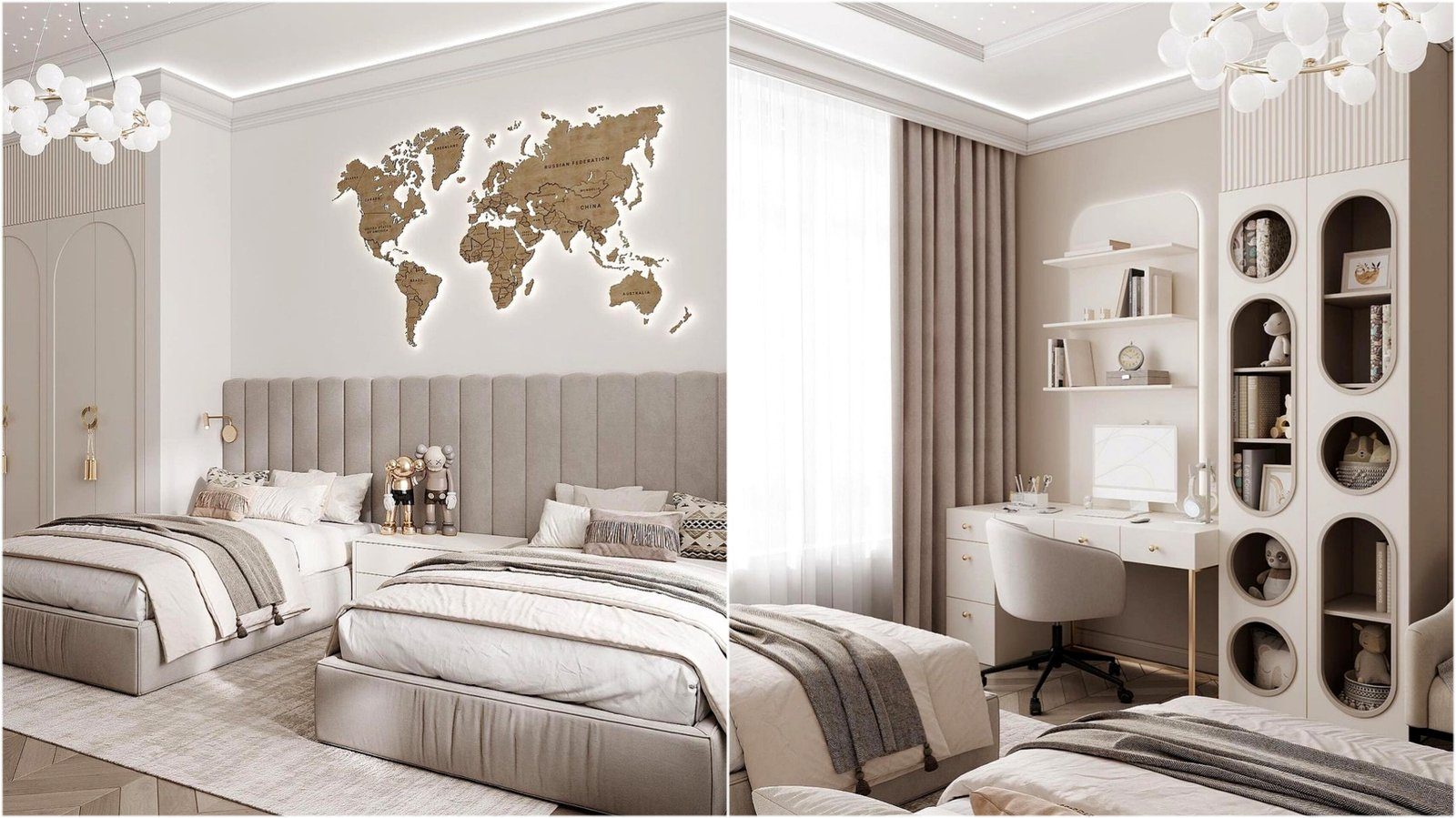
When two children share a room, parents face two tasks. The first is fitting two beds, two study spaces and two sets of belongings into limited space. The second is less visible but just as important: each child needs a corner of their own, so arguments ease and each takes responsibility for their own things. Well-planned furniture solves both at once.
Start with ages and habits
Before drawing a plan, answer a few questions. How big is the age gap? Are both at school, or is one still at play age? Do they go to bed at the same time? If one studies late and the other sleeps early, separating the sleeping zone from the study zone becomes especially important.
Personality matters too. Some children love playing together and want a shared play area; others need time alone. In the second case, even a small visual divider, such as an open shelving unit or a curtain by the bed, gives a child the feeling of having their own space.
Bed layouts
The main options for two beds are:
- Parallel: both beds along one wall or facing each other, with a walkway and bedside table between. The simplest and most equal arrangement for a larger room.
- Corner: beds along two adjoining walls with their heads meeting in the corner. The centre stays free for play, and the corner takes a shared table or shelf.
- Bunk bed: saves the most floor space, but comes with age and safety requirements and deserves a separate assessment.
- Loft bed with a desk underneath: bed above and desk below for one child, a standard bed for the other. It can suit children with an age gap.
- Trundle bed: hidden under the first bed by day, pulled out at night. It frees space in small rooms but has to be pulled out and put away daily.
Whichever layout you choose, each bed needs a small personal surface: a shelf for a book, a night light or a glass of water. If a shared bedside table causes arguments, two small wall shelves work better.
A separate desk for each child
Two school-age children sharing a desk may work for a while, but over the years it causes problems: belongings mix and one blocks the other's light. A more lasting solution is two separate workstations. If the room is not wide, a long shared worktop along the window can be split in the middle by a shelf or drawer unit, giving each child their own section, drawer and lamp.
Desk height should match each child's size. With an age gap, a practical approach is to build both desks at one height and give the younger child an adjustable chair and a footrest. When positioning desks, make sure daylight from the window is not blocked by the shadow of the writing hand.
Dividing storage fairly
A shared wardrobe is the piece of furniture children argue over most. Splitting the interior into two equal halves from the start, even marking sections with colours or names, helps. Each child should have their own hanging zone, shelves and drawers.
A few practical points:
- Items the younger child uses often go within their reach.
- Seasonal clothes and rarely used things move to the top sections.
- A shared area is set aside for toys, while personal belongings are kept in separate boxes.
- A hook or open compartment near the door holds school bags and sports kit.
Furniture that can change as they grow
A shared children's room usually changes several times over the years: one child becomes a teenager while the other is still at play age. That makes modular furniture important. A bunk bed that splits into two, a long worktop that can become two separate desks and a wardrobe with an adjustable interior all make it easier to reorganise the room later.
The same flexibility applies to colours and decor. Keeping the main furniture in neutral tones and expressing each child's taste through textiles, wall decor and small accessories lets the room be refreshed at little cost as the children grow.
If Zaferoglu Mebel has the room plan and knows the age gap between the children, beds, desks and cupboards can be divided so each child gets a corner of their own.