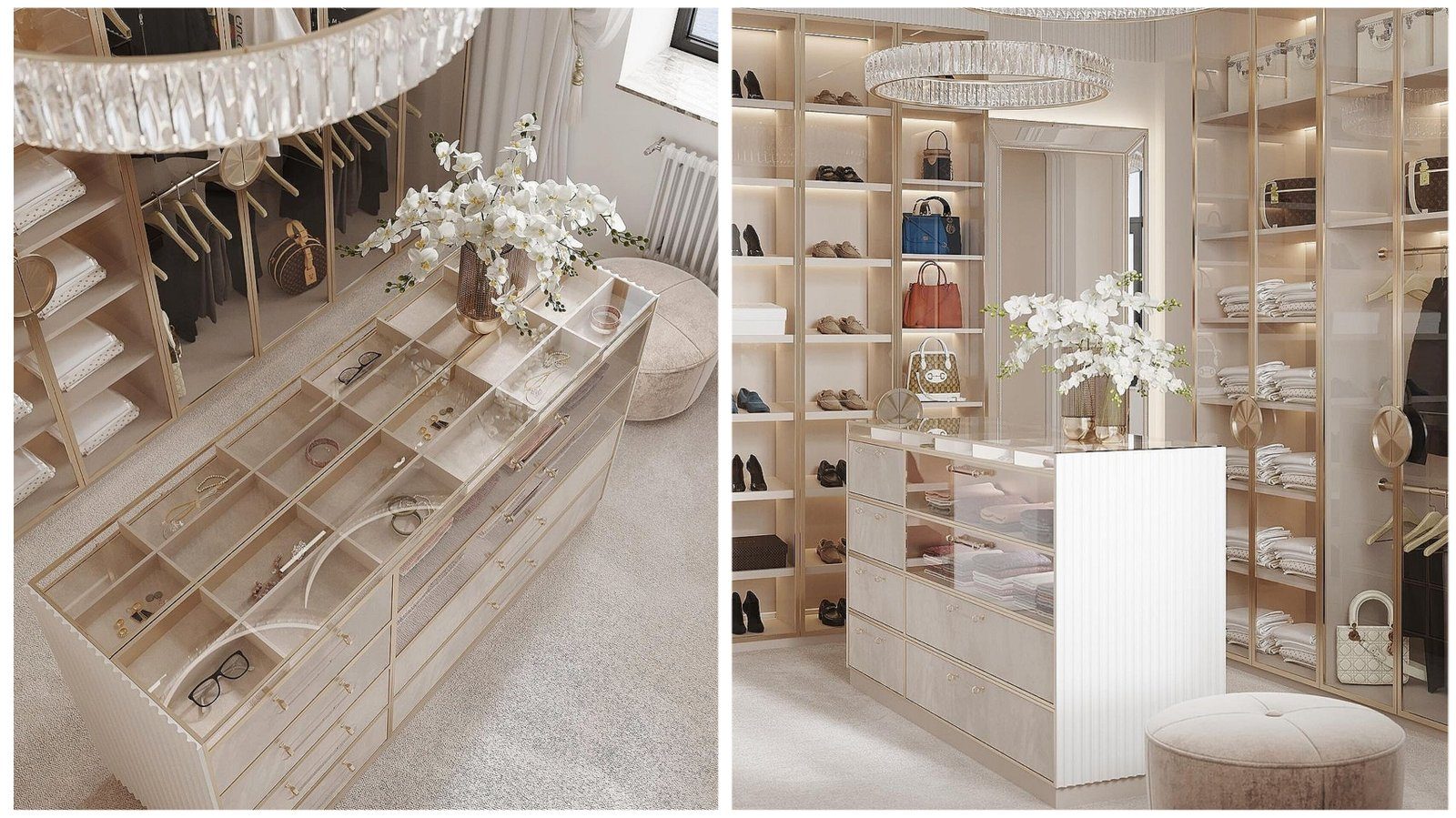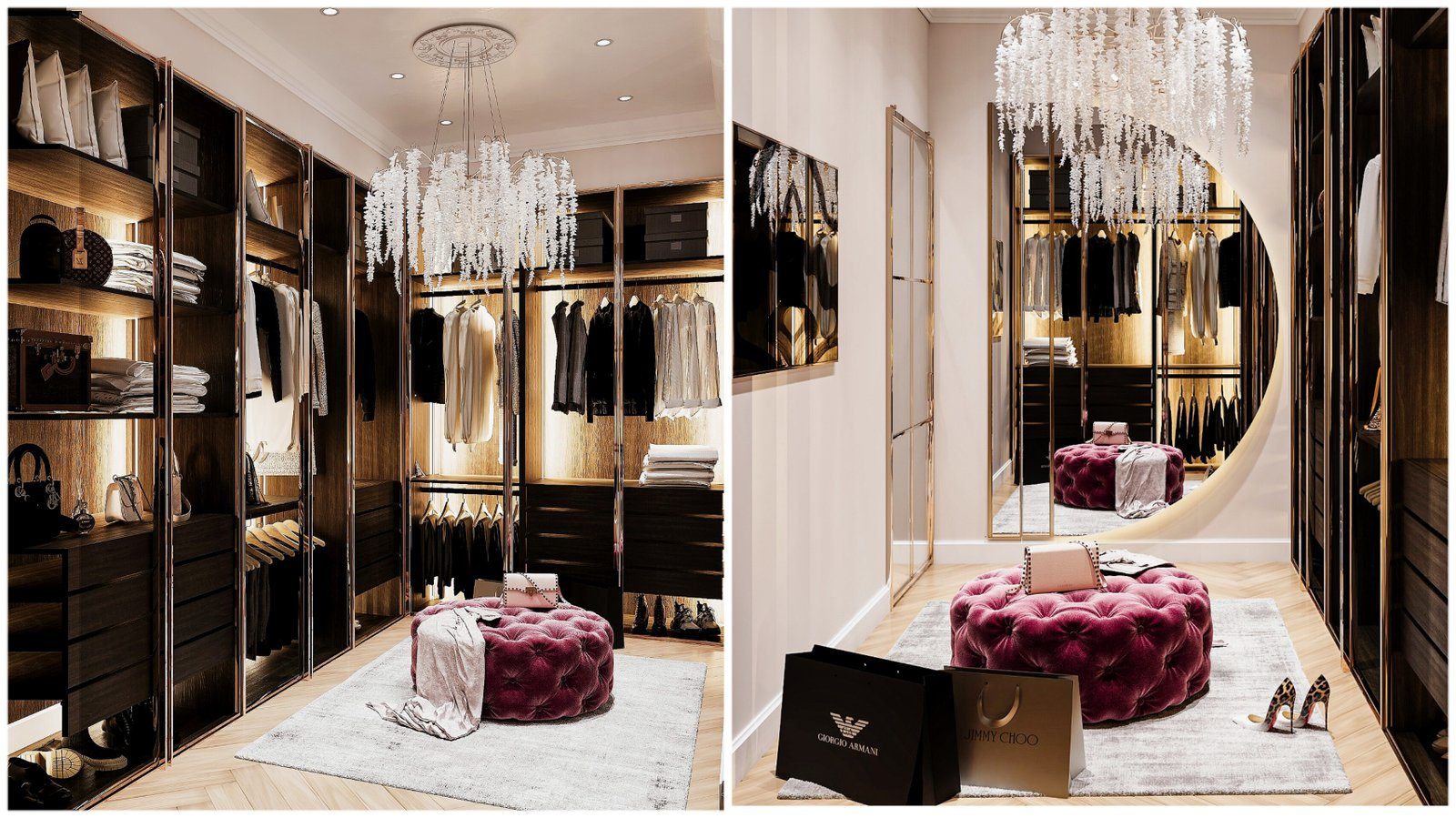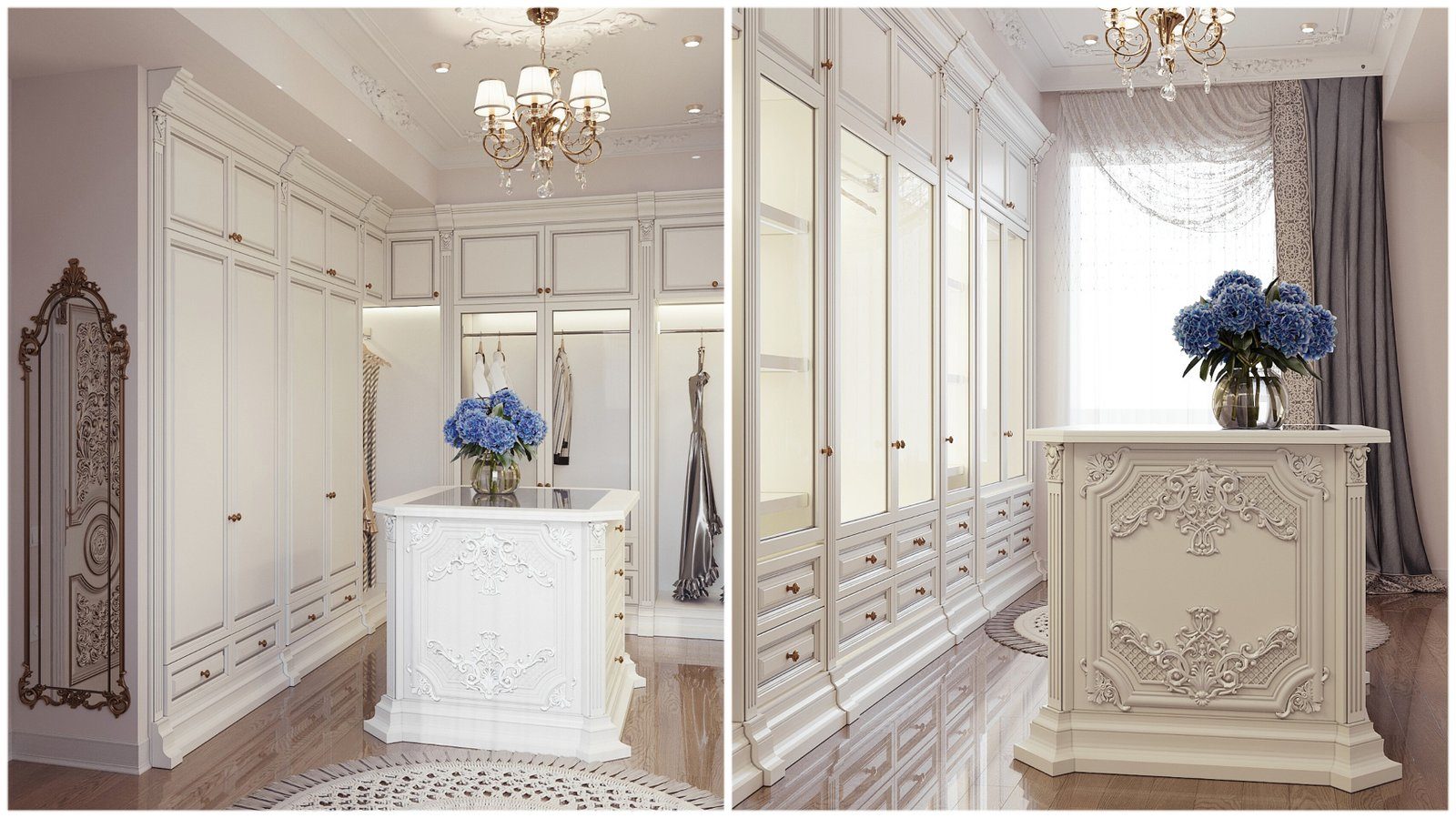

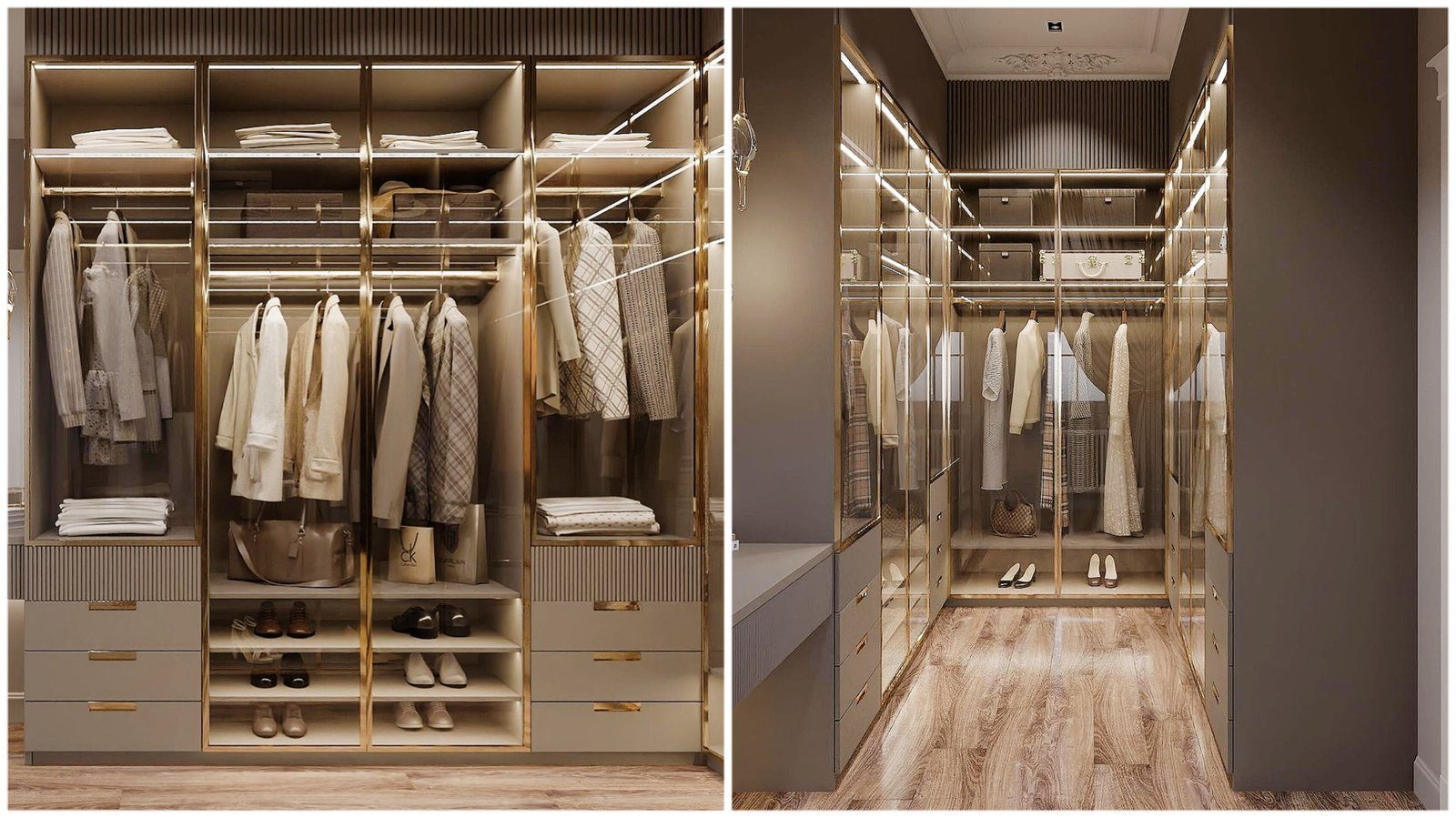
Glass doors have become a common feature of dressing room design. Lit shelves, neatly hung jackets and rows of shoes look like a boutique window. Yet there can be a gap between the catalogue photo and everyday life: a glass door shows everything inside, including the mess. That makes the choice more about habits than about style.
Who glass doors suit
A glass wardrobe works best when what is inside is also meant to be seen. For example:
- a dressing room with a collection of bags, shoes and accessories;
- someone who habitually arranges clothes by colour and type;
- a home with a separate dressing room that does not open onto the bedroom;
- a wish to use lighting as a decorative accent in the interior.
On the other hand, in a child’s room, in a wardrobe that gets messy every day, or in a bedroom directly facing the bed, glass doors often cause irritation. The eye keeps landing on the shelves and the room feels visually busy.
Type of glass: you can choose how much shows
A glass door does not have to be fully transparent. The range is wide:
- Clear glass shows everything and gives the most striking effect with lighting.
- Tinted glass in grey or bronze shows the contents softly. With the interior light off the door looks almost opaque; switch it on and the shelves appear.
- Frosted glass shows only silhouettes and hides clutter while keeping the door light.
- Reflective and mirrored glass makes the room feel larger and conceals the interior.
In every case toughened glass, or glass with a safety film on the back, is recommended so that fragments do not scatter if it breaks.
Frame and door mechanism
Glass doors are usually built in slim aluminium frames. The frame colour — black, graphite, bronze or gold — sets the door’s character: a thin black frame looks modern and graphic, bronze feels warmer and more classic. The frame also stiffens the door and protects the glass edges from knocks.
A glass door is heavier than a standard board door. With hinged doors, the number of hinges and their load rating matter; with sliding doors, the quality of the tracks. Without smooth opening and soft closing, a glass door will often slam, which means both noise and risk.
What visible storage demands
The real price of a glass door is tidiness. A few practical measures lighten the load:
- Matching hangers. Hangers of the same colour and shape instantly make a row of clothes look orderly.
- A closed section. Keep one or two solid-door sections next to the glass for sportswear, bed linen and things that get jumbled every day.
- Drawers. Small items belong in closed drawers, not behind glass.
- Lighting. An LED strip along the front edge of the shelves improves the look and makes things easier to find. A door-activated sensor light also saves energy.
There is the dust question too. A glass door keeps dust out, but the glass itself shows fingerprints and dust faster than an opaque door. Glossy black frames and dark tinted glass need wiping more often than light finishes.
Sunlight and fading
A glass door does not just show what is inside; it also exposes it to light. If the wardrobe faces a window, direct sun can fade fabrics and leather goods on the shelves over the years. Tinted and frosted glass soften the effect somewhat but do not remove it. In that situation a curtain or blind on the window, or solid fronts on the sunny side, are more reliable. For the same reason LED sources are preferred for interior lighting: unlike older lamp types, they do not produce noticeable heat inside the shelving.
Questions to ask yourself before deciding
- How often do I actually tidy my wardrobe each week?
- What will face the glass — the bed, a desk or a hallway?
- Do I have things I want to display, or is it all everyday clothing?
- Would a mix of glass and solid fronts be more balanced?
Zaferoglu Mebel can combine solid and glass fronts within one wardrobe or dressing room project; the interior layout and lighting are planned at the measuring stage around the user’s habits.