
When ordering a wardrobe, height and width usually follow from the wall. Depth is a genuine choice, and getting it wrong is felt every day: either shirt shoulders catch on the doors, or the wardrobe takes more of the room than it needs to. To set the depth properly, start with what will be stored and how.
Hangers set the depth
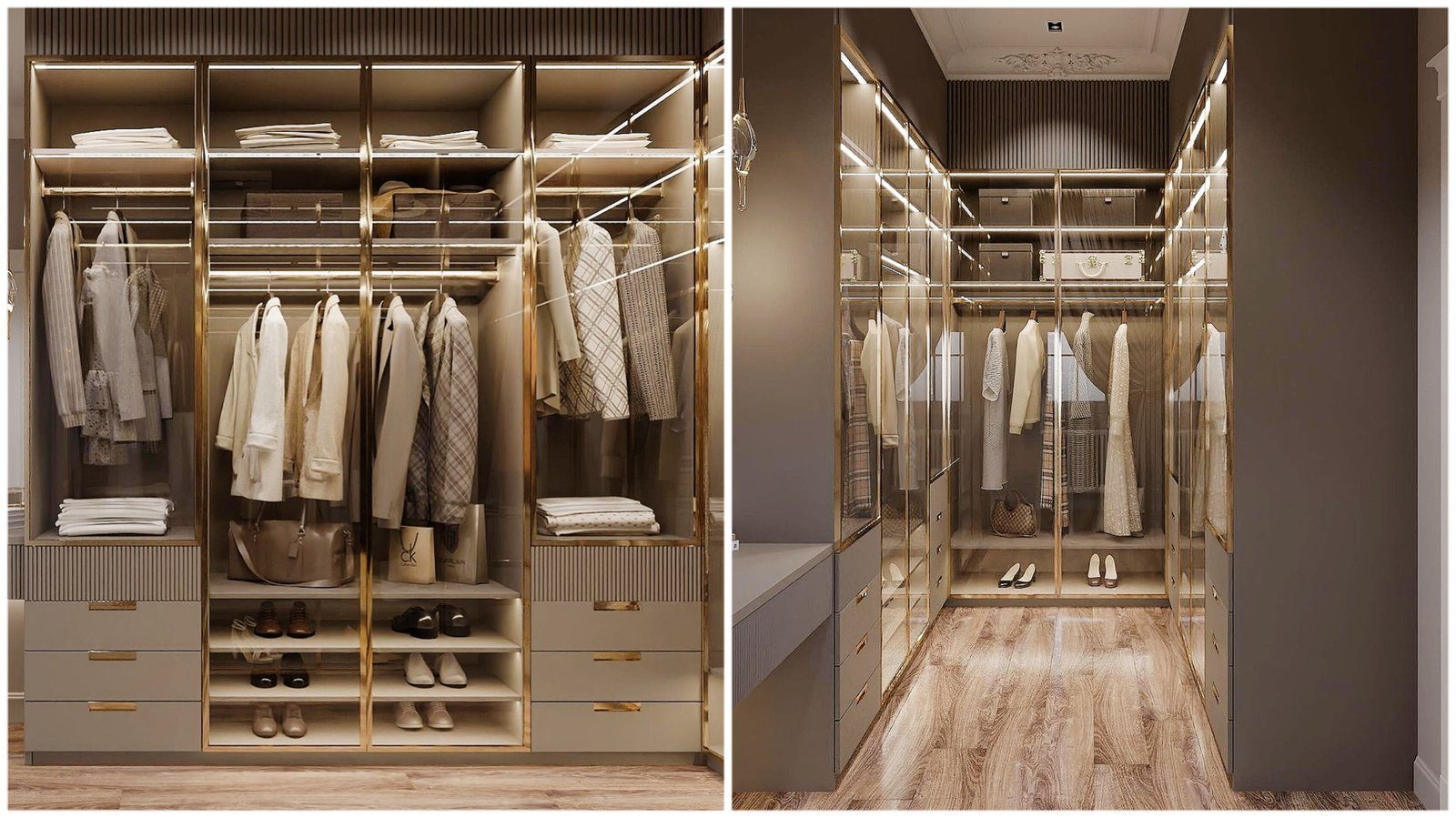
Clothes on ordinary hangers hang from a rail parallel to the back wall. The internal depth therefore has to be at least the width of the hanger plus the bulk of the garment's shoulders. A man's jacket, a heavy coat or a hooded top takes noticeably more room than a plain shirt. If the internal depth is too small, garments hang at an angle, get squeezed when the doors close and crease.
That is why wardrobes with full hanging space are planned at standard depth. The important detail is the difference between the outside dimension of the carcass and the usable depth inside: the back panel, the thickness of the fronts and especially a sliding door system all take a share.
How sliding doors reduce depth
Sliding doors run on tracks at the front of the carcass. Because two doors pass in front of each other, their profiles and tracks occupy some depth. So at the same external depth, a sliding-door wardrobe is shallower inside than one with hinged doors. When you give measurements, make clear whether you mean overall or internal depth.
Hinged doors take no space inside, but they need clear floor in front of the wardrobe to open. In a narrow room that can matter more than the few centimetres saved on depth.
When a shallow wardrobe works
If a hallway, a narrow bedroom or an alcove behind a door cannot take standard depth, a shallow wardrobe is the answer. To make it work, the hanging direction changes:
- a pull-out hanging rail, where clothes hang facing the door and the rail slides out like a drawer;
- short hooks and front-facing rails for a few everyday items;
- shelves and baskets for folded clothes, bags, scarves and accessories;
- angled shoe shelves, which suit shallow sections well.
A shallow wardrobe holds fewer hangers per section, but in a hallway it is often the only sensible way to add storage without narrowing the passage.
The walkway: how much room is left in front
When choosing depth, look beyond the wardrobe to the space in front of it. In a bedroom there must be room between the wardrobe and the bed for a person to pass comfortably, pull out a drawer and bend down. With hinged doors, the open door has to fit into that space as well.
Often the best result is a mix: part of the wardrobe at standard depth for hanging, and a shallower shelving module where the walkway narrows. In made-to-measure furniture that kind of layout is easy to plan.
Matching the interior to the depth
Depth matters for every internal element, not just the rail. When shelves are too deep, items at the back disappear from view and get forgotten; folded jumpers end up in two rows, and reaching the back row means emptying the front one. In such wardrobes, replacing some fixed shelves with pull-out shelves or drawers makes storage far more visible.
If drawers are planned, their length follows the internal depth of the carcass, and the door profile, hinges or sliding track must not block them. In a sliding-door wardrobe, drawers should be placed behind the doors so that they can be pulled out fully whichever door is open. Shoes, bags and hat boxes fit well in shallower upper and lower sections.
Questions to decide
- Will the wardrobe mainly hold hanging clothes or folded items?
- Will outerwear such as coats and thick jackets go in this wardrobe?
- Will the doors slide or be hinged?
- How much clear space is left in front for walking?
- If there are internal drawers, will the door profile get in their way?
Zaferoglu Mebel uses Aristo and RaumPlus systems for sliding wardrobe doors. Choosing the depth on measuring day, from your bulkiest coats and the width of the walkway, avoids regrets later.