
After size, material and colour, one of the most important decisions when ordering a wardrobe is the type of door. Many people choose on looks alone, yet door type directly shapes everyday use: how much space is needed in front, how you see the contents when choosing clothes, and how the interior is divided. Both systems have strengths and weaknesses.
Space required
A hinged door needs a clear area in front of the wardrobe roughly equal to the door width when it opens. In a narrow hallway, with little space between bed and wardrobe, or with other furniture opposite, this is a real problem: the door does not open fully, and when it does, it blocks the passage.
Because a sliding leaf travels along its own rail, nothing swings into the room. In a compact bedroom, a hallway or wherever the bed sits right next to the wardrobe, that alone often settles the choice.
Sliding doors do have a hidden "space cost", though: the doors run on two track lines so they can pass each other, and this adds to the wardrobe's overall depth. If usable interior depth is to stay the same, a sliding-door wardrobe ends up slightly deeper.
Visibility and access
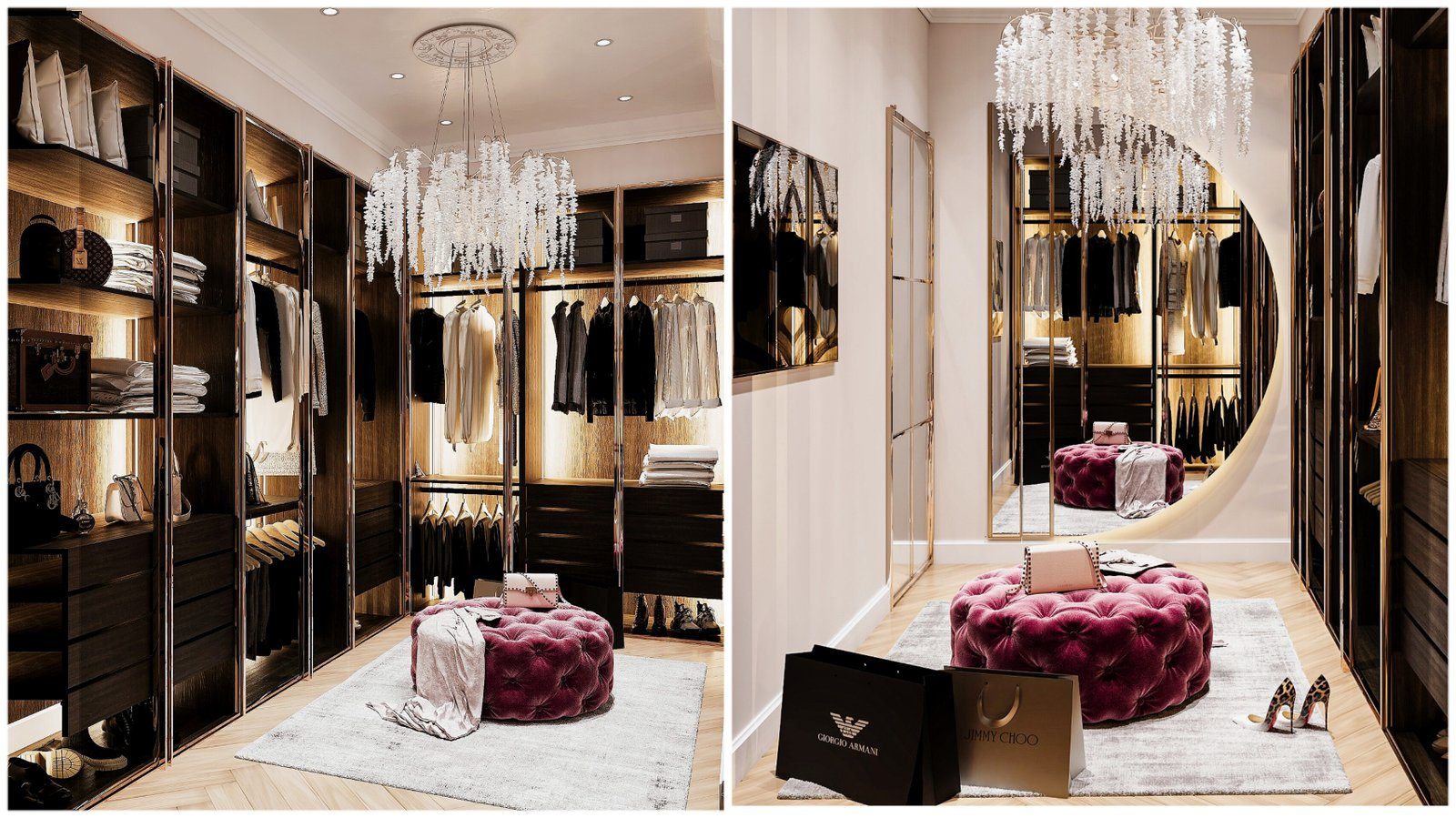
The biggest advantage of hinged doors is being able to open them all and see the entire interior at a glance. When choosing clothes, especially in a large walk-in style wardrobe, that convenience is noticeable.
Sliding doors never uncover the whole wardrobe at once: with two leaves you see roughly half, with three about two-thirds. So the inside has to be arranged with the door layout in mind:
- Drawer blocks and narrow sections must not sit behind the line where doors meet, or the drawers cannot be pulled out fully.
- Frequently used zones should be grouped behind one door and rarely used ones behind another.
- A tall hanging section for long garments should match the width of one door.
Front design
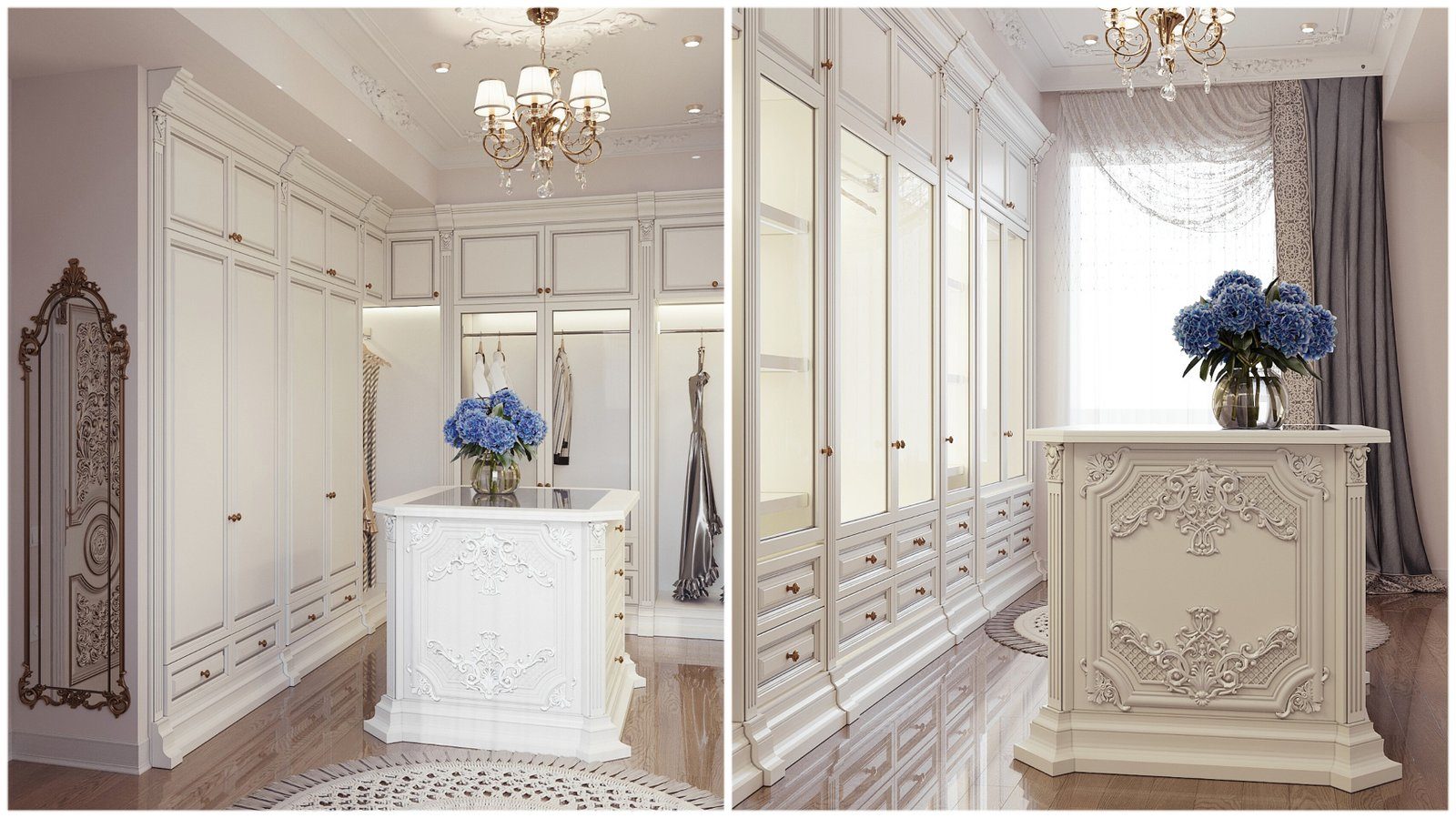
Hinged doors suit both classic and modern styles: they can be framed, routed, handleless, painted or wood-textured. Because each door is a separate front, the wardrobe resembles a wall panel and coordinates easily with other furniture in the room.
Sliding doors are large, continuous surfaces. They are filled within an aluminium profile frame with board, mirror, coloured glass or a combination of these. A large mirrored sliding door makes a room feel bigger. Systems such as Aristo and RaumPlus offer a wide choice of profile colours and infill combinations. Frameless sliding systems also exist and look more minimalist.
Noise, maintenance and durability
Good hinged doors with soft-close work silently and, with adjustment, stay aligned for years. Their maintenance is simple: check the hinge screws from time to time.
Sliding doors depend on clean tracks. Dust, sand and hair in the bottom track make the rollers run heavily and noisily, so the bottom track needs regular vacuuming. Top-hung systems have no bottom track, which reduces this problem, but they place greater demands on the strength of the ceiling or top panel. Good systems offer a soft stop at the end of travel and adjustable rollers.
Which suits which room
- Small bedroom, narrow hallway: sliding doors.
- Spacious bedroom with free space in front: hinged doors, for full visibility of the contents.
- Children's room: hinged doors with soft-close, or sliding doors with finger-trap protection; in both cases check the child can open them easily.
- Wardrobe fitted into a recess: depends on the passage in front — usually sliding.
- Classic interior: hinged framed fronts fit the style better.
Check before deciding
- Is there room in front of the wardrobe for doors to open fully?
- Has the interior layout been planned for the door type?
- Has the extra depth of a sliding-door option been accounted for?
- Is regular track cleaning acceptable to you?
- Does the front design match the room's other furniture?
Zaferoglu Mebel makes wardrobes to individual dimensions with both hinged and sliding doors, using Aristo and RaumPlus for sliding systems and Blum hardware for hinges. The door type can be chosen together during measuring, based on the room layout.