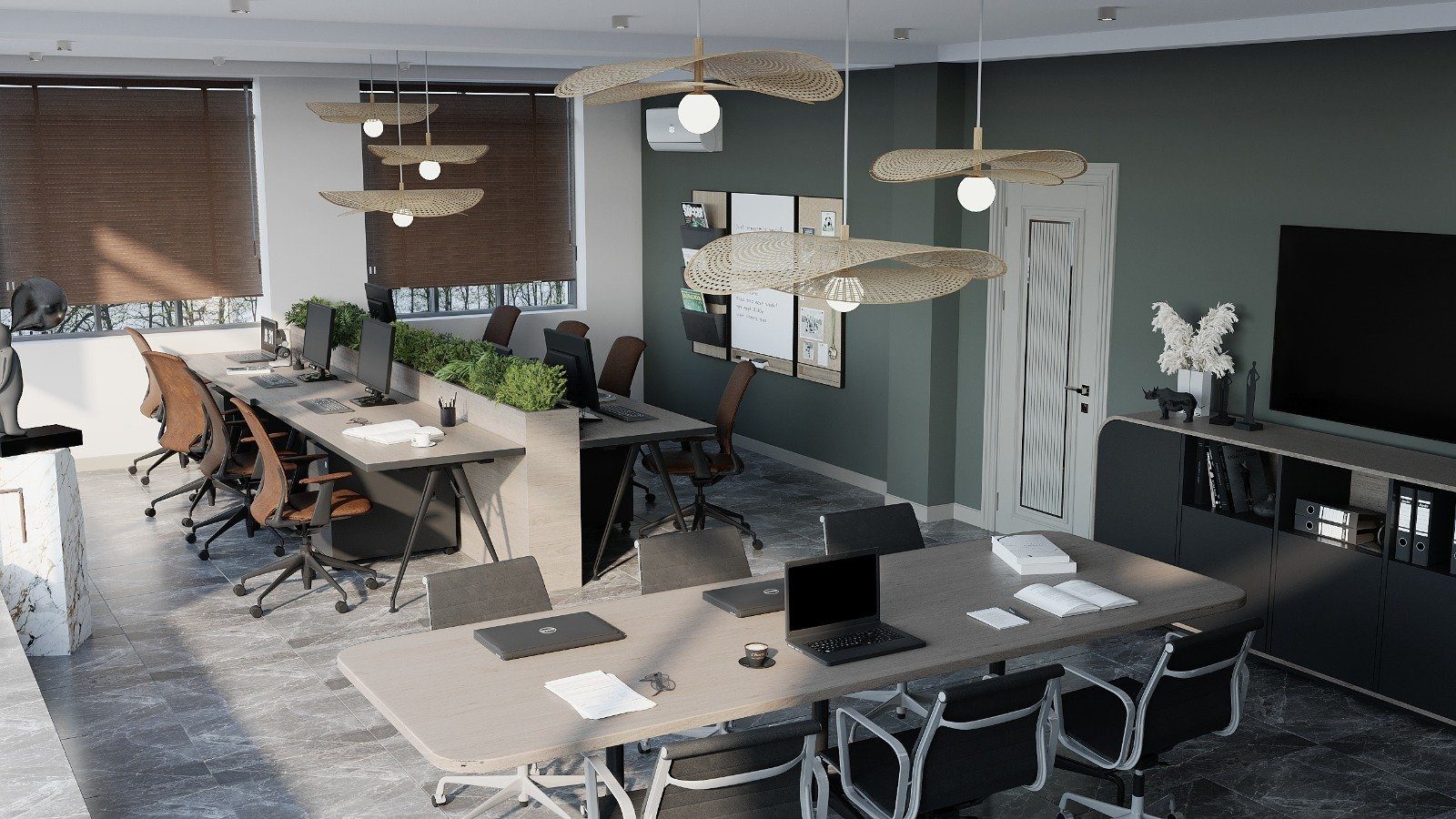

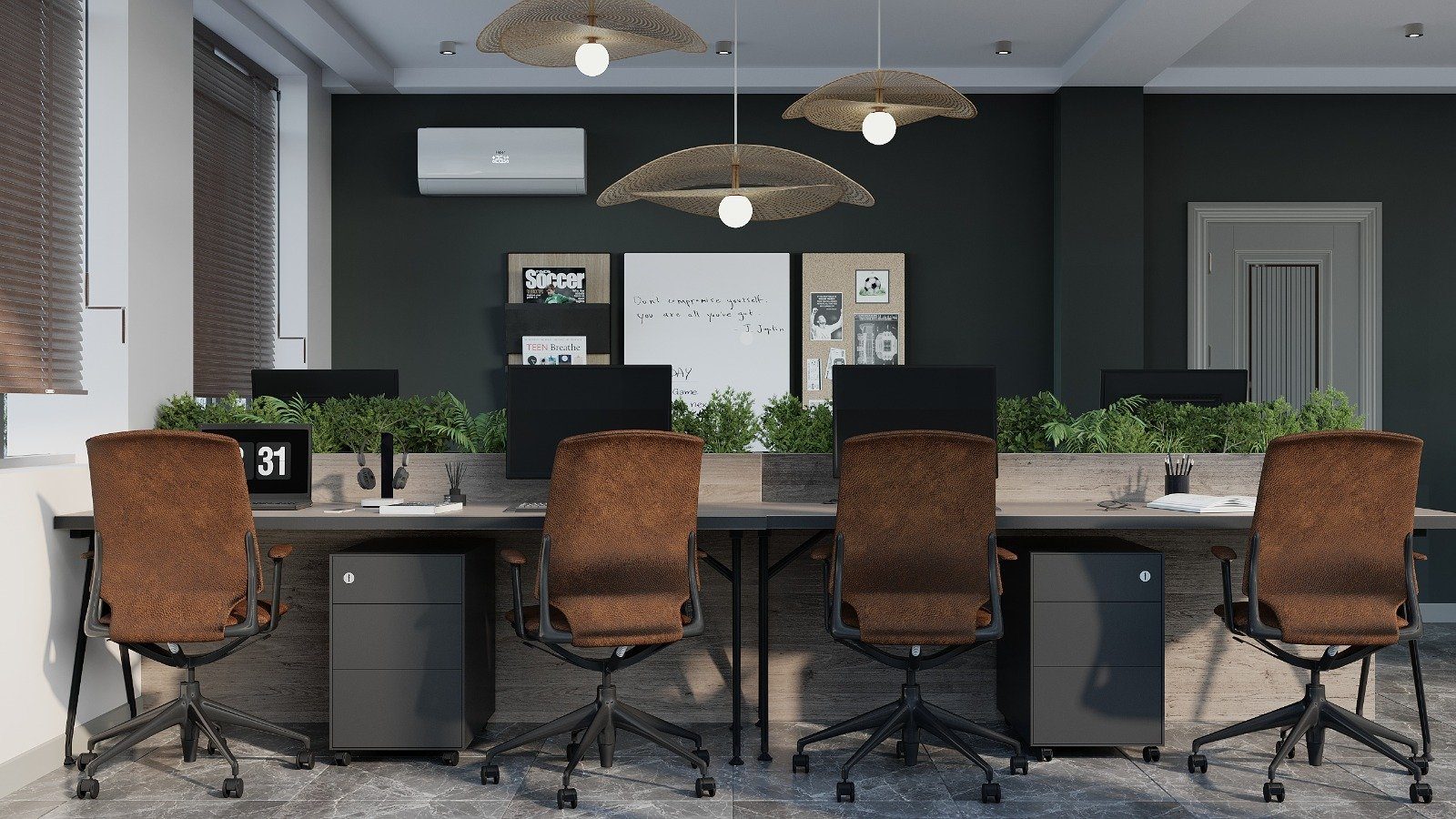
Open-plan offices use glass partitions, cabinets and screen systems to separate zones. In recent years planter dividers have joined the list: furniture below acting as storage or support, with a long planter of greenery on top. This solution divides the space without closing it off, softens the look and brings life into the office. But combining plants and furniture introduces demands that are unusual for furniture: water, soil and light.
What the divider should do
Before planning a planter divider, define its main function:
- visual separation, marking the boundary between desks and a walkway or visitor area;
- partial sound softening, since plants and soil scatter some sound, though they do not provide sound insulation;
- storage, with cupboards below for files, a printer or personal items;
- seating, as in some designs one side of the divider doubles as a bench.
Height depends on the job the divider does. Up to seated eye level, it screens desks from view while the room still reads as one space. Taller, with plants rising above a standing person, it separates the zone more firmly but may cut off daylight.
Planter construction and moisture
The main problem with a planter is water. Furniture board and MDF are not water-resistant, so soil must never go directly into the furniture carcass. A proper construction has several layers:
- the furniture carcass, the visible outer part;
- a leak-proof liner inside the carcass, in plastic, metal or a purpose-made waterproof box;
- a drainage layer at the bottom of the liner, so excess water does not rot the roots;
- plants placed either directly in the liner or in individual pots.
Individual pots are more practical: if a plant becomes diseased or needs replacing, it is easy to lift out. Lining the inner edges of the carcass with a moisture-resistant material and leaving a ventilation gap between liner and carcass protect the furniture for a long time.
Watering and care
Decide in advance who will look after the plants. Otherwise, a few months later the green divider is full of dried-out or rotting plants. Possible approaches:
- self-watering containers, with a water reservoir below from which the plant draws gradually, reducing how often watering is needed;
- artificial or preserved plants, which need no care but do not have the effect of living plants on air and mood;
- a service contract with a company that visits regularly to care for the plants;
- a named person in the office with a simple watering schedule.
Water can spill during watering, so the top edge of the planter and the surrounding floor should be water-resistant. With electronic devices on nearby desks, the watering point must be accessible and safe.
Plant choice and light
Light inside an office is often limited, especially far from windows. Plants must tolerate office conditions: shade, dry air from air conditioning and constant temperature. Consulting a plant specialist on the choice is the best route.
Far from windows, plants may need artificial light. In that case, fitting suitable plant lighting on top of the divider or in the ceiling becomes part of the furniture project, and the power point must be planned in advance.
Size and weight
Soil and water make a planter surprisingly heavy, and that has consequences. The divider body has to be built to bear it, and a long run needs intermediate supports. If the planter divider is meant to roll, choose castors rated for the weight of a watered, fully planted box. For very long, heavy units on upper floors, especially in older buildings, get advice on what load the floor can take.
Planter depth should suit the plants' root systems: in a very shallow planter plants dry out quickly, while a very deep one adds unnecessary weight.
Planning checklist
- What is the divider's main function: separation, storage or seating?
- Does the planter include a leak-proof liner and drainage?
- Who will care for the plants, and how?
- Is there enough light in the zone, or is artificial light needed?
- Can the structure and castors carry the weight of a full planter?
Zaferoglu Mebel makes custom furniture for offices. In a planter divider project, planning the furniture together with a plant specialist's advice, agreeing liner size, drainage and lighting in advance, gives a long-lasting result.