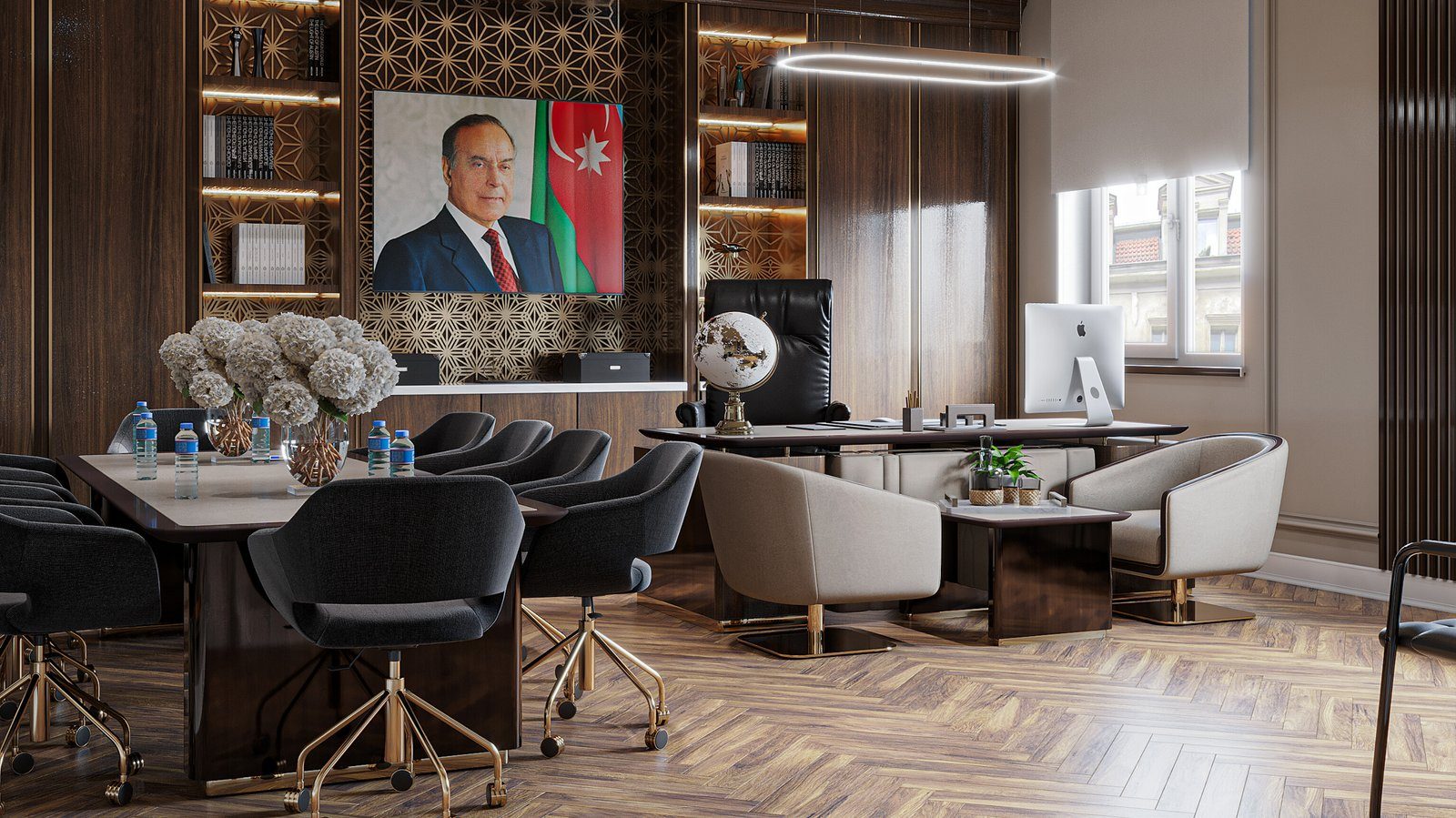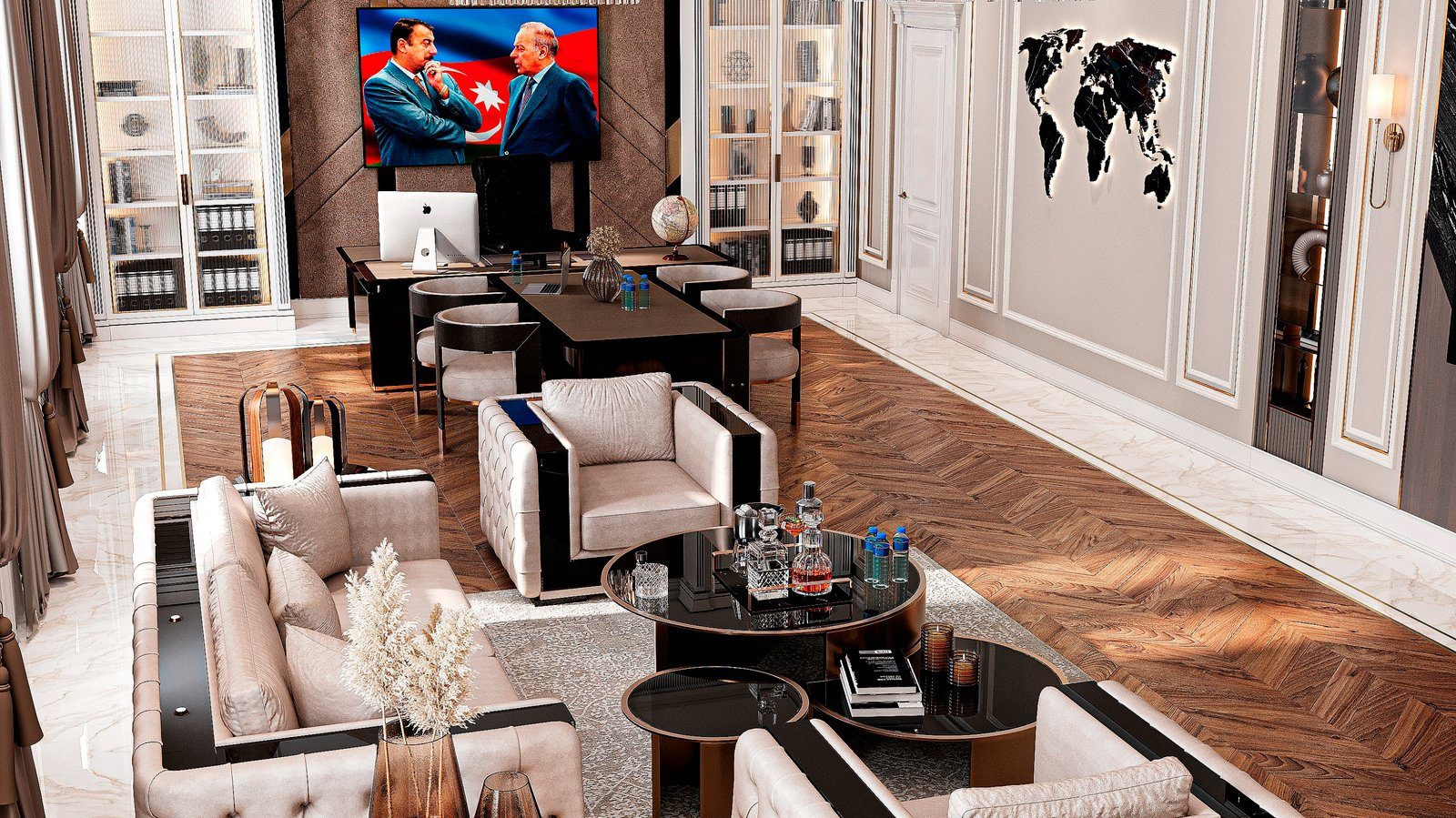

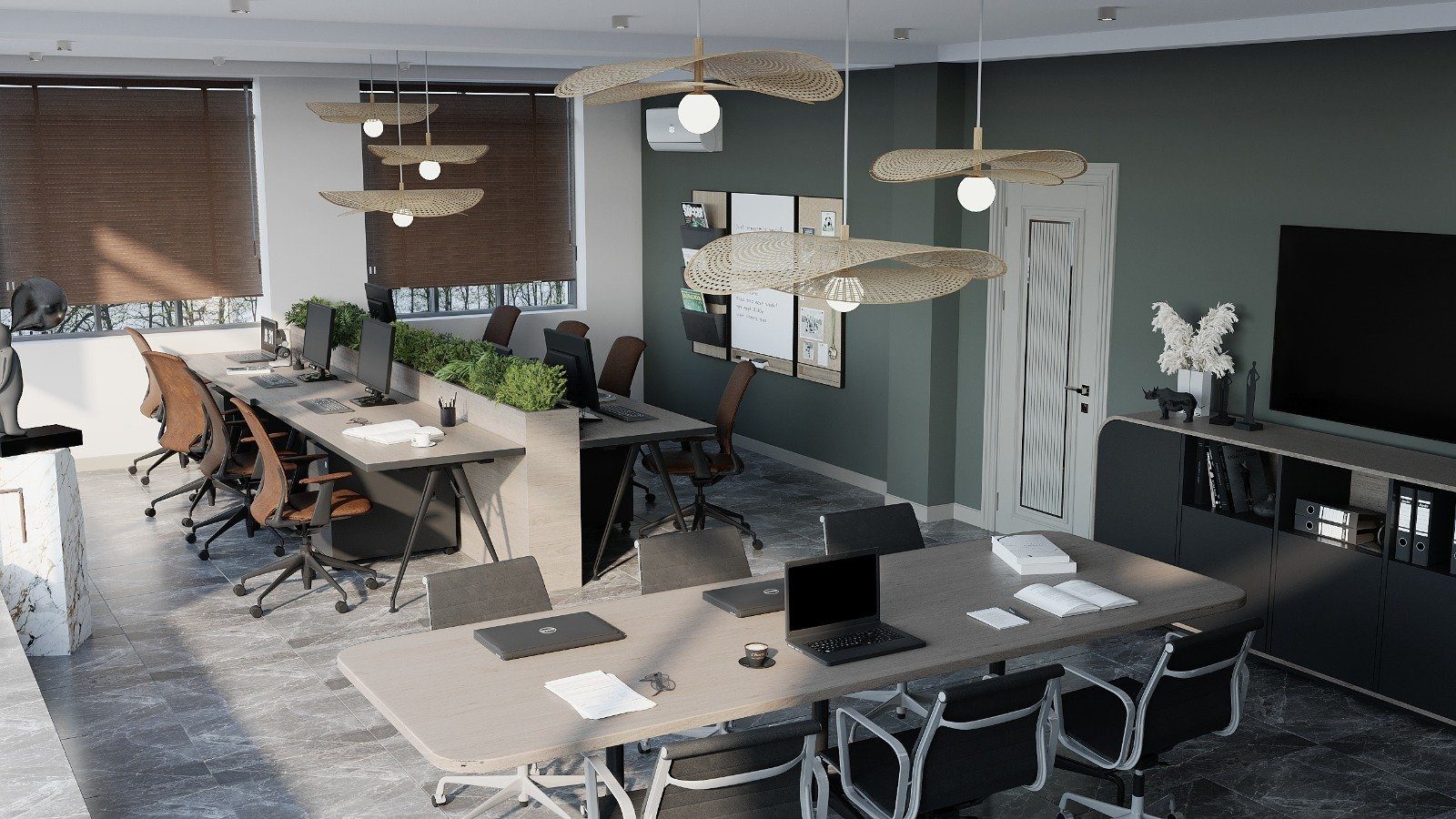
The main difference between home and office furniture is intensity of use. An office desk works for hours every day: laptops, files and cups are put on it, elbows lean on the edge, chairs knock its legs. In shift work or shared workspaces, different people use the same desk and nobody treats it as "their own". So in an office, material choice should be driven less by appearance and more by how the furniture will look a few years from now.
The desktop: surface and thickness
The desktop takes the most wear. The key requirements are resistance to scratches, impact, heat and liquids.
- Laminated chipboard is the go-to for office desks. A decent laminate shrugs off daily wear, cleans with a wipe and is made in many decors; Egger and Kronopol, for example, offer woodgrain, stone-look and solid colours.
- An HPL (high-pressure laminate) face is harder and resists impact and scratching better. It is a sensible choice for reception desks, shared workbenches and meeting rooms.
- Veneered surfaces look refined and suit an executive office, but the lacquer can scratch and hold liquid marks, so they are less practical in busy shared areas.
- Gloss is best avoided in offices: fingerprints, scratches and reflections from monitors show immediately.
Desktop thickness affects both appearance and sagging. On long desks a thin top can bow over time under load; a thicker board, a metal profile underneath or an intermediate support prevents this.
Edges: the weak point of office furniture
Edges are what deteriorate first in office furniture. Chair arms hit the front edge of the desk, the cleaning trolley bumps the bottom corner of a cabinet, bags rub against the reception counter. Thin edge banding chips or comes away under such knocks.
That is why thick ABS edge banding is preferred in offices: it absorbs impact and allows corners to be slightly rounded. When the banding matches the surface colour, minor damage is less visible. Bonding quality — gaps, lifting, glue lines — should be checked on handover.
The frame: metal and board
There are two main approaches for desk legs and frames. Desks with board side panels look stable and calm, but cable routing and legroom are limited. Metal-framed desks look lighter, combine easily with cable trays and leave plenty of legroom. Powder-coating a metal frame gives a surface that resists scratches and corrosion.
Testing frame strength is simple: take hold of a corner of the desk and rock it gently. There should be no side-to-side wobble. With height-adjustable desks, it is important that the mechanism stays stable even at maximum height.
Cabinets and storage
Files create heavy loads in office cabinets. To stop shelves sagging, long shelves need thick board or a middle support, and in filing cabinets the shelves must be firmly fixed to the sides. Hinges and drawer runners are opened and closed far more often than at home; hardware from well-known makers such as Blum is designed for that load.
For lockable cabinets, check lock quality and key matching. In a shared office, a single lock system for all cabinets makes management easier.
Seating and upholstery
For office chairs and waiting area sofas, the abrasion resistance of the upholstery fabric is decisive. Fabric manufacturers state this with test results; it is worth choosing fabrics intended for office use and asking about that figure. Dark or melange fabrics show stains less. Faux leather is practical in reception areas because it wipes clean, but poor-quality types crack quickly.
Maintenance and a quick check
Office furniture is cleaned by cleaning staff with general-purpose products, so the surfaces chosen must withstand them. Knowing which products the cleaning company uses when selecting materials helps avoid dulled lacquer or faded surfaces later.
- Is the desktop resistant to scratches and liquids?
- Is the edge banding thick and tightly bonded?
- Do long desks have support against sagging?
- Is the frame free of wobble?
- Are cabinet shelves rated for the weight of files?
- Is the upholstery fabric intended for office use?
Zaferoglu Mebel makes office furniture to measure from Egger and Kronopol boards with Blum fittings. Materials can be agreed in the design according to how many people use the office and how intensively.