
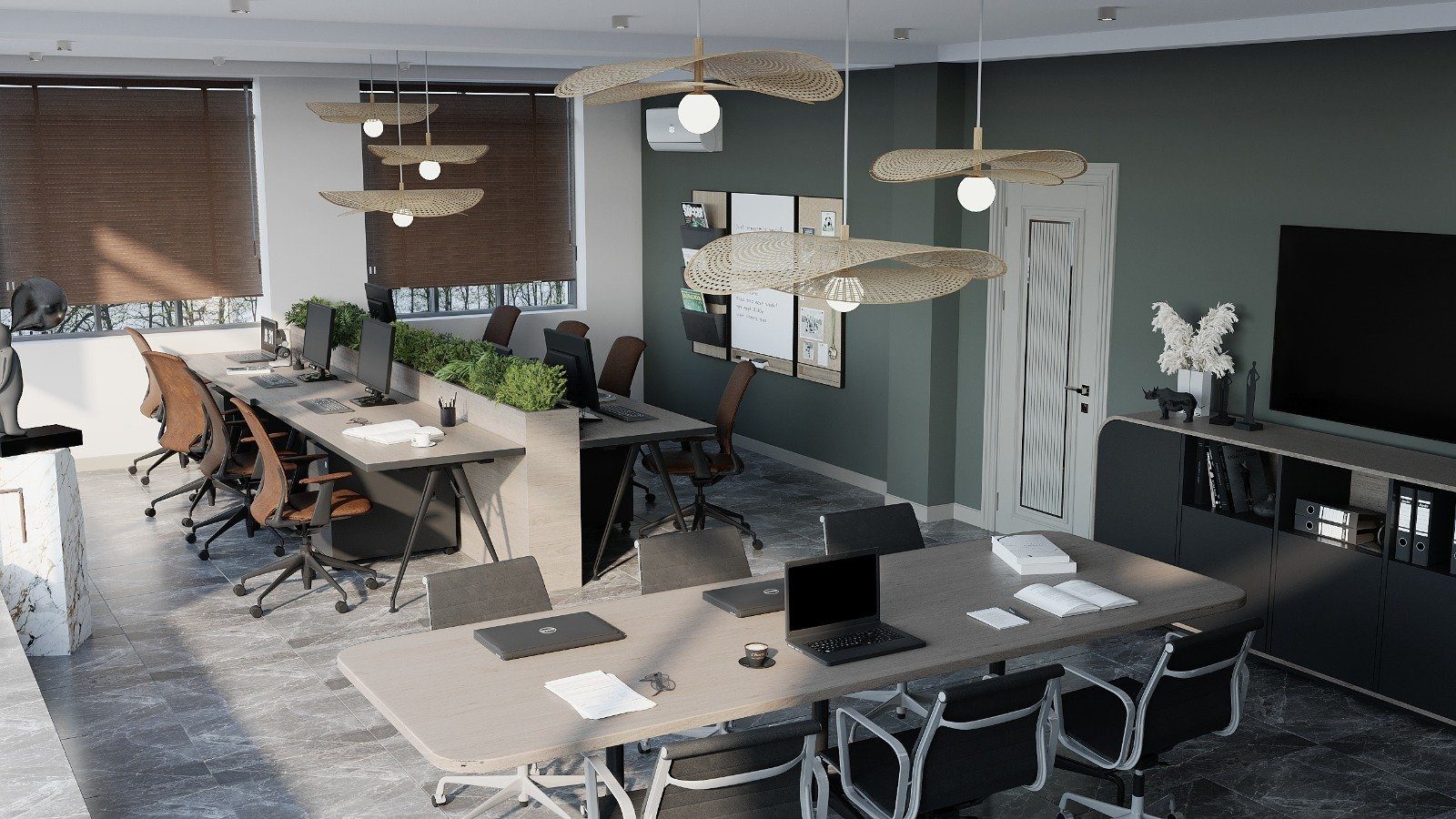
Furniture in an office works in harsher conditions than at home. Laptops, coffee cups and papers move across desktops all day, chairs carry weight for eight hours, and in the meeting room different people sit on the same chairs throughout the day. Without systematic care, an office starts to look tired after a year or two: desks with lifting edges, creaking chairs and doors that do not close properly. Preventing this does not require complicated procedures, just simple rules followed consistently.
Daily cleaning: desks and surfaces
Most office desks have laminated or melamine surfaces. The best daily care for them is a damp microfibre cloth and a neutral detergent. A few important points:
- frequent use of alcohol or chlorine-based disinfectants can change the sheen of the surface and weaken the glue on edge banding, so products recommended by the manufacturer are safer;
- after wiping desk edges with a damp cloth, go over them with a dry one so moisture does not sit along the edge line;
- coasters under cups and glasses prevent ring marks on the desktop;
- when using cutting tools such as a paper knife, work on a cutting mat rather than directly on the desk.
It helps to tell the cleaning service in writing which products to use. Surface damage usually comes not from carelessness but from one strong all-purpose cleaner being used everywhere.
Chairs: mechanism and upholstery
An office chair is a complex product with moving parts. Its care should cover both upholstery and mechanism:
- regularly removing hair, thread and dust from the castors keeps the chair moving smoothly;
- checking and tightening the screws of the gas lift and tilt mechanism from time to time prevents wobbling;
- fabric upholstery should be vacuumed and stains blotted straight away;
- faux leather and leather are wiped with a damp cloth, avoiding strong solvents;
- mesh backs are dusted with a soft brush.
A creaking chair is often caused by a loose screw or dust in the mechanism. Opening and lubricating the mechanism should follow the manufacturer's instructions.
Cabinets, drawers and doors
The parts of office cabinets that cause most trouble are hinges, runners and locks. Doors that sag or touch each other can usually be fixed easily by adjusting the hinge screws. Overloaded drawers wear out their runners quickly, so heavy archive binders are better kept in lower drawers or dedicated filing cabinets.
When books and binders stay in the same place on a shelf for a long time, the middle of the shelf can sag. Placing heavy binders towards the ends of the shelf, near the supports, reduces the risk.
The meeting area
Meeting room furniture is used intensively but in short bursts through the day. The surface of a large meeting table should be wiped after each meeting and marker or pen marks cleaned off immediately. Check the felt pads under chair legs, because once they fall off the floor gets scratched and chairs become noisy when pulled back.
Covers on socket and cable units built into the table should be opened carefully so they do not break, and cables should not be crammed into the unit.
Periodic checklist
Alongside daily cleaning, a simple technical check every few months greatly extends furniture life:
- check and tighten hinge and handle screws;
- check that drawer runners move smoothly and are adjusted;
- check that desk legs and frames do not wobble;
- look for places where edge banding is starting to lift and re-glue them in time;
- check chair mechanisms and castors;
- note any furniture exposed to damp or direct sunlight.
If a small piece of lifting edge banding is not repaired in time, moisture and knocks damage the board edge and the whole part eventually has to be replaced.
Sun, moisture and temperature
Desks and cabinets next to windows can change colour over time in direct sunlight. Blinds or curtains reduce this. Air conditioning and heaters blowing straight onto furniture increase the risk of materials drying out or deforming. It is worth keeping these points in mind when positioning furniture.
Zaferoglu Mebel makes custom furniture for offices and stays in touch with clients about any issues that arise after handover. When ordering office furniture, sharing which cleaning products will be used and the office's daily routine helps choose more suitable surfaces and hardware.