
At first glance a modern bedroom can look almost empty: little decoration, no handles on the fronts, nothing piled on the bedside tables. That calm is no accident. It is made possible by a well-thought-out storage system that keeps things out of sight. When storage falls short, a "minimalist" room quickly fills with clothes thrown over a chair and clutter on the chest of drawers.
The wardrobe as part of the wall
In a modern bedroom the wardrobe is built not as a large freestanding piece but as an extension of the wall. Installed from floor to ceiling, with no gaps at the sides or top, it does not create the impression of a box in the room. The hard-to-reach upper sections hold seasonal clothes and bedding.
When the fronts match the wall colour or come very close to it, the wardrobe visually recedes. Handleless solutions — push-to-open mechanisms or a concealed profile handle along the edge of the front — keep the surface clean. Sliding doors save opening space in a narrow room, while hinged doors give access to the whole interior at once; the choice depends on the size of the room.
A modern wardrobe interior is planned around its contents rather than filled with open shelves: double hanging rails, drawers, sloping shoe racks and a pull-out trouser rail. A light that comes on as the door opens makes dark clothes easier to tell apart.
The bed: low profile and the space beneath
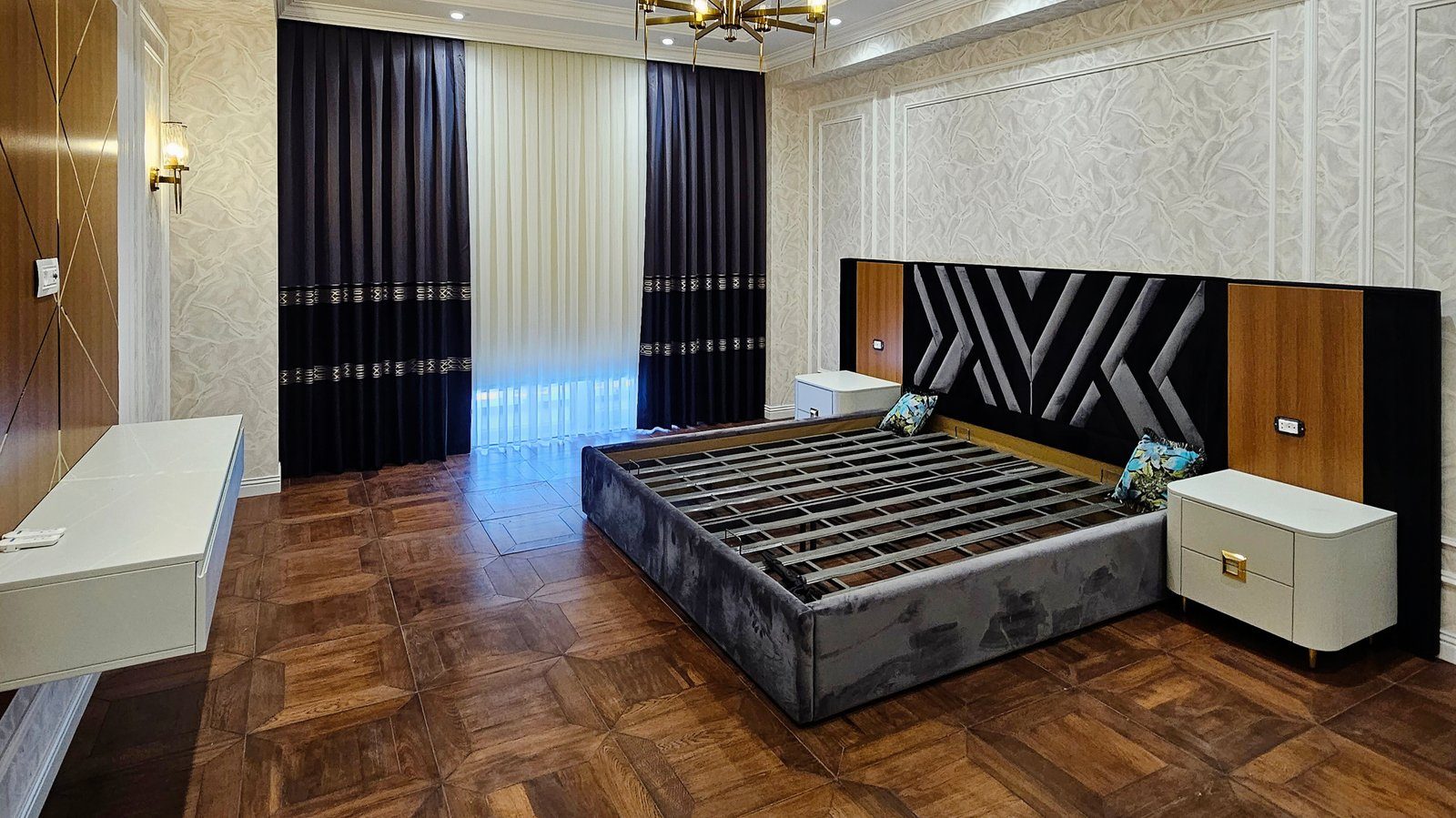
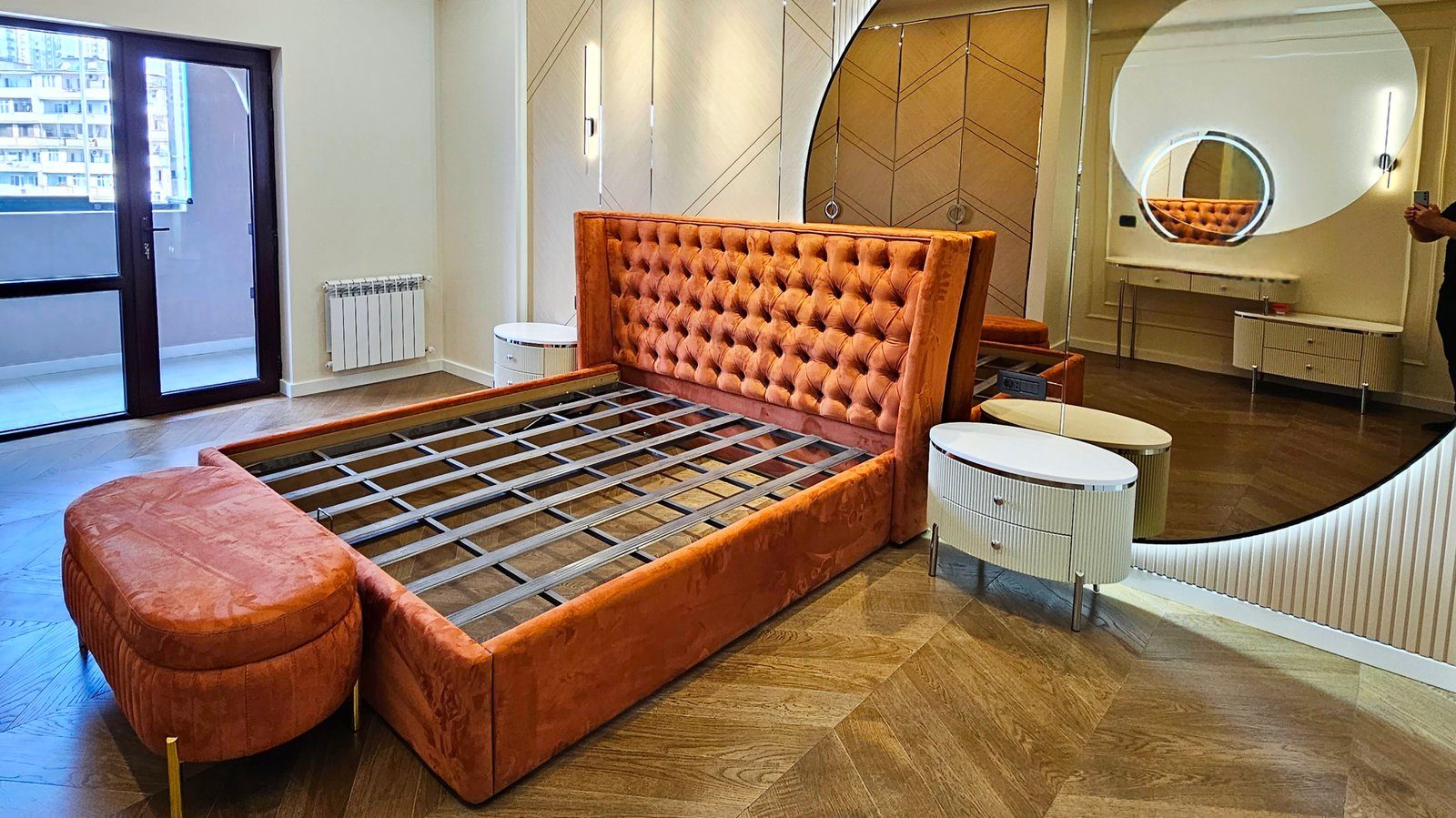
A modern bed is usually simple and low: a slim frame, an upholstered or plain headboard, sometimes a "floating" look slightly above the floor. A hidden light strip under the bed strengthens that effect and doubles as a soft guide light at night.
The space under the bed is a large storage reserve. There are two main solutions:
- A lift-up frame: the whole area under the mattress becomes a box for bedding, duvets and seasonal items.
- Drawers along the sides: quicker access to things used every day, but they need room beside the bed to open.
In both cases the underside of the bed is closed, which also reduces dust.
Bedside tables and the headboard wall
Instead of traditional bedside tables on legs, units hung on the wall or attached to a headboard panel keep the floor clear and make cleaning easier. A shallow unit with one drawer is enough for a phone, book and glasses; an open shelf quickly looks messy.
A panel running along the wall behind the bed can combine the headboard, bedside tables and lighting in one composition. If sockets, USB outlets and cable routes for reading lamps are planned in the panel from the start, no extension leads or charging cables show on the bedside tables.
Colour, materials and light
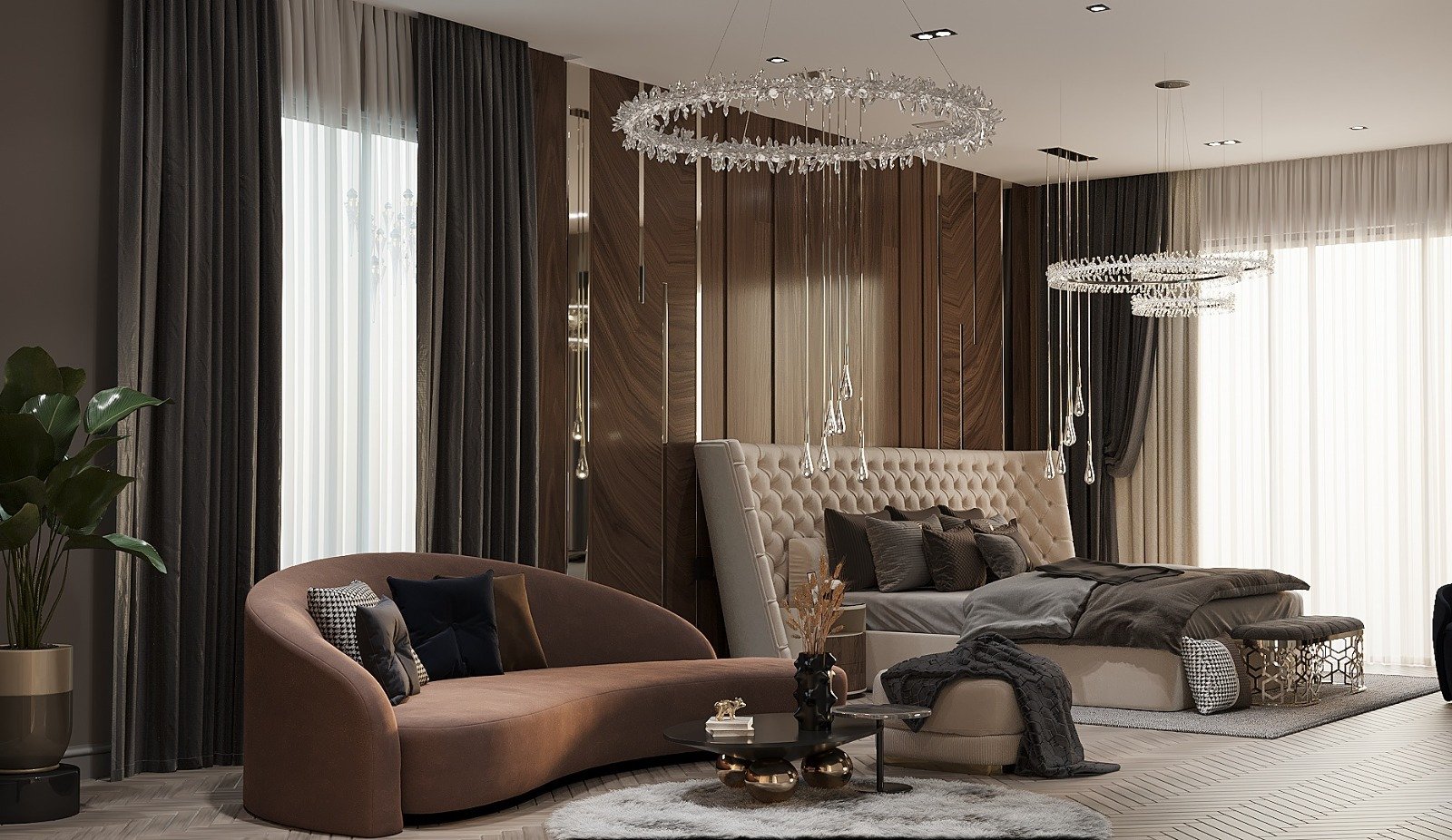
The palette of a modern bedroom is usually calm: white, beige, grey, graphite and natural wood tones. Matt surfaces feel more restful than gloss and do not reflect light. Combining woodgrain board with matt painted fronts looks both warm and clean.
Lighting is planned in three layers: general ceiling light, directed task light for reading, and concealed ambient light (under the bed, inside the wardrobe, behind the panel). The more concealed lighting there is, the less the ceiling light is needed.
In a small bedroom
In a tight room, the modern approach earns its keep. Floor-to-ceiling cabinets on either side of the bed, bridged above the headboard, form a U-shaped alcove for sleeping and double the storage. A mirrored door makes the room feel bigger, although many people prefer it not to face the bed. Pale matt fronts matched to the wall let the furniture fade into the background. Here a lift-up bed is simply practical, because there is no space to pull out drawers from the side.
Common mistakes
- Cutting storage to get an "empty room" look — belongings then pile up on open surfaces.
- Choosing handleless fronts in a glossy material that shows fingerprints.
- Installing sockets before the furniture design, so they end up behind the bedside tables.
- Choosing all furniture in one tone and making the room monotonous; at least one change of texture is needed.
Zaferoglu Mebel builds bedrooms to size, including wardrobes that reach the ceiling and beds with lift-up storage, using Aristo and RaumPlus for sliding doors and Blum for drawers and hinges.