
An upholstered headboard turns a simple bed into the main design element of a bedroom. Its stitching, colour and shape define the whole wall. Yet the headboard is also a surface used every day: we lean against it to read, and it comes into contact with hair, face cream and hands. That is why the choice should rest not only on looks but on this daily wear.
How a headboard is built
Inside an upholstered headboard there is a frame, usually board or a timber frame, soft layers on top of it and the cover fabric on the outside. The strength of the frame keeps the headboard from flexing when you lean on it; the soft layers provide comfort and hold the shape.
A headboard can be built in two ways: as part of the bed frame, or as a separate panel fixed to the wall. A wall panel can be wider than the bed, even running behind the bedside tables, and gives the room a unified look. A headboard attached to the bed makes the furniture easier to move.
Padding layers
Softness and shape depend on the padding. The most common solution is foam with a thin layer of fibre wadding on top. The foam holds the shape, while the fibre softens the edges and helps the fabric lie smoothly.
Foam density matters. Foam that is too soft sags where people lean over time, leaving a dip in the middle of the headboard. Denser foam keeps its shape much longer but can feel firm to the touch. The balance usually comes from a dense base layer with a thin soft layer above. On stitched headboards the padding thickness sets the depth of the pattern: a thicker layer gives a fuller, more sculpted look.
Types of stitching
Stitching defines the character of the headboard. The main options:
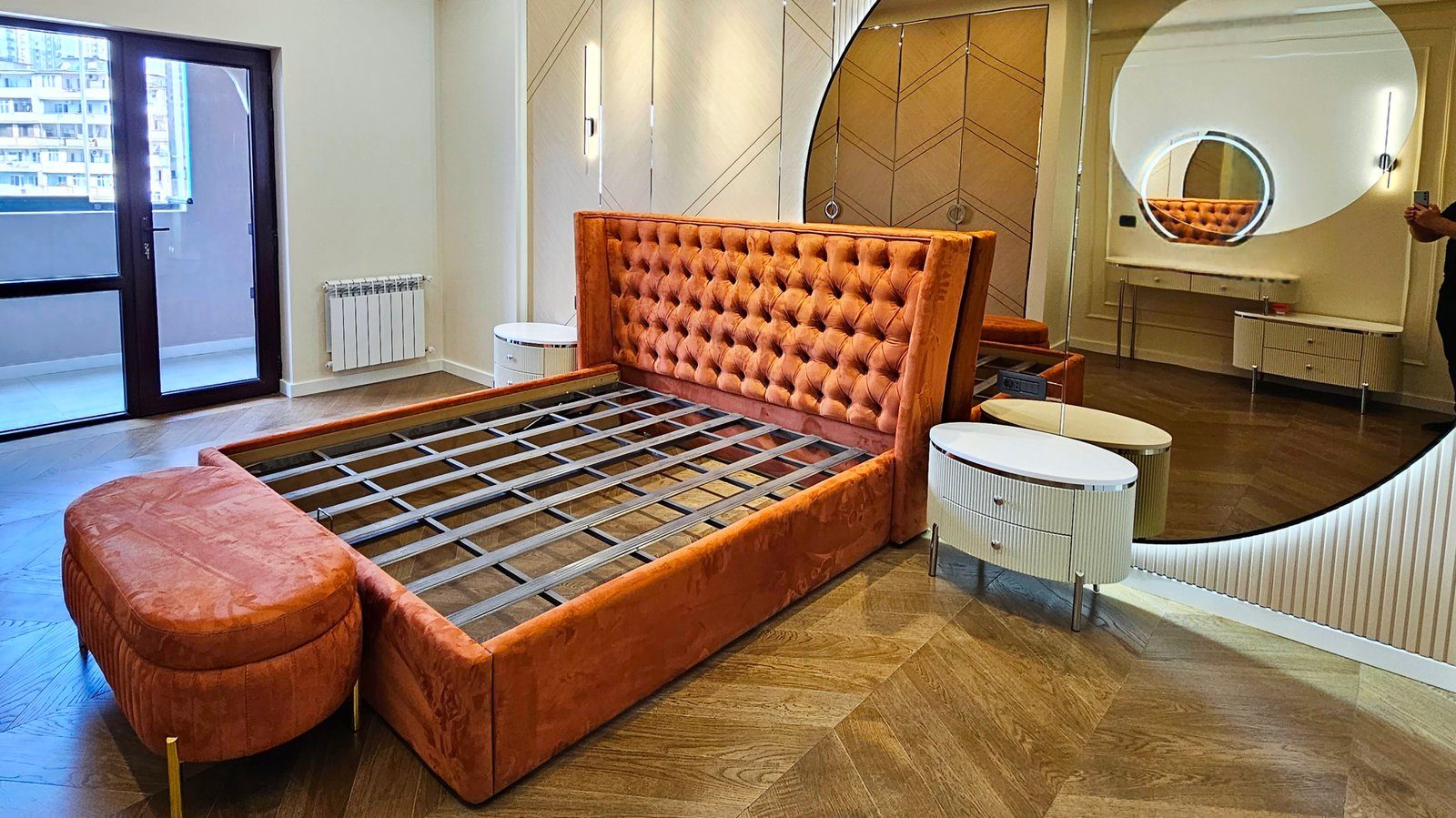
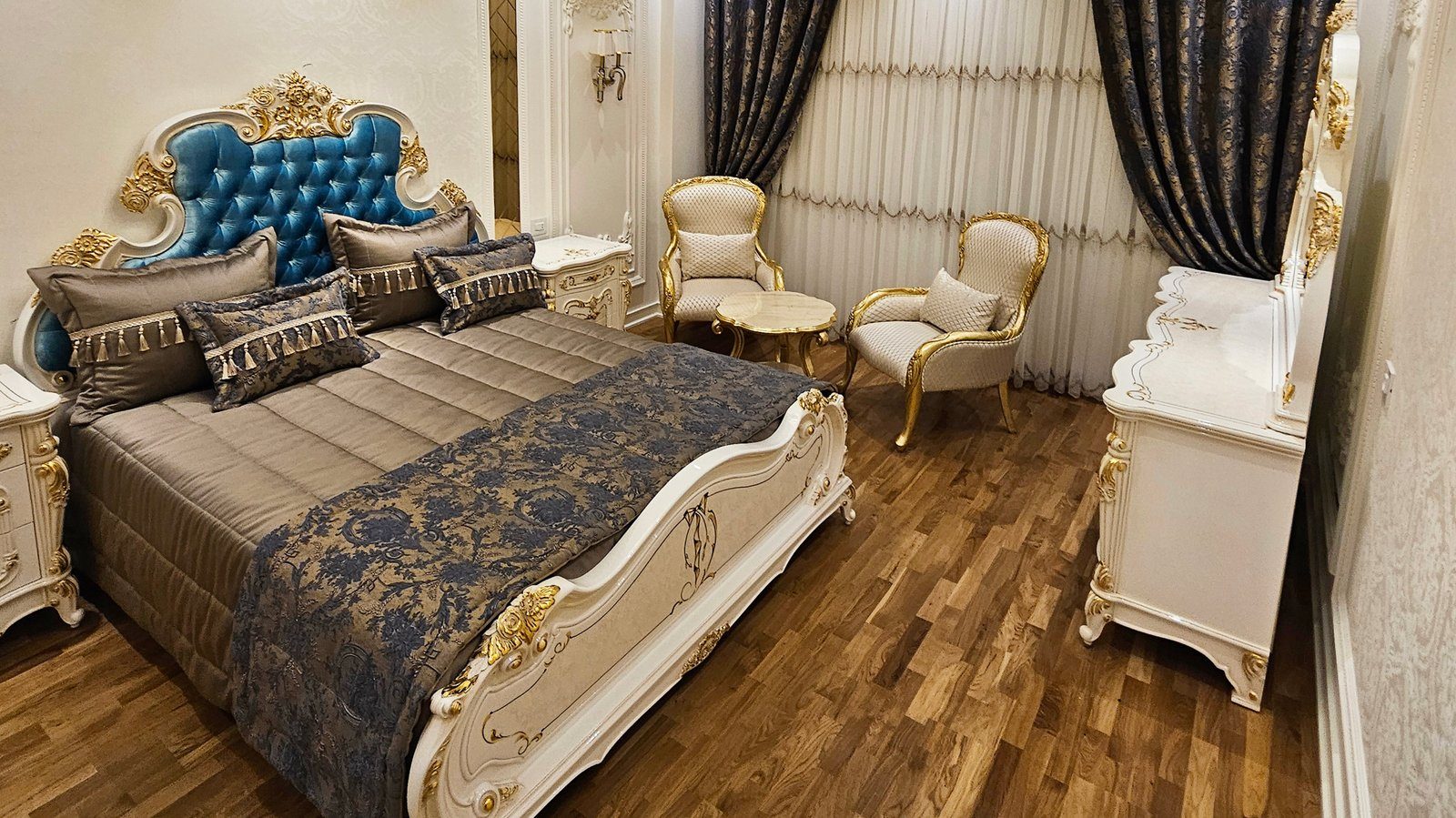
- Button tufting: fabric is pulled deep with buttons to form diamond patterns. It suits classic and neoclassical interiors. Dust can collect in the folds around the buttons, so regular vacuuming is needed.
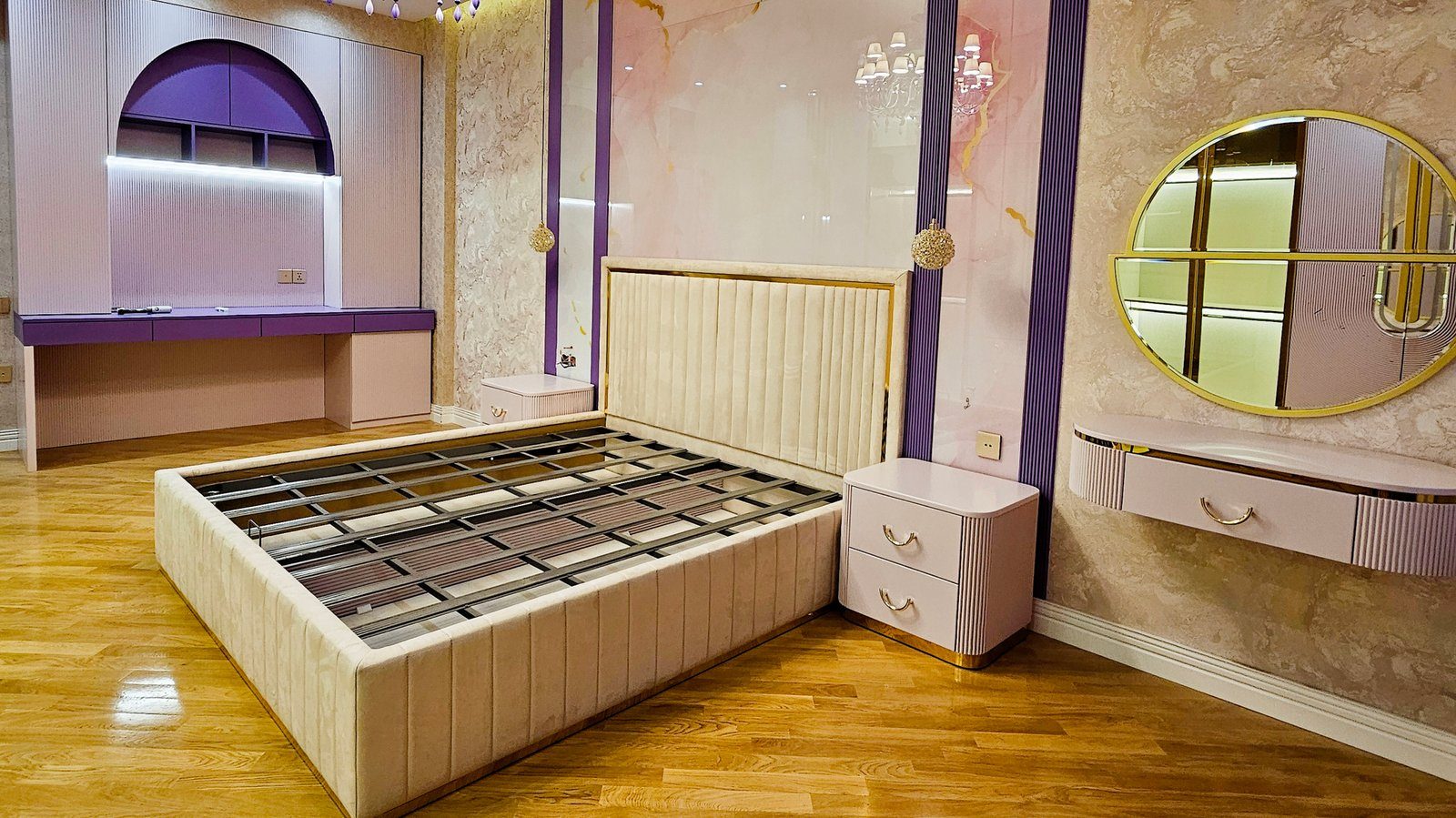
- Vertical channels: the headboard is divided into parallel vertical strips. It looks contemporary, makes the room feel taller and is easier to clean than tufting.
- Horizontal panels: calm and compact on wide, low headboards.
- A plain, unstitched surface: for minimalist interiors; fabric quality and tension show more here, as every wrinkle is visible.
- Piped edges: emphasise the outline and protect the edge from rubbing.
Choosing the fabric
A headboard does not face as much abrasion as sofa upholstery, but it is in direct contact with skin and hair. Velour and velvet look rich and soft, but pile fabrics can show pressure marks. Chenille and textured weaves show marks less. Tightly woven basket-weave fabrics stand up well to daily use and look natural.
On a light headboard a darker patch can appear over time where heads rest. If you want a light colour, a stain-resistant treated fabric or a removable cover is more practical. In homes with pets, tightly woven fabrics that resist claws and shed hair are the better choice.
Removable covers and future repair
An upholstered headboard is used for years, and the fabric may wear out sooner than the structure. It makes sense to ask when ordering whether the cover can be replaced later. With wall-mounted panel headboards this is often easier: the panel comes off and is re-upholstered. For plain or simple channel-stitched headboards, a removable cover with a zip or hook-and-loop fastening is also possible.
With button tufting, a removable cover is not practical, because the fabric is anchored to the padding by the buttons. When choosing such a headboard, pay closer attention to stain resistance. It is also worth keeping a spare piece of fabric: finding material from the same batch for a small repair or colour match later is not always possible.
Height and everyday comfort
The headboard should be tall enough for your head and back to rest comfortably when sitting up in bed to read. Allow for mattress thickness, since a deep mattress reduces the visible part of the headboard. If sockets, a light switch or wall lamps are planned beside it, fix their positions together with the headboard size so the panel does not cover them.
For care, vacuum the headboard once a week with a soft brush attachment, and treat stains with a product suited to the fabric, testing it first on a hidden spot.
When ordering an upholstered bed from Zaferoglu Mebel, the headboard shape, stitching and fabric can be picked to suit the room's style and habits such as sitting up in bed to read.