
In many households a separate room is called the guest room, yet it hosts guests for only a few weeks a year. The rest of the time it is either shut or gradually becomes a store room: old boxes, the ironing board, seasonal things. When guests do arrive, a rushed tidy-up begins. Setting up a rarely used room properly serves two aims: being useful all year and turning into a comfortable bedroom within an hour when guests come.
Define the room's main purpose
The first question is what the room will be used for most of the year. The answer changes the furniture plan completely. The most common options are a home office, a hobby or exercise room, extra wardrobe space, or a play room for children. The guest function is then added as a second mode on top of that main purpose.
If guests come often, say every month, the room is set up mainly as a bedroom. If they come once or twice a year, it is more sensible to prioritise daily use and hide the bed.
The bed: solutions that save space
In a rarely used room, the bed takes up the most space. There are several alternatives:
- Wall bed: hidden in a vertical cabinet, it folds down to a full-size mattress. During the day the room is completely free. The system demands a good mechanism and secure fixing to the wall.
- Sofa bed: a sofa for sitting by day, a bed by night. When choosing the mechanism, check that the sleeping surface is even and that it opens and closes easily.
- Trundle bed: a second bed that slides out from under a single, providing room for two guests.
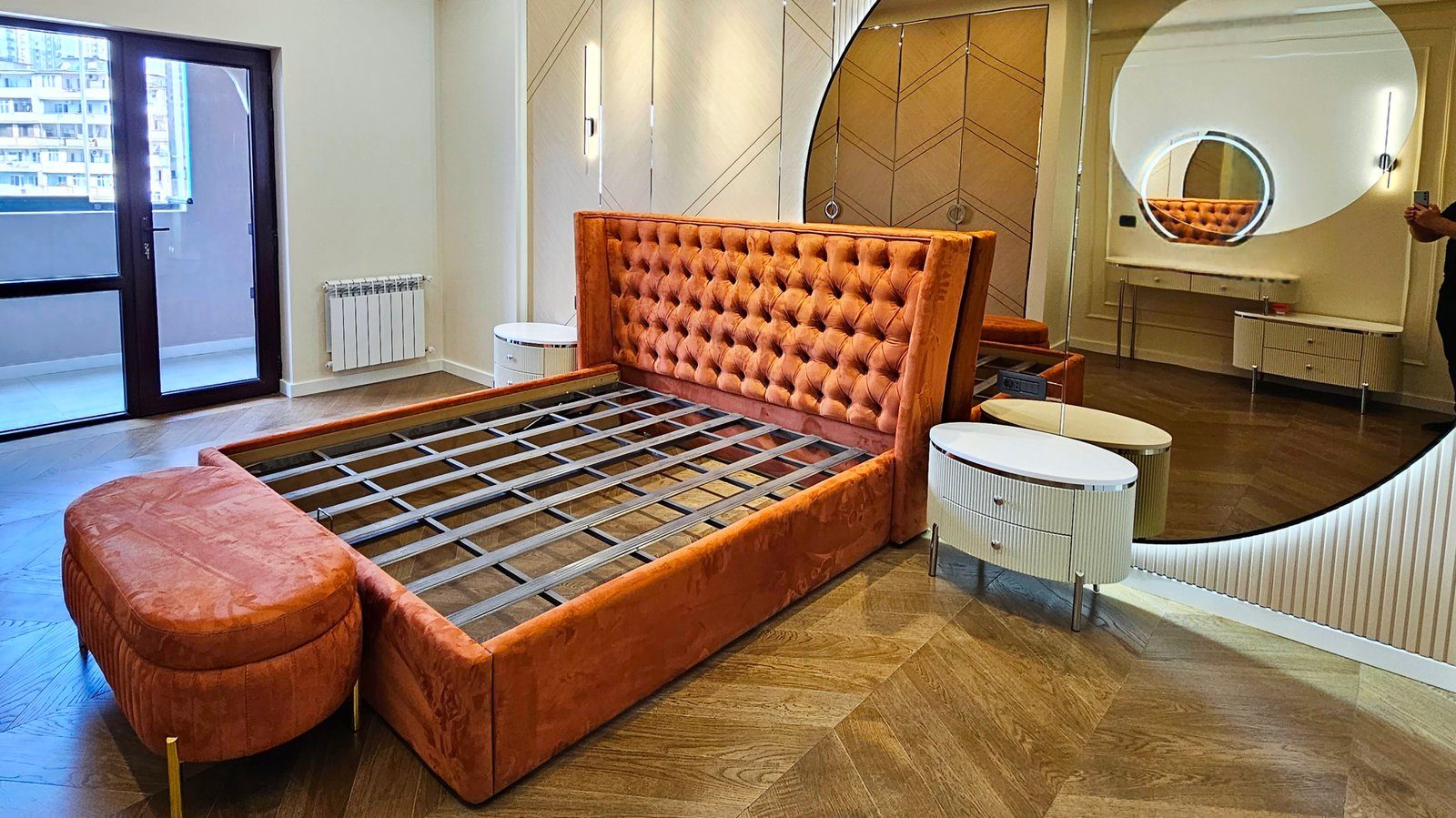
- Ottoman bed with lift-up base: if the room is mainly a bedroom, the large storage under the mattress hides seasonal items.
Whichever option you choose, do not economise on the mattress. What matters most to a guest is a good night's sleep.
Minimal but thoughtful storage for guests
Guests usually arrive with a suitcase and stay a few days. They do not need a full wardrobe, but living out of an open suitcase on the floor for the whole stay is uncomfortable. The minimum that works:
- A rail or hooks for a few hangers.
- One or two empty shelves or drawers.
- A low surface or bench for the suitcase.
- A bedside unit or wall shelf for phone, glasses and a glass of water.
- A socket nearby.
If the wardrobe in the room is full of the hosts' things, always keeping one section empty is the simplest gesture for a guest. If the room is used as a dressing room, separating the guest section behind its own door keeps the hosts' belongings out of sight.
Combining with a home office
The most popular pairing is a guest room that doubles as a study, and the main thing is that desk and bed do not clash. A wall bed works particularly well: some models keep a shelf or small desk in place in front of the folded bed. A sofa bed, meanwhile, gives office visitors somewhere to sit.
The office's documents and equipment may be needed while a guest is staying. A lockable cabinet for papers and a laptop protects the host's privacy and spares the guest any awkwardness about touching things in the room.
Details for guests' comfort
The best test of a guest room is to sleep there yourself for a night. That is often when the missing things come to light: you cannot turn off the light from bed, the curtains let in morning light, there is no mirror, the socket is far from the bed. A few small solutions fix these problems:
- A separate bedside light with a switch within reach.
- Blackout curtains or blinds.
- A full-length mirror, inside a wardrobe door or on the wall.
- A closed shelf for a spare duvet and pillows.
- A separate place for household items, so the room is not used as a store.
Keeping it from becoming a store room
An unused room gradually fills with things nobody needs. To prevent this, the room needs closed storage with a purpose defined in advance. One box left in an open corner soon attracts a second and a third.
When ordering a guest room from Zaferoglu Mebel, explaining what the room does when nobody is staying helps combine the bed, storage and desk properly in one design.