
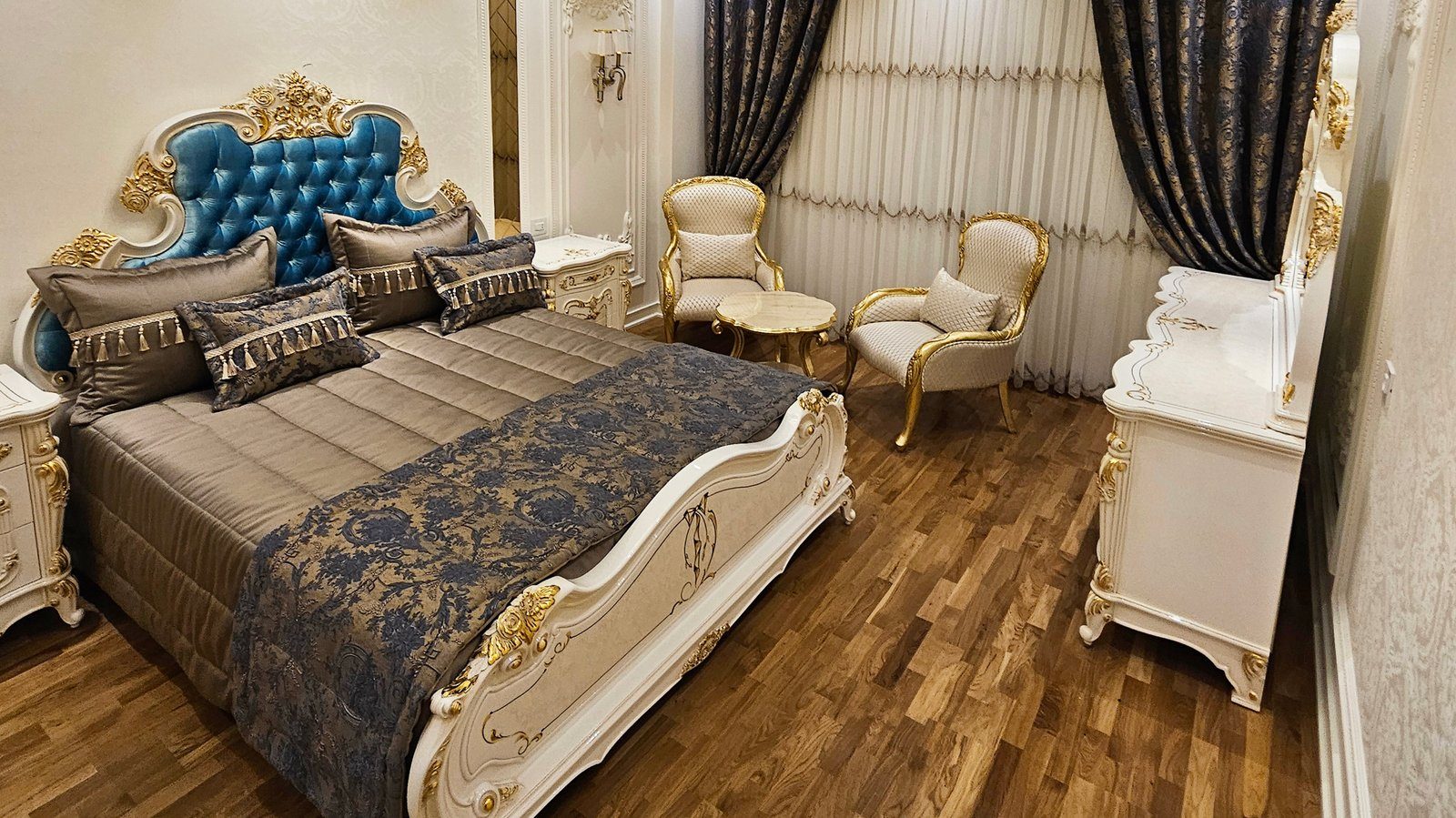
A classic bedroom is not simply "ornate furniture". The style rests on proportion, symmetry and details that recall handcraft. Carving on the headboard, a gently aged finish along the edges of a chest of drawers, a glint of gold on the handles — when they work together the room feels stately yet comfortable. When the same details multiply unchecked, the bedroom starts to look like a museum hall and stops feeling restful.
Carving: by hand, by router or as an applied ornament
Carved decoration in classic furniture comes about in three main ways. The first is hand carving in solid wood: it gives the liveliest result, but it takes a long time and each piece comes out slightly different. The second is a pattern cut by a CNC router in MDF or solid wood: repeated motifs are precise and symmetrical, and they take paint well. The third is gluing ready-made decorative mouldings — rosettes, cornices, edge ornaments — onto the body.
The right question when choosing is not "which is more luxurious" but "where will the carving be seen". The headboard is where the eye lands first, so deeper, larger ornament makes sense there. On bedside tables and a chest of drawers a simplified, shallower version of the same motif is enough. Deep carving collects dust, so on surfaces handled every day, such as drawer fronts, it is practical to keep the relief light.
Patina: how the aged effect is created
Patina is a finishing technique that gives a surface an older, softened look. After the base colour is applied, a darker or metallic tone is worked into the recesses of the carving and along the edges, the excess is wiped off and the surface is sealed with lacquer. The result is that the relief reads more clearly.
The colour of the patina changes the overall mood of the furniture. On an ivory front, brown patina feels warm and slightly rustic; grey patina gives a calmer, cooler look; gold or silver patina moves towards a palatial aesthetic. Always look at a sample in the room's own light: under warm bulbs gold patina looks brighter, in daylight it looks more muted.
Because patinated surfaces are protected by lacquer, they can be wiped with a soft damp cloth. Abrasive sponges and alcohol-based cleaners, however, dull the lacquer and can remove the patina itself.
Gilded details: how much is enough
Gold is the most striking and also the riskiest element of a classic interior. A practical rule: use gold either as a fine line that picks out the relief, or on the hardware — handles, escutcheons, foot caps — but not both at the same intensity. If the carving is filled with gold, choosing handles in antique brass or dark bronze gives a more refined effect.
If the chandelier, mirror frame and curtain fittings also carry a metal tone, pick them from the same family as the furniture. Bright gold mixed with matt bronze in one room looks accidental.
Keeping the room from feeling heavy
The most common mistake is ordering every piece of a classic set at the same level of richness. A better approach is to think in terms of a lead piece and supporting pieces:
- The bed is the centre: its headboard, carved or upholstered, is the richest element.
- Bedside tables and the chest of drawers repeat the motif in a simpler form.
- The wardrobe is a large surface, so its doors are framed but lightly carved; otherwise it creates a wall of visual weight.
- Walls and textiles stay calm so the furniture details do not compete with the background.
In a small room, light backgrounds — cream, ivory, pale beige — and a subtle patina make the space feel larger. A large room can take dark walnut tones and bolder carving.
Checklist before ordering
- Is the carving in solid wood, routed in MDF or an applied moulding?
- Have you seen the patina colour on a sample in the room's light?
- Do the gilded details match the hardware, chandelier and mirror frame?
- Is dust-catching deep relief kept away from surfaces touched every day?
- Is the surface sealed with lacquer, and which cleaners are safe for it?
Zaferoglu Mebel makes classic bedroom sets to size and its own team installs them. How deep the carving goes, the patina shade and how much gilt detail to use can be agreed in the design beforehand.