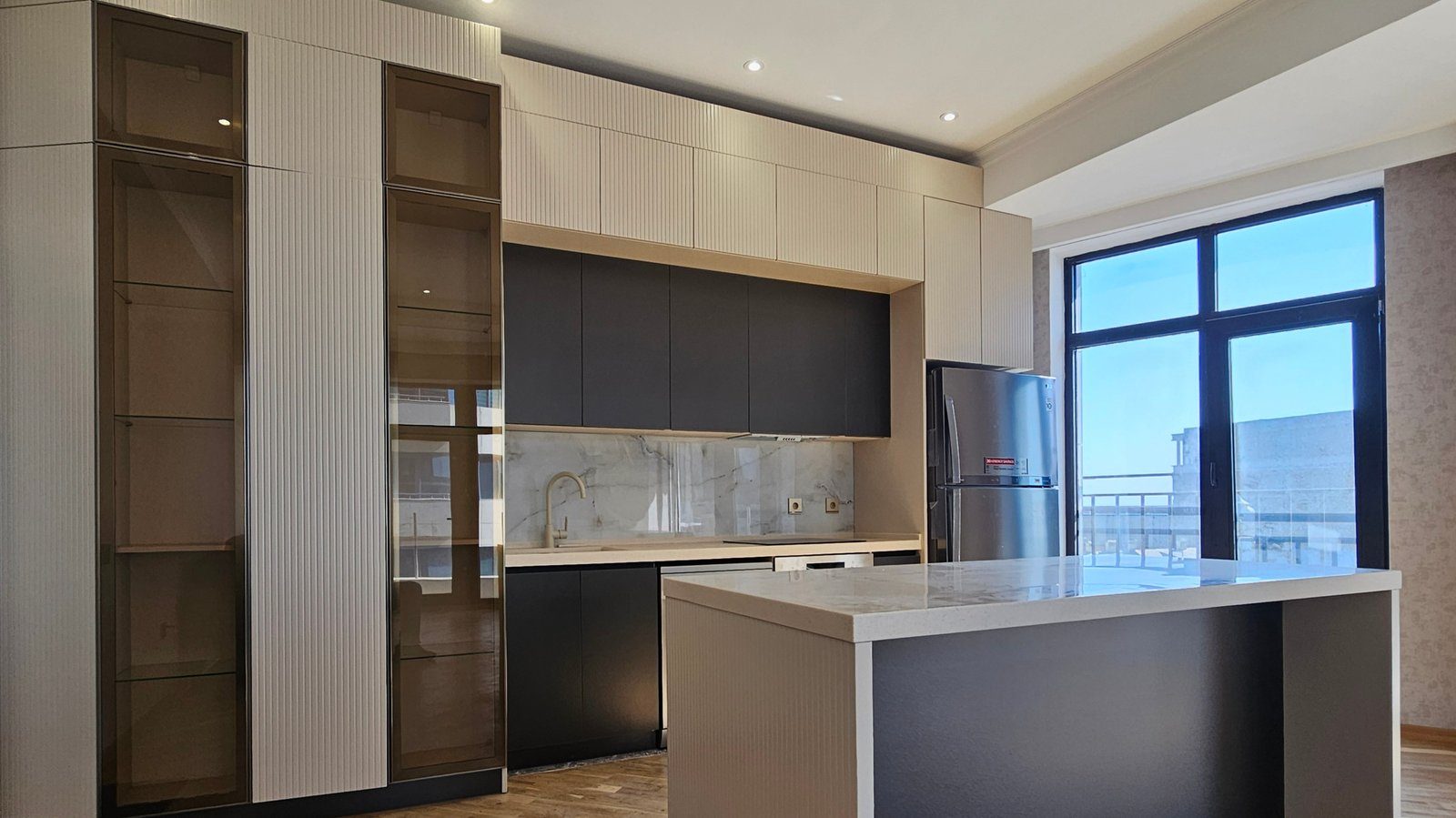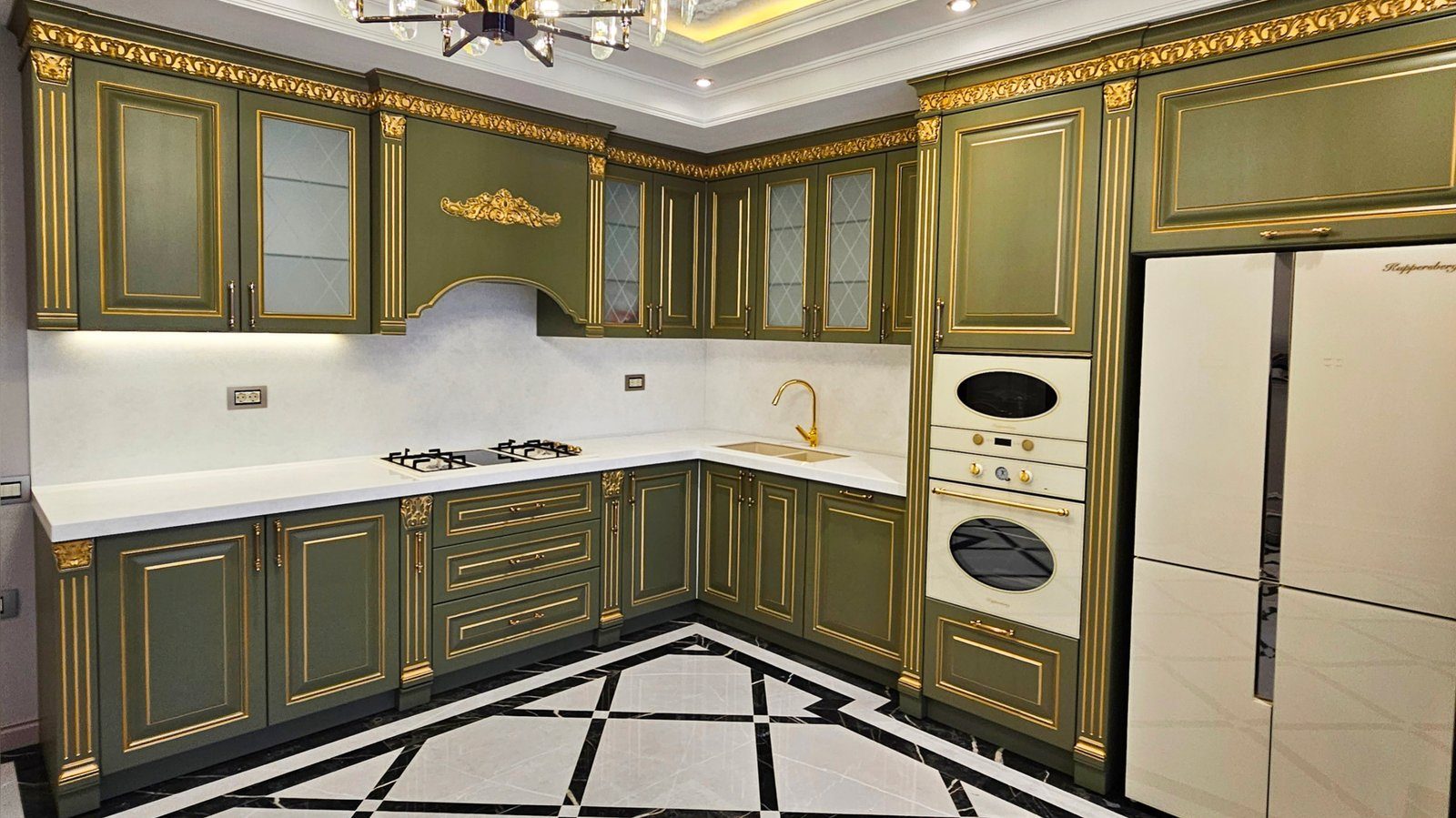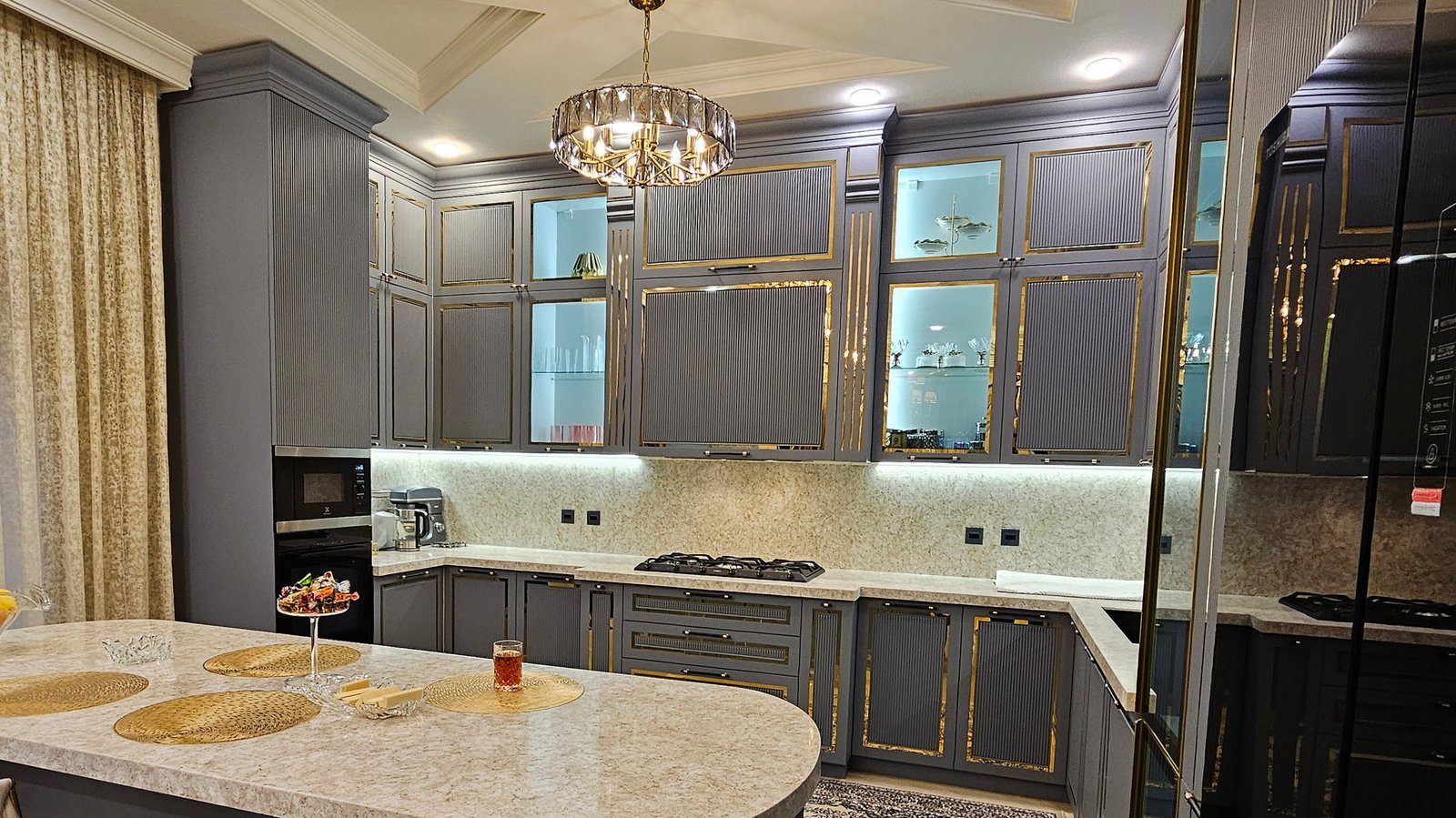

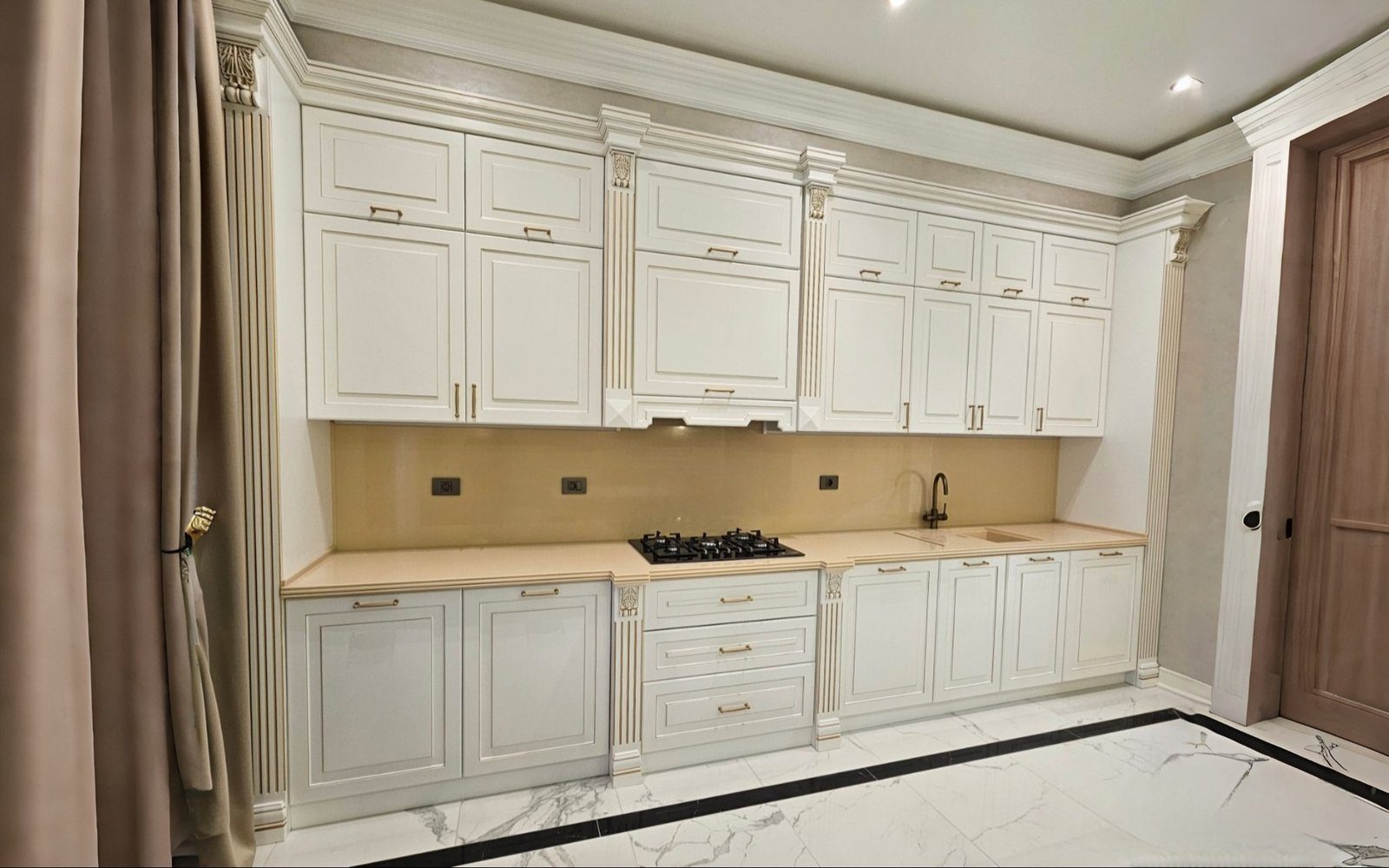
If the fronts are the first thing you notice in a kitchen, the worktop is the part that works hardest. Bread is cut on it, hot pans are set down, lemons are squeezed, water is spilled and it is cleaned several times a day. A wrong material choice shows up a few months later as stains, swollen joints or cracks. Below we compare four widely used materials on the same questions: heat, stains, scratches, joints and repairability.
Laminate worktops
A laminate worktop is a chipboard core with a high-pressure decorative plastic layer bonded to it. The decor range is very wide: wood, stone, concrete, plain colours. The surface handles everyday cleaning products, moderate scratching and stains well.
Laminate's weak points are water and joints. The surface itself is waterproof, but if cut edges, cut-outs for the sink and hob, and the joint between two worktops are not properly sealed, moisture reaches the core and the worktop swells. With laminate, the quality of installation matters as much as the material. Very hot pans placed directly on the surface can damage it, so a trivet is essential. Deep scratches or burn marks are practically impossible to repair, and the damaged section has to be replaced.
Quartz
A quartz worktop is pressed mainly from crushed quartz with a polymer binder, producing a dense, almost non-porous surface. Stain resistance is its biggest strength: coffee, wine, oil and lemon juice do not soak in. It also resists scratching well, and colour is consistent within a batch.
Quartz's sensitive point is heat. Because the binder is a polymer, a very hot pan straight from the hob can mark the surface, or a sharp temperature difference can cause cracking. Use a trivet for hot pans. Quartz is heavy, so base unit carcasses must be sturdy. Undermounting the sink, for a neat, rimless joint, is possible with quartz.
Solid surface
Solid surface, often called acrylic stone, is made from acrylic resins and mineral fillers. Its main advantage is seamless joins: two pieces are bonded with a special adhesive so the seam disappears. The sink can be made of the same material and joined to the worktop as one piece, eliminating places where dirt collects. It also suits curved shapes and non-standard layouts.
Solid surface is softer than quartz: it scratches and is sensitive to heat. The upside is repairability: small scratches and some stains can be removed by sanding the surface. On dark and glossy colours scratches show sooner, while light matt finishes are more forgiving in daily use.
Natural stone: granite and marble
Granite is a hard natural stone, very resistant to heat and scratches, and every slab has a unique pattern. However, natural stone can be porous, so it needs periodic treatment with a sealer to keep oil and coloured liquids from soaking in.
Marble is chosen for its beauty but is the most delicate kitchen worktop material. It is soft and porous, and acidic substances such as lemon, vinegar and wine dull the surface and leave marks. Anyone choosing a marble worktop should accept in advance that it will develop a patina and never look perfectly pristine.
Thickness, edges and sink installation
After the material, a few technical decisions remain:
- Thickness: a thin worktop looks light and modern, a thick one more substantial. On stone worktops the visible edge is sometimes built up with an extra strip.
- Edge profile: square, rounded or chamfered. A rounded edge resists knocks better and is safer in homes with children.
- Sink: an inset sink suits any material; undermounting suits moisture-resistant materials such as quartz, solid surface and natural stone, and is not recommended with laminate.
- Joints: in an L-shaped kitchen, plan the joint away from the sink and hob.
- Upstand: the join between worktop and wall must be protected against water getting in.
A quick summary
- Budget and decor choice come first: laminate, with carefully sealed installation.
- Stain resistance and easy daily care come first: quartz, with a trivet for hot pans.
- A seamless look and repairability come first: solid surface.
- Heat resistance and natural pattern come first: granite.
- Looks above all, with a patina accepted: marble.
Zaferoglu Mebel can match the worktop to how much you cook, the front decor you picked and whether the sink sits on top or underneath.