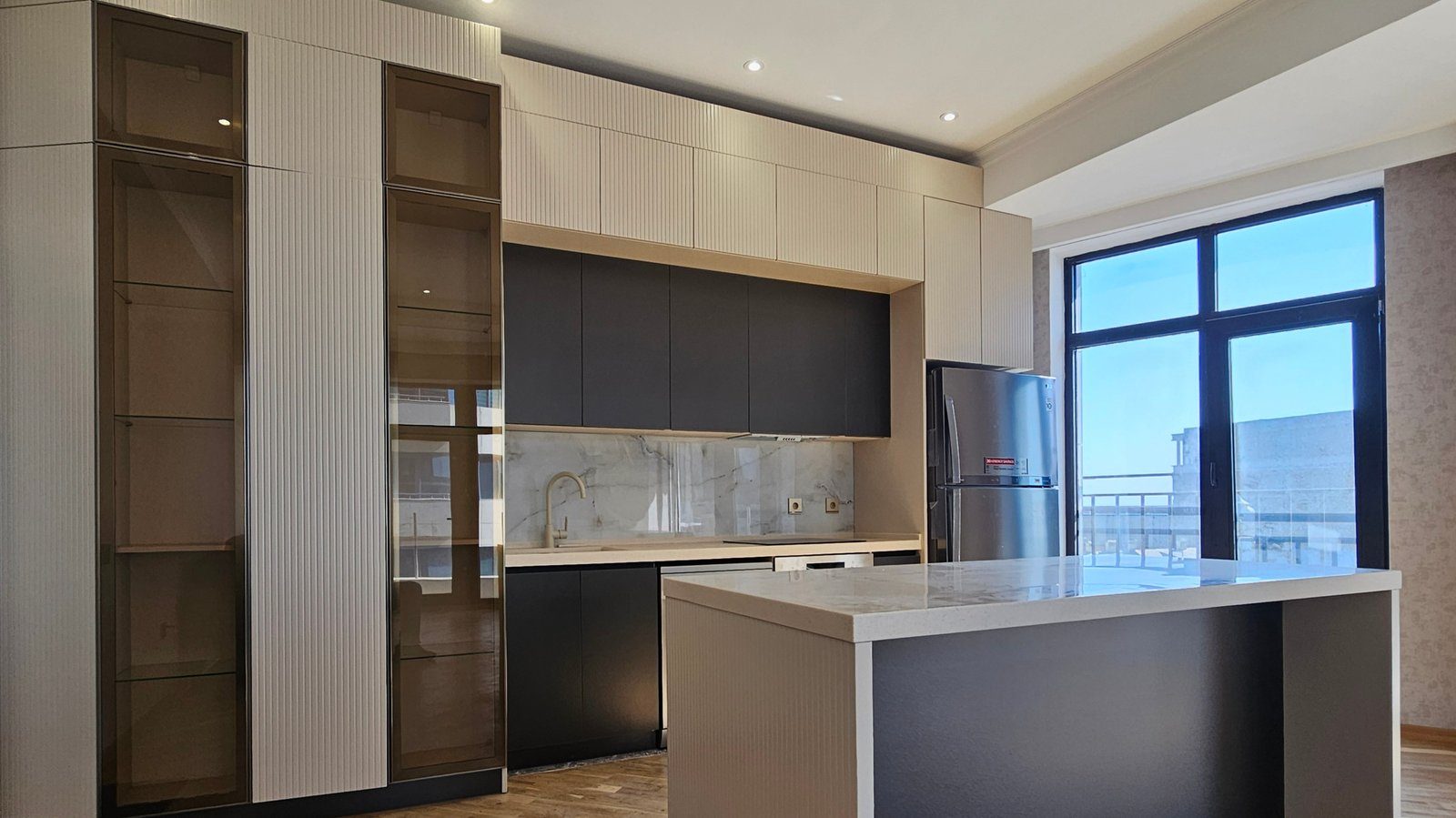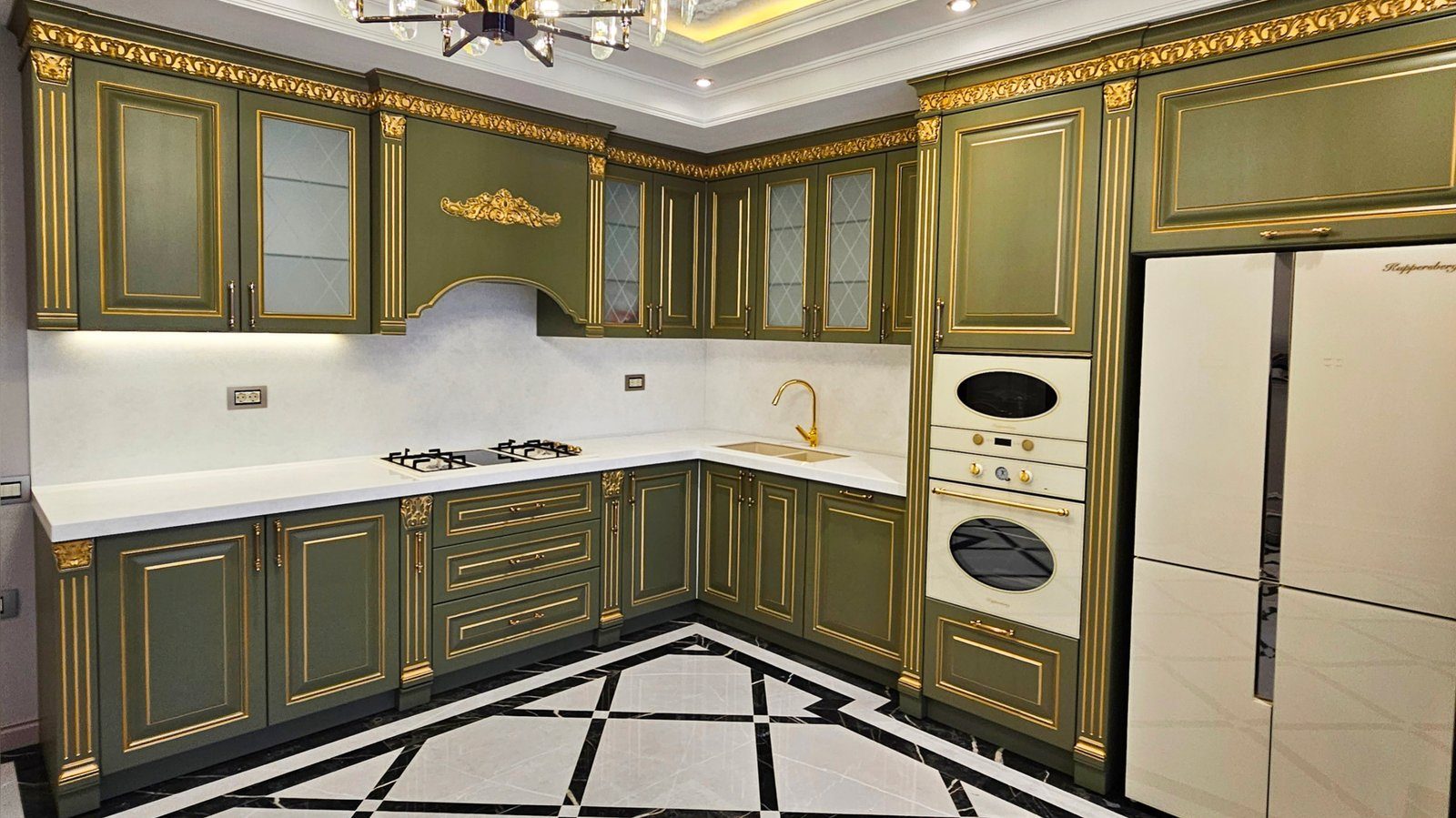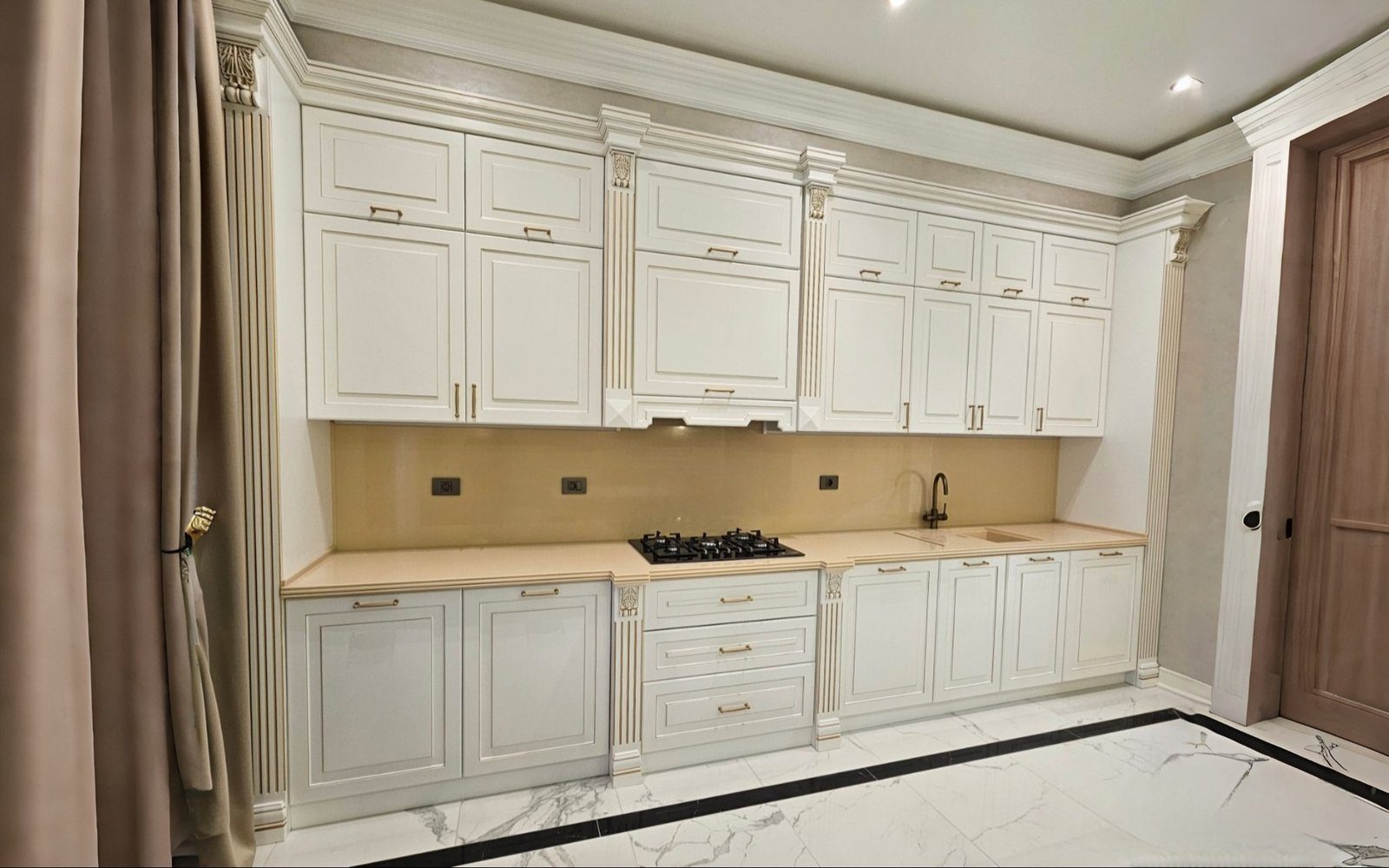

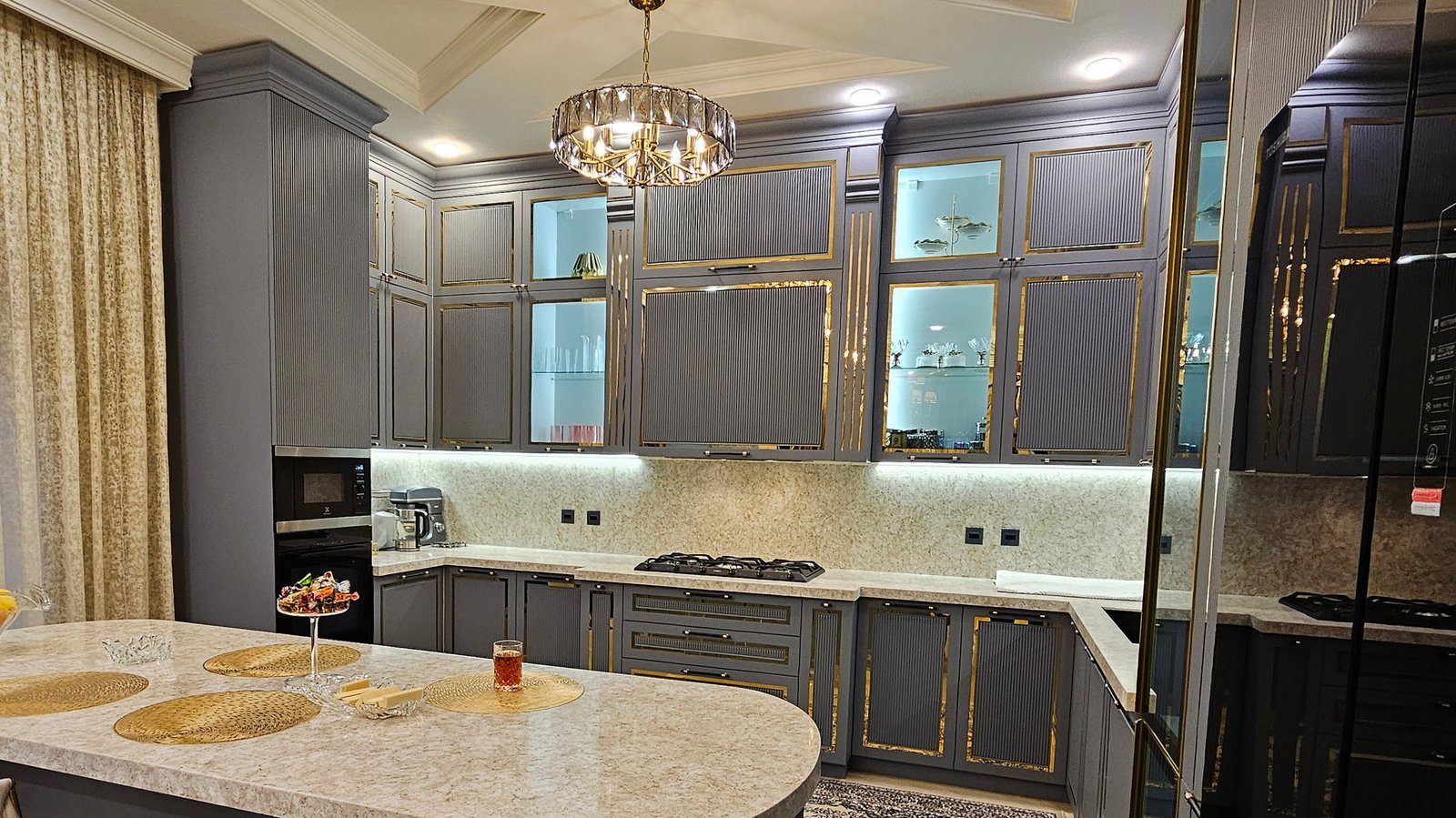
When people choose a kitchen, most of the attention goes to the fronts: colour, sheen, handles. Yet how the cabinets behave after years of use depends mainly on the carcass — the side panels, bottoms, shelves and back. However good the door looks, it will not hang straight if the side panel holding the hinge swells or the screws work loose. That is why the carcass material deserves a decision of its own.
Laminated chipboard: the standard choice
Laminated chipboard (known locally as LDSP) is particleboard with a decorative melamine layer pressed onto both faces under heat and pressure. The surface is smooth, easy to wipe and needs no painting. Most kitchen carcasses are made from it, because once every cut edge is properly sealed it copes well with everyday kitchen conditions.
Its weak point is the cut edge. The laminated face repels water, but an exposed edge lets the particles absorb moisture, and the board can swell at that spot. Good workshops therefore seal every edge, visible or not, with edge banding, and pay particular attention to how well it is bonded on units next to the sink and dishwasher. Boards from manufacturers such as Egger and Kronopol come in a wide range of decors, so the inside of the carcass can be matched to the fronts.
MDF: when it makes sense in a carcass
MDF is pressed from much finer fibres, which gives it a dense, uniform structure. It machines, paints and shapes well, so it is best known as a front material. In carcasses it is used for specific cases: when the exposed edges of open shelving are to be painted, or when a visible side panel must share the painted finish of the doors.
Building the whole carcass from MDF rarely pays off. The material is heavy and adds cost, and standard MDF is still vulnerable to moisture at unprotected edges. Moisture-resistant grades exist, but they too need properly sealed edges.
Plywood: strong, but not needed everywhere
Plywood is made from thin wood veneers glued with the grain of each layer running crosswise. This construction gives it good resistance to bending and a firm grip on screws. Plywood bonded with water-resistant glue also tolerates contact with water better than ordinary particleboard.
On the other hand, bare plywood is not a finished kitchen surface. It has to be faced with laminate, lacquered or veneered, and its layered edge is either left exposed as a design feature or covered with banding. That extra work costs time and money, so plywood is usually chosen for particular units rather than the entire kitchen.
Which board for which unit
In practice, combining materials within one kitchen gives the most balanced result:
- Wall cabinets and dry storage units are well served by chipboard with properly sealed edges.
- The sink base, the units beside the dishwasher and around the fridge are worth considering in moisture-resistant board or plywood, ideally with a protective mat on the bottom.
- Long open shelves need thicker board or an intermediate support to avoid sagging.
- Visible end panels and painted elements can be made from the same material as the fronts, often MDF.
For hot units such as an oven tower, ventilation gaps and the clearances specified by the appliance maker matter more than the board itself.
What really determines carcass quality
A material name is not a guarantee on its own. Two kitchens built from the same chipboard can behave very differently depending on how accurately they are assembled. Clean, chip-free cuts, edge banding with no gaps, fixings placed at the right spacing and the quality of the hinges affect the life of a carcass as much as the board does. For formaldehyde emissions, class E1 is the widely accepted benchmark for furniture boards, and it is a fair question to ask when ordering.
A simple way to decide is to split the kitchen into zones and ask what happens most in each one: water, heat, heavy loads or just dry storage. The material should answer that question rather than habit or fashion.
For kitchen carcasses Zaferoglu Mebel uses Egger and Kronopol boards with Blum fittings. Which unit gets which material is best agreed after measuring, once the conditions in that particular kitchen are clear.