
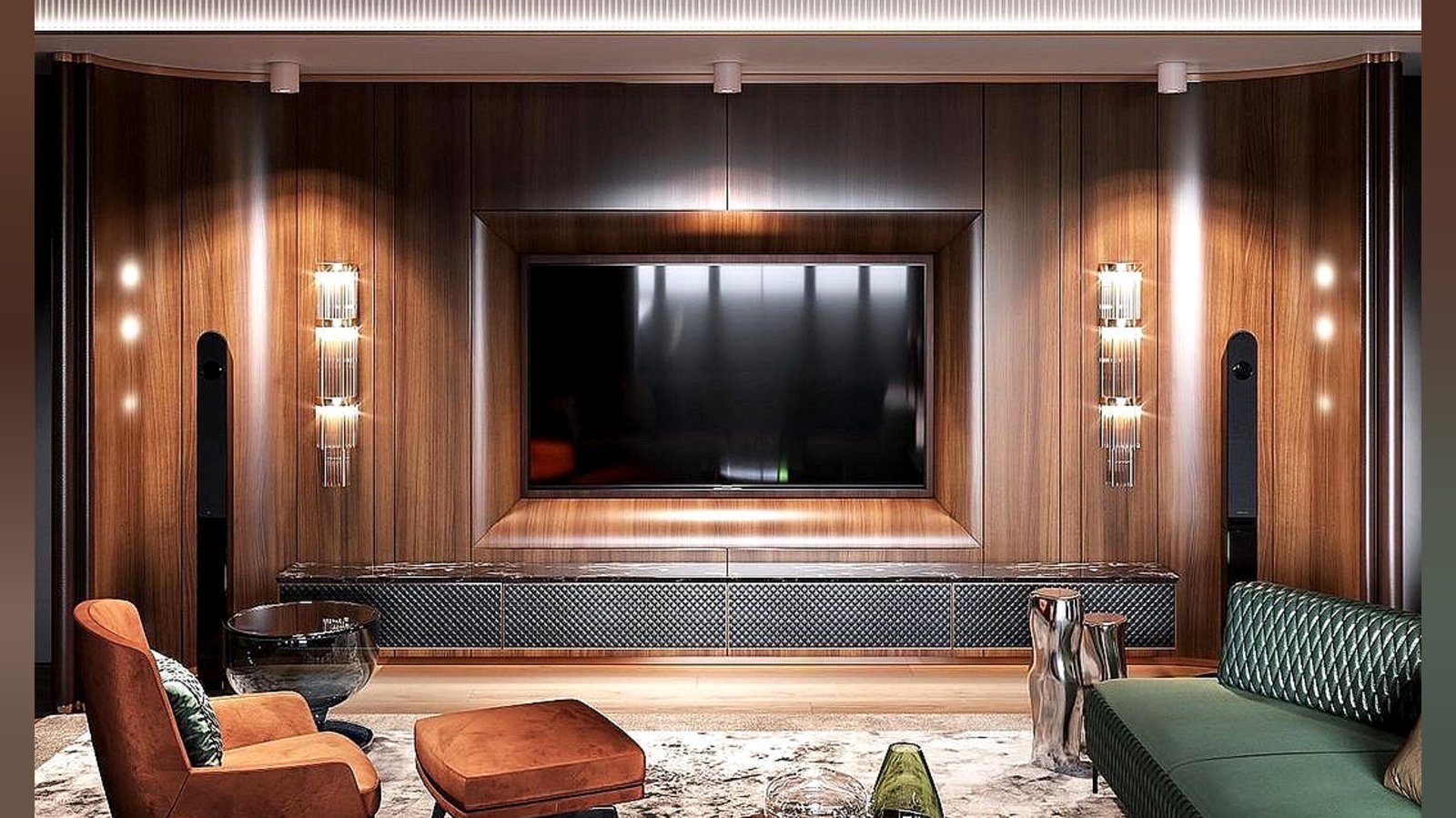
In a furniture showroom, when you touch doors that look like oak, walnut or spruce, it is often hard to tell straight away that they are not real wood. On modern laminated boards a wood decor is not just colour and pattern but also a texture you can feel with your fingers. That raises new questions for the buyer: how good is a wood-effect decor, how does it differ from natural wood, and when is it the better choice?
How a decor is made
The core of a wood-effect board is usually particleboard or MDF. A special decorative paper printed with a wood pattern is laid on top and impregnated with resin. Under high pressure and temperature the paper bonds to the board and forms a hard, durable surface.
The pattern itself comes from a high-quality photograph of real wood. In good decors the repeat is long, so the same knots and marks do not obviously recur on doors placed side by side. In cheap decors the repeat is quickly spotted and gives the imitation away.
Zaferoglu Mebel uses Egger and Kronopol boards, and both brands offer oak, walnut, ash and other wood decors in several surface textures.
The role of texture
How convincing the imitation looks depends largely on texture. A wood pattern printed on a smooth surface looks fine from a distance but flat up close or when light strikes it at an angle. In textured decors a relief following the grain is pressed into the surface.
Textures vary:
- fine pore texture resembles open-pored wood and looks calm;
- deep grain texture, like brushed oak, creates relief you can feel;
- synchronised texture, where the relief matches the printed pattern exactly, so the grooves follow the visible grain;
- matt or semi-matt surfaces look close to oiled natural wood.
Synchronised texture brings the imitation closest to real wood, because when light hits the surface the shadows fall exactly where the pattern shows the grain.
Practical differences from real wood
When choosing between a wood-effect decor and natural wood, look beyond appearance to how each behaves in use:
- colour consistency: a laminate decor is the same colour on every door, while each piece of natural wood may differ and changes colour with light over time;
- response to moisture: natural wood expands and contracts with humidity, while a laminated surface is stable, although its edges must be well protected by edge banding;
- scratches and knocks: the laminate top layer resists everyday scratches, but deep damage cannot be repaired, whereas scratched natural wood can be sanded and refinished;
- feel: natural wood feels warm and alive, while laminate, even textured, stays slightly cooler;
- ageing: natural wood develops a patina, while an imitation looks the same for many years.
When a wood-effect decor makes more sense
A wood-effect decor is a practical choice particularly for wardrobes and cabinets with large door areas, where colour must be identical on every element, in rooms where humidity and temperature vary, in children's rooms and in commercial premises with intensive daily use. It also helps keep the weight and cost of furniture under control.
Natural wood or veneer tends to be chosen where touch matters most, such as tabletops, decorative panels and classic furniture. Often the best result is a combination: carcasses and large doors in decor board, with elements that are touched and draw attention in natural material.
What to check when choosing a decor
- View the sample at a large size, since a small piece does not show the repeat.
- Look at it in daylight by a window and under artificial light, at an angle.
- Check that the edge banding matches the decor in colour and texture, with no visible stripe at the edge.
- Make sure it belongs to the same tone family as the floor and other wood in the room.
- Decide the grain direction on the doors: vertical or horizontal.
Grain direction is especially important. When drawers and doors sit in a row, a pattern that continues from front to front looks more unified. This must be discussed at the design stage, because the board cutting plan is arranged accordingly.
When choosing a wood decor for a custom piece, bring a floor sample or a photo of the room: it is far easier to pick the right tone next to what is already in the home.