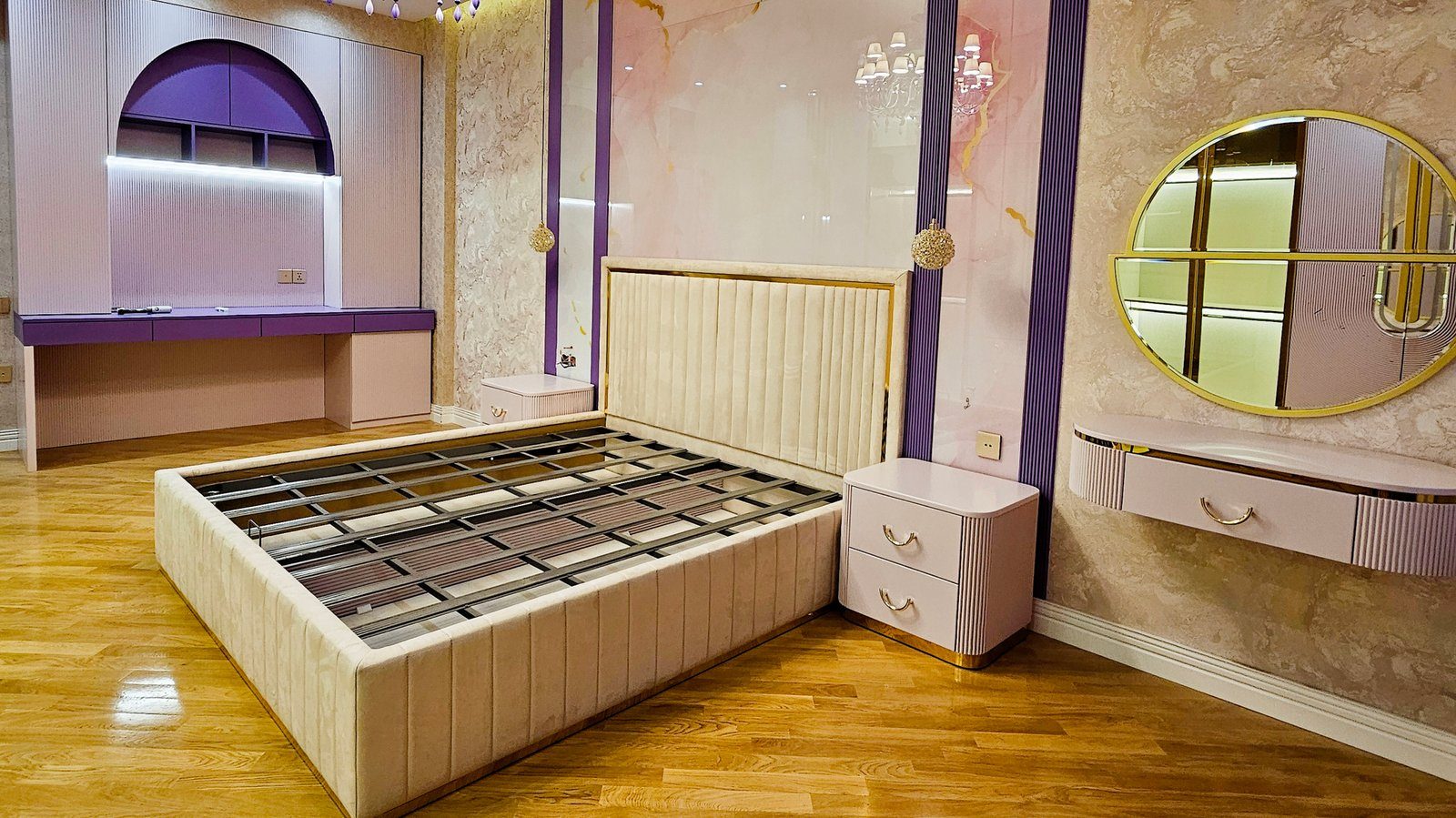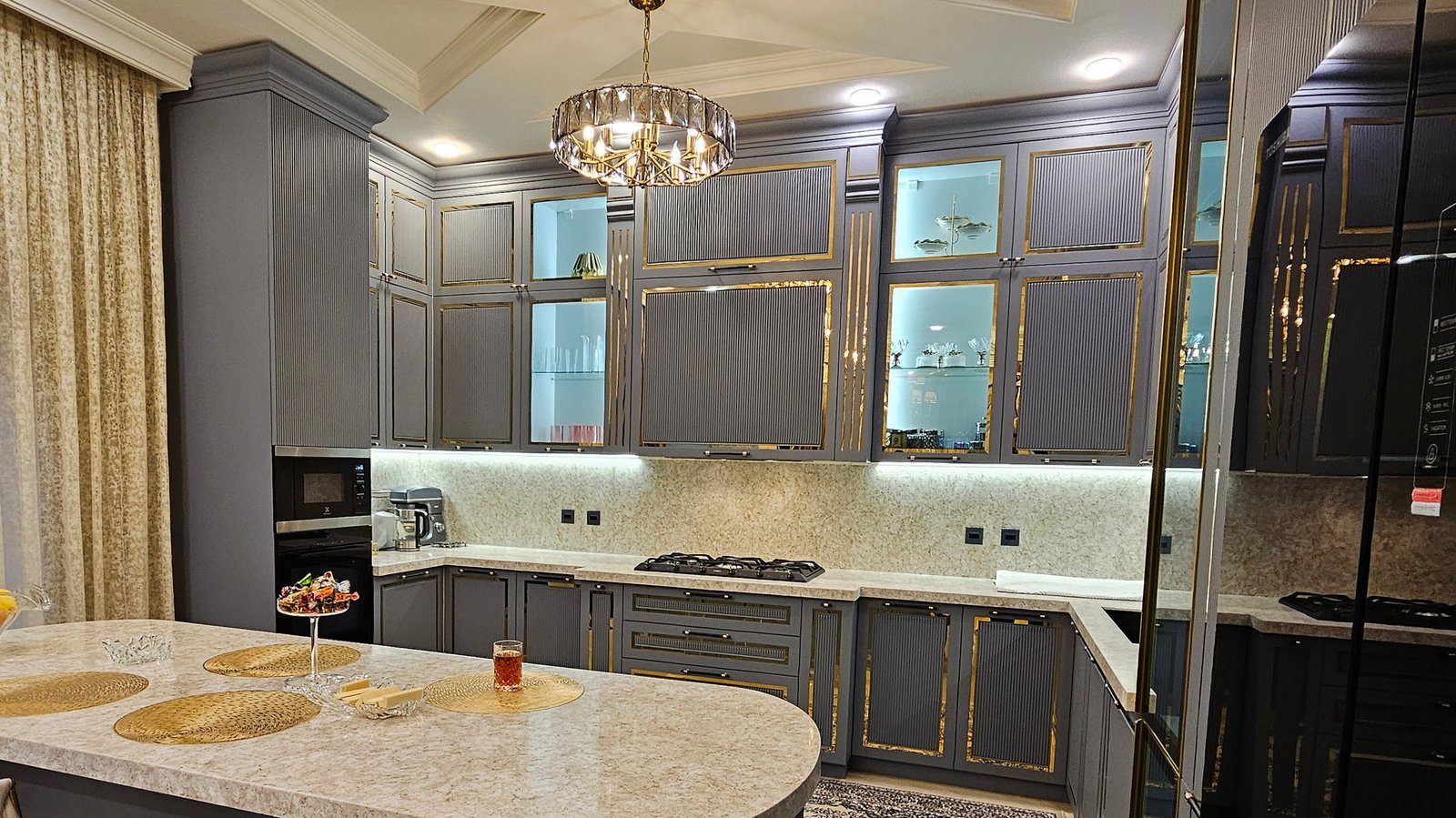

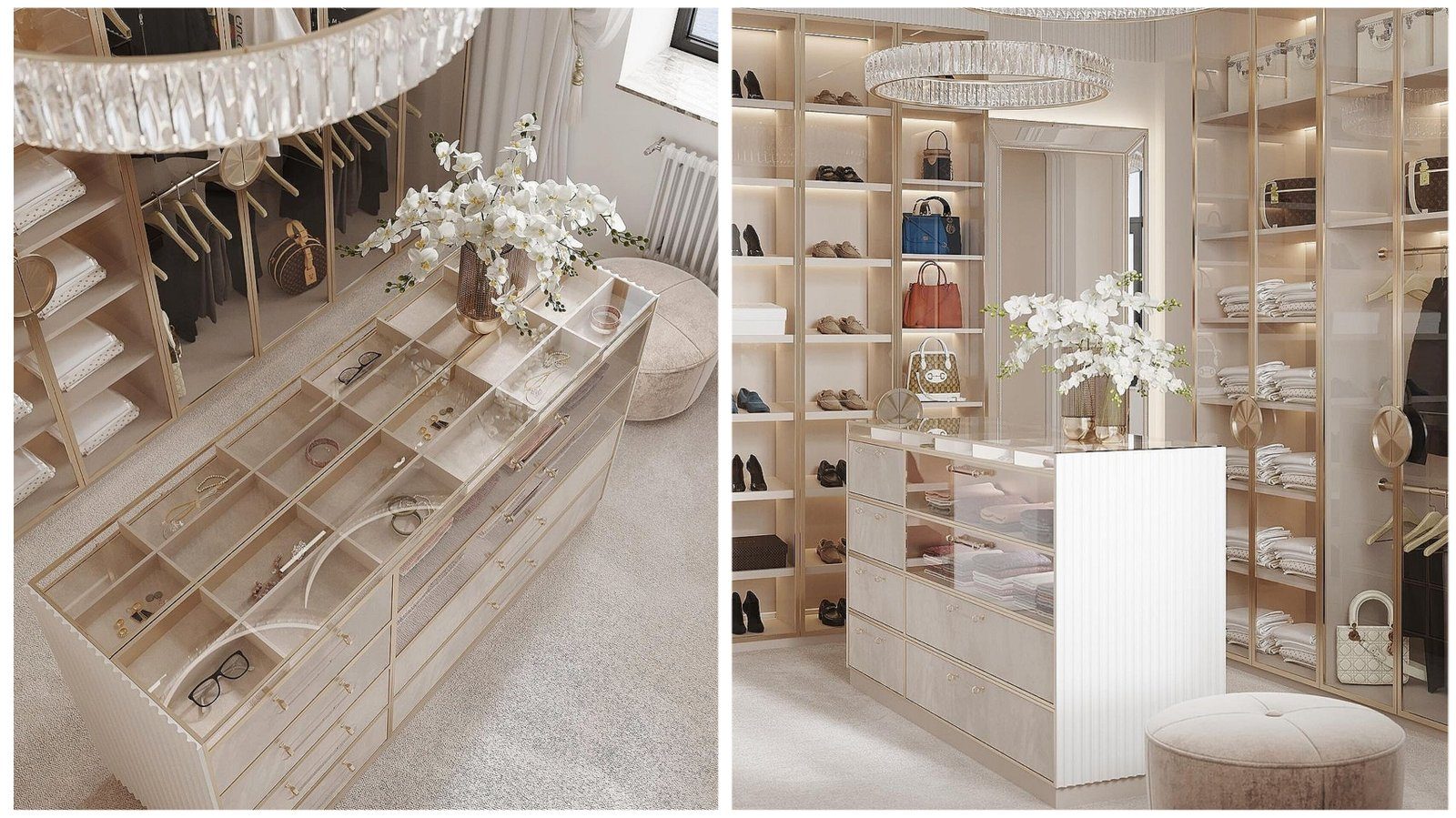
Laminate is one of the easiest furniture surfaces to keep clean: it needs no paint, it does not let water through and everyday marks wipe off easily. That very convenience sometimes leads to carelessness. Wiping everything with a kitchen spray, scrubbing a stuck mark with steel wool or leaving a wet cloth on an edge can change how a surface looks within months. The care rules are not complicated, but a few important limits are worth knowing.
Daily cleaning: little water, soft cloth
For everyday cleaning, a soft microfibre cloth and warm water are usually enough. The cloth should be well wrung out, damp rather than wet. Drying the surface with a dry cloth afterwards removes water marks and stops moisture reaching the edges.
For dust, a dry microfibre cloth is best. Wiping dust with a wet cloth spreads it and leaves streaks, especially on dark and glossy decors. Dust shows less on light surfaces, but the same rule applies.
Grease and stubborn marks
Grease builds up on kitchen fronts and around handles. Neutral washing-up liquid diluted in water is the safest remedy. Apply the solution to the cloth rather than pouring it on the surface, leave it for a few minutes, then wipe with a clean damp cloth and dry.
For stubborn marks such as felt-tip, ink or adhesive residue, start with the gentlest method. A cloth moistened with a little isopropyl alcohol sometimes helps, but test it somewhere out of sight first. Lift the mark with a few light passes rather than scrubbing.
Things to avoid completely
These products and habits damage laminate surfaces and edge banding:
- Abrasive powders, creams and steel or hard scouring pads: they leave micro-scratches and take away the sheen.
- Acetone, solvents, petrol and stain removers containing strong solvents: they can damage the decorative layer and the edge banding adhesive.
- Chlorine bleach and strong alkaline cleaners: they can change the colour and dull the surface.
- Steam cleaners: hot steam gets under the banding and softens the glue.
- Too much water: a puddle left standing reaches the cut edges.
- Wax and polishing sprays: laminate has no pores, so these simply leave a greasy film that attracts dust.
Gloss versus matt
On high-gloss laminate and gloss plastic fronts every scratch and fingerprint shows more. Use only a clean microfibre cloth on them, since even a grain of sand in the cloth leaves a mark. If new gloss fronts come with protective film, remove it completely after installation: film left in the sun becomes hard to peel.
Matt surfaces hide fingerprints, but grease can settle in the texture of structured decors. A soft brush moved along the grain works well there. On embossed decors, always move the cloth in the direction of the texture.
Watch the edges and joints
The most vulnerable part of laminate furniture is not the face but the edges. The lower edge of the sink cabinet, the side panel next to the dishwasher and panels near the floor in a bathroom have the most contact with water. Wiping drips immediately, putting a protective mat in the base of the cabinet and waiting a moment after opening the dishwasher so steam does not hit the fronts directly are all useful habits.
If you notice banding lifting at a corner, do not pull it. A small lift glued back in time keeps moisture out. Larger areas of detachment should be repaired by a professional.
New furniture has one more nuance. In the first days after installation, surfaces may carry a thin layer of workshop or transport dust or light marks. There is no need to attack them with strong products: a dry and then a damp microfibre cloth is usually enough. It is also best to avoid sticking tape, stickers or adhesive hooks on the furniture, because they can leave marks when removed.
A short care routine
- Dry microfibre for dust, a wrung-out damp cloth for everyday cleaning.
- Diluted neutral detergent for grease, followed by clean water and a dry cloth.
- No abrasives, solvents, chlorine or steam.
- No standing water on edges, and lifted banding repaired promptly.
Zaferoglu Mebel's cabinet furniture is built from Egger and Kronopol boards. Any questions about caring for the decor you chose can be put to the fitters at handover.